

Furnace Installation in Baltimore: Options and What to Expect
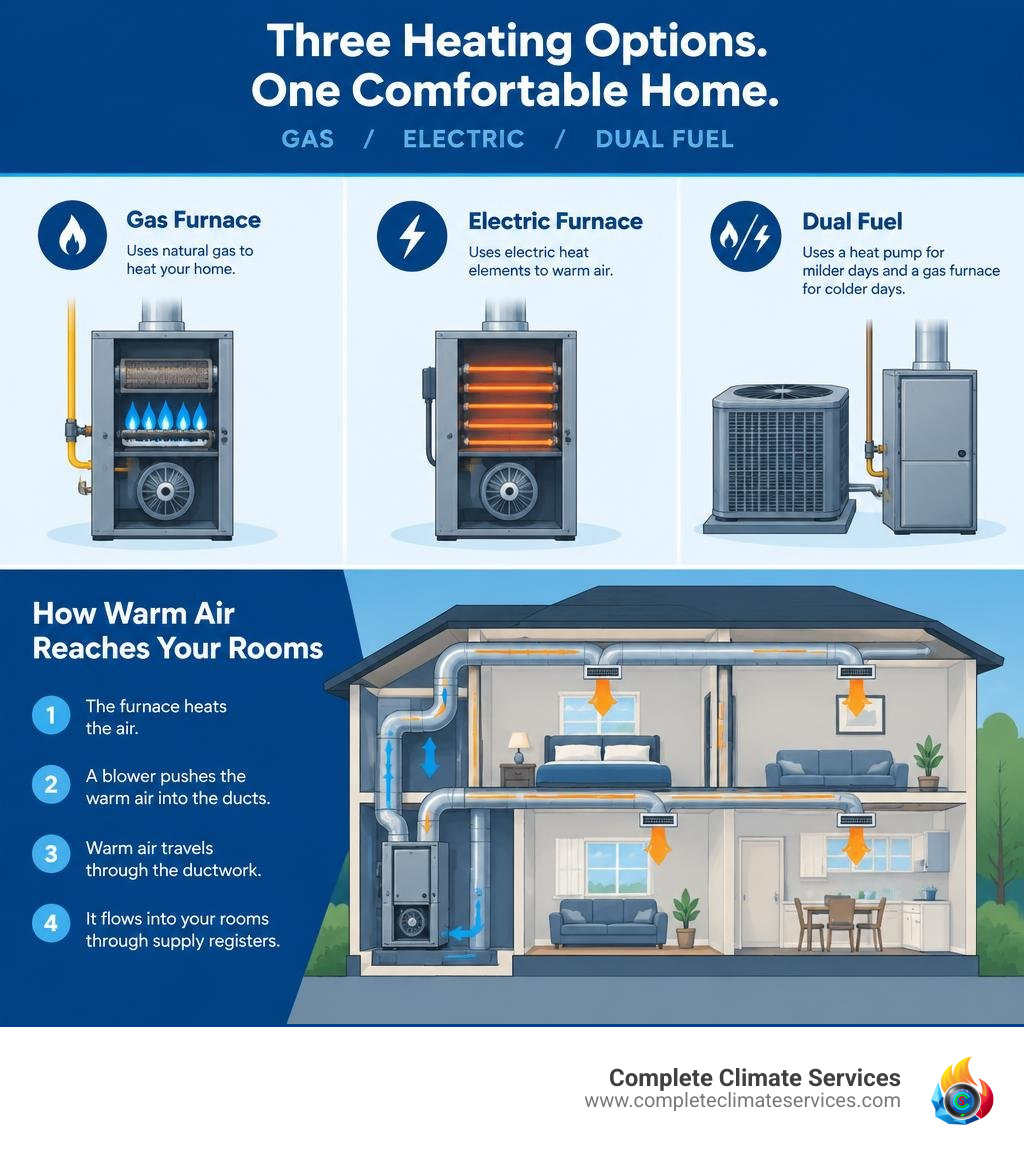
Furnace installation starts with choosing a dependable heating system tailored to your home’s layout and daily routines. Local homeowners can face different needs based on building age, design, insulation, and utility access. Gas, electric, and dual fuel systems each provide heat differently throughout local homes. The right setup depends on your property structure, existing energy connections, how conditioned air moves through rooms, and which comfort concerns matter most to your household.
Complete Climate Services is a local residential HVAC company serving homeowners in Baltimore City, Baltimore County, Anne Arundel County, and Howard County. We install dependable gas, electric, and dual fuel heating equipment to keep households comfortable all winter. Our technicians size every new system with a Manual J load calculation to establish proper heating performance. We also repair and service oil furnaces, but do not install them.
I’m Michael Holcomb, Co-Founder and Operations Manager of Complete Climate Services. Our team brings 20+ years of HVAC experience and 5.0 stars on Google to every residential heating project. I will walk you through furnace installation options, proper capacity sizing, and what to expect during a professional equipment replacement.
Signs It May Be Time for a New Furnace
Winter weather across our region places heavy seasonal demands on residential heating equipment during sustained cold snaps. An aging heating system often gives clear physical signals before it stops producing warm air altogether. Uneven temperatures between rooms, persistent drafts, repeated thermostat adjustments, or unusual banging and rattling noises can point to a system that is struggling. Those signs do not automatically mean replacement is necessary, but they are useful details to share during a professional evaluation.
Homeowners can easily handle a few safe, basic checks before assuming the entire heating unit has failed completely. Make sure your wall thermostat has fresh batteries, verify your air filter is clean, and check your electrical breaker panel. You should also confirm that all supply registers and return air grilles throughout your living spaces are open. If those basic items check out, deciding whether to repair or replace your heating equipment requires a close look at system reliability and ongoing heating performance.
Aging systems can also create serious indoor safety concerns when internal metal components begin to corrode and crack. It is essential to prioritize carbon monoxide safety because cracked heating components can allow dangerous combustion gases into your living spaces. The CDC carbon monoxide guidance recommends annual service by a qualified technician and battery-operated or battery back-up carbon monoxide detectors near every sleeping area. When recurring mechanical problems compromise indoor comfort or family safety, scheduling a professional heating replacement becomes the most sensible long-term decision.
Evaluating your current equipment age can help determine whether a replacement unit offers better long-term reliability for your household. Systems operating beyond their expected service life may need repeated component repairs while struggling to maintain comfortable indoor temperatures. Think about whether comfort problems are isolated, whether service needs are becoming more frequent, and whether the system still meets your family’s routines. An evaluation gives homeowners a clearer way to weigh those factors before deciding on their next step.
Keeping a simple record of recurring symptoms can make a professional conversation more productive. Note which rooms feel cold, when noises occur, and whether the thermostat setting seems difficult to maintain. Those observations help distinguish a one-time issue from a pattern that may justify planning for replacement.
Gas, Electric or Dual Fuel: Which Furnace Fits Your Home
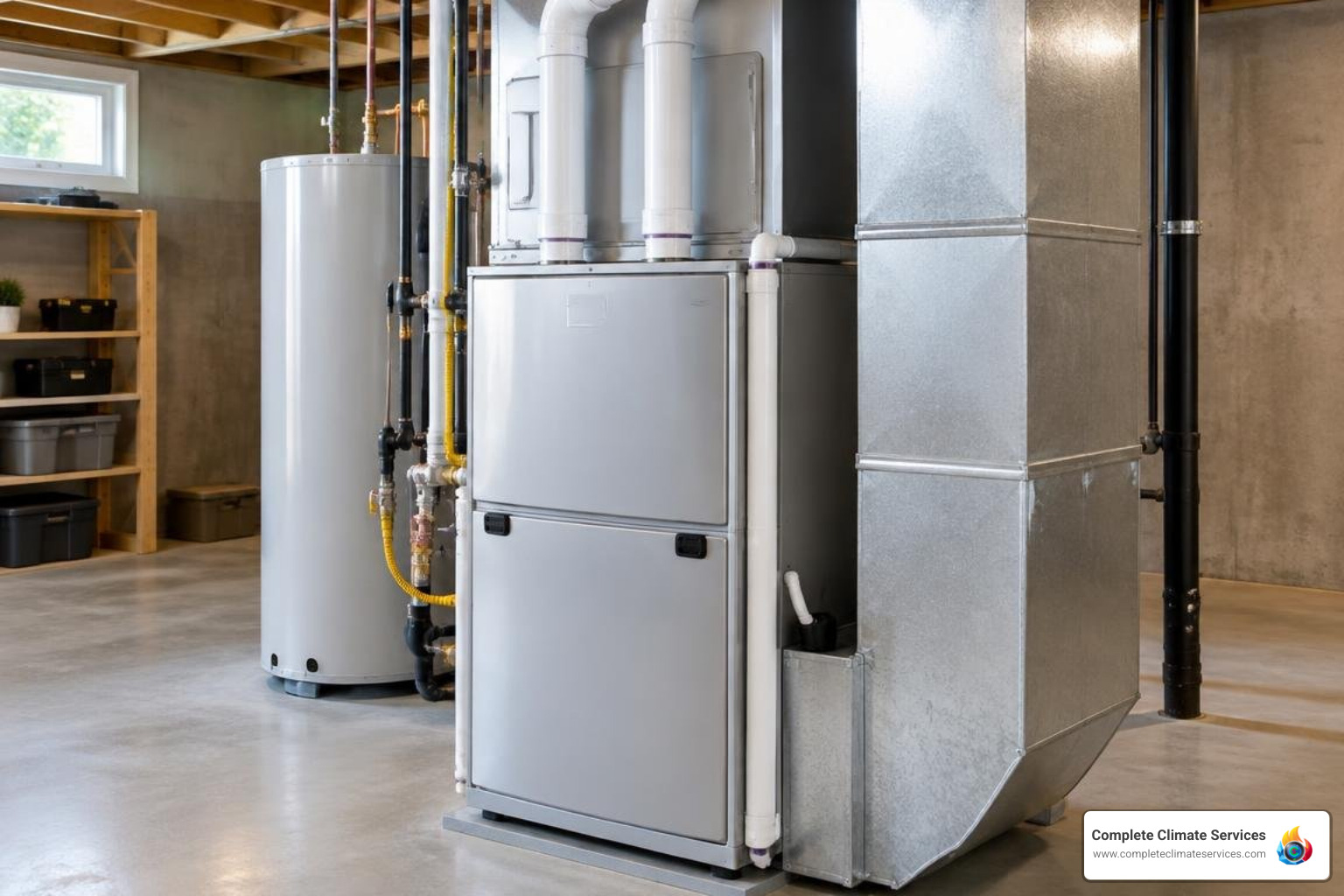
Selecting the ideal fuel source requires matching equipment capabilities with your existing utility connections and household comfort priorities. Natural gas systems remain popular throughout the area because they can deliver rapid warmth during freezing days. Modern gas models can provide consistent airflow while using less fuel than older atmospheric units from decades past. Reviewing new furnace options can help homeowners understand which features fit their home’s layout without treating one fuel type as the right answer for every property.
All-electric heating units offer an alternative for homes without direct municipal gas line connections. These systems use electric heating elements and a blower motor to distribute warm air throughout the home. They can be a practical choice for specific architectural designs, well-insulated additions, or households considering their available energy sources. Comparing electric equipment with gas and dual fuel alternatives helps homeowners focus on comfort, utility access, and the condition of the existing distribution system.
Many regional homeowners choose dual fuel systems to balance seasonal flexibility with winter performance. Learning how dual fuel works helps explain how an electric heat pump pairs with a secondary gas furnace. The ENERGY STAR furnace guidance says gas furnaces meeting its program requirements in the northern half of the U.S. can be up to 18 percent more energy efficient than baseline models, with higher AFUE ratings and higher-efficiency blower motors. BGE EmPOWER Maryland may offer rebates for qualifying equipment; we can help check eligibility.
Each fuel type provides specific operational benefits depending on your home architecture and local utility access. Our experienced technicians review your current setup to recommend equipment that delivers balanced warmth across every living zone. Investing in the right fuel configuration supports efficient operation and consistent comfort.
Fuel choice is only one part of the decision. Homeowners should also consider the condition of their ductwork, the location of the equipment, and how often different areas of the home are used. Discussing those details during an evaluation can make the options easier to compare in practical terms.
Why Correct Sizing Matters
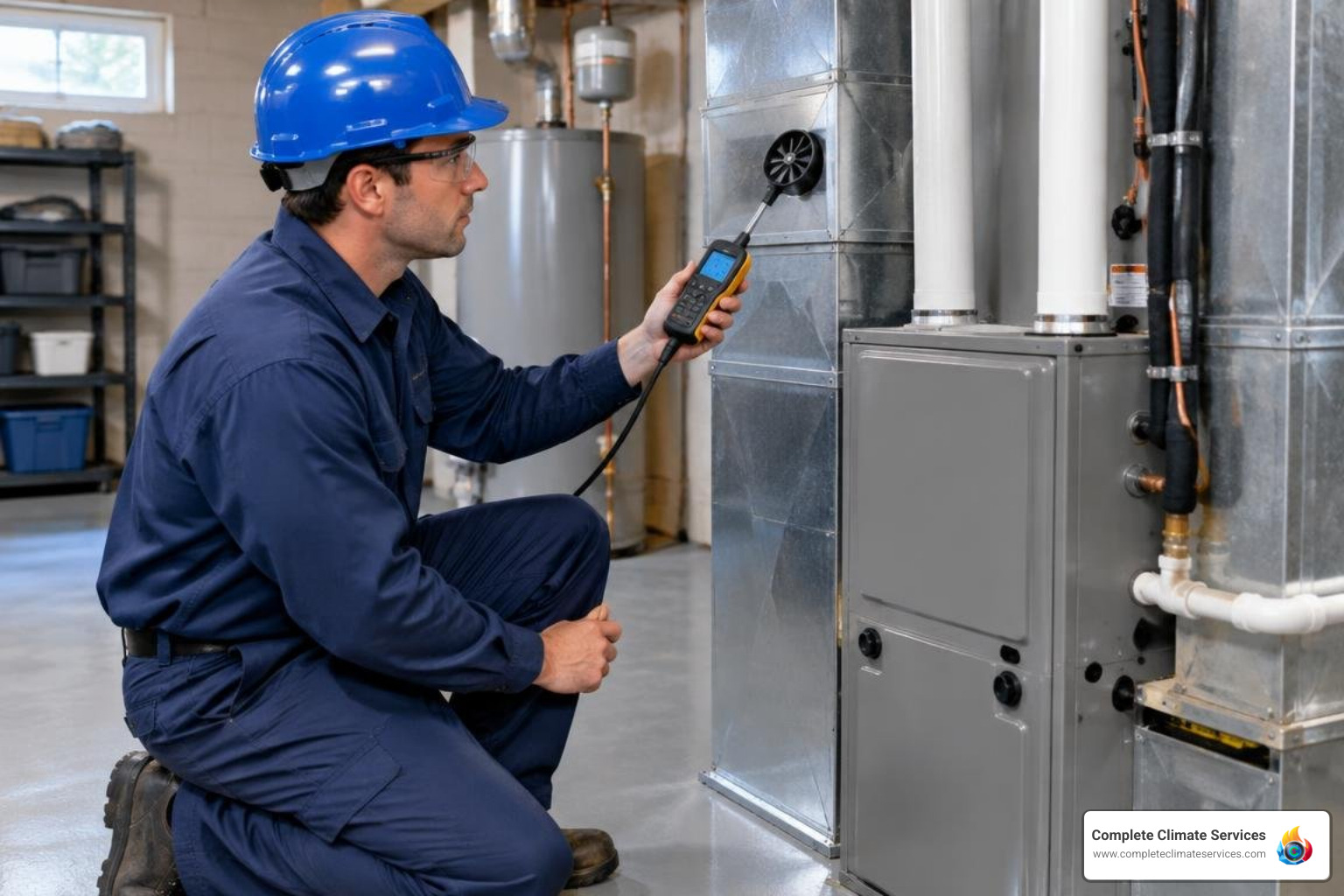
Installing the right capacity is more important to home comfort than simply selecting a particular equipment brand. An oversized heating unit can heat the home too quickly, leading to temperature swings and frequent short cycling. That repeated starting and stopping can add mechanical wear while leaving distant rooms drafty or uncomfortable. An undersized unit may run for long periods on cold days without satisfying the thermostat, which makes accurate sizing central to a balanced replacement decision.
Our technicians perform a comprehensive Manual J load calculation for every home before recommending replacement equipment. This evaluation accounts for living square footage, ceiling heights, insulation values, and the orientation of exterior windows. It also considers window construction, exterior door seals, general air leakage, and the way the home is actually used. Reviewing these details helps connect a recommended system size to the specific conditions that affect comfort during Baltimore-area winters.
Proper equipment sizing must also account for the volume and layout of your existing air distribution network. A brand new heating unit cannot perform properly if forced air cannot flow freely through your supply and return plenums. Evaluating your home furnace ductwork ensures that static air pressure stays within the manufacturer operational design limits. When equipment capacity matches your home distribution network, airflow stays quieter and room temperatures stay more balanced.
Taking time to calculate your home’s thermal profile can prevent comfort issues such as hot and cold spots. Balanced heating distribution can reduce unnecessary strain on equipment while supporting steadier indoor humidity during winter. A Manual J calculation also gives homeowners a clearer basis for comparing recommended system options. That information helps connect equipment capacity to the way each room is used.
Sizing is not a guess based only on the previous furnace or the number of rooms in a home. Changes such as insulation improvements, window replacements, or a finished addition can alter heating needs over time. A current load calculation accounts for those changes instead of assuming older equipment remains the right reference point.
What Happens on Installation Day
Installation day is easier when homeowners know what to expect and prepare the space ahead of time. Clear a direct path from the entryway to the furnace area, and move boxes, laundry, or stored items nearby. Secure pets in a quiet room and make sure the electrical panel is accessible if needed. Before work begins, write down questions about the replacement plan, thermostat settings, filter changes, or rooms that have been difficult to keep comfortable.
The work involves gas, venting, electrical, and sealed components that should only be handled by trained technicians. Homeowners do not need to manage those technical steps or attempt adjustments during the visit. Instead, focus on sharing comfort concerns, explaining when certain rooms feel uneven, and confirming thermostat preferences for occupied and unused spaces. Those details give useful context for the final walkthrough and help make everyday system operation easier to understand.
After the replacement is complete, a homeowner should receive clear guidance for using the thermostat and changing the filter. It is also a good time to ask which routine observations may signal a future service need. Establishing regular furnace maintenance can help keep equipment clean, safe, and efficient over time. Keep carbon monoxide detectors maintained according to their instructions and respond promptly to any alarm.
A professional replacement should leave homeowners with a straightforward understanding of the next steps. Save any equipment information in an accessible place, note the filter size, and set a reminder to check it regularly. Pay attention to new noises, uneven temperatures, or repeated thermostat changes after installation. If something seems unusual, contact a qualified HVAC technician rather than trying to diagnose internal parts yourself.
The first few days of operation are a good opportunity to notice how the home feels at different times. Check that frequently used rooms are comfortable, that the thermostat is easy to operate, and that airflow seems consistent. Share specific observations with a qualified technician if comfort concerns continue after the replacement.
Why Furnace Installation Is Not a DIY Project
Replacing modern heating equipment involves complex technical systems that require professional training and specialized mechanical tools. Working with municipal natural gas lines demands strict adherence to safety protocols to prevent hazardous gas leaks and fire hazards. High-voltage electrical wiring presents serious shock dangers that can damage sensitive control boards if handled improperly by an untrained homeowner. Professional technicians possess the diagnostic tools necessary to verify safe combustion parameters and precise system venting on startup.
Homeowners should restrict their personal heating maintenance to simple tasks like checking filters, adjusting thermostats, inspecting breakers, and verifying open vents. All work involving natural gas lines, exhaust venting systems, electrical wiring, and internal sealed parts is strictly technician-only. Attempting to replace heating equipment without professional training risks severe property damage, safety hazards, and compromised home comfort. Trained technicians check that every component operates safely, cleanly, and reliably throughout its working life.
Frequently Asked Questions
How do I know if I need a new furnace instead of a repair?
You should consider replacing your heating unit when it requires frequent service visits to keep operating through winter. Persistent comfort issues, cold rooms, unusual operating noise, and failing internal components can signal declining reliability. Consider whether repairs are restoring dependable operation or only postponing another disruption during a demanding heating season. A professional assessment can help you compare the system’s overall condition, repair history, and comfort performance with your household’s needs.
What is the difference between a standard and a high-efficiency gas furnace?
A standard gas furnace uses a single heat exchanger and vents exhaust gases through a chimney flue. High-efficiency models use a secondary heat exchanger to capture more heat before exhaust leaves the home. Their venting approach, drainage needs, and equipment requirements can differ from those of standard units. A home evaluation helps determine whether either option fits your utility access, ductwork, and long-term comfort goals.
Do you install oil furnaces?
No. Complete Climate Services repairs and services oil furnaces but does not install them. For a home with oil heat, a technician can review available fuel sources, electrical infrastructure, and ductwork. That conversation can help identify a practical replacement approach without assuming every home needs the same solution.
Will my existing ductwork work with a new furnace?
Many existing residential duct systems can work with a new heating unit when they are properly sized and in good condition. During a home evaluation, technicians review duct layout, return-air capacity, and sheet-metal transitions for airflow concerns. Restrictions, disconnected runs, or undersized returns can affect comfort even when the furnace itself is new. Addressing those concerns early helps homeowners understand whether adjustments may support more balanced temperatures after replacement.
How can I prepare my home for installation day?
Share any useful access details before the visit, including the location of the furnace, electrical panel, and convenient parking. Let the team know which areas stay colder than others, since that context can guide the conversation about comfort. No tools, adjustments, or technical preparation are required from the homeowner.
Conclusion
Choosing the right heating system helps your household stay warm, comfortable, and safe through winter weather. Comparing fuel options, matching equipment capacity to your layout, and relying on trained technicians can make the replacement process easier to understand. A home evaluation can clarify how your ductwork, utility access, and comfort goals affect the available choices. When you are ready to explore modern equipment, contact our team to schedule an in-home consultation.
Written by Michael Holcomb, Co-Founder and Operations Manager, Complete Climate Services.
Complete Climate Services LLC · 204 S Chapel St, Baltimore, MD 21231 · (443) 898-4747

