

When Heat Pump Installation Near Me Should Move to the Top of Your List
Heat pump installation near me can be a practical next step when comfort and reliability decline. Baltimore homeowners may notice rising bills, uneven rooms, unusual noises, or frequent repair visits. Safe homeowner checks include the thermostat, filter, breaker, vents, and leaves around outdoor equipment. Gas, electrical, refrigerant, and sealed-system concerns should always be handled by a technician.
Modern heat pumps provide heating, cooling, and humidity control in one system for many Baltimore homes. Correct sizing and careful installation matter because they shape comfort, efficiency, and dependable operation. ENERGY STAR replacement guidance notes replacement may be worth considering when equipment exceeds ten years. It also says correctly installed ENERGY STAR units can save up to 20 percent on heating and cooling costs.
I’m Michael Holcomb, Co-Founder and Operations Manager of Complete Climate Services, and I help Baltimore homeowners weigh heat pump installation near me when comfort or reliability changes. I will walk you through signs that may make replacement worth considering. I will also explain what our team checks during an installation visit.
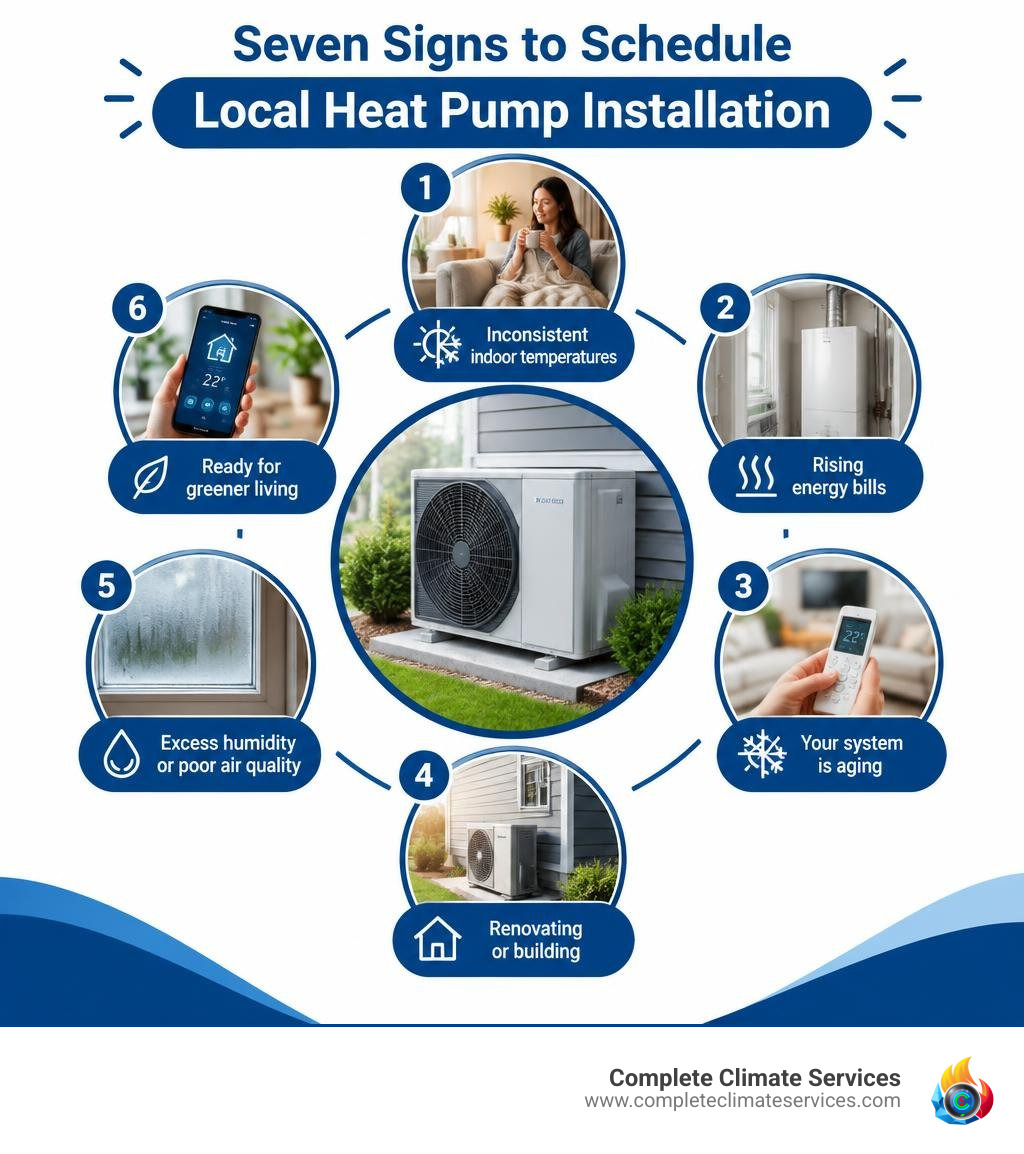
Seven Signs Your Baltimore Home May Need a Heat Pump Installation
Heat pump problems often begin with smaller changes in comfort, noise, or operating costs. Paying attention early can help homeowners plan before a complete failure disrupts daily routines. Each sign below deserves a professional evaluation when safe basic checks reveal no simple cause. Our installation tips explain what a careful assessment includes.
Your System Is More Than Ten Years Old
An older system may need longer cycles before rooms feel comfortable, especially during demanding weather. Homeowners may also notice new noises, uneven temperatures, or repairs becoming more common. Age alone does not determine whether replacement is the right choice.
A technician reviews maintenance history, operating performance, and the condition of major components during an evaluation. The visit also identifies problems that may be repairable before replacement becomes necessary. That information helps homeowners compare practical next steps with confidence. The technician can also explain which findings should be monitored over time.
Monthly Heating and Cooling Bills Keep Rising
Higher utility bills may appear when equipment runs longer to maintain the same indoor comfort. A dirty filter, closed vents, or incorrect thermostat settings can contribute to that change. Homeowners can safely check those items before scheduling service.
If costs remain high, a technician checks airflow, equipment operation, and controls for signs of declining performance. The evaluation can reveal whether a repair, adjustment, or replacement deserves consideration. It also helps separate equipment concerns from changes in household comfort needs. That context makes the recommendation easier to understand and act on for homeowners.
Repairs Are Becoming More Frequent
Repeated service visits often signal that a system is losing reliability or developing related component problems. Homeowners may notice the same issue returning after a repair or new concerns appearing nearby. Those patterns are worth documenting before a technician arrives.
A technician checks the affected components, overall system condition, and whether repairs address the underlying cause. The evaluation considers how reliably the equipment is likely to operate going forward. Homeowners can then weigh continued repairs against a replacement plan. Clear records help make that decision less stressful during a service visit.
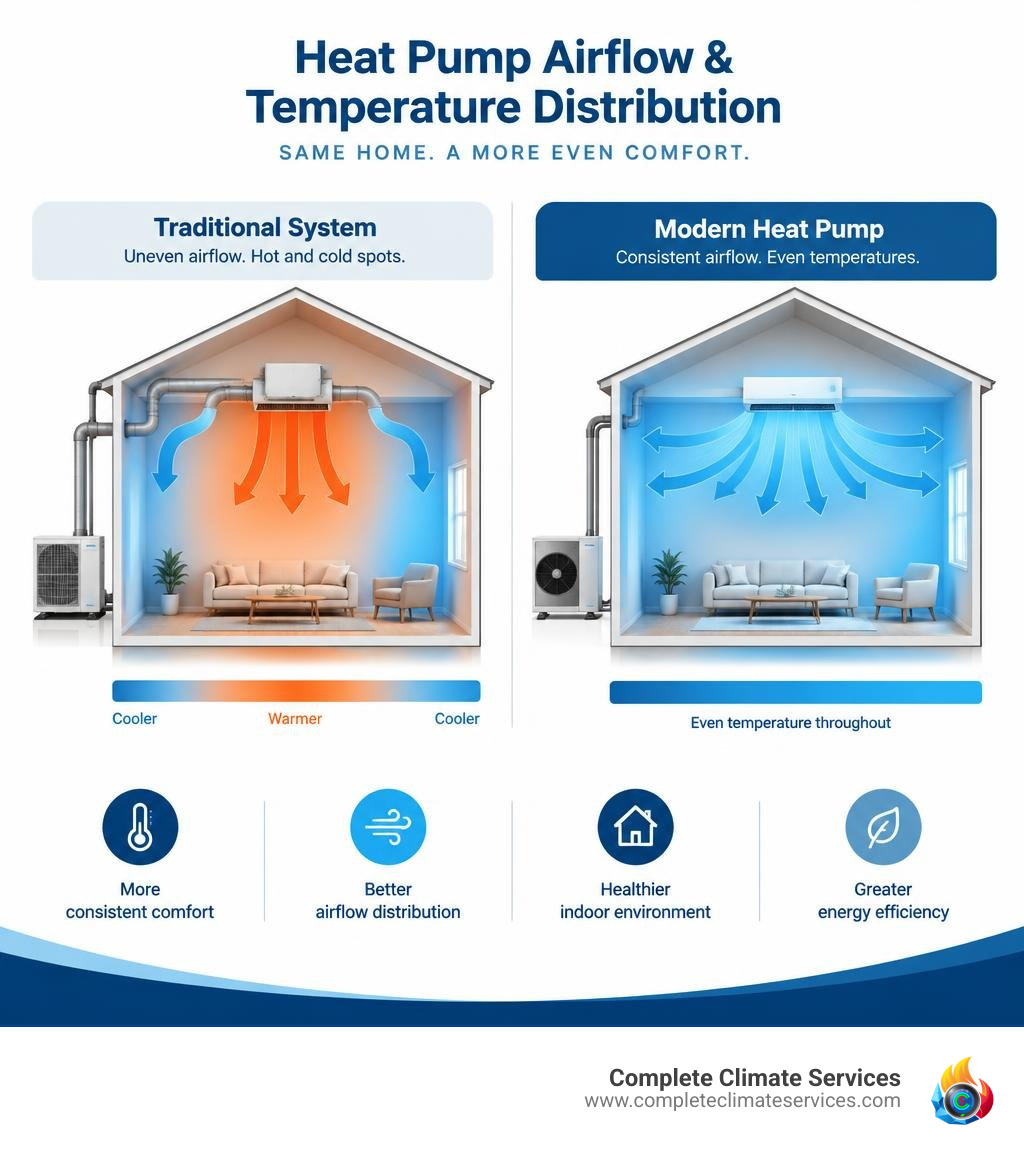
Rooms Have Uneven Temperatures
Different rooms may feel noticeably warmer or cooler even when the thermostat setting stays unchanged. This pattern can reflect restricted airflow, duct concerns, or equipment that is not meeting the home’s needs. Homeowners can check that supply vents remain open and unobstructed before calling for service.
A technician evaluates ductwork, system sizing, airflow, and equipment performance to locate the underlying cause. Some comfort problems come from distribution issues rather than the heat pump itself. A complete evaluation helps avoid replacing equipment before the real issue is understood. That information can guide the next repair or replacement decision with clear expectations.
Noise or Humidity Problems Are Getting Worse
Unusual rattling, screeching, or banging can make routine operation feel distracting or concerning. Summer air that feels clammy may signal that the system is not removing moisture as effectively. Persistent comfort or sound changes are worth discussing with a technician.
Avoid opening equipment panels or attempting repairs involving electrical, refrigerant, or sealed-system parts. A technician checks the source of the noise, airflow, drainage, and operating performance. That evaluation helps identify whether a focused repair can restore comfort. The technician can explain safe next steps in plain language for the homeowner.
You Want to Move Away From Older Heating Equipment
Homeowners with oil, propane, or baseboard heat may be ready to consider a different way to heat and cool. A heat pump transfers heat to provide electric comfort throughout the year without relying on combustion. For a closer look at flexible options, homeowners can consider inverter heat pump systems for particular rooms or whole-home comfort.
A technician reviews the home’s layout, existing equipment, and winter comfort needs before recommending a setup. The best choice depends on the results of a professional evaluation.
Your System Struggles During Freezing Weather
Longer heating cycles, cool areas, or slow recovery after thermostat changes can point to a winter performance concern. Clearing leaves and debris from around the outdoor unit is a safe homeowner task that supports airflow. Homeowners considering project timing can review guidance about installing in winter when site conditions allow.
A technician checks equipment operation, airflow, controls, and the home’s comfort needs during colder conditions. The visit can identify whether maintenance, repair, or a different system approach makes sense. Planning ahead helps homeowners account for comfort concerns and household schedules. It also makes it easier to prepare for a service or installation visit.
Understanding Heat Pump Options and Installation Planning
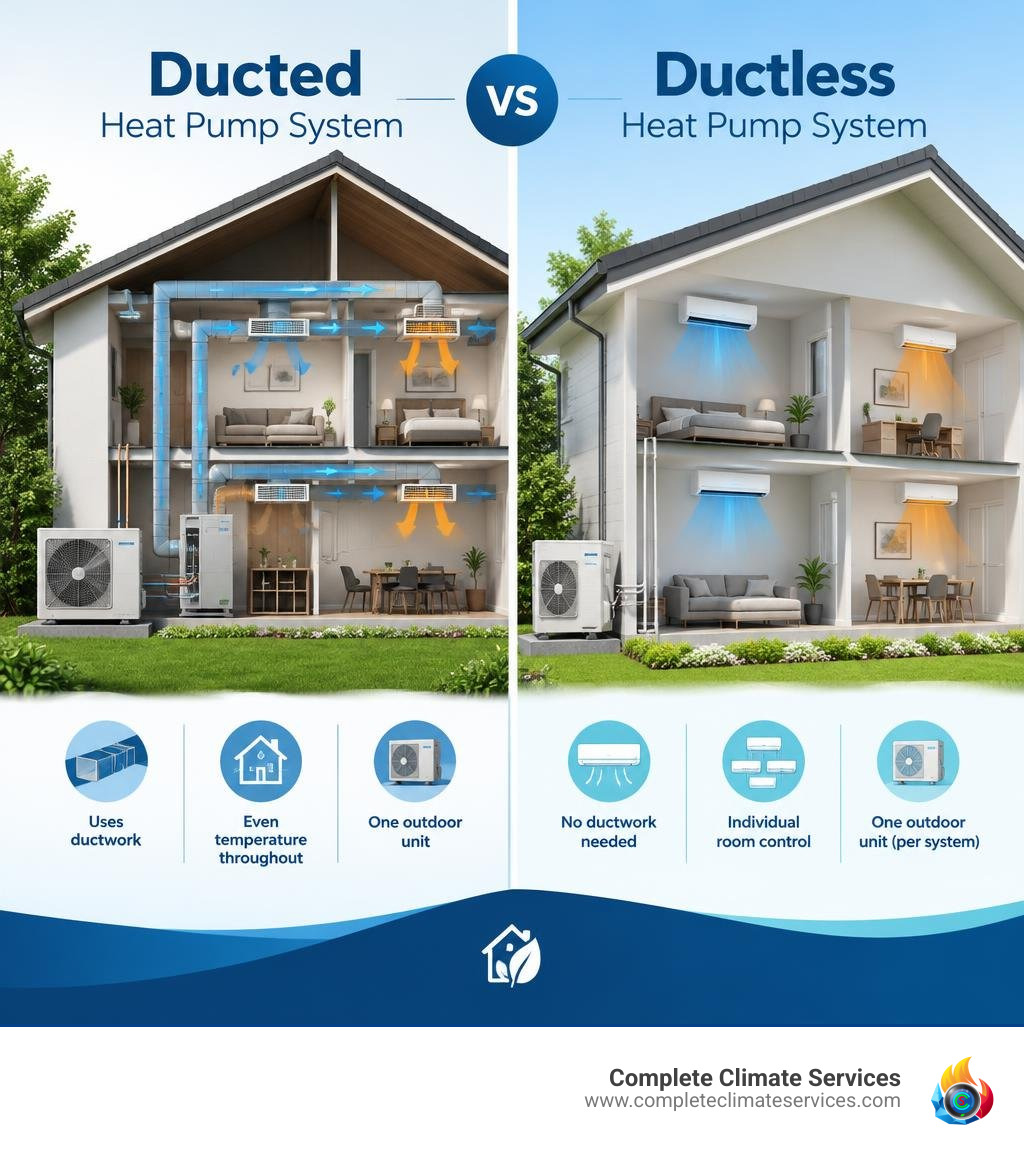
Choosing between ducted and ductless equipment starts with your home’s layout, comfort needs, and existing infrastructure. A ducted system can use suitable existing ductwork, while ductless equipment serves individual areas without ducts. A review of HSPF2 ratings can help compare heating efficiency among equipment options.
Ducted and Ductless Heat Pump Systems
A home evaluation helps determine whether existing ducts can support a new heat pump. Ductless systems may suit additions, rooms with persistent comfort issues, or homes without central ducts. The right approach depends on the home’s design and the results of a professional assessment.
Cold Weather Performance and Sizing
Cold-weather comfort depends on appropriate equipment selection, careful installation, and the home’s heating needs. Information from EPA heat pump guidance explains that poorly matched equipment can reduce efficiency and overall comfort. A Manual J load calculation helps match equipment capacity to your home’s heating and cooling needs.
Planning the Installation
Installation scope depends on access, equipment type, ductwork, electrical needs, and required site preparation. Homeowners who want work completed before colder weather can review fall installation timing. BGE EmPOWER Maryland may offer rebates for qualifying equipment; we can help check eligibility.
A heat pump can be paired with a gas furnace when a backup heat source fits the home’s needs. During the evaluation, we also explain auxiliary heat costs. Your technician can explain operating options without relying on a one-size-fits-all recommendation.
Heat Pump, Furnace or Dual Fuel: Which Setup Fits Your Home
An all-electric heat pump provides both heating and cooling through one system. It can be a practical choice for homes seeking electric comfort throughout the year. A home evaluation determines whether the equipment and layout support that approach.
Dual fuel pairs a heat pump with a gas furnace that can provide backup heat. This setup may suit homeowners who want electric heating with another option during demanding weather. A technician reviews comfort goals and existing equipment before recommending either system.
Replacing a furnace and air conditioner with a heat pump changes how the home receives heating and cooling. The right choice depends on ductwork, insulation, electrical capacity, and everyday comfort priorities. Clear recommendations start with an evaluation rather than a one-size-fits-all answer.
How to Prepare Your Home for Installation Day
Clear access to indoor and outdoor equipment so the installation team can work safely and efficiently. Move stored items, furniture, and fragile belongings away from the immediate work areas. Ask the team which spaces need the most room before the appointment.
Plan for pets by keeping them comfortable and away from active work areas. Discuss any access concerns, parking needs, or household routines that may affect the visit. These details help the team move through the installation with fewer interruptions.
Use the visit to ask questions about thermostat use and the system’s everyday operation. The team can explain safe homeowner tasks and when to call for professional service. A clear handoff helps homeowners feel prepared after installation is complete.
Caring for Your New Heat Pump
The EPA notes that heat pumps typically use about half the energy of other electric home-heating sources, that equipment that is too large or too small can reduce efficiency, and that a professional technician should service the system at least once a year.
Homeowners can support reliable operation by checking the filter and following the manufacturer’s replacement guidance. Keep vents open and clear leaves or debris from around the outdoor unit. These safe habits support airflow without opening panels or handling sealed components.
A technician can inspect performance, controls, drainage, and other components during routine service. Addressing concerns early can help protect comfort before a small issue becomes disruptive. Keep notes about unusual sounds or uneven rooms to discuss during a visit.
What Our Team Does During a Heat Pump Installation
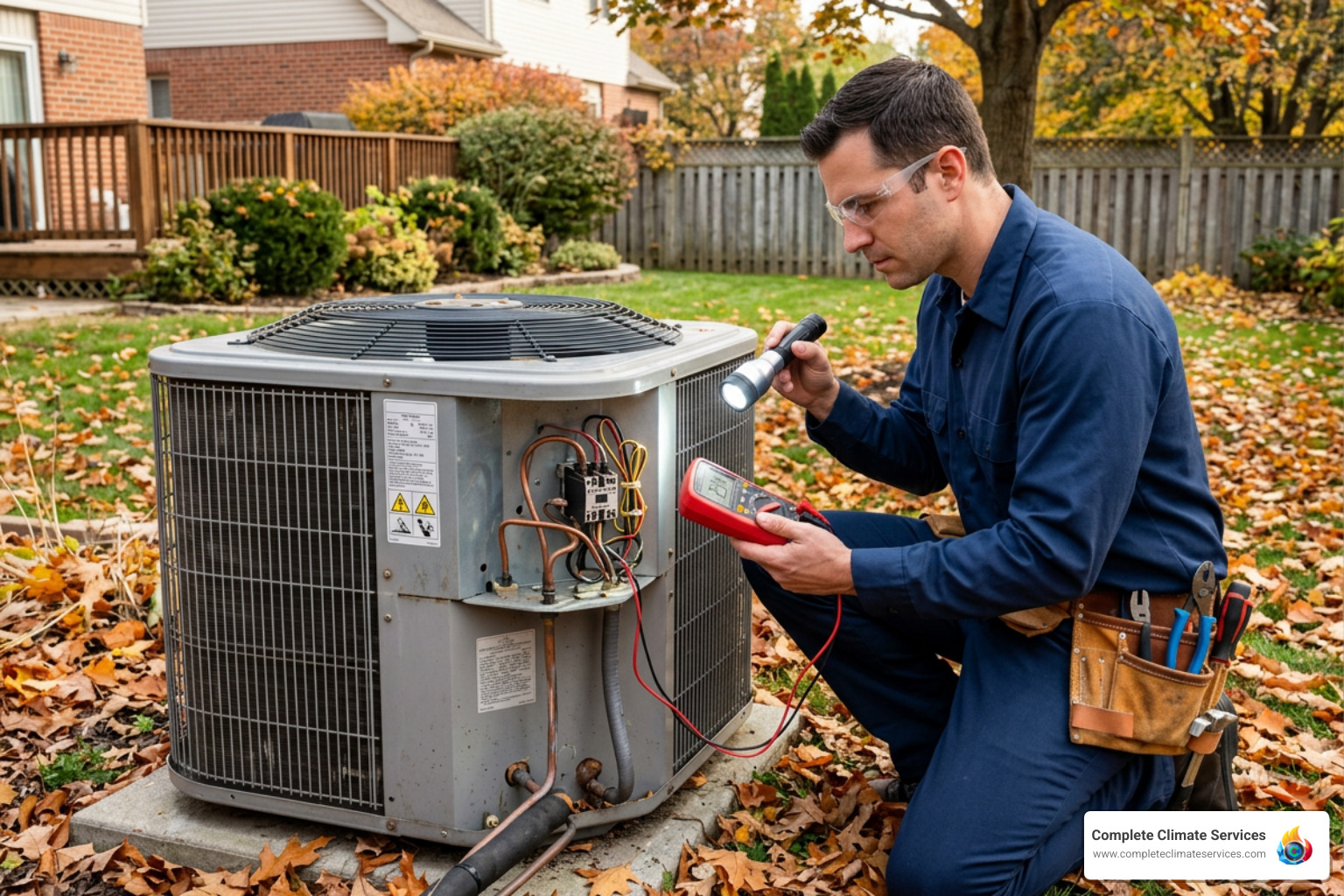
Every installation starts with a conversation about the rooms, comfort concerns, and goals for the new equipment. To select suitable capacity, our team completes a Manual J load calculation based on the home’s needs. We then review the duct system and electrical panel before bringing the equipment online. Careful commissioning lets the team address necessary adjustments while the visit is still underway.
During startup, the technician checks airflow at the registers to confirm that conditioned air reaches the intended rooms. The thermostat is tested in heating and cooling modes to confirm that controls respond as expected. The technician also checks refrigerant line connections and confirms that the outdoor unit has appropriate placement and clearance. These steps help identify concerns before the installation team leaves the home. The homeowner receives a walkthrough of the thermostat, filter location, and safe day-to-day operating habits.
During the first week, it is normal to pay attention to how rooms feel as the system settles into regular use. Homeowners should note persistent temperature differences, unfamiliar sounds, or controls that do not respond as expected. Keeping access clear around the indoor and outdoor equipment helps the system operate without avoidable airflow restrictions. A technician can answer follow-up questions and address concerns that appear after the installation visit. Clear communication helps homeowners become comfortable with the new system and its routine care. Homeowners can also ask how to adjust daily temperature settings without changing equipment controls unnecessarily. Sharing early observations with the installation team gives the technician useful context if a follow-up visit becomes appropriate. Keeping the owner’s materials nearby can make routine filter checks and thermostat questions easier to address.
Frequently Asked Questions About Heat Pump Installation
How do I know if my home is a good fit for a heat pump?
Whether a heat pump suits a home depends on how the house holds comfort and distributes air. During a visit, the technician looks at the layout, existing equipment, and concerns in specific rooms. Insulation and household preferences also shape the available options. The recommendation should reflect the home’s actual needs rather than a generic approach.
Can a heat pump work with my existing ductwork?
Existing ducts may support a heat pump when they can move the needed airflow effectively. The technician assesses their condition, sizing, sealing, and impact on comfort from room to room. Some homes benefit from duct improvements before new equipment is installed. The evaluation explains what changes, if any, would improve performance.
Can I keep my gas furnace as a backup heat source?
A dual fuel arrangement combines a heat pump with a gas furnace for backup heating. It may appeal to homeowners who want electric heating while retaining another heat source. Existing equipment, comfort priorities, and the home’s design guide that decision. A technician can explain how each option would operate day to day.
Do heat pumps keep up during Baltimore winters?
A properly matched heat pump can keep a Baltimore home comfortable during winter weather. Performance depends on the home’s heat loss, airflow, equipment size, and installation quality. A professional assessment identifies the setup that best supports local comfort needs. The conversation can include whether a backup heating option is appropriate.
What should I have ready before an installation estimate?
Before the estimate, make a short list of comfort issues and recent service concerns. Note which rooms feel different and how the thermostat has been used. Provide a clear path to the indoor and outdoor equipment for the visit. These details help the technician focus on the home’s most important needs.
Conclusion
If your current system shows declining comfort, rising bills, repair needs, or winter performance problems, consider an evaluation. Complete Climate Services brings 20+ years of HVAC experience to Baltimore-area homeowners. We also maintain 5.0 stars on Google through a focus on clear communication and reliable service. Explore our heat pump services when you are ready to discuss your options.
For a personalized evaluation, contact our team to talk through your home’s heating and cooling needs. We can help you understand suitable next steps without pressure or confusing technical language. The goal is a practical recommendation that fits your home and comfort priorities.
Written by Michael Holcomb, Co-Founder and Operations Manager, Complete Climate Services.
Complete Climate Services LLC · 204 S Chapel St, Baltimore, MD 21231 · (443) 898-4747

