

Are Dual Fuel Heat Pumps Worth It for Baltimore Homeowners?
The pros and cons of dual fuel heat pumps give Baltimore homeowners a practical framework for comparing comfort, reliability, and daily operation. This approach pairs an electric heat pump with a natural gas furnace that can serve the same duct system. The heat pump handles milder conditions, while the furnace takes over when the home needs more heating capacity.
This setup can provide steady comfort while giving homeowners a dependable backup heating source. It also combines heating and cooling equipment into a coordinated system controlled by one thermostat. The tradeoff is added installation planning, regular care for both components, and a professional setup that matches the home.
Dual fuel systems are often a practical choice for homes with natural gas service and ductwork. They can support more even indoor comfort during changing Maryland weather. A technician should evaluate the home’s equipment, airflow, insulation, and heating needs before recommending a system.
I am Michael Holcomb, Co-Founder and Operations Manager at Complete Climate Services. At Complete Climate Services we bring 20+ years of HVAC experience to local homeowners, and in this guide I will walk you through the pros and cons of dual fuel heat pumps. My goal is to make system decisions easier to understand and more relevant to everyday home comfort.
How a Dual Fuel Heat Pump Works
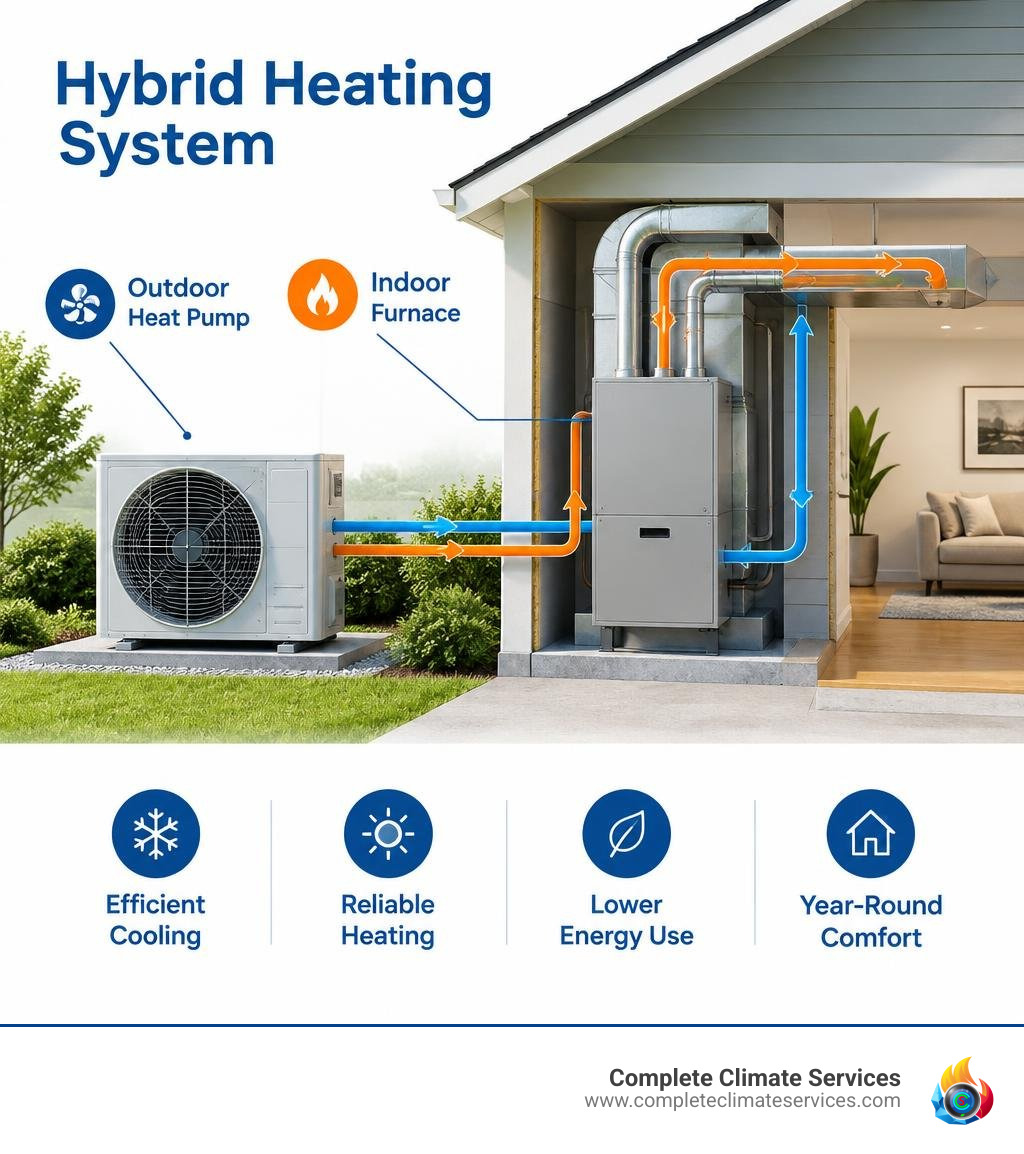
At its core, a dual fuel heat pump pairs an electric heat pump with a natural gas furnace. Both components use the same ductwork and work with a thermostat designed for the system. Instead of operating together, the system selects the heating source that best fits outdoor conditions.
A dual fuel system works best when each component has a clear role. The heat pump handles moderate heating demands and provides cooling during warm weather. The natural gas furnace supplies dependable heat when the home needs more capacity.
The system depends on correct sizing, compatible controls, and ductwork that moves air evenly. A technician reviews these details before installation and again during routine service. That preparation helps prevent short cycling, uneven rooms, and confusing thermostat behavior.
Homeowners should pay attention to changes in comfort, unusual sounds, or reduced airflow. A clean filter and open vents are useful first checks before scheduling service. Any concern involving gas, electrical wiring, refrigerant, or sealed components belongs with a technician.
The Heat Pump During Mild Weather
A heat pump does not make heat by burning fuel inside the home. It transfers heat through a sealed refrigerant system, which is why professional service matters.
The ENERGY STAR guidance explains that certified equipment can pair with a gas or oil furnace as a dual fuel system. It also notes that an air source heat pump can deliver up to three times more heat energy than the electrical energy it consumes. That efficiency can make mild weather feel more comfortable without relying on the furnace for every heating cycle. Complete Climate Services provides heat pump services to help homeowners maintain the heat pump side of a coordinated system.
The Furnace During Colder Weather
As outdoor conditions become more demanding, the heat pump may no longer be the preferred source. The thermostat switches to the furnace at an outdoor temperature our technician sets for your home. That setting considers equipment capacity, insulation, ductwork, comfort preferences, and local weather patterns.
The furnace then provides stronger heat through the same ducts without homeowner intervention. Reliable furnace maintenance helps ensure the backup system is ready when it is needed.
A dual fuel thermostat coordinates the handoff so the system does not compete with itself. Homeowners may notice a change in the feel of the air when the furnace takes over. That change is normal when the equipment has been sized and programmed correctly.
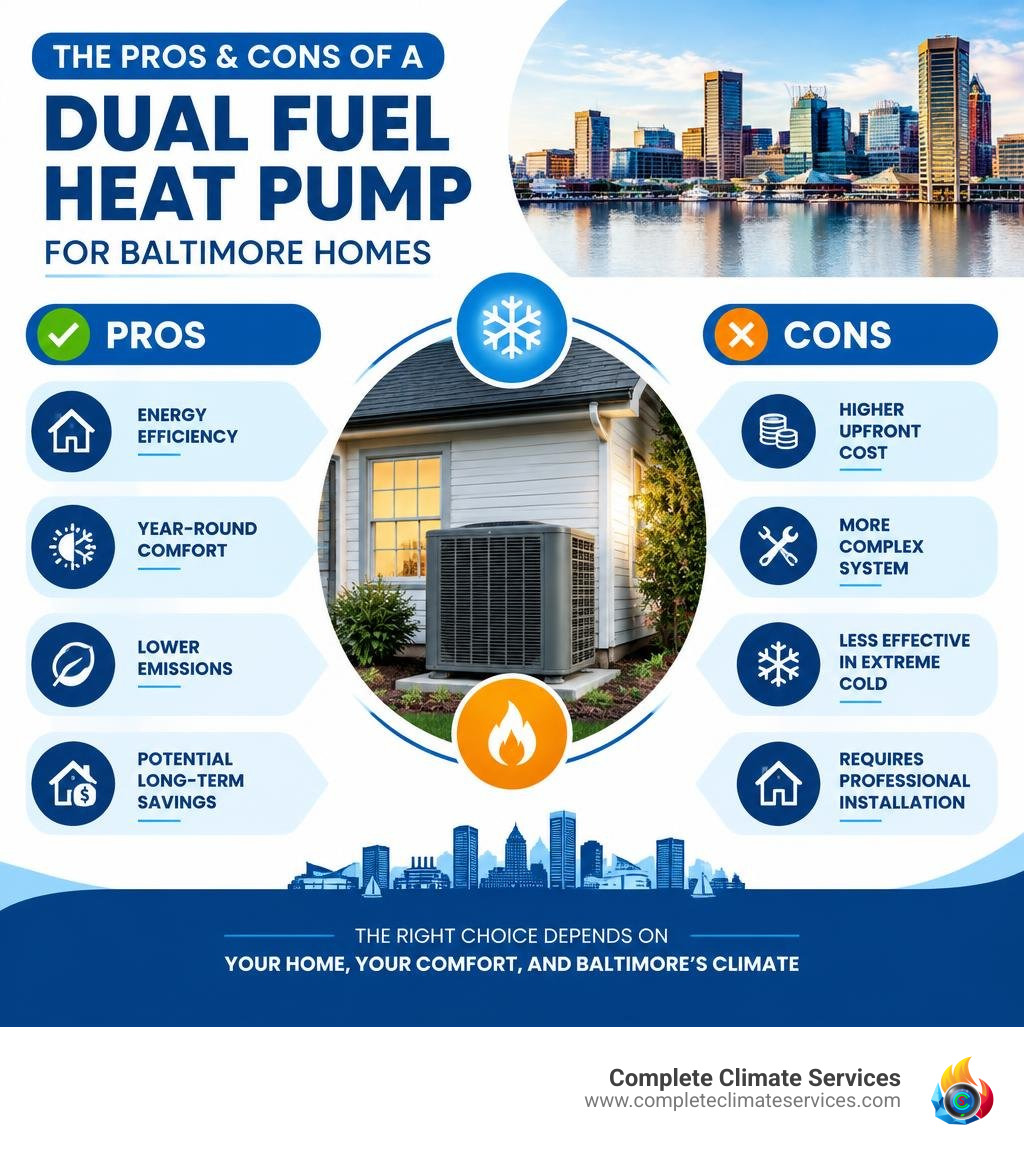
Pros and Cons of Dual Fuel Heat Pumps
For homes with natural gas service, a dual fuel arrangement can create a flexible path to year-round heating and cooling. Its thermostat selects the heat pump during milder stretches and calls on the furnace when stronger output is needed. That coordination lets the system adapt to changing conditions without constant adjustments from the homeowner.
Comfort also depends on how consistently the home holds conditioned air and distributes it through each room. Insulation, window condition, duct sealing, and room airflow influence how either heating source feels. A technician can identify these factors during a system evaluation and recommend practical improvements for changing Maryland weather.

The primary advantage is comfort that adapts as Maryland weather changes. The heat pump generally provides gentle, steady warmth during milder stretches. The furnace adds stronger heating performance when the technician-selected switchover point is reached.
Homeowners also gain cooling from the heat pump during summer. The system can reduce the need for separate heating and cooling equipment decisions. Our overview of dual fuel advantages describes why this coordinated approach appeals to many households.
The main consideration is that both the heat pump and furnace need professional installation and maintenance. A coordinated system needs compatible controls, adequate airflow, and careful commissioning to support reliable operation.
Comfort Through Changing Weather
Heat pumps often feel different from a furnace because they deliver more gradual, even warmth. That steady delivery can reduce abrupt temperature swings and help rooms feel less stuffy during longer heating cycles. The furnace remains available when outdoor conditions make stronger heat the better choice.
Comfort changes can also reveal how the home manages heat between cycles. A room near an exterior wall may feel cooler if insulation, weather sealing, or airflow needs attention. Rooms far from the indoor equipment may need a technician to review duct design, register placement, and return-air movement. These details influence comfort even when the heating equipment is operating as intended.
Thermostat programming also affects how smoothly the system responds to Maryland weather. When settings match the home’s layout and equipment capacity, the handoff between heating sources can feel less noticeable. A professional evaluation can help homeowners understand whether uneven comfort comes from equipment settings, airflow limitations, or the home’s construction.
Daily routines inside the home can shape comfort without changing the thermostat. Keeping interior doors positioned for normal airflow can help conditioned air reach rooms more consistently. Furniture placed directly against supply or return grilles can restrict circulation and make a room feel different from nearby spaces. Window coverings may also affect how quickly a sunny room warms or cools during changing weather.
Homeowners often notice comfort differences first in bedrooms, upper floors, and rooms with several exterior walls. Those differences do not always mean the system is undersized or malfunctioning. A technician can compare room conditions, duct performance, and thermostat behavior before recommending equipment changes. That measured approach helps separate a correctable airflow concern from a larger comfort-planning decision.
The goal is not to make every room feel identical at every moment. Instead, a well-planned dual fuel system should provide steady, predictable comfort while adapting to outdoor conditions. Understanding how the home responds gives homeowners better questions to ask during maintenance visits or replacement consultations.
Comfort planning also benefits homeowners before they replace heating equipment. Sharing which rooms feel uncomfortable, when those changes occur, and how long they have been noticeable gives the technician useful context. The visit can then focus on the relationship between the equipment, ductwork, thermostat location, and the parts of the home that need attention. Clear observations lead to more practical recommendations than choosing equipment based on one uncomfortable room alone.
When a dual fuel system is a good fit, its value comes from coordinated operation rather than constant homeowner involvement. The thermostat and equipment handle routine changes once the system is designed and configured for the home. That combination can help households feel more confident about comfort during the changing conditions common across the Baltimore area.
Good comfort also depends on the home itself, not just the equipment. Drafts, insulation gaps, duct leaks, and blocked vents can undermine performance. Our explanation of how dual fuel works shows why installation details and thermostat programming matter.
Maintenance and Professional Setup
A dual fuel system needs attention for both heating components, even when everything appears normal. Seasonal inspections can identify airflow restrictions, worn electrical parts, combustion concerns, and control problems. Routine maintenance plans help organize professional service before heavy heating or cooling use.
The EPA heat pump guidance says a heat pump typically uses about half the energy of other electric home-heating sources. It also recommends professional service at least once a year. That service gives a technician an opportunity to review the full system rather than addressing only a single symptom.
For Maryland homeowners, seasonal preparation can make a dual fuel system easier to manage. Our discussion of auxiliary heat costs explains why backup heat can affect seasonal operation. The winter heat pump checklist also reinforces the value of preparing equipment before colder weather arrives.
A dual fuel system is not automatically the right answer for every home. A thorough evaluation should consider the existing furnace, duct condition, insulation, electrical capacity, and comfort goals. Proper dual fuel systems installation starts with that complete assessment.
Installation, Maintenance, and Rebates
A successful dual fuel installation begins by matching the heating and cooling equipment to the home’s airflow and control needs. The furnace, heat pump, ductwork, and thermostat must work as one coordinated system. For every new installation, Complete Climate Services relies on a Manual J load calculation to determine appropriate system sizing.
Long-term comfort depends on more than selecting compatible equipment. Before installation, the technician examines the existing furnace and reachable ductwork to identify conditions that could affect performance. Proper controls, secure duct connections, drainage, electrical protection, and combustion safety help the completed system operate predictably.
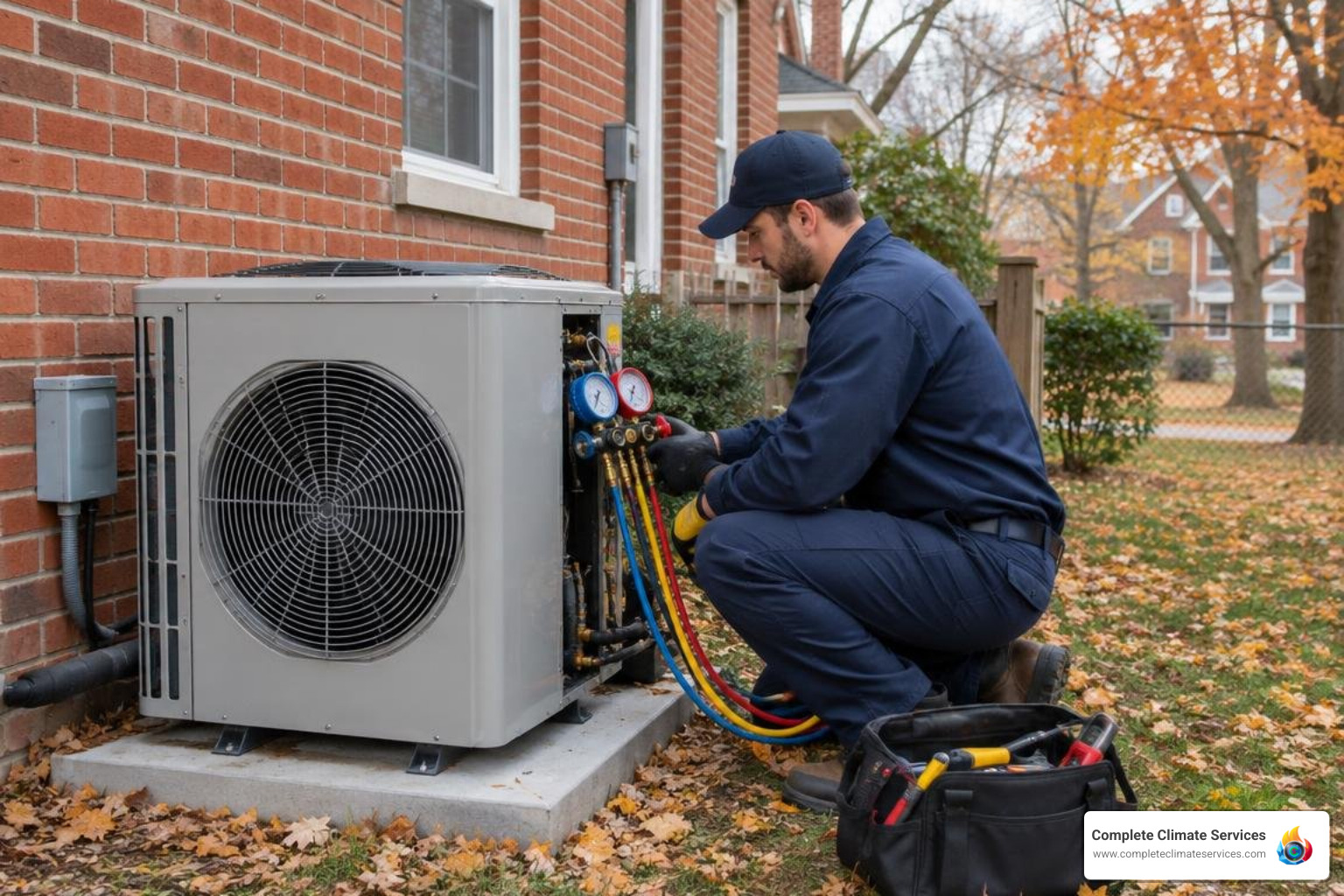
Because a dual fuel setup uses two heating components, seasonal service should account for the condition of each one. During a visit, a technician reviews airflow, controls, combustion equipment, and the outdoor heat pump for developing concerns. Our maintenance plans make it easier to arrange service before demanding heating or cooling weather arrives.
BGE EmPOWER Maryland may offer rebates for qualifying equipment; we can help check eligibility. Program details can change, so homeowners should confirm current requirements before making a final equipment decision. Complete Climate Services has 20+ years of HVAC experience and 5.0 stars on Google. That local experience supports careful recommendations instead of one-size-fits-all equipment choices.
Frequently Asked Questions About Dual Fuel Heating
Do dual fuel heat pumps work during a power outage?
No. Both the heat pump and gas furnace need electricity for their controls and blower, so neither will operate normally during an outage.
A generator must only run outdoors, and a technician should connect any backup power. Homeowners should avoid improvised connections, which can create safety risks for the home and utility workers. Before an outage occurs, a technician can explain safe backup-power options that fit the equipment and electrical setup.
How does a dual fuel system decide when to switch to the furnace?
The thermostat monitors outdoor conditions and follows settings chosen for the home. It switches to the furnace at an outdoor temperature our technician sets for your home.
This automatic handoff helps the equipment respond without daily homeowner adjustments. Proper setup considers the home’s insulation, ductwork, equipment capacity, and comfort preferences. This planning helps the system choose the appropriate heating source without homeowners needing to change settings as weather shifts.
Can I add a heat pump to my existing gas furnace?
In many homes, a heat pump can work with an existing compatible gas furnace. A technician must inspect the furnace, ductwork, controls, electrical capacity, and overall system condition first.
The evaluation also identifies whether equipment changes are needed for dependable airflow and thermostat communication. That assessment determines whether a coordinated dual fuel setup is appropriate. It also gives homeowners a clearer picture of expected installation work before making a replacement decision.
Does a dual fuel system need more maintenance?
Both the heat pump and furnace need professional care because they share responsibilities throughout the year. Homeowners can replace filters, keep vents clear, and note changes in comfort or operating sounds between visits. A technician should handle combustion checks, electrical service, refrigerant work, and internal repairs. Regular professional service helps each component remain ready for its role when weather changes.
Is a dual fuel system better than an all-electric heat pump?
The better option depends on the home, local utility conditions, existing equipment, and comfort priorities. A dual fuel system offers a natural gas furnace as a backup heating source when the thermostat calls for it.
An all-electric heat pump may suit homeowners whose goals and home conditions support that approach. A professional evaluation can clarify how each option would work with the home’s ductwork and comfort needs. The best choice is the one that supports reliable operation and fits the household’s long-term priorities.
Conclusion
For the right Baltimore-area home, a dual fuel system can balance gentle heat-pump comfort with dependable furnace performance. The thermostat manages the change between heating sources according to settings designed for the home. An on-site evaluation can show whether the existing equipment, ductwork, and comfort goals support this type of system.
To compare a dual fuel system with other replacement options, Complete Climate Services can assess the current setup and answer practical questions. When you are ready to begin, contact our team to arrange an evaluation.
Written by Michael Holcomb, Co-Founder and Operations Manager, Complete Climate Services.
Complete Climate Services LLC · 204 S Chapel St, Baltimore, MD 21231 · (443) 898-4747

