

Heat Pump Maintenance Before Winter: Start With These Essential Checks
Heat pump maintenance before winter starts with a few practical checks before cold weather arrives, replace or clean the air filter, clear leaves and debris from the outdoor unit, check that airflow is not blocked, and test your thermostat in heating mode. Keep snow, mulch, and plants away from the outdoor unit, and schedule a professional inspection for refrigerant, electrical, and defrost-system checks.
These simple steps help your system move heat more easily when temperatures drop. They can also reduce the chance of weak airflow, heavy ice buildup, surprise auxiliary-heat use, or a breakdown during a Baltimore cold snap.
A little frost and a short burst of steam during defrost can be normal. But persistent ice, loud new noises, frequent cycling, weak heat, burning smells, or an AUX heat light that stays on are reasons to call a qualified HVAC technician.
I’m Michael Holcomb, Co-Founder and Operations Manager of Complete Climate Services, where I help Baltimore-area homeowners maintain reliable heating and cooling systems. My work focuses on practical seasonal care that supports comfort, efficiency, and dependable operation when it matters most.

Why Baltimore Winters Are Hard on Heat Pumps
Baltimore winters can challenge a heat pump with fast temperature swings, damp air, and repeated freeze-thaw conditions. For local homeowners, heat pump maintenance before winter is a practical way to prepare for weather that can leave the outdoor unit wet, frosty, or surrounded by heavy snow. Moisture can refreeze on the coil and cabinet after a storm, while leaves, mulch, or packed snow can limit the airflow the system needs to collect heat from outside air. It also helps to make sure roof runoff and downspout discharge do not drain directly beside the unit, where water can freeze around the base.
Defrost cycles are designed to clear normal frost from the outdoor coil. During one, the unit may pause heating briefly, reverse its refrigerant flow, and produce a visible burst of steam. That process is expected, but an outdoor unit that stays covered in thick ice after a defrost cycle needs professional attention. Clearing a path around the equipment and watching for unusual ice buildup can make it easier to spot a problem early.
On the coldest Baltimore nights, a heat pump may run longer or use auxiliary heat to maintain indoor comfort. Older homes can add another complication when leaky ductwork lets warmed air escape before it reaches living spaces. Drafts, uneven room temperatures, and restricted airflow can make the system work harder even when the equipment itself is operating normally. A seasonal check helps separate ordinary winter behavior from issues that need service before a cold spell becomes more disruptive.
How Seasonal Maintenance Supports Winter Performance
Because it provides summer cooling and winter heating, a heat pump sees year-round use. A fall service visit gives a technician time to address airflow, drainage, and control concerns before cold weather places more demand on the system.
A heat pump transfers heat rather than producing it through combustion, as outlined in why heat pumps are popular. A clean filter, an unobstructed outdoor coil, and open return vents support that process. Many manufacturers advise annual professional service, and warranty coverage can depend on documented upkeep.
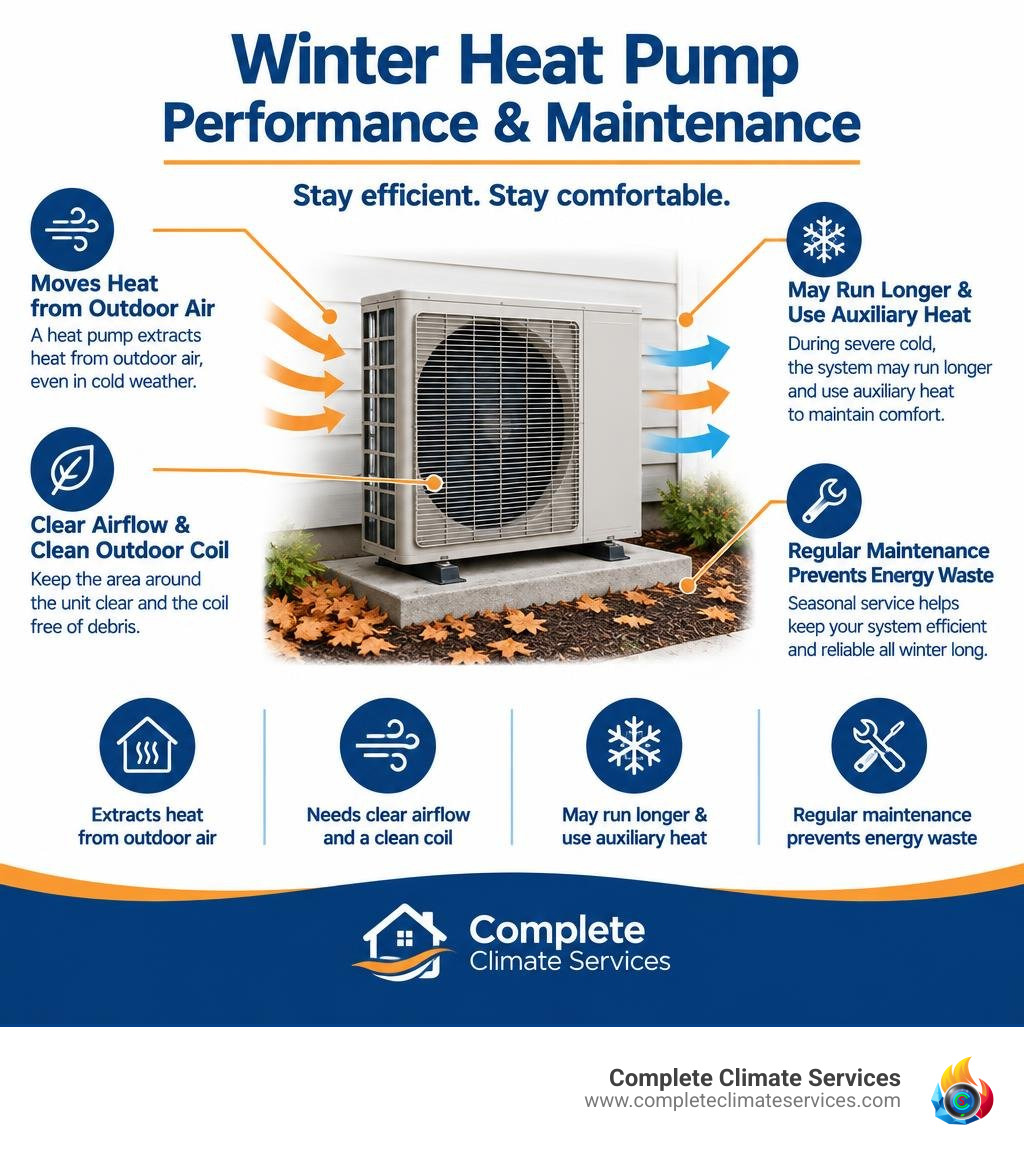
Cold-Weather Operation
Outdoor air still contains usable heat in cold weather, but extracting it becomes more demanding as conditions worsen. Run time may increase, and the system can call on auxiliary heat during a severe cold spell. Debris, coil contamination, or refrigerant problems can make that backup heat more likely to operate.
Preventing Energy Waste
Regular heat pump maintenance before winter helps limit avoidable energy waste and supports steadier comfort in cold weather. The U.S. Department of Energy notes that regular maintenance is necessary to help a heat pump maintain peak performance. For related federal efficiency information, see DOE heat pump guidance. Early attention to worn parts and restricted airflow can also help households avoid winter bill shock during a long Maryland cold spell.
Simple Homeowner Checks Before Winter
Seasonal heat pump care does not require an engineering degree. With basic safety awareness, homeowners can complete a few checks that support steady airflow and help spot problems before colder weather arrives.
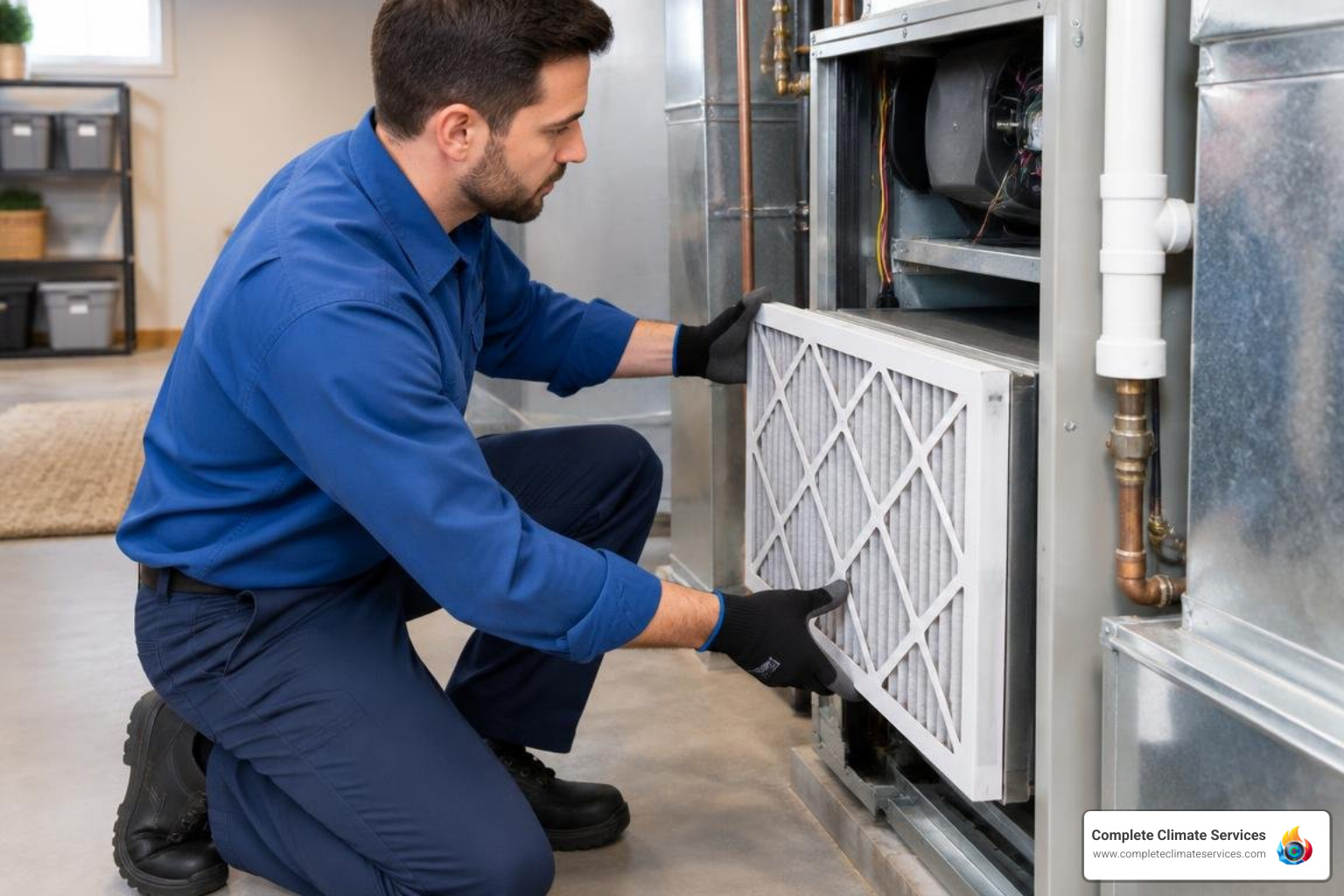
Your Pre-Winter Checklist
Set aside time in early fall to complete these straightforward homeowner checks:
- Replace the Indoor Air Filter: Install a clean filter that matches your system’s specifications. A clogged filter can restrict airflow and make the blower work harder.
- Clear the Outdoor Unit: Keep at least 2 feet of open space around the outdoor unit. Remove leaves, grass clippings, and snow buildup so air can move freely.
- Check the Condensate Drain: Look for standing water near the indoor unit or drain connection. Water that does not drain properly is a reason to schedule service.
- Inspect Line Insulation: Check the insulated refrigerant line for cracks, gaps, or exposed pipe. Damaged insulation can affect system performance.
- Schedule a Seasonal Tune-Up: During a professional tune-up, a technician can clean the coils, flush the drain, and inspect the parts that homeowners should not service themselves.
Thermostat Settings and Defrost Cycles
Thermostat habits can affect winter comfort. For heat pumps, a steady setting is often more effective than frequent large adjustments.
- Maintain a Consistent Setpoint: Choose a comfortable temperature and avoid large setbacks that can call for auxiliary heat when the system catches up.
- Keep Fan Mode on “Auto”: This setting circulates air while the heat pump is actively heating rather than continuously moving cooler air through the ductwork.
- Monitor the Defrost Cycle: A brief burst of steam and light frost on the outdoor unit can be normal. If thick ice remains or the unit cannot clear it, schedule service. For additional guidance, see restart after cold spells. Homes with a dual fuel system may rely on a second heat source when conditions call for auxiliary heat.
Professional Service: What a Technician Should Handle
Filter changes and outdoor housekeeping are useful homeowner habits, but a seasonal tune-up should cover the system checks that require professional training and safe access to internal components.
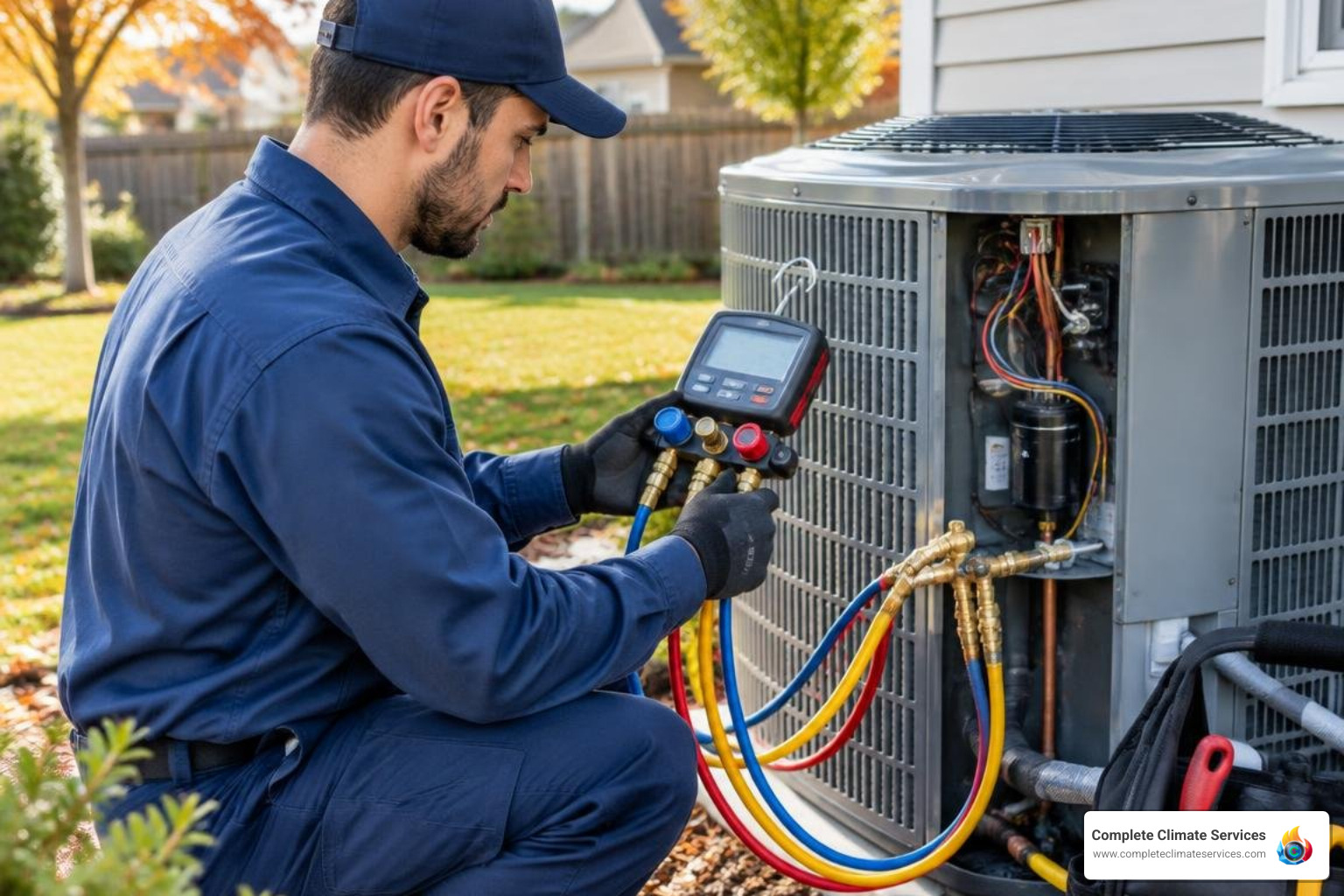
Professional Winter Service Checks
Professional heat pump maintenance before winter goes beyond the visible tasks homeowners can handle safely. A qualified technician can evaluate the system under heating conditions, confirm that controls respond correctly, and identify wear that may become more noticeable during colder weather. This inspection is especially useful when the system has struggled with uneven comfort, recurring frost, frequent auxiliary-heat operation, or unusual noises. The goal is not to replace routine homeowner care, but to check the internal components that affect dependable heating, airflow, and defrost performance.
- Refrigerant Charge Check: An EPA-certified technician can check refrigerant charge and look for signs of a leak. Incorrect charge can reduce heating output and place added strain on the compressor.
- Electrical Components: Electrical connections, contactors, and the capacitor should be inspected for wear, secure operation, and signs of overheating.
- Defrost Controls and Reversing Valve: The technician can test the defrost sequence and verify that the reversing valve changes modes correctly so normal frost can clear from the outdoor coil.
- Blower and Airflow: Indoor blower operation, accessible airflow restrictions, and duct-related concerns can be reviewed to help the system distribute heat more evenly.
- Auxiliary Heat Strips: The backup heat sequence should engage when conditions require it, without running longer than necessary because of a control or airflow issue.
- Thermostat and Drain Check: The thermostat can be checked for correct heating-mode operation, while the condensate drain is inspected and flushed when needed to help prevent drainage problems.
Enrolling in maintenance plans can help keep seasonal service on schedule.
Warning Signs Your Unit Requires Immediate Repair
If you notice any of the following warning signs, schedule service promptly; use emergency heat only as a temporary backup:
- Solid Ice Encasement: The outdoor cabinet is covered in thick ice that does not melt after a normal defrost cycle.
- Continuous Auxiliary Heat: The “AUX” or “Emergency Heat” indicator stays on when outdoor temperatures are mild.
- Frequent Short Cycling: The heat pump turns on and off rapidly without warming the home.
- Mechanical Grinding or Screeching: New metallic noises from the outdoor or indoor unit can indicate a mechanical problem.
- Electrical Burning Odors: Persistent burning smells from supply vents may indicate an electrical issue that needs prompt attention.
Recognizing when your heat pump is struggling can help prevent a smaller issue from becoming a major repair. For more troubleshooting guidance, see heat pump repair signs. If a loss of heat, burning odor, or electrical concern needs urgent attention, contact emergency HVAC services.
For additional seasonal guidance on defrost behavior and cold-weather performance, see heat pumps in winter.
Frequently Asked Questions About Winter Heat Pump Care
What temperature should I set my heat pump to in winter?
A steady, comfortable thermostat setting often works best for a heat pump in winter. Large, frequent temperature changes can cause the system to call for auxiliary heat as it works to recover. If comfort is inconsistent, schedule an evaluation instead of repeatedly raising the setting.
Is it normal for my heat pump to have ice or frost on it during winter?
A light layer of frost on the outdoor coil can be normal during cold, damp weather. The defrost cycle should clear that frost and may produce a short burst of steam. Thick ice that remains after a defrost cycle needs professional attention.
When is the best time to schedule heat pump maintenance?
Early fall is the best time to schedule service, before the first freeze and before heating demand increases. A seasonal visit gives the technician time to find airflow, drainage, or defrost issues before colder weather arrives. Booking early can also make it easier to choose an appointment that fits your schedule.
Why is my heat pump blowing cool air in heating mode?
Cool air may be noticeable briefly during a defrost cycle or when the system is catching up after a large thermostat change. It can also point to an airflow problem, refrigerant issue, or a system that needs repair. If the problem persists, schedule professional service.
Should I cover my heat pump in winter?
No, do not wrap or fully cover an operating heat pump in winter. A small top shield can be acceptable only when the manufacturer allows it and it does not block airflow. Keep snow, leaves, and debris away from the unit instead.
Conclusion
Proactive seasonal care helps a heat pump operate more reliably through winter. Replacing filters, keeping the outdoor unit clear, and scheduling professional service before colder weather arrives can help prevent avoidable comfort problems.
Written by Michael Holcomb, Co-Founder and Operations Manager, Complete Climate Services.
Complete Climate Services brings 20+ years of HVAC experience and 5.0 stars on Google to homeowners in Baltimore City, Baltimore County, Anne Arundel County, and Howard County. Schedule heat pump services before winter arrives, or contact our team to arrange service.
Complete Climate Services LLC · 204 S Chapel St, Baltimore, MD 21231 · (443) 898-4747

