

What Is Furnace Short Cycling and Why Does It Happen?
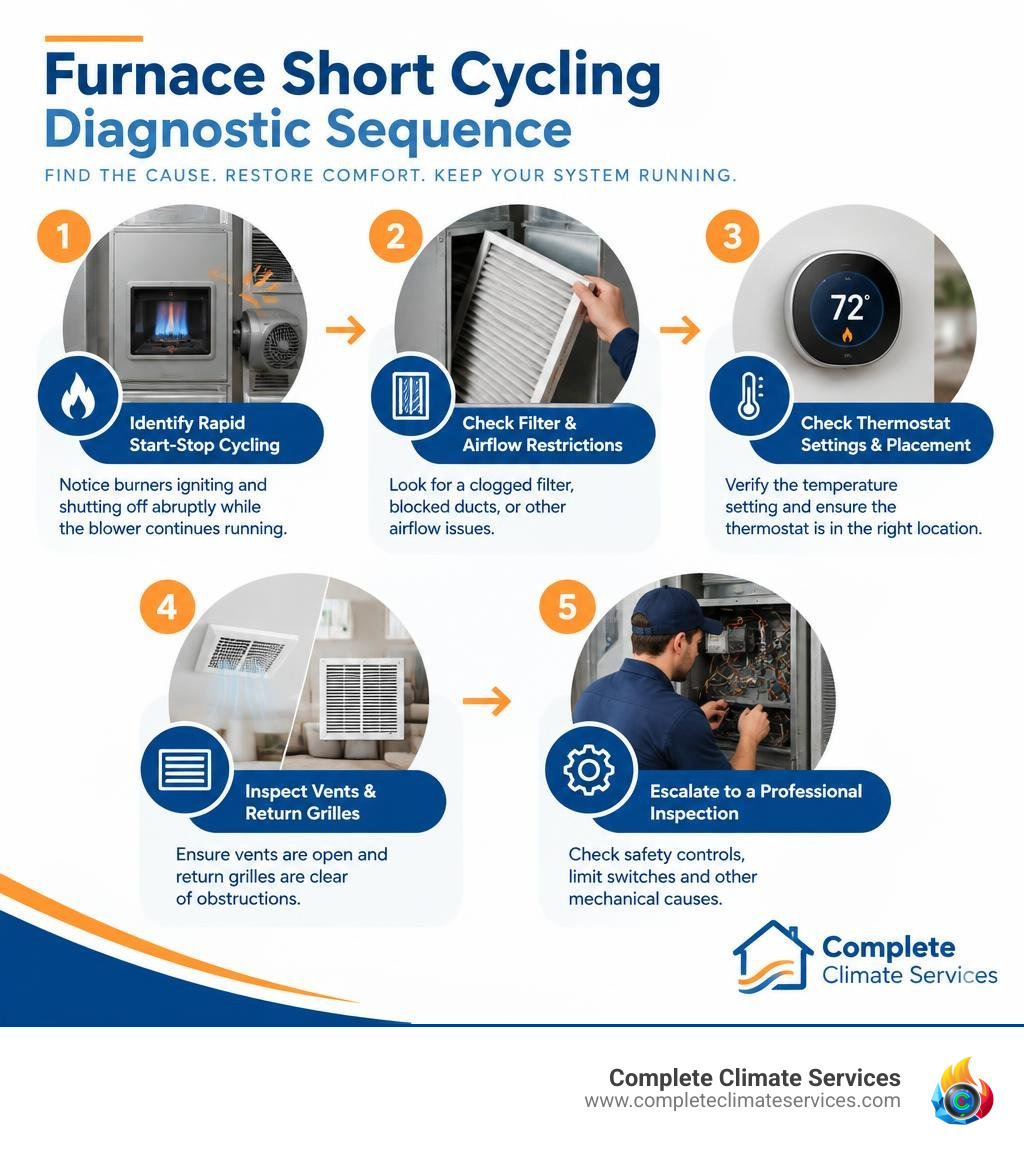
Furnace short cycling happens when your system starts and stops too quickly. Start with safe checks such as replacing a dirty filter, setting the thermostat fan to AUTO, and making sure return vents are unblocked. These simple steps can rule out common airflow or thermostat problems before you schedule service.
During normal operation, a central heating system runs long enough to distribute heat evenly and maintain comfortable indoor temperatures. The exact runtime varies with outdoor conditions, insulation, thermostat settings, and the size of the home.
When a heating system shuts down soon after starting, it may not satisfy the thermostat and can place added strain on internal components. Repeated restarts can also make rooms feel unevenly heated and point to an airflow, thermostat, or mechanical problem that needs attention.
Rapid cycling can create mechanical strain, especially on the heat exchanger. During normal operation, the heat exchanger warms gradually, transfers heat to passing airflow, and cools evenly. Repeated cycling can accelerate wear and, in serious cases, create a risk of combustion gases entering the indoor air. Review CDC carbon monoxide guidance for information on preventing carbon monoxide exposure. When simple checks do not resolve the issue, scheduling timely furnace repair helps prevent a minor malfunction from becoming a safety concern.
Identifying Abnormal Short-Cycling Patterns
Recognizing the difference between normal temperature regulation and erratic system cycling is essential for protecting your equipment. In healthy systems, the blower fan continues running for a brief cool-down period after the burners extinguish, ensuring residual heat enters the ductwork.
In an abnormal cycle, the sequence can feel disjointed. You may notice:
- Burners igniting and shutting off abruptly while the blower continues to move lukewarm or cool air.
- The system attempting ignition repeatedly without reaching the set temperature.
- Uneven temperatures between rooms, with some spaces staying cold while areas near the main trunk feel briefly warm.
- Error codes on the furnace control board that point to a limit-switch or flame-signal issue.
Understanding these warning signs helps prevent premature equipment breakdown. Learn why it is important to address furnace issues before they lead to a prolonged heating outage.
Airflow Restrictions: Air Filters and High-Limit Switches
Restricted airflow stands as the single most common reason a furnace shuts down prematurely. Your furnace relies on a steady stream of return air to absorb thermal energy from the heat exchanger. When airflow drops, heat builds up inside the cabinet.
Modern furnaces use a high-limit switch to help prevent overheating. When the cabinet becomes too hot because airflow is restricted, the switch shuts off the burners while the blower continues running to cool the system. If the switch keeps resetting and the furnace repeatedly restarts, a technician should identify the underlying airflow or mechanical cause.
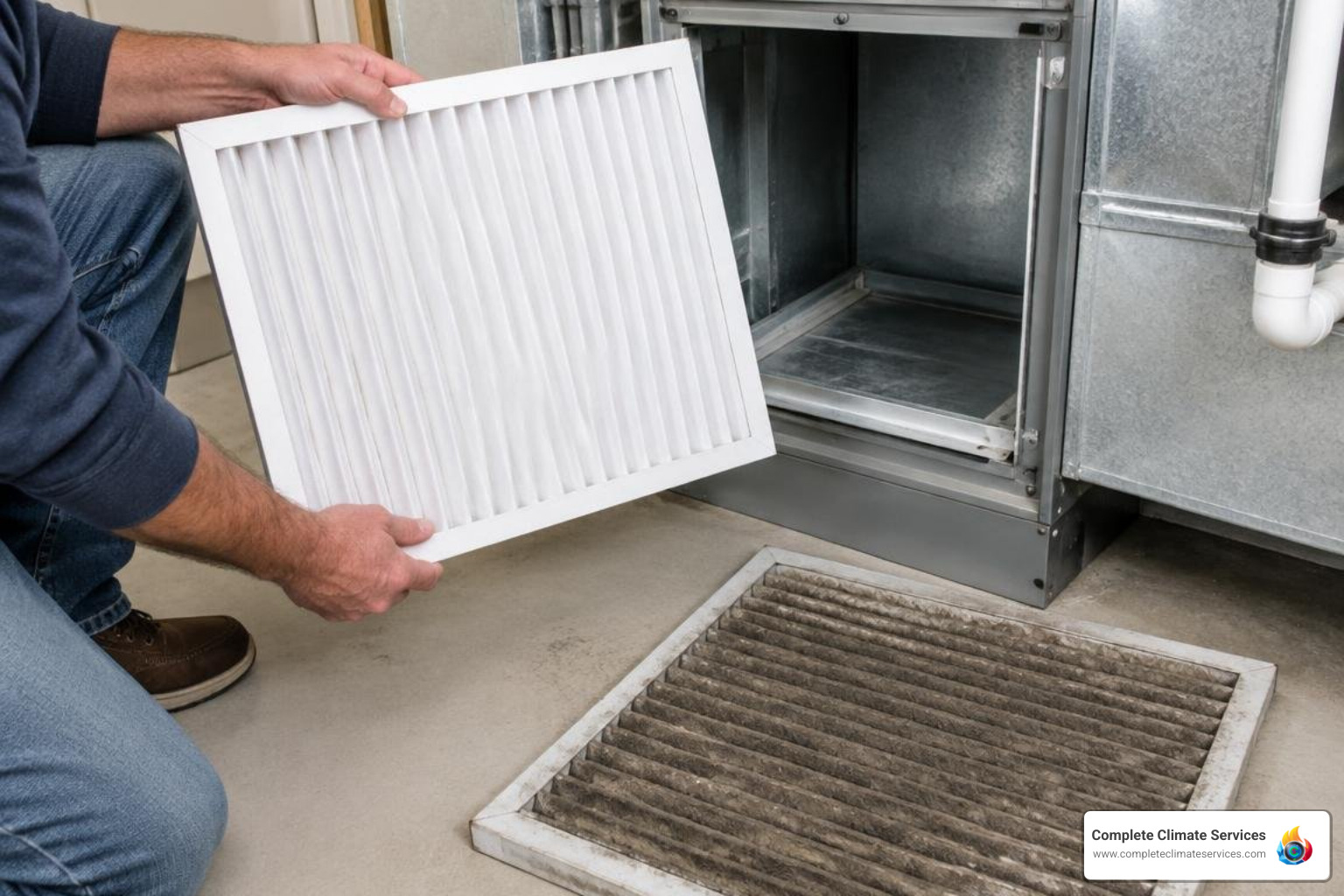
A clogged pleated filter can restrict airflow and cause the high-limit switch to shut the burners down. Following steps to prevent furnace problems helps keep filters clean and supports safe system operation.
Ductwork Problems, Blocked Vents, and Return Air Deficits
Airflow restrictions are not limited to dirty filters; the duct system itself can choke the furnace. Forced-air systems operate on a closed loop where the volume of air delivered must balance the volume returned.
Common duct issues that trigger high-limit shutoffs include:
- Crushed or Kinked Flexible Ducts: Often found in attics, crawlspaces, or drop ceilings, damaged flexible ducting restricts air pathways, creating excessive static backpressure.
- Disconnected Collars and Trunk Leaks: When duct supply branches disconnect, heated air dumps into unconditioned spaces, while the furnace struggles against unbalanced pressure.
- Closed Supply Registers: Homeowners often close registers in unused rooms to save energy. Closing many supply registers can create backpressure and trap heat inside the furnace cabinet.
- Obstructed Return Grilles: Large area rugs, heavy curtains, or relocated furniture placed over return air grilles starve the blower motor of incoming air, causing rapid heat buildup.
ENERGY STAR duct sealing estimates that in a typical house, about 20 to 30 percent of the air moving through the duct system is lost through leaks, holes, and poorly connected ducts.
Simple Checks Before You Call a Technician
Before scheduling a service visit, start with a few safe homeowner checks that can rule out common airflow or thermostat problems. Replace a dirty air filter, confirm the thermostat has fresh batteries, and set the fan to AUTO rather than ON. Check that the thermostat is not exposed to direct sun or heat from a nearby register, and make sure supply registers are open and return grilles are clear of furniture, rugs, or curtains.
If the furnace still starts and stops quickly after these checks, schedule a furnace repair visit. During the inspection, our technician can check for issues homeowners should not attempt to diagnose, including a dirty flame sensor, an improper temperature rise, electrical safety controls, and airflow problems inside the system.
When a Technician Should Inspect the Furnace
A furnace that repeatedly shuts down before your home reaches the set temperature may have a combustion, electrical, or ventilation issue. Warning signs such as error codes, unusual odors, loud operation, or repeated restarts call for professional diagnosis. Learn more about common furnace problems that can affect reliable heating.
Preventing Airflow Problems
Keeping airflow paths open helps protect the furnace from overheating. Change filters as needed, leave supply registers open, and avoid blocking return grilles. Scheduling regular furnace maintenance gives a technician the opportunity to spot developing problems before they interrupt your heat.
Advanced Mechanical Causes Requiring Professional HVAC Service
When basic filter changes, vent adjustments, and flame sensor cleanings fail to correct short cycle patterns, the underlying issue likely stems from complex electrical or mechanical safety components.
What Our Technician Checks During a Short-Cycling Visit
A short-cycling visit starts with a careful review of how the furnace starts, heats, and shuts down. Our technician checks the flame sensor for buildup that can interrupt the burner sequence and evaluates the high-limit and pressure switches for signs that an airflow or venting condition is triggering a safety shutdown. The draft inducer is inspected to confirm it is moving combustion gases correctly, while the blower motor and capacitor are evaluated for problems that can reduce airflow across the heat exchanger.
The inspection also includes the venting path and condensate drain, since a blockage, leak, or drainage issue can affect pressure-switch operation. The technician checks the system’s temperature rise to see whether the furnace is transferring heat within its intended operating range. This helps identify restrictions in the filter, ductwork, blower, or other components that may cause overheating.
Because furnace short cycling can sometimes point to a serious combustion concern, the heat exchanger condition is also assessed for damage or deterioration. These components work together, so professional diagnosis focuses on the underlying cause rather than replacing parts based on symptoms alone. Once the issue is identified, the technician can explain the recommended repair and the safest next step for restoring reliable heat.
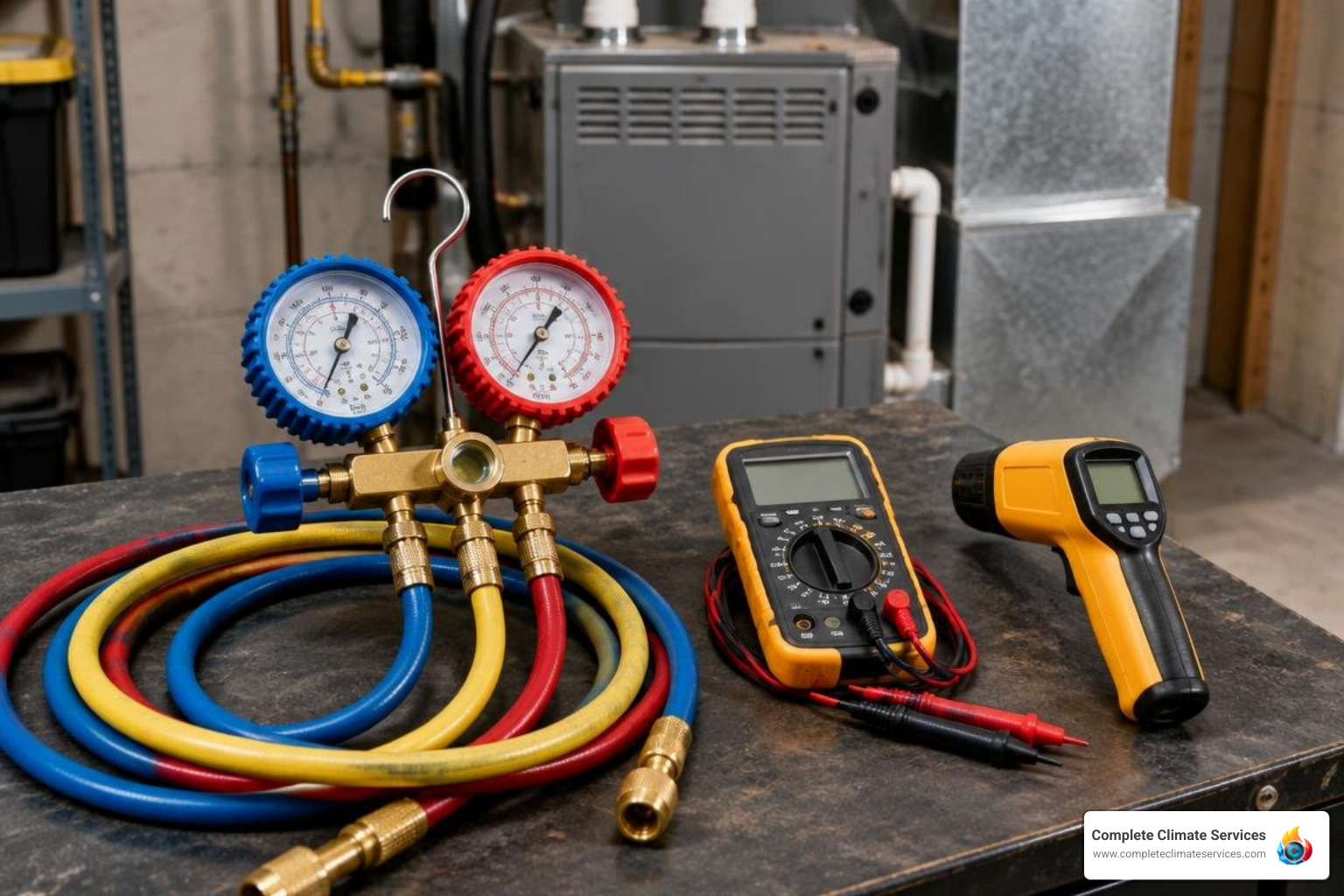
Furnaces operate through a strictly timed sequence of interlocks. If any safety switch in the electrical chain opens, the control board aborts the heating cycle:
- Pressure Switches: These differential switches monitor draft pressure created by the inducer motor. If the flue pipe is blocked, the condensate drain is clogged, or the rubber tubing is cracked, the pressure switch opens, shutting off fuel.
- Flame Rollout Switches: Positioned near the burner vestibule, thermal rollout switches detect flames escaping the combustion chamber. A tripped rollout switch often indicates a cracked heat exchanger or severe exhaust restriction and must always be inspected by a professional.
- ECM or PSC Blower Motor Failure: A failing motor bearing or bad run capacitor causes the blower fan to spin below its required RPM, moving insufficient air across the heat exchanger and tripping limit switches.
If your system displays recurring error codes or signs of electrical failure, a technician should evaluate it promptly. Read about furnace ignition failure and contact emergency HVAC services if you are concerned about safe operation or carbon monoxide.
Oversized Heating Equipment and Rapid Temperature Drops
A furnace that is physically too large for a home is a persistent cause of short cycling that cannot be fixed by cleaning parts. Historically, many contractors used rough square-footage estimates rather than precise calculations, resulting in the installation of oversized units.
When a furnace produces excessive BTUs for the space it serves, it blasts heat into the supply ducts rapidly. The area immediately surrounding the thermostat heats up in minutes, satisfying the temperature setting before warmth reaches exterior walls or distant rooms. The unit shuts off, the home cools down unevenly, and the cycle repeats.
Correct sizing is based on your home’s actual heating needs: insulation, windows, layout and local climate.
When Short Cycling Means It’s Time to Replace Your Furnace
Short cycling does not always mean replacement is necessary. A repair may be the right path when the problem is limited to a thermostat issue, airflow restriction, or serviceable component. However, replacement becomes more likely when an older furnace has a cracked heat exchanger, recurring major failures, or equipment that is too large for the home.
An oversized furnace can heat the area around the thermostat too quickly, then shut off before warmth reaches other rooms. A cracked heat exchanger is a safety concern that requires prompt professional evaluation. Complete Climate Services provides clear repair-or-replace guidance based on the condition of your system and your home’s heating needs. If replacement is the better long-term solution, we offer free quotes and explain the available options without pressure.
Frequently Asked Questions About Rapid Furnace Cycles
How long should a furnace run during a normal heating cycle?
A normal heating cycle varies with outdoor conditions, insulation, and thermostat settings. The important sign is steady, even heating rather than repeated starts and stops before the home reaches the set temperature. If the furnace cycles rapidly or leaves rooms unevenly heated, arrange a professional inspection.
Can a clogged air filter damage my furnace permanently?
A heavily clogged filter can restrict airflow and cause the furnace to overheat. Repeated overheating can strain important components and trigger safety shutdowns. Replacing a dirty filter is a simple step, but recurring shutdowns should be checked by a technician.
Is it safe to keep running a furnace that short cycles?
It is best not to ignore a furnace that short cycles. The issue may involve airflow, a thermostat problem, or a safety control, and continued operation can place added strain on the system. Turn the furnace off and contact a professional promptly if you notice burning odors, error codes, or signs of carbon monoxide. While waiting for service in a Baltimore-area home, keep the thermostat at one steady setting, leave supply registers open, and keep return grilles clear so the system can move air as safely as possible. Make sure carbon monoxide alarms are installed near sleeping areas and working properly, particularly when a furnace problem is causing repeated shutdowns or other warning signs, and leave the home and seek urgent help if an alarm sounds or anyone develops symptoms such as headache, dizziness, nausea, or confusion.
Can a thermostat cause furnace short cycling?
Yes. Weak batteries, poor placement, or incorrect fan settings can cause the thermostat to signal the furnace at the wrong time. Check the batteries, use the AUTO fan setting, and keep the thermostat away from direct heat or sunlight. If the issue continues, a technician can test the thermostat and the furnace controls.
How often should a furnace be serviced?
A professional maintenance visit before the heating season can help identify airflow, ignition, and safety-control concerns. The technician can inspect the system, confirm safe operation, and recommend any needed repairs. Ongoing maintenance also helps keep the system operating reliably when you need heat.
Conclusion
Understanding what causes rapid cycling and knowing which simple airflow checks are safe for homeowners can help you respond before a small problem becomes a larger repair. Replace dirty filters, keep supply registers open, clear return grilles, and call a technician when the furnace continues to shut down too soon.
Written by Michael Holcomb, Co-Founder and Operations Manager, Complete Climate Services.
Complete Climate Services brings 20+ years of HVAC experience and 5.0 stars on Google to homeowners in Baltimore City, Baltimore County, Anne Arundel County, and Howard County. Our technicians provide careful diagnostic testing and honest recommendations when your furnace needs attention. Schedule furnace services to keep your home warm, safe, and reliable.
For help with a furnace that is short cycling, contact our team.
Complete Climate Services LLC · 204 S Chapel St, Baltimore, MD 21231 · (443) 898-4747

