

How Furnaces Generate Carbon Monoxide and Common Failure Points
Furnace carbon monoxide safety starts with three simple habits: install certified CO detectors on every level of your home, schedule annual professional furnace maintenance, and keep exterior intake and exhaust vents clear of snow and debris. If an alarm sounds or anyone feels sudden dizziness, nausea, or a persistent headache, evacuate immediately and call 911 from outside. These steps matter because fuel-burning appliances, including natural gas, propane, and oil furnaces, rely on a precise chemical reaction between fuel and oxygen. When the fuel-air mixture is perfectly balanced, the combustion process produces harmless water vapor and carbon dioxide.
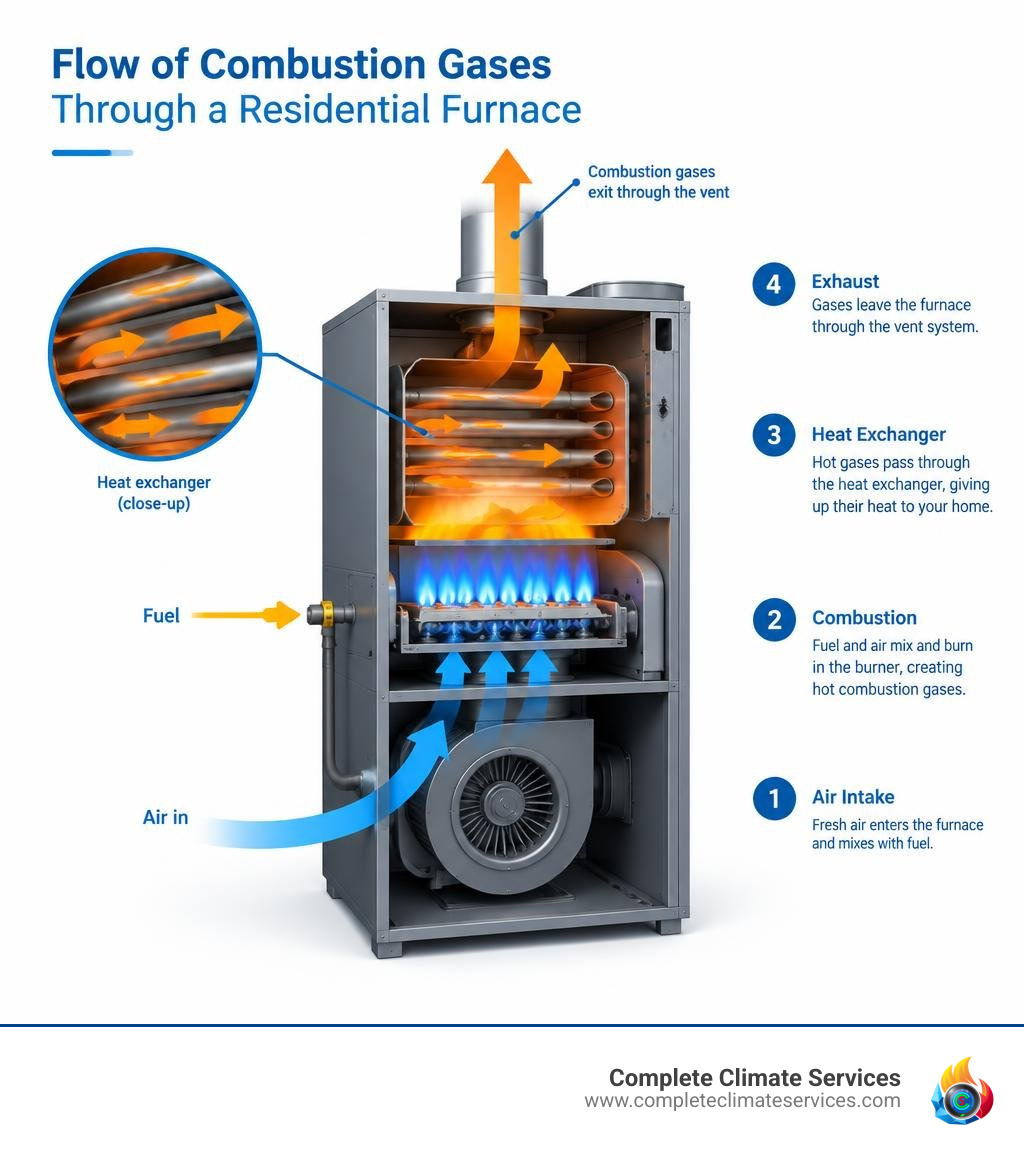
However, if oxygen levels drop or the burner flames become unstable, incomplete combustion occurs. This chemical breakdown creates carbon monoxide (CO), a toxic byproduct. Under normal operating conditions, your heating system contains these combustion gases entirely within a sealed component called a heat exchanger, expelling them through exhaust pipes and out of your home.
Venting dynamics play an enormous role in maintaining a safe indoor environment. Extensive laboratory testing published in CPSC furnace research demonstrates that while a properly venting system maintains negligible ambient CO levels, vent obstructions combined with extended operation can rapidly generate hazardous concentrations of several hundred parts per million (ppm). Understanding these hidden furnace air quality helps homeowners recognize why appliance maintenance is vital for home health.
Common Causes of Carbon Monoxide Leaks at Home
In a standard residential setup, several mechanical and environmental issues can disrupt combustion and exhaust flow:
- Exhaust Flue Obstructions: Outdoor debris, bird nests, leaves, or heavy corrosion inside the chimney can restrict the exit path for toxic exhaust.
- Draft Inducer Blower Failures: Modern mid- and high-efficiency furnaces rely on a motorized draft inducer fan to pull exhaust through the heat exchanger. If this motor weakens or fails, toxic gases back up into the cabinet.
- Burner Misalignment and Soot Buildup: Dirty or shifted burners cause yellow, inefficient flames that produce excessive carbon monoxide and heavy soot, clogging the heat exchanger passages.
- Backdrafting and Negative Pressure: Tightly sealed modern homes or powerful exhaust appliances (such as powerful kitchen range hoods and bathroom fans) can depressurize living spaces. This negative pressure pulls exhaust back down the chimney flue instead of letting it rise outdoors.
Being aware of these mechanical hazards enables families to catch minor equipment glitches before they escalate. Keeping an eye out for common furnace problems will help you spot early performance drops and protect your indoor air.
Why a Cracked Heat Exchanger Demands Complete Replacement
The heat exchanger is the steel barrier separating toxic combustion fumes from the breathable air your furnace blower circulates across living spaces. Over years of operation, this metal heats up, expands, cools down, and contracts hundreds of times every single winter.
This thermal expansion and contraction causes metal fatigue. Eventually, stress cracks, rusted pinholes, or seam separations can develop. When the blower fan turns on, air pressure differences push circulated air across these cracks, forcing toxic flue gases directly into your ductwork and living areas.
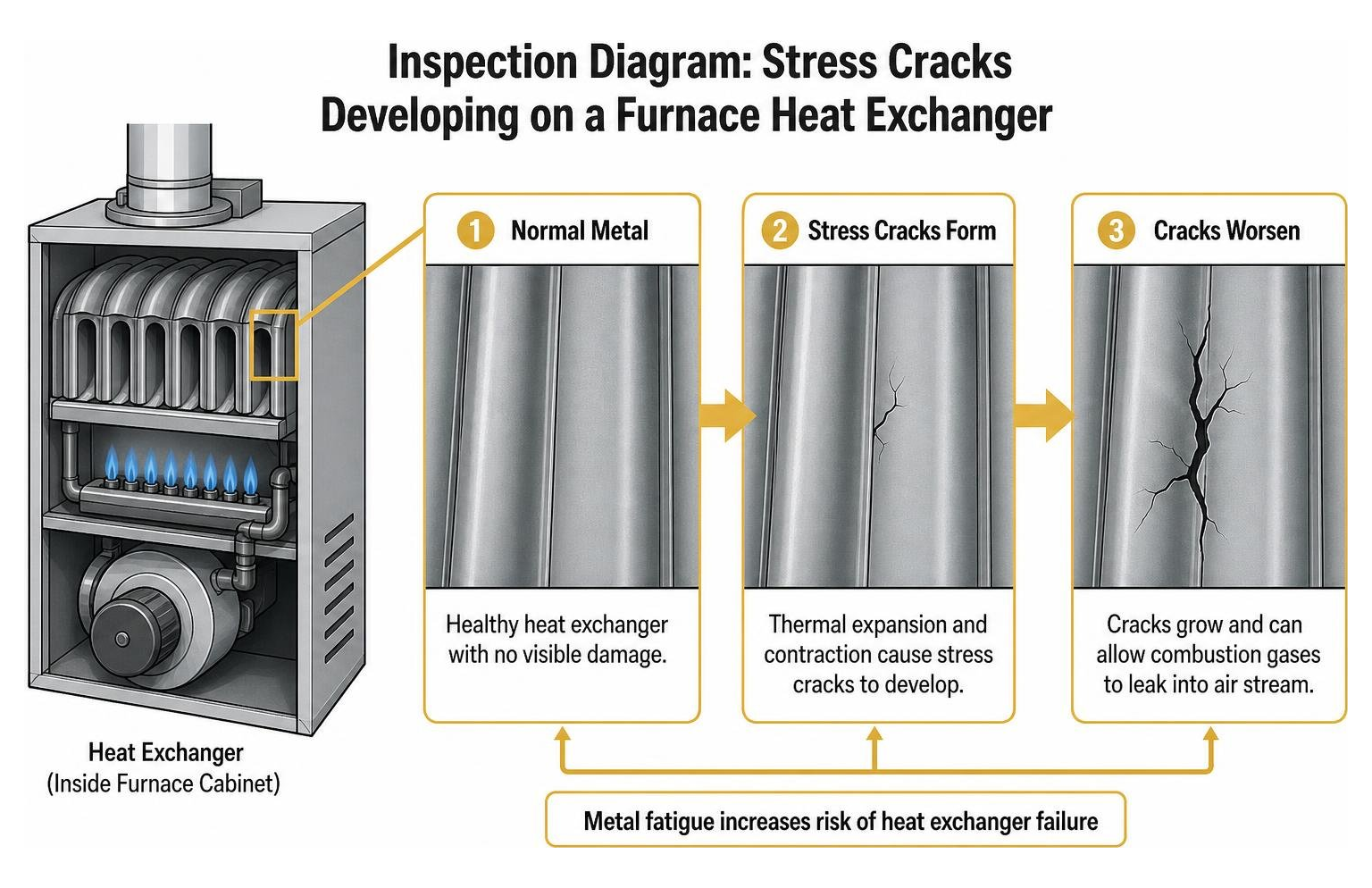
Homeowners frequently ask if a technician can weld, patch, or seal a damaged heat exchanger. In the HVAC industry, the answer is an absolute no. A cracked heat exchanger can never be safely repaired. Welding heat-stressed sheet metal inside a furnace creates weak spots that fail rapidly under high operating temperatures, voiding safety listings and creating immediate liability.
When a heat exchanger cracks, the only safe and code-compliant solution is replacing the heat exchanger assembly or investing in a new furnace installation to restore safe operation.
Recognizing Carbon Monoxide Poisoning vs. Physical Furnace Warning Signs
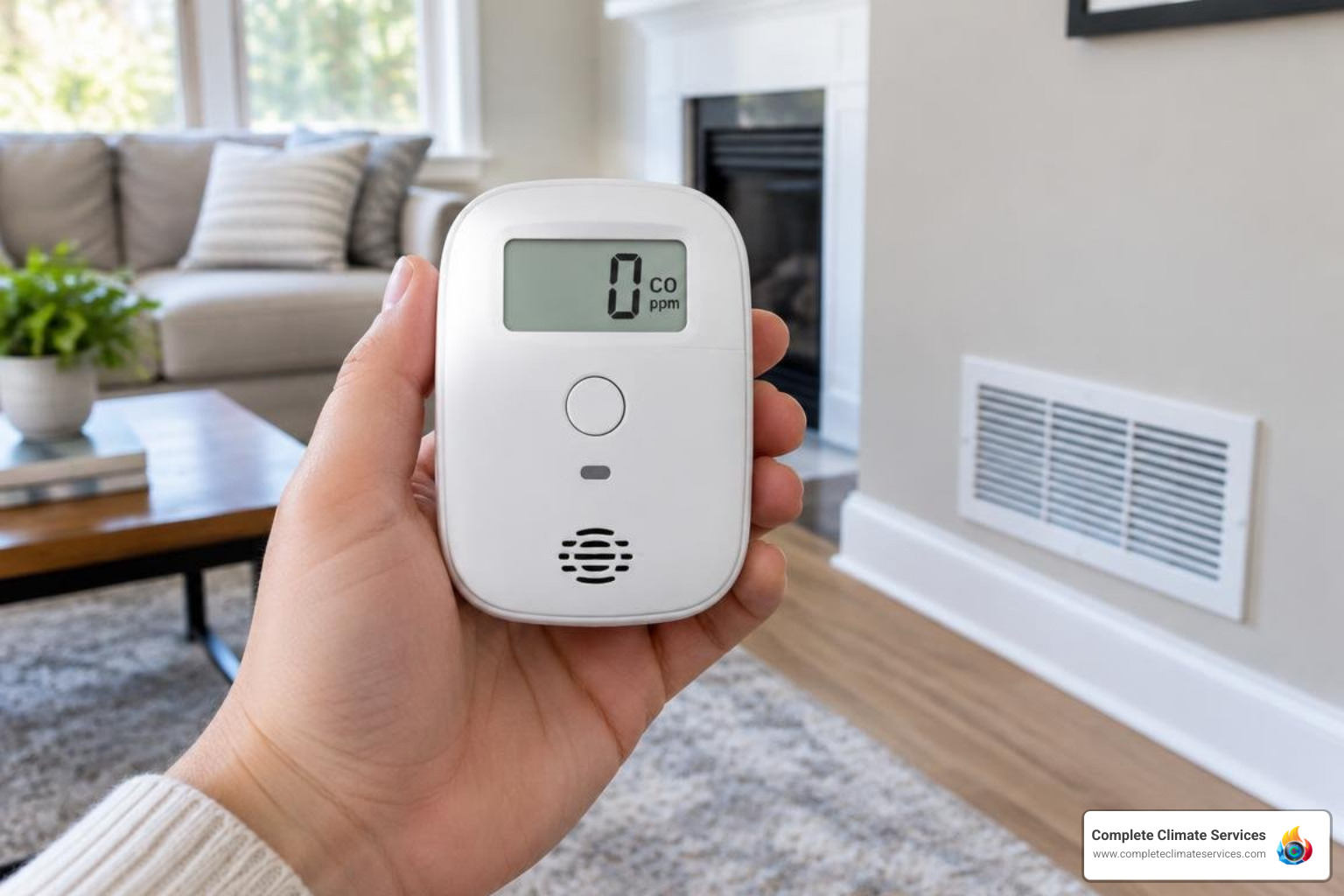
Because carbon monoxide cannot be seen, tasted, or smelled, physical equipment indicators and human health cues serve as essential early alerts. You do not need specialized tools to notice visible warning signs around your heating system.
Watch for these physical indicators of incomplete combustion and venting issues:
- Burner Flame Color: Gas flames should burn a crisp, steady blue. Yellow, orange, or flickering flames indicate incomplete combustion and active CO production.
- Heavy Moisture on Windows: Excessive, uncharacteristic condensation on windows near the furnace room often points to combustion moisture spilling indoors rather than venting outside.
- Soot and Scorch Marks: Black soot accumulation, brown staining, or burnt discoloration around the furnace access panels or flue pipe connection.
- Corroded or Rusted Vent Pipes: Flaking rust, white chalky powder, or visible holes on the exhaust flue pipe.
- Unusual Odors: A persistent stale, stuffy, or burning smell when the furnace cycles on.
If you suspect unusual air conditions in your home, professional indoor air quality testing can measure airborne contaminants and provide clear answers about your home environment.
Differentiating CO Exposure Symptoms from the Flu
Carbon monoxide binds to human hemoglobin over 200 times more readily than oxygen, creating carboxyhemoglobin in the bloodstream and depriving vital organs of oxygen (tissue hypoxia). Because initial symptoms mirror seasonal winter illnesses, many people mistake low-to-moderate carbon monoxide exposure for a simple cold or flu.
| Symptom / Characteristic | Carbon Monoxide Poisoning | Influenza (Seasonal Flu) |
|---|---|---|
| Fever & Chills | No fever present | High fever, chills, and body sweats |
| Headache | Dull, throbbing, persistent headache | Generalized head and sinus ache |
| Dizziness & Confusion | Common, worsens with extended exposure | Rare, primarily occurs with severe dehydration |
| Nausea / Vomiting | Frequent, often sudden without fever | Accompanied by fever and gastrointestinal distress |
| Household Impact | Multiple family members & pets feel sick together | Illness spreads sequentially over days |
| Location Effect | Symptoms improve when leaving the home | Symptoms persist regardless of location |
Public health guidelines detailed in the CDC furnace fact sheet emphasize that if everyone in the home, including pets, develops sudden headaches or nausea that vanish when you step outside into fresh air, treat the situation as an immediate carbon monoxide emergency rather than a virus.
Winter Storms, Snow Blockages, and Extreme Cold Vulnerabilities
Severe winter weather creates specific environmental factors that elevate carbon monoxide risks across communities in Baltimore City, Baltimore County, Anne Arundel County, and Howard County.
High-efficiency condensing furnaces utilize PVC vent pipes that exit through exterior sidewalls near the ground. During heavy blizzards and drifting snow, these exterior intake and exhaust terminals can become buried under snowdrifts or frozen solid by ice dams. When exhaust cannot escape, furnaces either cycle off on pressure switch safety lockouts or spill combustion gases indoors.
Extended freezing temperatures force heating systems to run continuously for hours. This prolonged run time accelerates wear on aging components. Additionally, power outages frequently lead to improper generator placement. Running a portable fuel generator inside a garage, porch, or near open windows introduces lethal concentrations of carbon monoxide into the home within minutes.
Addressing necessary winter furnace repairs early prevents unexpected shutdowns and venting failures during severe cold snaps.
Furnace Carbon Monoxide Safety: How to Prevent CO Problems
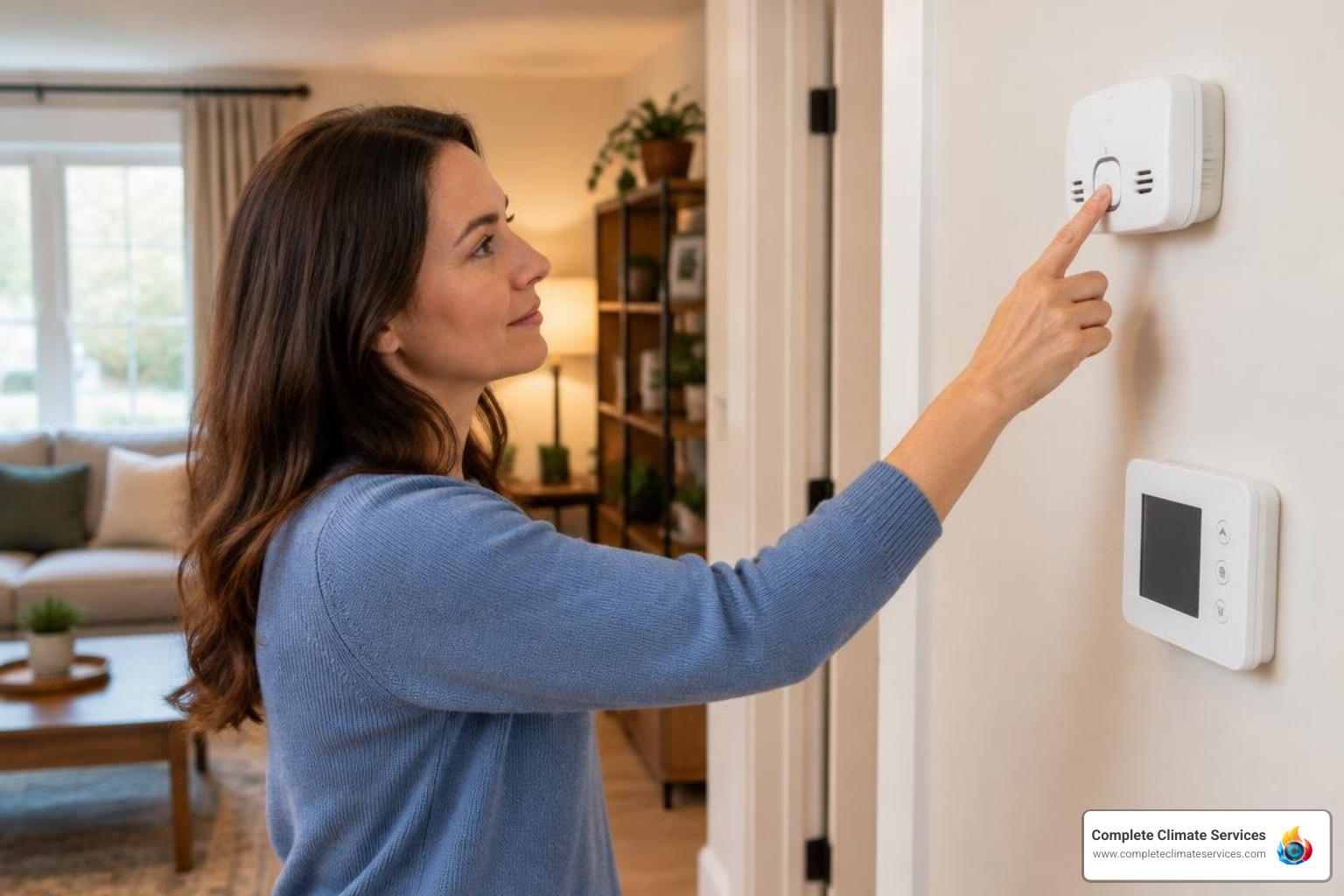
A reliable furnace carbon monoxide safety routine requires reliable detection hardware combined with regular equipment maintenance. By establishing simple preventive habits, you can eliminate the threat of combustion leaks.
The NFPA CO guidance stresses that working, certified alarms serve as your frontline defense against the invisible gas. Standard residential alarms certified to the UL 2034 standard protect against acute, life-threatening exposure. For sensitive individuals, young children, or older adults, specialized low-level CO monitors are also available that display readings starting as low as 5 to 10 ppm, alerting you to minor mechanical degradation well before standard retail alarms reach their threshold.
Strategic Placement and Testing of Carbon Monoxide Detectors
Proper placement ensures that alarms wake sleeping family members and provide timely warnings before gas accumulates to dangerous levels:
- Placement Rules: Install at least one carbon monoxide alarm on every level of the home, inside or immediately outside every sleeping area, and within 10 to 15 feet of attached garages.
- Clearance Requirements: Keep alarms at least 15 feet away from heating appliances, fuel-burning water heaters, and cooking ranges to avoid nuisance triggers from normal operational startup cycles.
- Mounting Height: Follow the manufacturer’s mounting instructions. Because carbon monoxide mixes evenly with indoor air at ambient temperatures, wall mounting at eye level or ceiling mounting are both effective.
- Testing Routine: Press the test button once a month to confirm horn functionality and internal circuitry.
- Battery and Unit Lifespan: Replace alkaline batteries twice per year (during daylight saving time changes) unless using sealed 10-year lithium models. Replace the alarm by the date the manufacturer lists on the unit, as electrochemical sensors naturally degrade over time.
Fall Furnace Safety Checks
A furnace safety tune-up goes far beyond simply swapping out a dirty air filter. Professional combustion analysis requires precision testing equipment and specialized training to verify that fuel is burning cleanly and exhaust drafts properly.
During a professional safety inspection, technicians inspect the heat exchanger, burners, venting, and safety switches to help confirm the furnace is operating safely.
Reviewing regular furnace maintenance demonstrates how scheduled care prevents system breakdowns while protecting your family’s safety. Scheduling a pre-winter heating check before cold weather arrives ensures your heating equipment operates reliably throughout the season.
Emergency Action Protocol: What to Do When an Alarm Sounds
If a carbon monoxide detector sounds or anyone in your household displays sudden signs of poisoning, react immediately. Every second counts when dealing with toxic airborne gases.
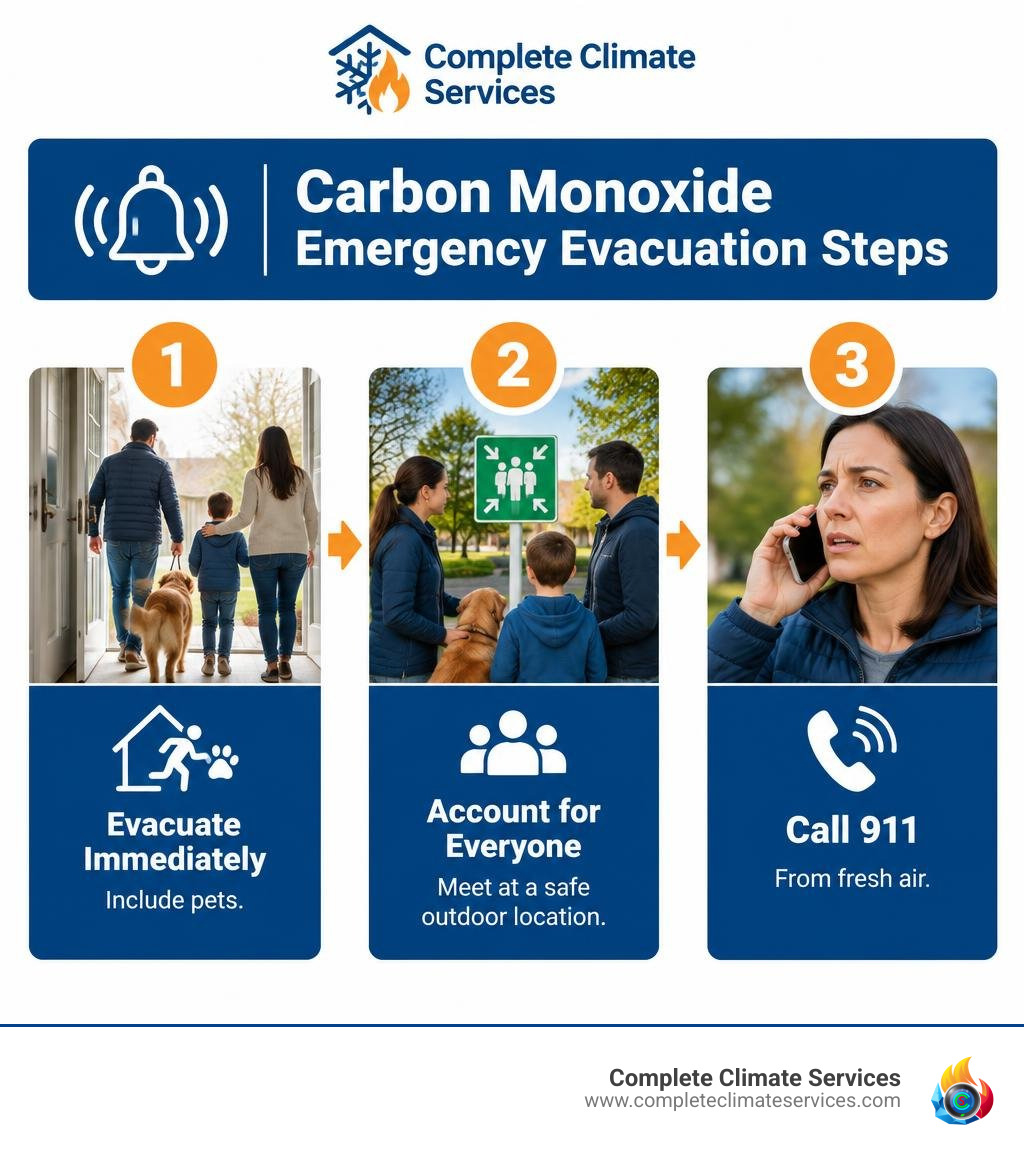
Follow this step-by-step emergency protocol:
- Evacuate the House Immediately: Get all occupants, including pets, outside into fresh air right away. Do not waste time opening windows or searching for belongings.
- Account for Everyone: Gather at an outdoor meeting spot a safe distance away from the home.
- Call 911 from Fresh Air: Contact emergency dispatch immediately. Inform the operator that your carbon monoxide alarm is sounding or that occupants are showing symptoms.
- Seek Immediate Medical Evaluation: Paramedics can administer pure oxygen therapy to flush carboxyhemoglobin out of the bloodstream.
- Do Not Re-Enter the Property: Remain outside until emergency responders with calibrated gas monitors confirm the building is safe.
- Schedule Professional HVAC Diagnostics: Once emergency responders clear the home, contact certified technicians for emergency HVAC repair services to locate and repair the source of the leak before turning the furnace back on.
Understanding these necessary emergency HVAC steps ensures your system is thoroughly tested and verified safe before heat is restored.
Frequently Asked Questions
Can an electric furnace produce carbon monoxide?
No. Electric furnaces utilize electric resistance heating elements to warm your air, which involves zero fuel combustion. Because there is no fuel, an electric furnace cannot generate carbon monoxide.
However, if an external source, such as an attached garage vehicle, a gas water heater, or a portable generator, leaks carbon monoxide into your home, an electric furnace’s blower fan will pull those fumes through the return ducts and distribute them across every room.
How often should gas furnaces be inspected for carbon monoxide leaks?
Gas, oil, and propane furnaces should receive a comprehensive professional safety inspection at least once a year, ideally in early autumn before heating demands pick up.
Annual inspections verify the structural integrity of your heat exchanger, clear chimney venting, and optimize burner combustion. If you notice yellow burner flames, soot around the cabinet, or unusual noises, schedule professional furnace repair immediately rather than waiting for your regular tune-up.
What level of carbon monoxide causes residential alarms to sound?
Under standard UL 2034 guidelines, residential alarms are engineered to avoid sounding for minor, transient spikes (such as lighting a match), focusing instead on preventing acute poisoning:
- 70 ppm: Alarm sounds within 60 to 240 minutes.
- 150 ppm: Alarm sounds within 10 to 50 minutes.
- 400 ppm: Alarm sounds within 4 to 15 minutes.
Because retail units permit continuous exposure up to 69 ppm without sounding an alarm, investing in low-level monitors or scheduling regular combustion testing is recommended to catch low-level leaks before they impact your health.
What should I do if my CO alarm keeps chirping?
A chirping CO alarm often signals a low battery, an end-of-life warning, or a unit problem. Check the manufacturer’s instructions, replace the battery if the model uses one, and replace the alarm if it has reached the date listed on the unit. If the alarm is sounding continuously rather than chirping, leave the home and call 911 from outside.
Is it safe to run my furnace if I smell exhaust fumes?
No. Turn the furnace off and do not run it again until a qualified HVAC technician has inspected it. Leave the home if anyone feels sick, dizzy, nauseated, or has a headache, then call for service from a safe location.
Conclusion
Furnace carbon monoxide safety does not have to be complicated. By placing certified carbon monoxide alarms on every level of your home, testing them monthly, keeping outdoor vents clear of winter debris, and scheduling annual heating tune-ups, you can keep your home warm and secure all winter long.
Written by Michael Holcomb, Co-Founder and Operations Manager, Complete Climate Services.
At Complete Climate Services, our team brings 20+ years of HVAC experience and 5.0 stars on Google to homeowners across Baltimore City, Baltimore County, Anne Arundel County, and Howard County. Our certified technicians inspect the heat exchanger, burners, venting, and safety switches as part of a thorough heating-system safety check. For a safety check-up, contact our team or explore our professional furnace services today to give your family dependable comfort and complete peace of mind.
Complete Climate Services LLC · 204 S Chapel St, Baltimore, MD 21231 · (443) 898-4747

