
Why Furnace Air Quality Matters for Your Home
Keeping your family healthy in the winter starts with understanding your furnace air quality.
Because we spend up to 90% of our time indoors during the cold Maryland winter, the air circulating through our vents has a massive impact on our daily health. In fact, indoor air pollution is often 2 to 5 times higher than outdoor air pollution.
Here is a quick guide to how your heating system affects the air you breathe:
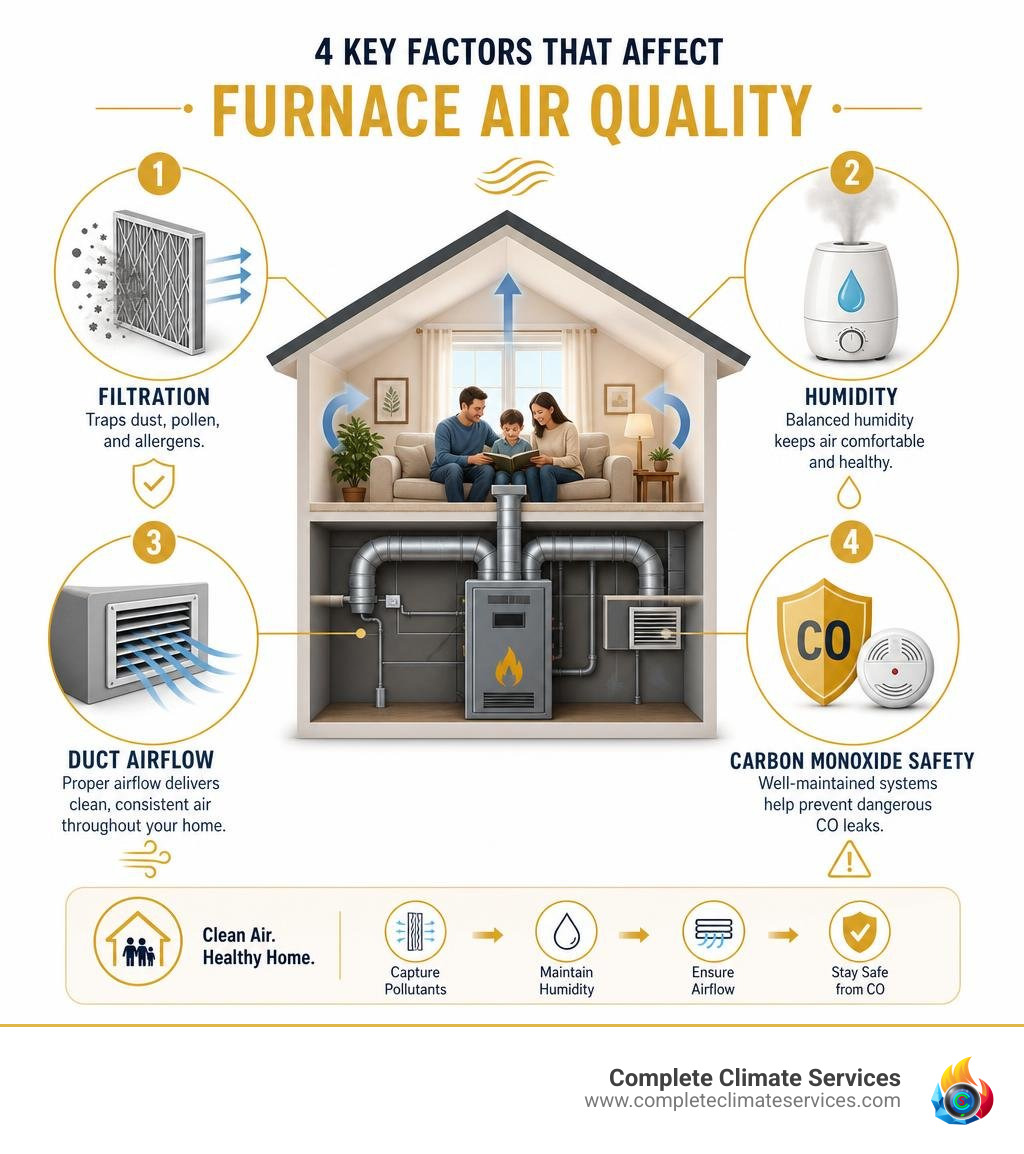
- Dust and allergen recirculation: Your furnace pulls air in and blows it out. If your filter is dirty or too cheap, the system continuously recirculates dust, pet dander, and pollen.
- Extreme dryness: Heating up cold winter air drops the indoor relative humidity. This dry air irritates your lungs, dries out your skin, and helps viruses spread easier.
- Toxic gas risks: Neglected gas furnaces can suffer from cracked heat exchangers, which leak dangerous gases like carbon monoxide directly into your living spaces.
You can protect your household by upgrading to a MERV 13 air filter, maintaining indoor humidity between 30% and 50%, and scheduling annual professional maintenance.
The Complete Climate Services team helps Baltimore homeowners optimize their furnace air quality and keep heating systems safe. Our technicians take the guesswork out of indoor comfort so your family can breathe cleaner, healthier air all season long.
How Winter Heating and Gas Furnaces Impact Indoor Air
When the temperature drops in Baltimore, our natural instinct is to seal up our homes, turn up the thermostat, and cozy up indoors. However, tightening up our houses for energy efficiency has an unintended side effect: it traps pollutants inside.
A gas furnace does not inherently create dust, but its powerful blower motor acts as a giant circulatory system. As air is pulled from your living spaces through the return vents, heated, and pushed back out through the supply registers, any airborne particles go along for the ride. If your home has accumulated winter dust, pet dander, or mold spores, your furnace will faithfully distribute them to every room in your house.
Beyond circulating physical particles, the heating process itself alters the physics of your indoor air. When cold, damp outdoor air leaks into your home and is heated by your furnace, its temperature rises, which causes its relative humidity to plummet. This dry air acts like a sponge, aggressively pulling moisture out of everything it touches, including your skin, throat, and nasal passages.
Additionally, because gas furnaces rely on combustion to generate heat, any malfunction in the burner assembly or heat exchanger can lead to incomplete combustion. Instead of cleanly venting combustion byproducts outdoors, a damaged system can spill hazardous gases directly into your home.
For Baltimore homeowners who want a healthier whole-home approach, Complete Climate Services offers indoor air quality solutions that pair filtration, humidity control, and ventilation with the heating system your home already uses.
To help you visualize what might be floating around your home, here is a breakdown of common indoor air pollutants and where they originate:
| Pollutant | Primary Sources in the Home | Potential Health Impact |
|---|---|---|
| Particulate Matter (PM2.5) | Dust, pet dander, fireplace soot, outdoor smoke | Lung irritation, asthma flare-ups |
| Carbon Monoxide (CO) | Cracked heat exchangers, blocked flues, back-drafting | Headaches, dizziness, fatal poisoning |
| Formaldehyde (HCHO) | Incomplete gas combustion, building materials, furniture | Throat irritation, respiratory issues, chronic risks |
| Nitrogen Dioxide (NO2) | Gas burners, poorly vented heating appliances | Airway inflammation, increased asthma symptoms |
| Volatile Organic Compounds (VOCs) | Household cleaners, paints, aerosol sprays, new carpets | Headaches, eye irritation, organ stress |
Common Pollutants Circulated by Heating Systems
When we think about air pollution, we often picture industrial smokestacks or highway traffic. Yet, the EPA ranks indoor air pollution among the top five environmental dangers to public health. During the heating season, your furnace can become a primary vector for several critical pollutants:
- Carbon Monoxide (CO): This colorless, odorless gas is a byproduct of incomplete combustion. If a gas furnace has a cracked heat exchanger or a blocked flue, carbon monoxide can build up rapidly. Overtightening a home for energy savings without providing proper makeup air can even cause combustion gases to back-draft down the furnace flue.
- Fine particulate matter (PM2.5): These tiny particles, less than 2.5 micrometers in diameter, are small enough to bypass your respiratory system’s natural defenses and enter your bloodstream.
- Formaldehyde and VOCs: Formaldehyde is a common volatile organic compound that can be produced in small amounts during incomplete gas combustion.
- Nitrogen dioxide (NO2): Another byproduct of burning natural gas, NO2 can severely irritate the mucous membranes of your lungs.
While most modern gas furnaces are designed to vent these gases safely outside, older or unmaintained systems pose a continuous risk. For those using alternative or solid-fuel heating systems, the dangers multiply. Burning unapproved materials, such as online shopping packaging, plastics, or wet wood, in household combustion setups can generate high levels of PM2.5 and toxic organic compounds.
The Health Risks of Poor Indoor Air Quality
Breathing compromised air over a long winter is not just a matter of minor discomfort; it carries genuine health consequences. When your furnace circulates dust and dry air, it dries out the protective mucous membranes in your nose and throat. This makes you significantly more vulnerable to winter respiratory infections, colds, and flu viruses, which actually travel further and survive longer in dry air.
For the millions of Americans living with asthma or allergies, poor furnace air quality is a constant trigger. Dust mites, pet dander, and mold spores circulating through the ductwork can lead to persistent coughing, wheezing, and sinus congestion.
The most severe hazard, however, remains carbon monoxide. Nearly 5,000 people in the United States are treated in hospital emergency rooms for accidental CO poisoning each year, and more than 400 Americans die annually from these exposures. Early symptoms of CO poisoning mimic the flu: headaches, dizziness, weakness, and nausea. That makes it easy to overlook until it is too late. If you are experiencing persistent, unexplained symptoms that seem to improve when you leave the house, a trained HVAC and indoor air quality team can help identify the root cause.
The Science of Filtration and Humidity Control
Improving the air inside your home does not require mysterious solutions. It relies on two primary pillars of HVAC science: effective filtration and precise humidity management.
Every time your furnace runs, it has the opportunity to clean your air, provided it is equipped with the right filter. Standard, cheap fiberglass filters are only designed to catch large particles like hair and giant dust bunnies to protect the furnace motor itself. They do almost nothing to clean the air you breathe. For a broader look at the same principles, our article on improving home air quality year-round explains how filtration, ventilation, and humidity control work together.
How Upgrading Filters Enhances Furnace Air Quality
Air filters are rated using the Minimum Efficiency Reporting Value (MERV) scale, which ranges from 1 to 16 for residential and commercial systems. The higher the MERV rating, the smaller the particles the filter can trap:
- MERV 1 to 4: Standard fiberglass filters. These capture only large particles larger than 10 microns and provide minimal air quality benefits.
- MERV 8 to 11: Good residential filters. They easily trap dust, pollen, dust mites, and pet dander.
- MERV 13: High-efficiency filters. Recommended by ASHRAE, these filters can capture fine particulate matter, bacteria, and even smoke particles down to 0.3 microns.
While upgrading to a MERV 13 filter is one of the fastest ways to improve your furnace air quality, you must ensure your system can handle it. High-efficiency filters are denser, which means your furnace’s blower motor has to work harder to push air through them. If your system is older, installing a filter that is too restrictive can reduce airflow, drive up your energy bills, and potentially cause the furnace to overheat.
Our technicians can evaluate your system to find the right balance between high-level filtration and safe, efficient airflow. The Complete Climate Services team also provides HVAC maintenance services that help keep filters, blowers, ductwork, and safety controls working together instead of against each other.
Balancing Relative Humidity with Whole-Home Humidifiers
As we established, heating winter air makes it incredibly dry. Low humidity below 30% does more than just cause annoying static shocks. It actively damages your health and your home. Wood floors can crack, musical instruments can go out of tune, and your body’s respiratory defenses can break down.
The ideal indoor relative humidity should be maintained between 30% and 50%. The most efficient way to achieve this is with a whole-home humidifier integrated directly into your furnace system. Unlike small, noisy portable humidifiers that only treat a single room and require constant refilling, a whole-home system connects to your water line and distributes moisture evenly through your entire ductwork system.
By maintaining proper moisture levels, you keep your nasal passages hydrated and fully capable of filtering out airborne pathogens. This is especially helpful during Baltimore’s dry heating season, when comfort problems often show up as scratchy throats, static shocks, and irritated sinuses.
Managing Ventilation and Emergency Air Quality Events
While we like to think of our homes as fortresses, outdoor air quality directly impacts our indoor environment. This is especially true during emergency air quality events, such as when distant wildfire smoke drifts across Maryland.
During these events, fine particulate matter (PM2.5) from the smoke easily seeps into our homes through natural ventilation, structural cracks, and HVAC fresh air intakes. To protect your family, you must know how to adapt your mechanical systems on the fly.
Understanding how air moves through buildings is key. Residential and commercial systems use different designs, but the same basic priorities apply: control airflow, maintain combustion safety, and avoid creating pressure problems that pull polluted air into occupied spaces.
Adjusting Recirculation Settings During Wildfire Smoke Events
When outdoor air is unsafe, your primary goal is to seal your home and rely on your indoor filtration. Take these immediate steps during a smoke event:
- Switch to recirculate: If your HVAC system has an outdoor air intake damper, close it or set the system to “recirculate” mode to keep outdoor smoke from being actively pulled inside.
- Set the fan to “On”: Change your thermostat’s fan setting from “Auto” to “On.” This keeps your furnace blower running continuously, ensuring that your indoor air is constantly pushed through your high-efficiency filter, even when the furnace isn’t actively heating.
- Upgrade and replace filters early: Ensure you have a MERV 13 filter installed, and check it frequently. Heavy smoke loads will clog filters much faster than normal household dust.
- Avoid creating indoor particles: Do not burn candles, use wood stoves, vacuum unless you have a HEPA-filtered vacuum, or fry foods, as these activities create additional indoor PM2.5. If you must go outside, always wear a properly fitted N95 respirator.
Fresh Air Ventilation vs. Recirculation Modes
Under normal operating conditions, keeping your home completely sealed isn’t ideal either. Without fresh air, carbon dioxide (CO2) exhaled by occupants accumulates, leading to drowsiness, headaches, and cognitive fatigue. ASHRAE recommends maintaining indoor CO2 levels below 1,000 ppm for acceptable air quality.
To balance energy efficiency with fresh air, modern homes often use mechanical ventilation systems, such as Heat Recovery Ventilators (HRVs) or Energy Recovery Ventilators (ERVs). These systems exhaust stale indoor air while drawing in fresh outdoor air, pre-heating it using the energy of the outgoing air stream. This ensures a steady supply of oxygen and keeps CO2 levels low without placing an excessive heating load on your furnace.
If you want to optimize this balance in your own home, the Complete Climate Services team can evaluate filtration, humidity, and ventilation as one connected system instead of treating each comfort issue separately.
Practical Steps to Improve Your Furnace Air Quality
Achieving excellent indoor air quality doesn’t happen by accident. It requires a combination of smart habits, regular maintenance, and the right technology.
The first rule of air quality is source control: keep pollutants out of your home in the first place. Avoid smoking indoors, store paints and chemicals in detached garages or sheds, and vacuum carpets weekly with a HEPA vacuum.
Additionally, because safety should always come first, install carbon monoxide alarms on every level of your home, especially near sleeping areas. Test these alarms monthly and replace their batteries annually. Regular tune-ups are also important because our guide to better air quality through HVAC maintenance explains how clean equipment, safe combustion, and steady airflow all support healthier indoor air.
The Role of Ductwork in Maintaining Furnace Air Quality
You can buy the most expensive furnace and filter on the market, but if your ductwork is compromised, your air quality will suffer. According to Energy Star, the average home loses 20% to 30% of the air moving through its duct system due to leaks, holes, and poor connections.
When ducts leak, they don’t just waste energy. They also create pressure imbalances. If return ducts in your attic, crawlspace, or basement have leaks, they can pull dusty, moldy, or chemical-laden air directly from those unconditioned spaces and blow it straight into your bedrooms.
Sealing these leaks with professional mastic or foil tape is crucial. Additionally, if your home has undergone recent renovations, or if you have struggled with pest issues, professional duct cleaning can remove decades of accumulated debris. Keeping the whole system clean also supports AC performance in warmer months, so these improvements help indoor air quality beyond the heating season.
Using Indoor Air Monitors to Track Pollutants
If you can’t measure it, you can’t manage it. Many homeowners guess at their air quality based on whether they are sneezing, but modern smart home technology has made tracking pollutants simple and affordable.
An indoor air monitor sits on your counter and continuously measures key metrics:
- PM2.5 levels: Tells you if dust, pet dander, or outdoor smoke is accumulating.
- CO2 levels: Helps you know when it’s time to crack a window or turn on mechanical ventilation.
- Chemicals (VOCs): Alerts you to off-gassing from new furniture, cleaning sprays, or paint.
- Humidity: Keeps you informed on whether your humidifier is keeping the air in the sweet spot of 30% to 50%.
Many of these monitors integrate seamlessly with smart thermostats, allowing your HVAC system to automatically adjust fan speeds or humidity levels in real time based on actual air conditions. For homeowners who want more visibility before making equipment changes, our article on air quality monitoring explains how monitoring can turn invisible comfort issues into actionable data.
Frequently Asked Questions About Furnace Air Quality
Can a gas furnace make you sick?
Yes, a poorly maintained gas furnace can make you sick. The primary risks include carbon monoxide leaks from cracked heat exchangers, severe respiratory irritation from circulating dust and pet dander, and physical symptoms caused by extremely dry air.
Regular professional inspections are the best way to keep your system safe and efficient. To learn more about preventing these issues, check out our furnace problem prevention guide.
How often should I change my furnace filter?
As a general rule, you should replace standard 1-inch pleated filters every 90 days. However, if you have pets, live in a high-occupancy home, or suffer from severe allergies, you may need to change your filter every 30 to 60 days.
Thicker media filters (4 to 5 inches deep) can often last 6 to 12 months before needing replacement. For a deeper look into why keeping your filters clean is so critical, read our article on why regular furnace maintenance matters.
What is the ideal indoor humidity level during winter?
The ideal indoor relative humidity level during the winter is between 30% and 50%. Keeping your humidity in this range prevents dry skin, throat irritation, and static electricity while ensuring that your home’s air does not become damp enough to encourage mold growth or dust mite infestations.
If you suspect your home has an air quality or moisture imbalance, you can learn more about finding the cause in our guide to understanding indoor air quality testing.
Conclusion
Your gas furnace does an incredible job of keeping your home warm and cozy through the freezing Maryland winters. However, true comfort is about more than just the temperature on your thermostat. It is about the safety and purity of the air your family breathes every single day. By upgrading your filters, managing your home’s humidity, and keeping your ductwork clean, you can transform your heating system into a powerful tool for health.
At Complete Climate Services, we have provided honest, reliable heating and air quality solutions to families across the Baltimore region for over 20 years. Whether you are in Catonsville, Towson, Columbia, Ellicott City, or right in Baltimore City, our 5.0-rated team is here to help.
Ready to take control of your home’s air? Contact our professional indoor air quality technicians to schedule a comprehensive system evaluation!