

Is It Time for a Furnace Replacement in Baltimore, MD?
If you’re facing a furnace replacement in Baltimore, MD, here’s what you need to know right away:
Quick Answer: Repair or Replace?
| Situation | Best Action |
|---|---|
| Furnace is under 15 years old, minor issue | Repair |
| Furnace is 15–20+ years old | Replace |
| Repair would be a major investment relative to the system’s condition | Replace |
| Frequent breakdowns in one season | Replace |
| Yellow pilot light or carbon monoxide risk | Replace immediately |
| Rising energy bills, uneven heating | Likely replace |
Baltimore winters are cold enough to make a failing furnace a real problem, not just an inconvenience. When your heating system starts struggling, the decision you face is simple to state but harder to answer: do you fix what you have, or start fresh?
Get it wrong and you’re either spending money on a system that’s on its last legs, or replacing something that had years of reliable heat left in it.
This guide walks you through exactly how to make that call, using clear criteria based on your furnace’s age, repair history, energy costs, and safety.
My name is Michael Holcomb, Co-Founder and Operations Manager of Complete Climate Services, and I’ve spent years helping Baltimore homeowners navigate furnace replacement in Baltimore, MD, from knowing when to hold off on a repair to choosing the right high-efficiency system for our region’s climate. In this guide, I’ll share what we’ve learned from local installations so you can make a confident, informed decision.
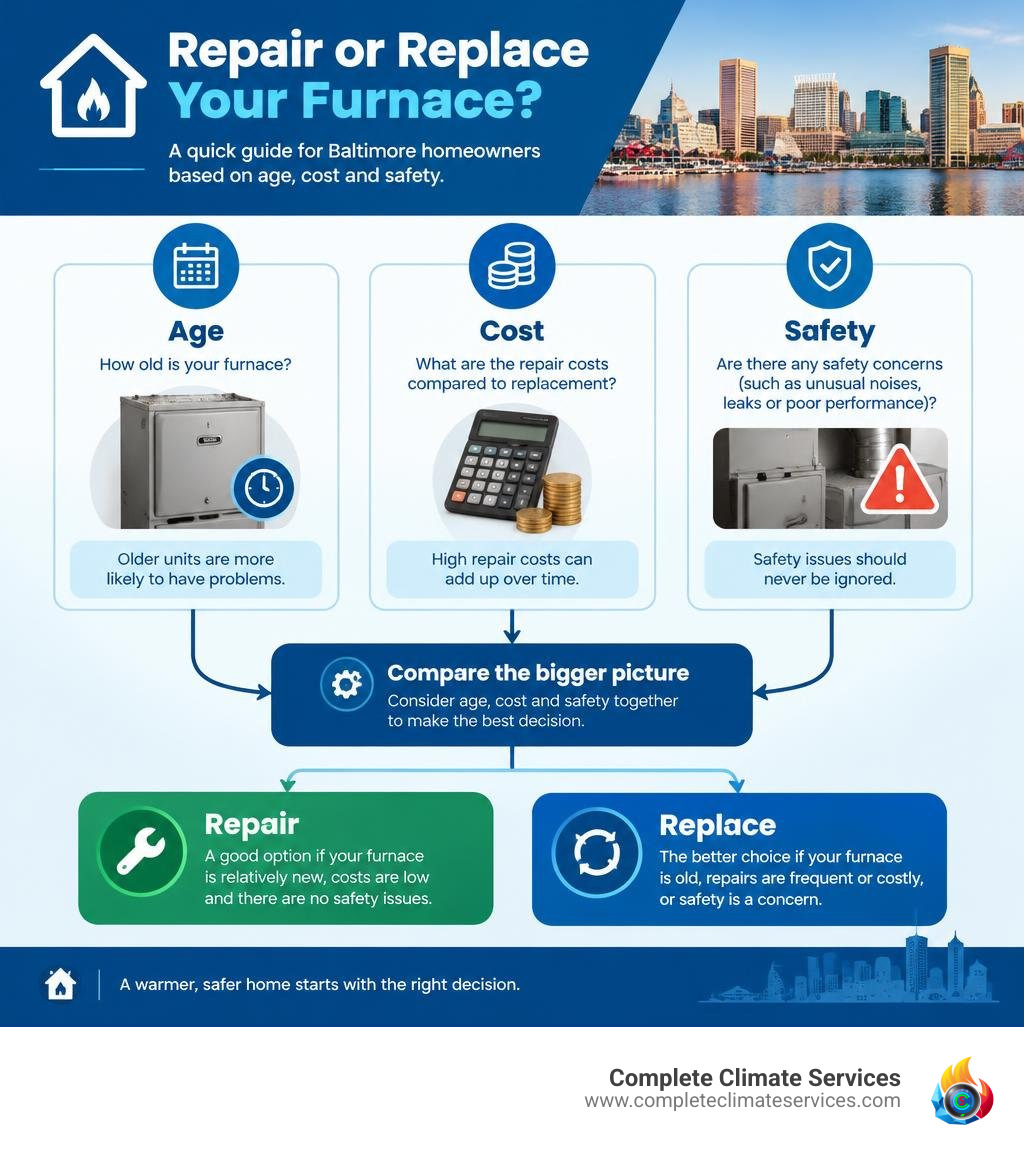
Repair vs Replace: The Smart Decision Framework for Baltimore Furnaces
Deciding whether to call for a repair or invest in a brand-new heating system doesn’t have to be a guessing game. By looking at a few clear factors, you can determine which route makes the most financial and practical sense for your household.
The primary factors we use to evaluate this decision include the age of the system, the frequency of repairs, your monthly utility costs, and any potential safety hazards.
| Decision Factor | When to Choose Furnace Repair | When to Choose Furnace Replacement |
|---|---|---|
| System Age | Under 12–15 years old | 15 to 20+ years old |
| Repair Frequency | Rare, one-off issues | Multiple service calls in a single season |
| Repair Cost | Minor repair | Major repair relative to the system’s condition |
| Energy Bills | Consistent with previous winters | Spiking despite normal usage |
| Safety Concerns | None (clean burn, blue flame) | Cracked heat exchanger, yellow flame |
| Comfort Levels | Even heat throughout the home | Uneven heating, cold spots, weak airflow |
If your system is younger and simply needs a quick component swap, checking out furnace repair is your best first step to getting your warmth back quickly. However, if your system is crossing into its second decade, the math quickly shifts in favor of a new installation.
When Furnace Repair Still Makes Sense
Not every furnace problem is a death sentence for your heating system. In fact, many common winter issues can be resolved with quick, affordable repairs. If your furnace is under 12 years old and has been well-maintained, it’s highly likely that a targeted repair is all you need.
Common, straightforward issues that make repair the obvious choice include:
- Thermostat glitches: Sometimes a furnace that won’t turn on simply needs a new thermostat battery or a recalibration.
- Dirty or clogged filters: A blocked air filter restricts airflow, causing the system to overheat and shut down (short cycle). Replacing the filter is a simple fix.
- Ignition or pilot issues: If your furnace fails to light, it might be due to a dirty flame sensor or a faulty igniter. For deep dives into this specific issue, see our guide to furnace ignition problems.
- Blower motor issues: A worn-out fan belt or a failing capacitor in the blower motor can often be replaced without needing to swap out the entire furnace.
By catching these minor issues early, you prevent them from cascading into major system failures. To keep your unit running smoothly, review common furnace problems to learn which warning signs to watch for.
When Replacement Is the Better Investment
There comes a point where keeping an old furnace alive is like pouring money into a failing car. If your furnace is between 15 and 20 years old, it is rapidly approaching the end of its natural service life. At this stage, parts become harder to source, and the overall efficiency of the unit drops significantly.
Replacement is almost always the smarter long-term investment if:
- The repair is substantial: When a major repair is needed on an aging furnace, replacement may be the more practical long-term choice.
- You experience frequent breakdowns: If you have to call an HVAC technician multiple times in one winter, those service fees add up fast.
- A cracked heat exchanger is diagnosed: This is a critical safety hazard. A cracked heat exchanger can leak carbon monoxide into your home, so schedule emergency heating repair promptly. Because replacing a heat exchanger is incredibly expensive and labor-intensive, we almost always recommend a full system replacement.
- You plan to sell your home soon: A brand-new, high-efficiency heating system is a major selling point that increases home value and reassures potential buyers.
For a broader look at managing your system’s health, a furnace problem prevention guide can help you weigh these critical steps.
The Most Common Signs Your Baltimore Furnace Needs Replacement
How do you know your furnace is whispering (or screaming) that it’s time to retire? Keep an eye out for these warning signs:
- Spiking Utility Bills: If your gas or electric bills are rising even though you haven’t changed your thermostat habits, your furnace is working harder and burning more fuel to produce the same amount of heat.
- A Yellow Pilot Light: A healthy gas furnace burns with a crisp, blue flame. A yellow or flickering pilot light indicates incomplete combustion, which means your system could be producing dangerous carbon monoxide.
- Strange Noises: Banging, rattling, squealing, or whistling sounds indicate worn-out bearings, a failing blower motor, or loose internal components.
- Cold Spots and Weak Airflow: If some rooms feel like iceboxes while others are boiling, your furnace can no longer distribute heat evenly.
- Dry, Dusty Air: Older furnaces lose their ability to moisturize and clean the air, leading to dry skin, static electricity, and an accumulation of dust around your registers.
If you’re noticing these symptoms during the coldest months of the year, schedule a professional inspection to identify the issue behind the access panel.
Furnace Replacement in Baltimore: Timeline and Preparation
Pulled the trigger on a replacement? Understanding what lies ahead can make the installation process smooth, stress-free, and highly rewarding. From budgeting to preparing your home for our technicians, here is what you need to know about getting a new furnace replacement in Baltimore, MD.
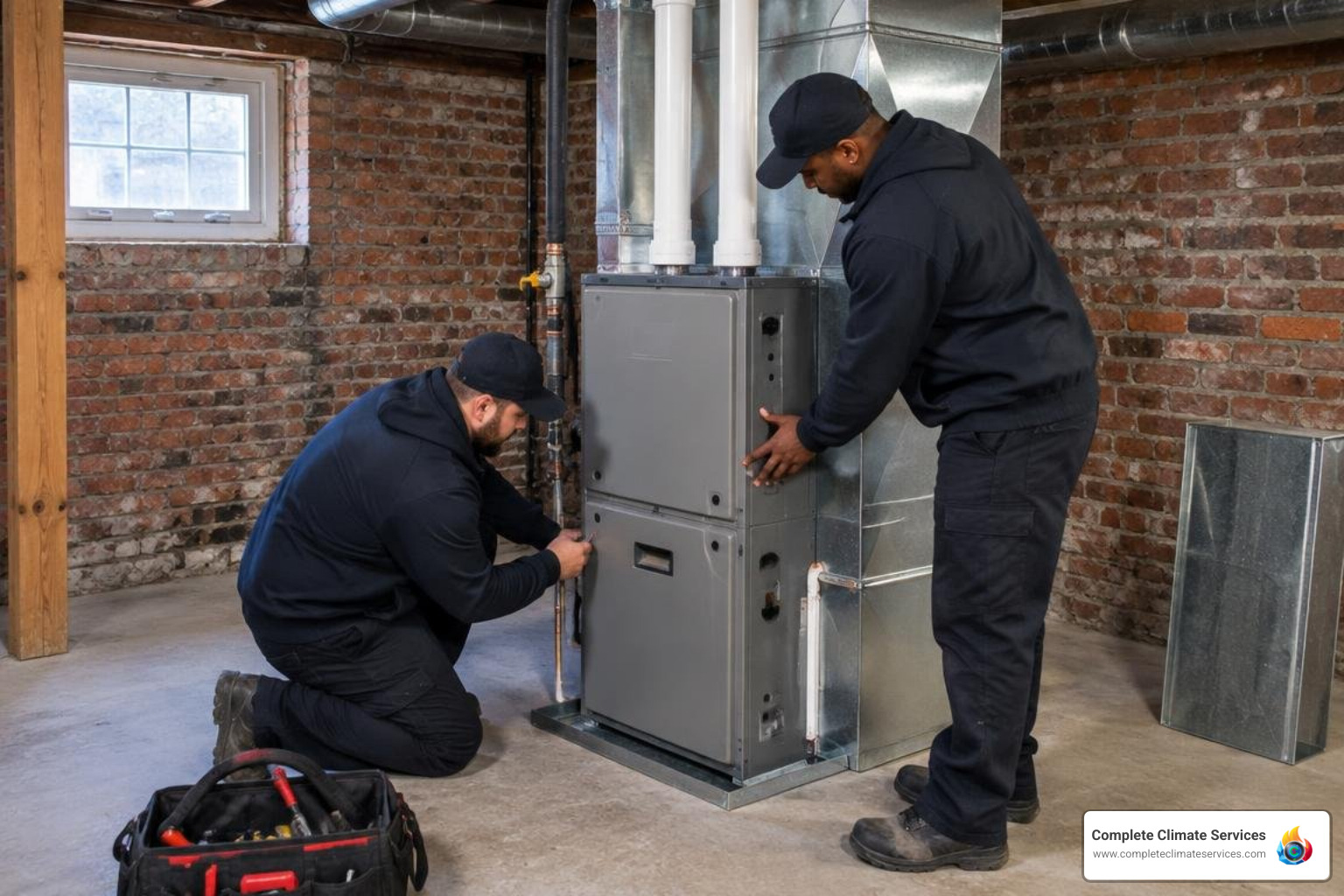
If you want to understand the complete installation process from start to finish, see how our furnace installation works.
Furnace replacement needs vary by home size, fuel type, and efficiency goals, and we provide a written estimate after an in-home visit.
Additional cost factors include necessary ductwork modifications, installing a smart thermostat, and obtaining local building permits. Ask your installer about available payment options and the details of any financing plans.
How Long Does a Furnace Replacement Take?
Most standard furnace replacements are completed in a single business day, typically taking between 4 to 8 hours.
Our team works efficiently to minimize disruption to your daily routine. A typical installation day looks like this:
- Arrive & Prep: We protect your floors with drop cloths and carefully shut off all gas and electrical lines to the old system.
- Removal: The old, heavy furnace is carefully disconnected, disassembled if necessary, and hauled away for proper environmental disposal.
- Positioning & Connection: The new furnace is set in place, perfectly leveled, and connected to your existing ductwork, gas lines, electrical panel, and exhaust vents.
- Thermostat & Safety Integration: We install or program your thermostat and perform rigorous safety checks, including gas leak tests and airflow calibration.
- Post-Installation Testing: We run the system through a full heating cycle to ensure every room receives balanced, reliable warmth.
If your project requires extensive ductwork repairs or complex venting modifications, it may take a bit longer, but we will always give you a clear timeline before we begin.
How Homeowners Should Prepare for Furnace Replacement
To help our technicians work as quickly and safely as possible, there are a few simple steps you can take before we arrive:
- Clear the Path: Ensure there is a clear, wide path from the entrance of your home to the utility room, basement, or attic where the furnace is located.
- Clear the Workspace: Move any stored boxes, holiday decorations, or household items at least 3 to 5 feet away from the old furnace unit.
- Secure Your Pets: The sound of power tools and technicians walking in and out can be stressful for pets. Keep them safe and comfortable in a closed room or a crate.
- Clear the Driveway: Our service trucks carry heavy equipment and need to park as close to your entry door as possible. Keeping the driveway clear is incredibly helpful.
If you are ready to explore your options without pressure, schedule an in-home visit to discuss your home’s heating needs.
Best Furnace Types and Efficiency Ratings for Baltimore’s Climate
Our region experiences a true mix of seasons. Baltimore winters bring damp, biting cold snaps, while our summers are notoriously hot and humid. Because our heating systems must work hard for several months out of the year, selecting the right fuel source and efficiency rating is critical for year-round comfort.
Comparing Gas, Electric, and Hybrid Furnace Options
When choosing a new heating system, you have several excellent options depending on your home’s infrastructure:
- Natural Gas Furnaces: The most popular choice across Baltimore City and surrounding suburbs. Natural gas provides fast, incredibly hot air and is highly cost-effective.
- Electric Furnaces: A great option for homes without access to natural gas lines. They are quiet, compact, and require no venting, though they can be more expensive to run during deep winter freezes.
- Oil Furnaces: We repair and service oil furnaces in older Baltimore-area homes. When an oil furnace needs replacement, we help homeowners compare gas, electric, and dual fuel options based on the home’s needs.
- Hybrid Heating Systems: A dual fuel system pairs an electric heat pump with a gas furnace. The heat pump handles heating during moderate spring and autumn days, while the gas furnace takes over during deep winter cold snaps. Learn how dual fuel works and whether this approach fits your home’s comfort and efficiency goals.
If you are looking for local installation support in nearby neighborhoods, our team serves a wide range of communities throughout the Baltimore metro area, ensuring homeowners in every local suburb receive prompt, professional care.
What AFUE Ratings Mean for Baltimore Homeowners
AFUE stands for Annual Fuel Utilization Efficiency. It is represented as a percentage that tells you how much of the fuel your furnace consumes is converted directly into heat for your home, versus how much is wasted up the chimney.
- 80% AFUE (Standard Efficiency): These furnaces convert most fuel into usable heat, while some energy leaves through the exhaust venting.
- 90% to 98% AFUE (High Efficiency): These condensing furnaces use a secondary heat exchanger to capture additional heat from exhaust gases that would otherwise be wasted.
Replacing an older furnace with a modern high-efficiency model can reduce fuel use and improve winter comfort over the life of the system.
Utility Rebates in Maryland
Some high-efficiency equipment may qualify for utility rebates:
BGE EmPOWER Maryland may offer rebates for qualifying high-efficiency equipment, and our team can help check eligibility for your home.
A qualified HVAC professional can help you review current program requirements and determine whether your home may be eligible.
What to Expect From Installation, Warranties, and Safety Checks
A furnace is not a plug-and-play appliance. The quality of the installation is just as important as the brand of the equipment itself. In fact, an improperly installed furnace can perform less efficiently and experience premature breakdowns.
To ensure your system operates safely and reliably for decades to come, we follow a rigorous installation process that meets all local building codes and manufacturer specifications. For a comprehensive overview of what we offer, see all our furnace services.
Proper Sizing and Installation Quality Matter
Before we recommend a new furnace, our technician visits your home, looks at your current system, and talks with you about comfort problems so the recommendation fits your house.
- The Danger of Oversizing: If a contractor installs a furnace that is too large for your home, it will heat the space too quickly and shut off. This constant starting and stopping (short cycling) wears out components rapidly and spikes your energy bills.
- The Danger of Undersizing: A furnace that is too small will run constantly without ever reaching your desired thermostat setting, leaving your home cold and your utility bills sky-high.
Additionally, proper ductwork installation helps ensure the system is sealed and connected correctly. Leaky ductwork can waste heating energy and reduce comfort. Ensuring airtight duct connections is a crucial part of our installation checklist.
Warranties and Guarantees to Look For
A new furnace is a major investment, and you deserve peace of mind knowing that your investment is fully protected. When purchasing a new system, always look for a robust warranty package:
- Manufacturer Parts Warranty: Most major brands offer a 5- to 10-year warranty on all major functional parts (such as the gas valve, blower motor, and circuit board), provided the system is registered promptly after installation.
- Heat Exchanger Warranty: Because the heat exchanger is the heart of the furnace, manufacturers often back it with a 20-year or even a lifetime warranty.
- Workmanship Warranty: This is provided by the installing contractor. Ask your installer what workmanship warranty they provide.
Always remember that most manufacturers require annual professional maintenance to keep your warranties valid. Skipping your yearly tune-ups can void your coverage!
Safety and Indoor Air Quality Benefits of Replacement
While saving money on your monthly energy bills is fantastic, the safety benefits of a new furnace are truly priceless.
Older gas systems carry a risk of cracked heat exchangers, which can leak carbon monoxide (CO) – a colorless, odorless, and potentially deadly gas. For general safety guidance, the CDC explains why carbon monoxide poisoning prevention is so important in homes with fuel-burning appliances. A brand-new furnace features advanced safety switches and sealed combustion chambers that virtually eliminate this risk.
In addition to safety, a new furnace significantly improves your indoor air quality. Modern systems feature:
- Advanced Filtration: Compatible with high-MERV filters that capture pollen, pet dander, mold spores, and dust.
- Constant Fan Speeds: Variable-speed blower motors keep air moving gently and continuously, preventing stagnant air and cold spots.
- Humidity Control: Keeps your indoor air from becoming overly dry during the dead of winter, protecting your skin, respiratory health, and wooden furniture.
Our technicians install furnaces across Baltimore City, Baltimore County, Anne Arundel County, and Howard County.
How to Choose a Reputable Furnace Replacement Company in Baltimore
A furnace installation is only as good as the team carrying it out. When searching for a contractor to handle your furnace replacement in Baltimore, MD, it pays to do your homework. Choosing a local, licensed, and highly-rated company ensures you receive honest diagnostics, upfront pricing, and a safe installation.
Choose a contractor that serves your neighborhood and understands Baltimore-area heating needs.
Credentials Every HVAC Contractor Should Have
Never let an unlicensed or uncertified “handyman” work on your heating system. Because furnaces deal with high-voltage electricity, natural gas, and combustion exhaust, improper handling can lead to catastrophic fires, gas leaks, or carbon monoxide poisoning.
Always verify that your chosen contractor possesses:
- A Valid Maryland HVAC License: This ensures they have passed rigorous state exams and stay up-to-date on local mechanical codes.
- Comprehensive Liability Insurance: Protects your home and property in the rare event of an accident during installation.
- A Solid Local Track Record: Look for companies with strong ratings on Google and the Better Business Bureau.
Whether you live in Baltimore City or the surrounding counties, choosing a local provider with deep roots in the community ensures you get a system tailored to our specific climate challenges.
Estimate Questions That Protect Your Budget
Before signing any contract, we recommend asking potential installers these important questions to protect your budget and ensure there are no hidden surprises:
- Is a local building permit included in this estimate, and will you handle the filing process?
- What AFUE efficiency rating is recommended for my home, and why?
- Are there any ductwork modifications or repairs included in this price?
- Does this quote include the removal and eco-friendly disposal of my old furnace?
- What specific parts and labor warranties come with this installation?
- Do you offer flexible financing options to help break up the cost?
A reputable contractor will always provide a detailed, written estimate that clearly outlines the scope of work, equipment models, and total costs upfront.
Why Maintenance After Replacement Matters
Once your new furnace is installed, the best way to protect your investment is with regular, proactive care. Just like a new car, a new heating system needs routine maintenance to run at peak efficiency and avoid unexpected breakdowns.
Scheduling a professional tune-up every autumn ensures:
- Optimal Efficiency: Keeps your energy bills as low as possible.
- Warranty Compliance: Meets manufacturer requirements to keep your parts warranty active.
- Safety Checks: Verifies that all safety controls and gas connections remain perfectly secure.
To learn more about how a simple autumn check-up can save you money and stress, review the benefits of a fall furnace inspection.
Frequently Asked Questions About Furnace Replacement in Baltimore
Should I Repair or Replace My Furnace in Baltimore?
If your furnace is over 15 years old, breaks down frequently, or needs a substantial repair, replacing it is the smarter long-term investment. For younger systems with minor issues, a targeted repair is usually the best path.
Will a High-Efficiency Furnace Lower My Heating Bills?
Yes! Upgrading from an older, standard-efficiency furnace to a modern high-efficiency model can improve energy efficiency and may help lower monthly heating costs over time.
Can Replacing My Furnace Improve Indoor Air Quality?
Absolutely. New furnaces feature advanced filtration systems, constant-circulation blowers, and improved humidity control. This helps reduce dust, pollen, pet dander, and dry air throughout your home, creating a healthier living environment.
How Long Does a Furnace Last in Maryland?
A well-maintained furnace often provides dependable heating for many years, but its lifespan depends on the system type, installation quality, maintenance history, and how hard it runs each winter. Regular professional maintenance and timely repairs can help identify wear before it leads to a larger problem. If the system is breaking down frequently or struggling to heat the home evenly, an HVAC professional can help determine whether repair or replacement makes more sense.
Can I Replace My Furnace and Keep My Existing Air Conditioner?
In many homes, a new furnace can work with an existing air conditioner when the equipment is compatible and the system is properly matched. An HVAC professional should check the blower, controls, refrigerant components, ductwork, and overall condition of the air conditioner before recommending that approach. If the existing air conditioner is near the end of its service life or does not pair well with the new furnace, replacing both systems together may be the better long-term option.
Is a Dual Fuel System a Good Option When Replacing a Furnace in Baltimore?
A dual fuel system can be a practical choice for Baltimore homeowners who want to use a heat pump during milder weather and rely on a gas furnace during colder conditions. The right fit depends on the home’s existing equipment, utility setup, comfort preferences, and heating needs. A qualified HVAC professional can evaluate the home and explain whether a dual fuel setup is appropriate.
Conclusion
Making the call on a furnace replacement in Baltimore, MD doesn’t have to be overwhelming. By understanding the age of your system, tracking your energy bills, and keeping an eye out for safety warning signs, you can make a smart, confident decision that keeps your family warm all winter long.
Whether you need a quick winter repair or are ready to upgrade to a high-efficiency heating system, our team at Complete Climate Services is here to help. With 20+ years of HVAC experience and 5.0 stars on Google, we pride ourselves on providing transparent recommendations without any high-pressure sales tactics.
If you are ready to restore comfort and safety to your home, contact our team to discuss repair or replacement options with a qualified local HVAC professional.
Complete Climate Services LLC · 204 S Chapel St, Baltimore, MD 21231 · (443) 898-4747

