

Furnace Blowing Cold Air? Start With These Safe Checks
A furnace blowing cold air can make a Baltimore home uncomfortable quickly, but begin with only low-risk observations. Look at the thermostat to confirm HEAT and AUTO are selected, check whether the filter needs attention, verify the furnace power switch is on, and confirm the external gas valve is open. Do not open the cabinet or work on wiring, burners, or other gas-system components.
Cold air from a register can have several causes, from a thermostat setting to a safety shutdown inside the furnace. If the safe checks do not restore heat, a licensed HVAC technician can diagnose the equipment and make the repair safely.
To help make sense of how your system functions, here is a quick visual look at a normal heating cycle compared to what happens during a malfunction:
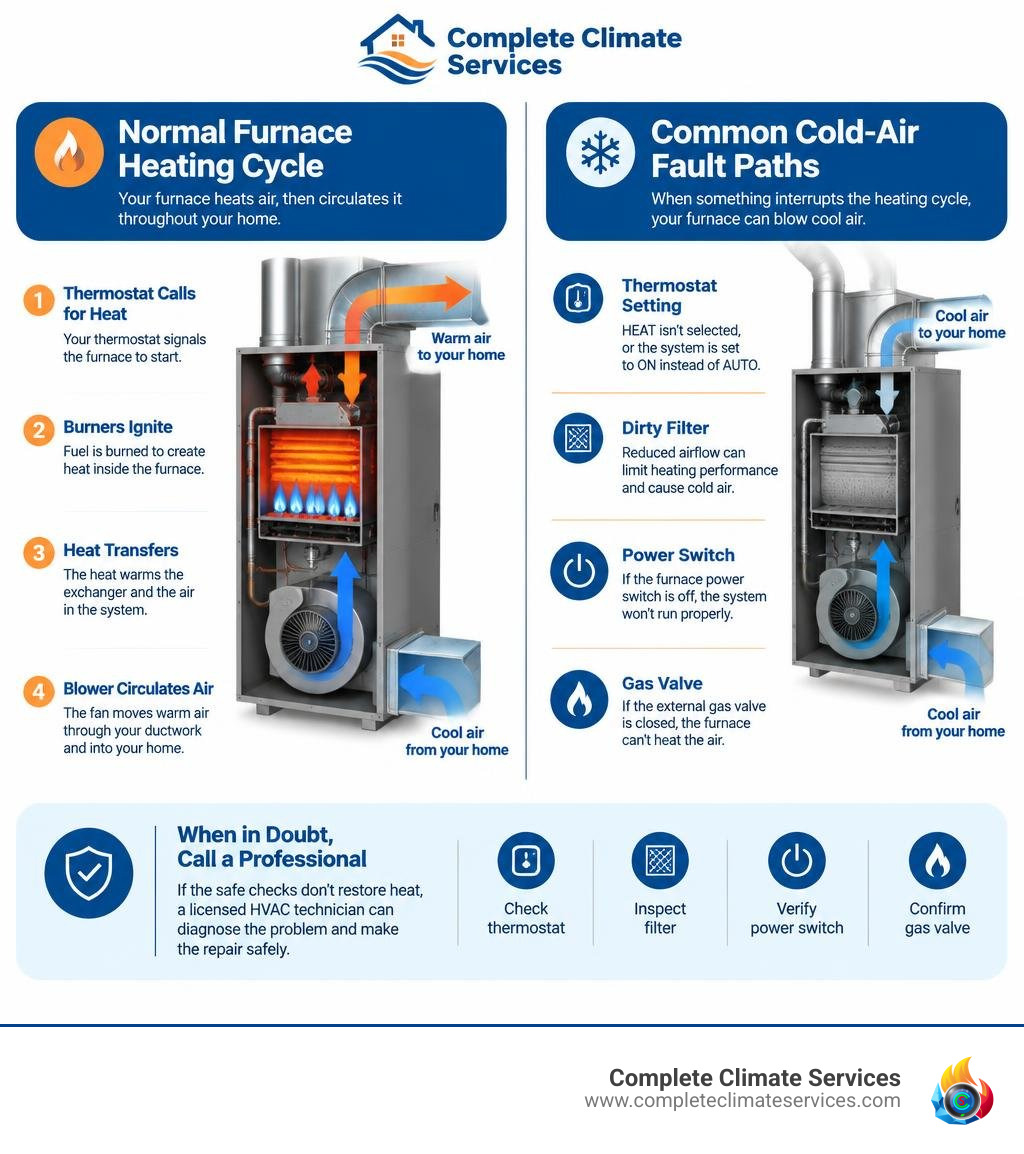
Understanding why your furnace delivers cold air starts with recognizing what you can safely inspect and when professional service is the right next step.
Common Causes of Cold Air From a Furnace
When a furnace blows unheated air, the blower may still be running even though the heating cycle has stopped or failed to start. Safety controls can shut off the burners when the system detects an airflow, ignition, combustion, or overheating concern.
The table below separates normal startup behavior from conditions that need attention:
| What You Notice | Likely Explanation | Expected? | Best Next Step |
|---|---|---|---|
| A brief burst of cool air when heating begins | Air already in the ducts reaches the register before the system warms | Often normal | Give the heating cycle a moment to establish. |
| The vents stay cool while the fan keeps running | The thermostat fan may be set to ON between heating cycles | Setting issue | Change the fan setting to AUTO. |
| Air warms, then turns cool again | A restricted filter can cause the furnace to protect itself from overheating | Airflow concern | Install a clean, correctly sized filter and arrange service if it persists. |
| No warmth and the burners do not remain on | The system may have an ignition, fuel-supply, or flame-sensing fault | Service needed | Confirm that the gas valve is open, then call a technician. |
| The burners start but stop almost immediately | The furnace is not receiving a reliable flame-safety signal | Service needed | Schedule a technician to clean or replace the flame sensor. |
| Some rooms receive noticeably cooler air | Duct leaks, loose connections, or restricted airflow may be affecting delivery | Duct concern | Have a technician inspect the ductwork. |
Cool Air at Startup
If the air feels cool during the first part of a heating cycle, the system may be operating normally. When the thermostat calls for heat, the furnace begins its startup sequence and the heat exchanger needs time to warm before the supply air becomes noticeably warmer.
During this warm-up period, the blower can move room-temperature air that was sitting in the ductwork. Once the furnace reaches its operating temperature, the air from the registers should warm up.
Thermostat Fan Setting
One of the easiest problems to correct is the thermostat fan setting. AUTO runs the blower only during a heating cycle, while ON keeps it running between cycles.
If changing the fan setting does not solve the problem, review these common furnace problems for other symptoms that may need service.
Restricted Airflow From a Dirty Filter
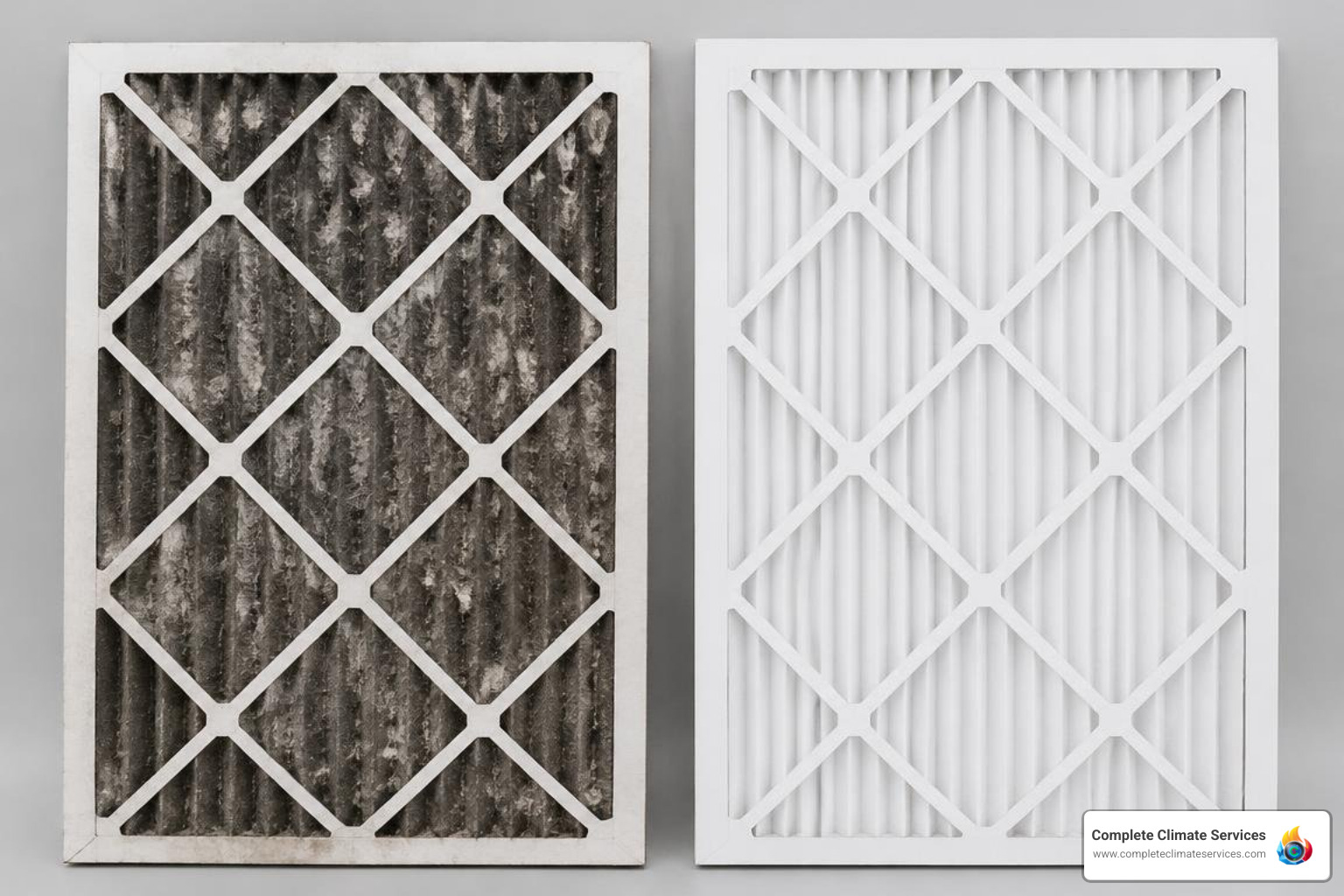
A clogged filter can restrict return airflow and cause the furnace to overheat. To protect the equipment, the high-limit switch can turn off the burners while the blower continues to run and cool the unit.
Replace a visibly dirty filter with the correct size and type for the system. If the problem returns after a filter change, schedule service rather than repeatedly restarting the furnace.
Ignition, Gas Supply, and Pilot Problems
A gas furnace needs a steady fuel supply and a working ignition system. If a gas valve is closed or an ignition component fails, the blower can circulate unheated air because the burners do not stay on.
Homeowners can confirm that the external gas shutoff valve is in the open position, but should leave pilot and ignition work to a technician. A technician can diagnose furnace ignition failure safely.
Flame Sensor and Safety Shutdowns
A flame sensor helps the furnace confirm that the burners are operating safely. When it cannot confirm the flame, the control board closes the gas valve and the blower may keep moving cool air.
A technician can inspect the ignition system and related safety controls during winter furnace repairs. Avoid removing or servicing these components yourself.
Duct Leaks and Condensate Drain Problems
ENERGY STAR duct sealing estimates that a typical home loses about 20 to 30 percent of the air moving through the duct system to leaks and poorly connected ducts. Damaged or disconnected ducts can make rooms feel colder and reduce the amount of warm air reaching the registers.
High-efficiency furnaces also use condensate drains that can trigger a safety shutdown when blocked. A technician can inspect the drain system and the ductwork during a ductwork installation or repair visit.
Safe Checks You Can Do Before Calling a Technician
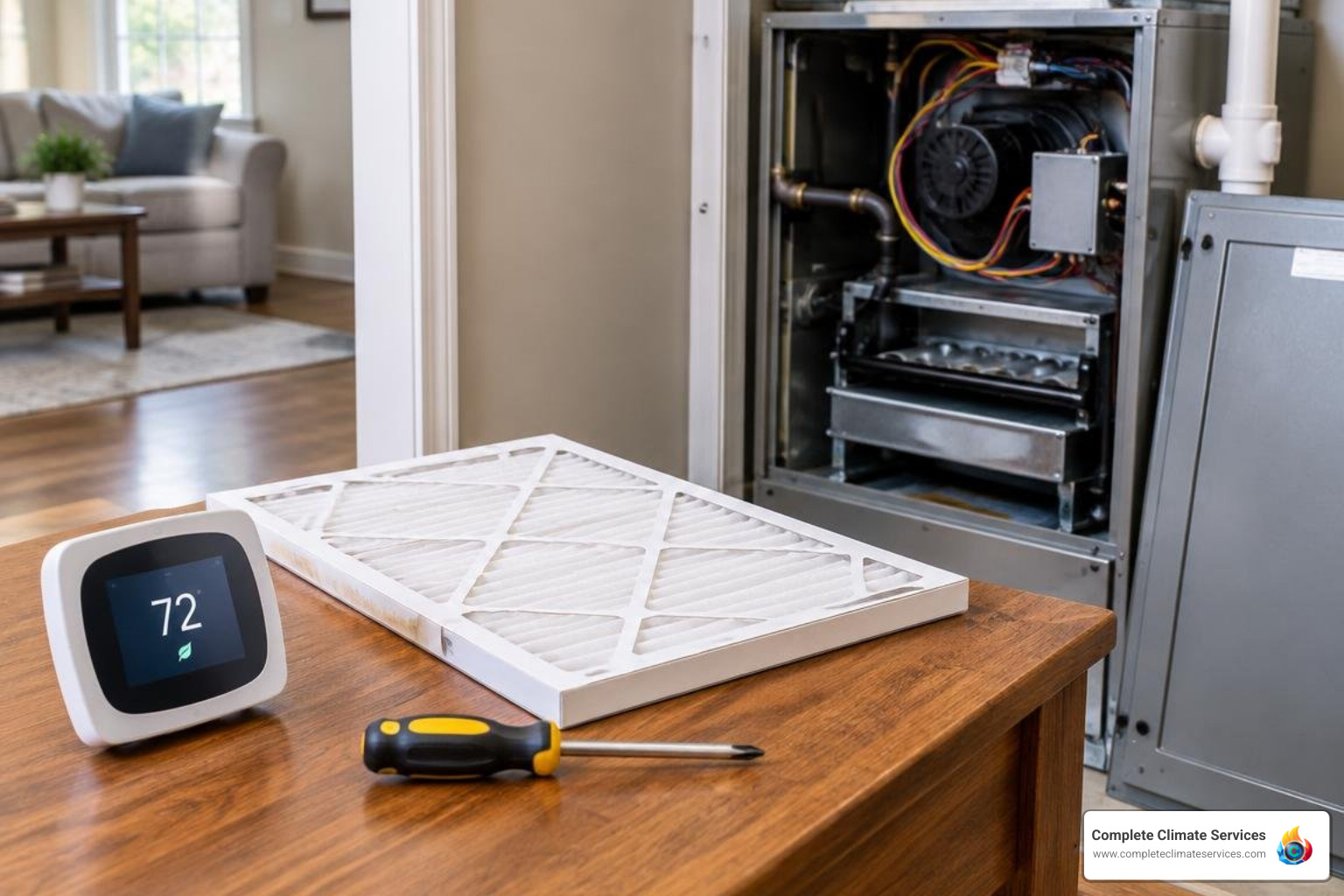
These checks can help rule out simple settings and airflow issues. Do not remove furnace panels or attempt repairs involving gas, wiring, burners, ignition parts, or safety controls.
Thermostat Settings
Confirm that the system is set to HEAT and the fan is set to AUTO. Raise the temperature setting a few degrees above the current room temperature, then give the system time to start a normal heating cycle.
Air Filter
Check the filter through its normal access slot and replace it if it is visibly dirty or clogged. Use the correct filter size and make sure the airflow arrow points toward the furnace cabinet.
Power Switch and Breaker
Confirm that the furnace power switch is on and that the furnace breaker has not tripped. If the breaker trips again or the furnace will not start, leave it off and call a technician rather than resetting it repeatedly.
Gas Valve Position
For a gas furnace, look only at the external manual shutoff valve. The handle should be parallel to the gas pipe for the open position; if you smell gas, leave the home and contact the gas utility or emergency services.
Vents and Returns
Make sure supply registers and return grilles are not blocked by furniture, rugs, or other items. Keep several registers open so the furnace can move air properly.
If these checks do not restore heat, schedule a furnace repair visit. A technician can safely handle any service the system needs.
When to Call a Professional: Safety Hazards and Major Repairs
What Our Technician Checks When a Furnace Blows Cold Air
When diagnosing furnace blowing cold air, a technician tests the heating sequence to identify where it stops or fails to operate as intended. The inspection can include the igniter and flame sensor, gas pressure, and the high-limit and pressure switches. Each component is checked against the furnace model’s specifications so the repair addresses the actual fault rather than only the symptom.
The technician may also inspect the condensate drain and float switch on high-efficiency equipment, then evaluate the blower, return airflow, and supply airflow. The visit can include a visual review of venting, an assessment of heat exchanger condition, and interpretation of control board fault codes for the specific model. After the diagnostic work is complete, the technician explains the findings and recommended repair before work begins.
A Recent Service Call in Towson
In a recent Towson service call, a homeowner noticed cool air blowing from every vent even though the thermostat called for heat. Our technician found a cracked hot surface igniter and replaced it on the spot. We completed the repair after identifying the cracked igniter during the service call. Warm air returned throughout the home within the hour. This case shows that cool air from every vent can require professional diagnosis when the thermostat is calling for heat.
Safe homeowner checks can rule out simple settings and filter issues, but heating equipment includes high-voltage electricity and combustible gas. If the checks above do not restore heat, contact a licensed HVAC technician for furnace issues before the problem causes further damage.
Stop troubleshooting and contact a licensed HVAC technician or emergency HVAC service if you notice:
- A rotten-egg odor of natural gas or propane. Leave the home and call the gas utility or emergency services.
- A loud booming or banging sound during burner ignition.
- Repeatedly tripping electrical circuit breakers.
- Frequent short-cycling that continues after you replace the air filter.
Signs of a Cracked Heat Exchanger
The heat exchanger separates combustion byproducts, including carbon monoxide, from the air circulating through the home. A damaged heat exchanger requires prompt professional evaluation; review CDC carbon monoxide guidance and make sure working carbon monoxide alarms are installed according to local requirements.
Warning signs can include soot around the burner area, unusual odors while the furnace runs, burner flames that flicker when the blower starts, or a carbon monoxide alarm sounding. Leave the home and seek emergency help if a carbon monoxide alarm activates or anyone feels ill.
Control Board Diagnostic Flash Codes
Many furnaces use an LED light to communicate a fault through a flash pattern. Because the meaning varies by manufacturer and model, note the pattern and share it with your technician instead of relying on a generic code list.
Aging Units and Sizing Problems
As a furnace ages, worn motors, electrical relays, and other components can contribute to unexpected shutdowns. A furnace that is too large or too small for the home can also short-cycle or struggle to maintain comfortable temperatures.
When repairs become frequent or safety controls trip repeatedly, a technician can evaluate repair and replacement options, including furnace installation.
How to Prevent Heating Breakdowns Before Winter
Preventive maintenance helps keep your heating system reliable through cold weather. A few routine habits can reduce airflow problems and help identify small concerns before they interrupt heating.
To protect your system throughout the heating season:
- Check the air filter regularly: Replace it when it is visibly dirty or according to the manufacturer’s schedule.
- Keep vents and registers unobstructed: Move furniture, rugs, and curtains away from supply vents and return grilles.
- Inspect accessible ductwork: Look for obvious loose connections or damage, then arrange professional service for repairs.
- Schedule a seasonal inspection: A fall furnace inspection lets a technician inspect electrical connections, combustion, and safety controls.
A pre-winter heating guide and regular furnace maintenance can help identify worn igniters, dirty sensors, and drainage restrictions before they leave you without heat.
Frequently Asked Questions
What should I tell the technician when I call?
Tell the technician when the cold air occurs, how long it lasts, and whether you notice unusual sounds or odors. Share any error-light pattern you see and the date of the last filter change so the service visit starts with useful details.
How can I keep my home warm while I wait for service?
Close curtains after dark, close doors to unused rooms, and dress warmly while you wait for service. Never use an oven, grill, or other combustion appliance to heat the home.
When should the air from my vents become warm?
Some cool air at the beginning of a heating cycle can be normal while the furnace warms up. If the air never becomes warm or the burners repeatedly shut down, arrange a professional inspection.
Is it an emergency if my furnace blows cold air?
Cold air alone is not always an emergency, but a gas odor, carbon monoxide alarm, smoke, sparks, repeated breaker trips, or loud ignition noises need immediate attention. Leave the home and contact the gas utility or emergency services for a suspected gas leak or carbon monoxide concern.
Why does my heat pump blow cool air in heating mode?
Heat pump air often feels cooler than air from a gas furnace, and brief defrost cycles are normal in cold weather. Call a technician if the system never produces comfortable heat, runs constantly, or shows signs of a malfunction.
Conclusion
A furnace blowing cold air may signal a minor setting issue or a mechanical problem that needs professional diagnosis. Use the safe observations in this guide to describe the symptoms clearly when you call for service. Prompt attention can help protect the equipment and restore dependable heat. Contact a licensed HVAC technician right away if the furnace shows any safety warning signs.
Written by Michael Holcomb, Co-Founder and Operations Manager, Complete Climate Services.
Complete Climate Services brings 20+ years of HVAC experience and a 5.0-star Google rating to homeowners and businesses in Baltimore City, Baltimore County, Anne Arundel County, and Howard County. For safe, reliable help with heating problems, contact our team for furnace repair.
Complete Climate Services LLC · 204 S Chapel St, Baltimore, MD 21231 · (443) 898-4747

