

What to Do When Your Furnace Makes Noise
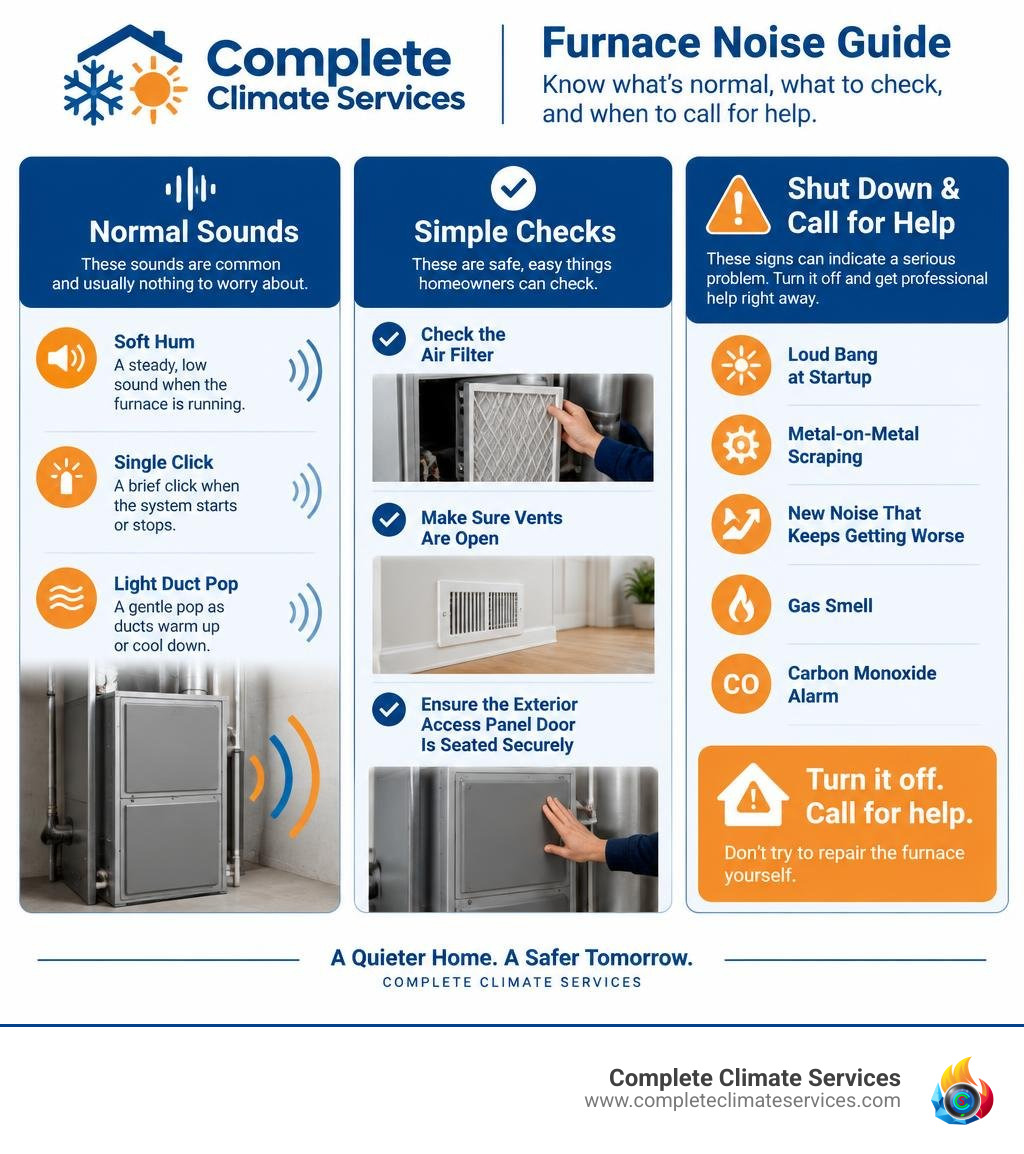
A furnace making noise is often telling you something about airflow, loose exterior parts, or a problem that needs service. A soft hum, a single click, or a light pop as ducts warm up can be normal. If the furnace whistles, check the air filter and make sure vents are open. If it rattles, make sure the exterior access panel door is seated securely. For other warning signs, review these common furnace problems.
Turn the furnace off and call an HVAC technician for a loud bang at startup, metal-on-metal scraping, or a new noise that keeps getting worse. If you smell gas or a carbon monoxide alarm sounds, leave the building and call emergency services or your gas utility from outside. Don’t try to repair the furnace yourself.
Complete Climate Services recommends limiting homeowner checks to accessible, low-risk items such as filters, vents, and the exterior access panel door. Any inspection or repair inside the furnace should be handled by a technician.
Why a Furnace Can Make Noise: Deciphering the Sound Profile
When a heating system operates properly, it blends into the background of your home. It delivers steady, comfortable warmth with little more than the gentle whoosh of air moving through your supply registers. When mechanical wear, airflow restrictions, or combustion issues arise, the system develops distinct acoustic signatures that point directly to the underlying problem.
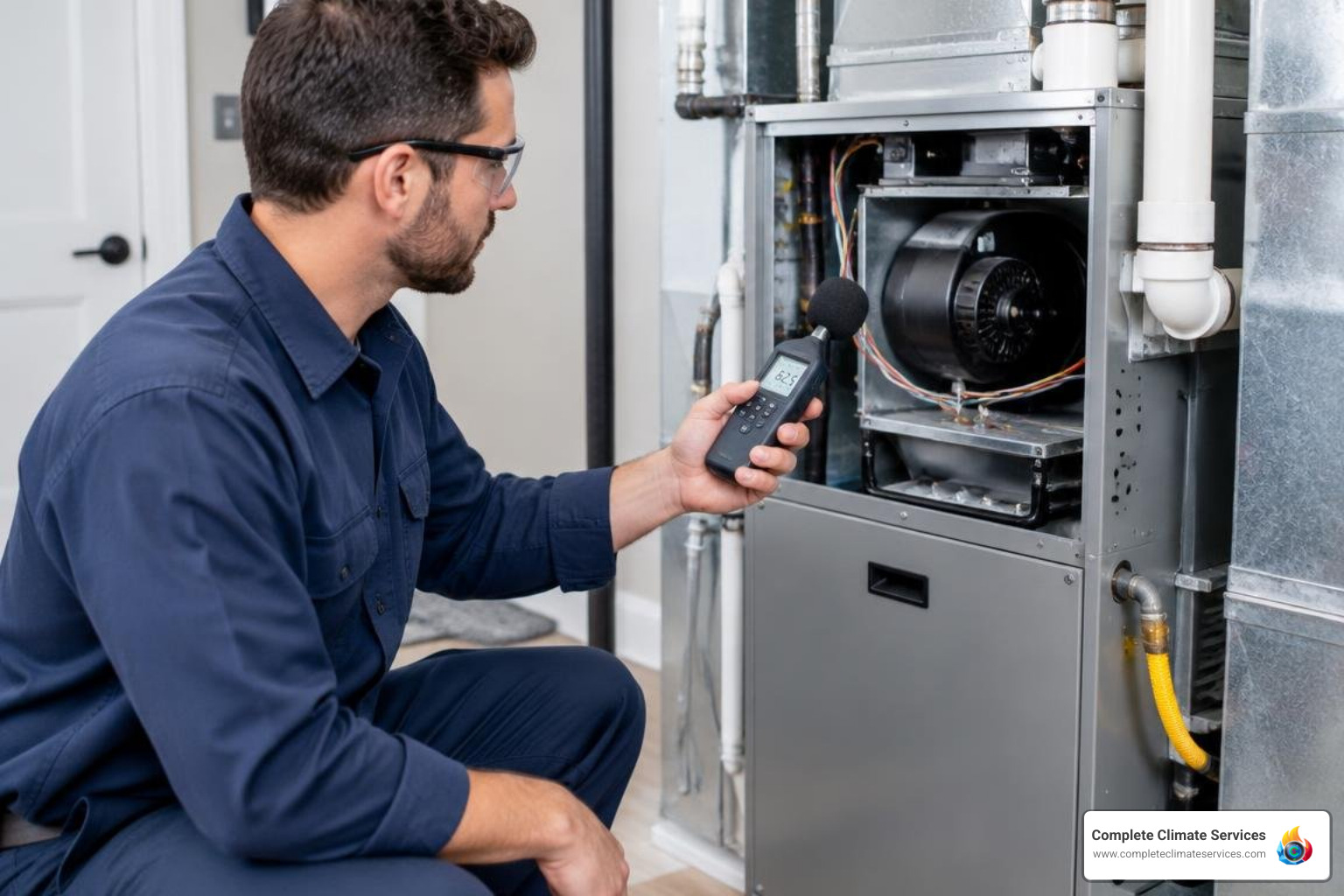
A noisy heating system is communicating with you. Mechanical friction inside motor bearings produces high-frequency squeals, restricted ductwork generates sharp whistles, and loose cabinet doors vibrate in sympathy with the internal blower. By deciphering the specific pitch, rhythm, and timing of these sounds, we can pinpoint whether the issue is a minor maintenance task or an urgent mechanical hazard.
Furnace Making Noise at Startup: Delayed Ignition and Booms
If your gas furnace ignites with a loud “boom” or “bang” that rattles your floorboards, you are experiencing delayed ignition. Under normal operating conditions, the gas valve opens, releasing fuel across the burner assembly, where it is instantly lit by the hot surface ignitor or electronic spark.
When burners become corroded, coated in soot, or affected by a gas-pressure issue, the fuel may not light immediately. Fuel can build up in the combustion chamber before igniting at once, creating a sharp boom and putting stress on the heat exchanger. Repeated events can lead to serious damage and potential carbon monoxide concerns, so schedule service for furnace ignition failure rather than trying to inspect burners yourself.
Squealing and Screeching: Blower Motors and Belts
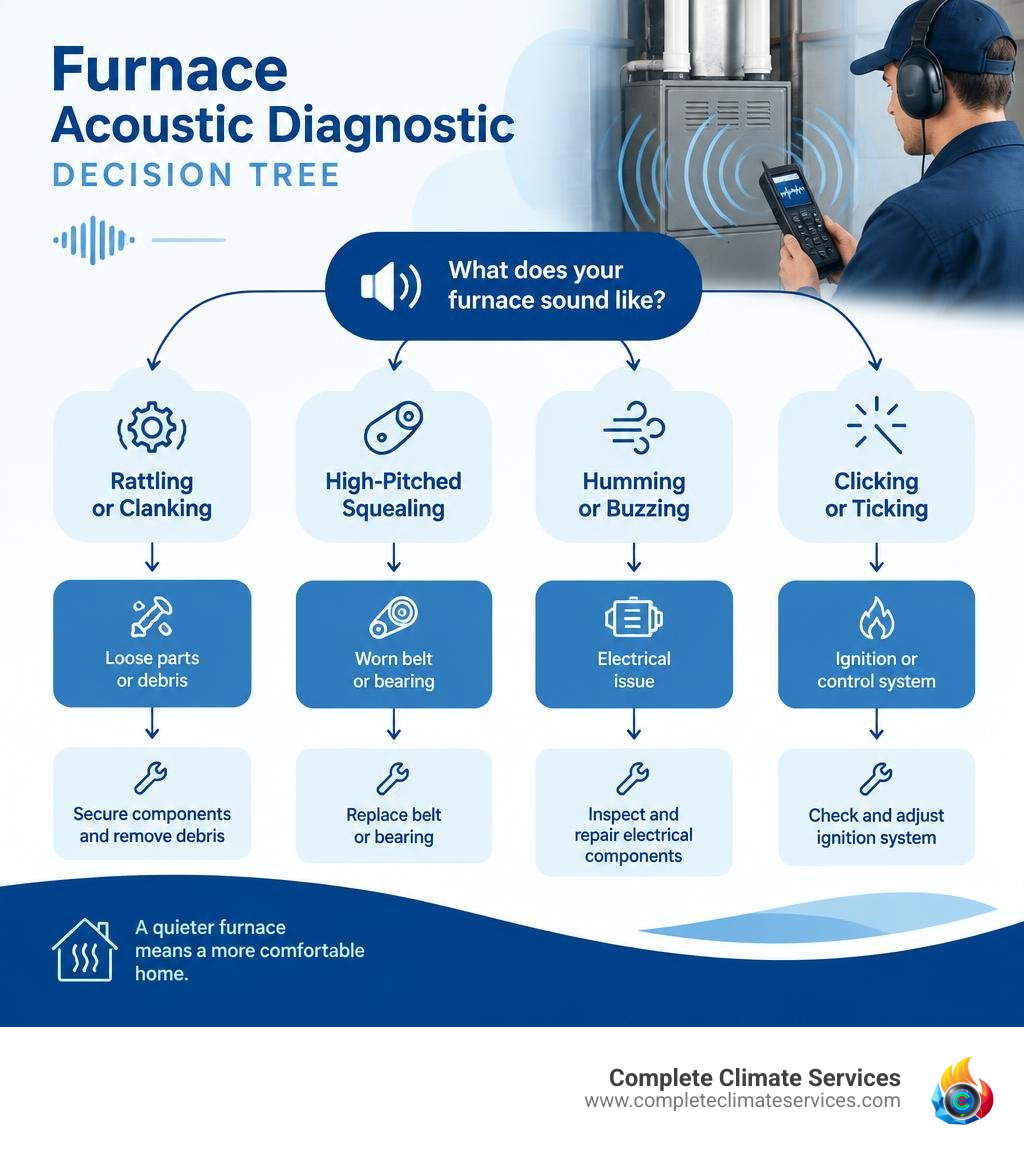
A sharp, high-pitched screeching or squealing sound typically originates from the blower assembly responsible for circulating air through your home. In modern furnaces equipped with direct-drive blowers, this sound indicates unlubricated or failing internal motor bearings. As the factory lubrication degrades, metal-on-metal friction generates intense heat and high-frequency sound.
In older heating systems that utilize a belt-driven blower assembly, a squeal often points to a worn, loose, or misaligned fan belt. When the belt loses tension, it slips across the metal pulleys during motor startup and high-speed operation. Addressing belt tension or replacing dry bearings early prevents the motor from seizing completely mid-winter.
Rattling, Scraping, and Vibration Hazards
Rattling and scraping noises range from harmless panel vibrations to critical mechanical failures:
- Loose Access Panels: The blower motor creates natural vibrations. If the thumb screws, latches, or cabinet panels are loose, the sheet metal rattles rhythmically against the frame.
- Loose Motor Mountings: Over years of thermal cycling, the bolts securing the blower housing to the furnace chassis can back out, producing a heavy, vibrating rattle during operation.
- Broken Blower Wheel (Squirrel Cage): If a counterweight detaches from the blower wheel or debris enters the housing, the wheel becomes unbalanced. This creates an aggressive wobble that can escalate into a harsh metallic scraping sound as the blades strike the outer casing.
Whenever you hear harsh metal-on-metal scraping, shut the system off immediately at the thermostat to prevent catastrophic motor and housing destruction.
Electric Furnace Noise: Transformers and Relays
Electric furnaces lack gas burners and combustion chambers, but their high-voltage electrical components can produce noticeable acoustic anomalies. A low, steady electrical hum is normal as the low-voltage step-down transformer powers the control board and thermostat circuit.
However, if that hum escalates into a loud buzzing or rhythmic chatter, you may have a failing capacitor, a loose transformer core, or an electrical contactor relay struggling to seat properly under load. A constant buzz coming from an electric unit that is currently powered on, even when the thermostat is not calling for heat, often indicates an electrical relay stuck in an energized position or a failing transformer winding that requires professional diagnostic testing.
Diagnostic Breakdown of Common Heating System Sounds
To help you identify what your system is experiencing, we have compiled a diagnostic matrix outlining common heating system noises, their typical mechanical causes, and the urgency of repair.
| Sound Profile | Timing / Location | Most Likely Cause | Urgency Level |
|---|---|---|---|
| Loud Bang / Boom | Right as burners light | Delayed ignition / dirty burner assembly | High (Shut off & call pro) |
| Metal Scraping | Continuous during blower operation | Blower wheel hitting housing / broken shaft | High (Shut off immediately) |
| High Squeal | Continuous or startup | Dry motor bearings / slipping fan belt | Medium (Service promptly) |
| Loud Buzzing | Cabinet / Electrical compartment | Failing transformer / weak capacitor / relay chatter | Medium (Schedule electrical check) |
| Whistling | Return grilles / Filter slot | Clogged filter / undersized ductwork | Low to Medium (Check filter today) |
| Popping / Knocking | Ductwork after system shuts off | Sheet metal thermal expansion / oil canning | Low (Harmless physics) |
| Rapid Clicking | Startup sequence (no heat) | Failing spark ignitor / dirty flame sensor | Medium (Schedule diagnosis) |
A deep knocking or popping noise that echoes through the walls shortly after the heating cycle ends can come from ductwork flexing as temperatures change. Flat sections of sheet metal can bow outward and pop back as they cool. If the sound is new, unusually loud, or paired with poor airflow, a technician can rule out duct contact or other system concerns.
Safe Checks Before You Call a Technician
Homeowners can safely check a few accessible items before requesting service. Do not remove furnace panels beyond the exterior access panel door or attempt work inside the unit.
Air Filter
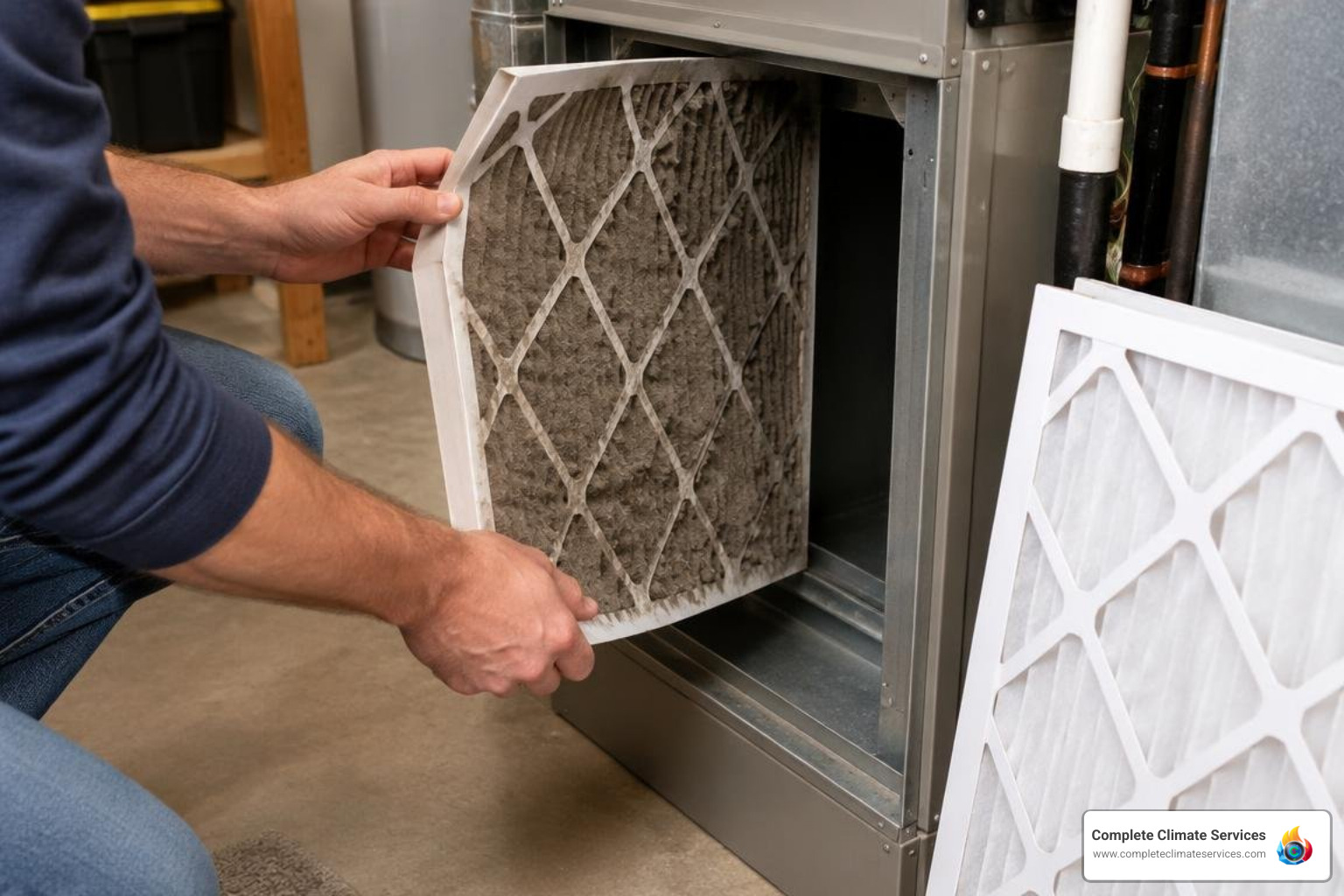
Check the filter at its accessible slot and replace it if it looks heavily soiled or blocks light. Use the size and airflow direction printed on the filter frame. A clean filter can reduce airflow-related whistling and helps the system operate normally.
If the filter does not solve the noise, do not investigate inside the furnace. Arrange service so a technician can identify the source safely.
Vents and Returns
Make sure furniture, rugs, and other items are not blocking return grilles or supply registers. Keep most registers open so air can move through the home as intended.
If whistling continues after these simple checks, service may be needed to identify the cause.
Access Panel Door
Confirm that the exterior access panel door is fully seated and latched. A loose door can rattle as the system runs.
If the door will not sit securely, leave the furnace off and arrange service rather than forcing it into place.
Loose Duct Contact
Listen for ductwork touching a joist, wall, or nearby object as the system starts and stops. Move stored items away from accessible ducts, but do not alter duct connections. During a furnace repair visit, our technician inspects the blower, motor, belt, burners, and electrical parts. A seasonal fall furnace inspection and routine furnace maintenance can help identify developing issues before they become more disruptive.
Dangerous Furnace Sounds That Require Immediate Shutdown
While some noises simply point to an overdue filter replacement, others can signal a serious safety concern that needs immediate attention.
Turn off the heating system at the thermostat and contact a qualified professional if you encounter:
- Repeated loud booming at ignition: Shut the system off and call a technician because delayed ignition needs professional assessment.
- Harsh metal-on-metal grinding: Shut the system off and call for service to avoid further damage.
- Continuous electrical arcing or sizzling: Shut the system off and call a qualified professional because the noise may signal an electrical hazard.
- Loud banging with sulfur odors: Leave the building and contact emergency services or your gas utility from outside. Review CDC carbon monoxide guidance after reaching a safe location.
For urgent heating concerns, contact our emergency HVAC service.
A Recent Service Call in Dundalk
At a Dundalk home, a carbon monoxide detector kept sounding near the furnace closet. Our team inspected the system, found a cracked heat exchanger, and shut the unit down because it was unsafe to operate. We then guided the family through a same-week replacement, which passed every safety check. This case is a reminder that warning signs should be taken seriously: banging at ignition should not be ignored, since combustion-related problems require prompt professional assessment.
What Our Technician Checks When a Furnace Is Noisy
During a service visit, our technician begins by matching the sound to the point in the heating cycle when it occurs. The inspection includes the burners and ignition timing, along with gas pressure concerns that can contribute to delayed ignition. The technician also examines the blower wheel, motor bearings, and, on older units, the belt for wear, looseness, or contact that may create squealing, scraping, or vibration.
The inducer motor is checked for abnormal operation, and electrical components such as the capacitor and relays are evaluated when humming, buzzing, or rapid clicking is present. The technician also looks for loose panels, mounting points, and ductwork contact that can turn normal vibration into a persistent rattle.
Before returning the furnace to operation, the technician reviews the system response and looks for signs that the noise is connected to restricted airflow, an ignition concern, or a moving component. This approach helps separate accessible airflow issues from conditions inside the furnace that should only be assessed by a trained professional. If a repair is needed, the technician can explain the cause and the appropriate next step.
Frequently Asked Questions About Noisy Heating Systems
What should I tell the technician about the noise?
Describe when the noise happens, where it seems to come from, and whether it sounds like a bang, squeal, rattle, whistle, pop, or click. Let the technician know how long it has been happening and whether you have noticed an unusual smell or a carbon monoxide alarm. These details can help narrow the inspection safely.
What is the difference between furnace noise and ductwork noise?
Furnace noise usually comes from the equipment cabinet, such as the blower, burners, or ignition components. Ductwork noise is more likely to be heard in walls, ceilings, or rooms farther from the furnace as metal expands, cools, or contacts a nearby surface.
Can furnace noise mean higher energy bills?
It can. Worn motors and restricted airflow can make the system work harder than it should, which may raise energy use. A technician can identify the source of the noise and recommend the appropriate repair.
Should I turn off my furnace if it is making a loud noise?
Turn the system off if the sound is a loud boom, grinding, scraping, sizzling, or a new noise that is getting worse. Also leave the building and seek help from outside if you smell gas or a carbon monoxide alarm activates.
Why does my furnace make noise when it shuts off?
Popping or ticking after a heating cycle can happen as metal ductwork changes temperature. If the noise is especially loud, new, or accompanied by weak airflow, a technician can check for duct contact or system conditions that need attention.
Keep Your Home Warm, Safe, and Quiet
A furnace making noise may be a simple airflow concern or a sign that the system needs professional attention. Safe checks can help rule out an accessible filter, vent, or panel-door issue, but sounds from inside the furnace should be evaluated by a technician.
Written by Michael Holcomb, Co-Founder and Operations Manager, Complete Climate Services.
Complete Climate Services brings 20+ years of HVAC experience and 5.0 stars on Google to heating service for Baltimore City, Baltimore County, Anne Arundel County, and Howard County. contact our team for furnace services when your heating system needs professional care.
Complete Climate Services LLC · 204 S Chapel St, Baltimore, MD 21231 · (443) 898-4747

