What to Do When Your AC Condensate Drain Is Causing Problems
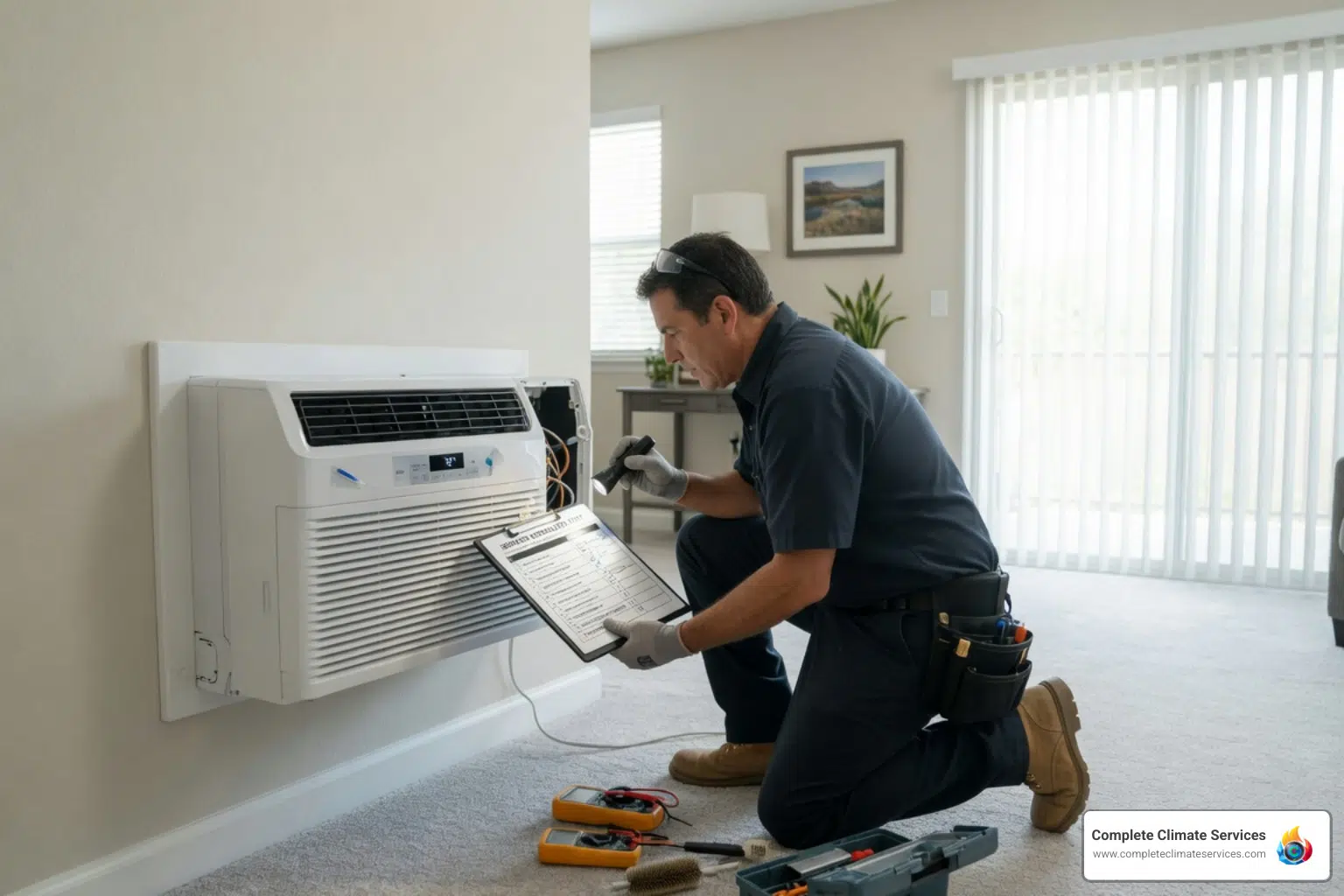
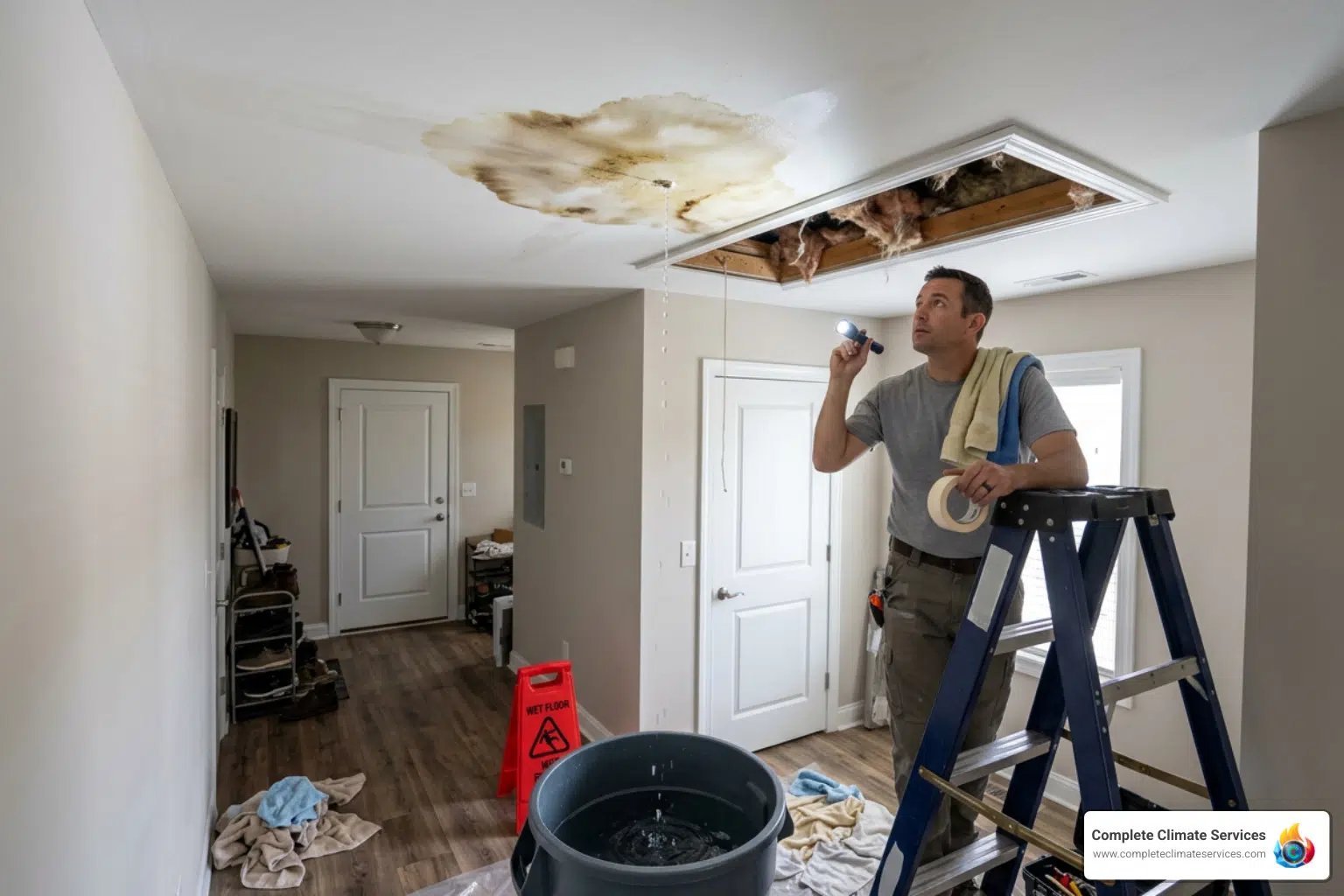
When it comes to AC repair and condensate drain problems, most Baltimore homeowners don’t realize there’s an issue until water is already dripping from their ceiling — or their AC has suddenly shut off on the hottest day of the year.
Here’s what you need to know right now:
- A clogged condensate drain line is one of the most common causes of AC breakdowns and indoor water damage.
- Modern AC systems will automatically shut off via a safety float switch when the drain pan fills up.
- A typical residential AC removes 5 to 20 gallons of moisture from the air every day in peak summer.
- Professional drain line cleaning costs between $100 and $250 and can prevent thousands in water damage repairs.
- Most minor clogs can be cleared with a wet/dry vacuum and a vinegar flush — but persistent or recurring clogs need a pro.
If your AC just shut off unexpectedly, you’ve noticed water pooling near your air handler, or you’re catching a musty smell coming from your vents, your condensate drain line is likely the culprit. This guide walks you through exactly what’s happening, what you can do right now, and when to call for help.
I’m Michael Holcomb, Co-Founder and Operations Manager of Complete Climate Services, and over the years our team has handled countless AC repair and condensate drain calls across the Baltimore area — many of them emergencies that started as a slow, ignored drip. Read on, and I’ll show you how to spot the warning signs early and protect your home before a small clog turns into a major repair bill.
Understanding Your AC Condensate Drain Line and How It Works
To understand why this simple pipe causes so many headaches, we have to look at how your air conditioner actually cools your home. Your AC doesn’t just lower the temperature; it acts as a massive dehumidifier.
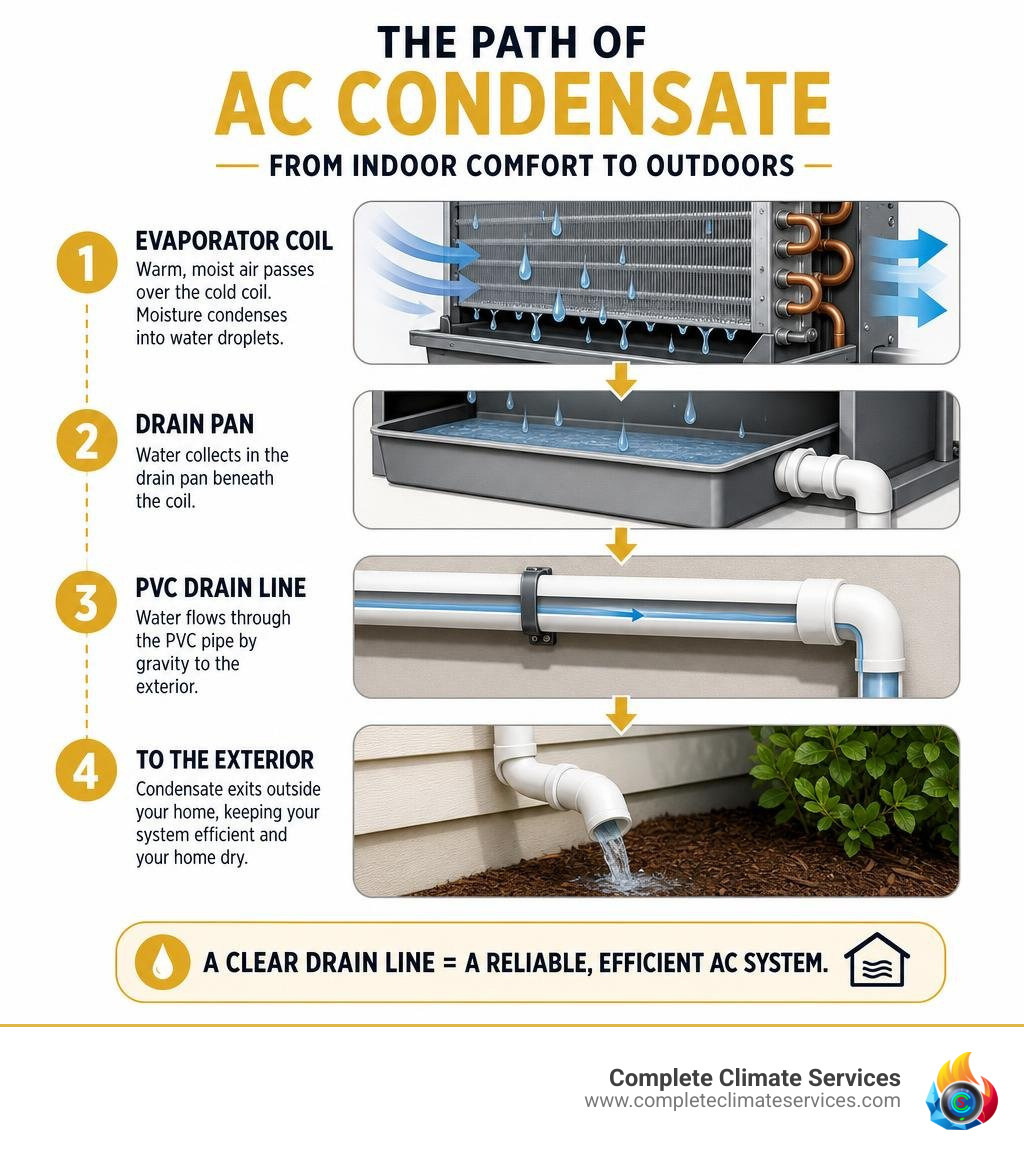
As warm, humid indoor air is pulled across the freezing cold evaporator coil inside your indoor air handler, heat is absorbed by the refrigerant. At the same time, moisture from the humid air condenses on the cold surface of the coil—much like water droplets forming on a cold glass of iced tea on a humid July afternoon in Dundalk or Curtis Bay.
This condensed water (condensate) drips off the evaporator coil and collects in a primary drain pan located directly underneath the coil. From there, gravity takes over. The water flows out of the pan and into a white PVC pipe—the condensate drain line—which typically channels the water safely out of your home. Depending on how your home is built, this line might terminate near your outdoor condenser unit, run to a basement floor drain, or connect to a dedicated plumbing trap under a sink.
Without this system working flawlessly, those 5 to 20 gallons of daily moisture would have nowhere to go but straight into your drywall, flooring, and structural framing.
Why Proper Sizing Matters for Your AC Drainage System
According to building codes like the International Mechanical Code (IMC 307.2.2), primary condensate drain lines must have a nominal diameter of at least 3/4 of an inch. While 3/4-inch PVC is the industry standard for most residential systems, experienced HVAC installers often recommend oversizing the primary line to 1 inch.
A 1-inch PVC pipe has a 78% larger cross-sectional area than a 3/4-inch pipe. This extra space makes it dramatically harder for algae, dust, and biofilm to bridge the gap and form a complete clog.
Additionally, gravity-fed drain lines require a minimum downward slope of 1/8 inch per foot of horizontal run to keep water moving. However, real-world settling can cause pipes to sag over time. That is why we prefer a slope of 1/4 inch per foot whenever possible, which provides a safer margin against structural shifting. If you are planning a system replacement or want to double-check your existing setup, you can use a condensate drain size calculator to evaluate the exact code minimums and slope requirements for your system’s tonnage.
The Hidden Dangers of a Clogged Condensate Drain Line
A clogged condensate line is far more than a minor inconvenience. Because air handlers are frequently installed in attics, upper-floor utility closets, or basements, an overflowing drain pan can quickly lead to severe structural and financial consequences:
- Structural Water Damage: Water overflowing from an attic unit will seep through your ceiling drywall, causing yellow-brown stains, sagging plaster, and eventually a partial ceiling collapse.
- Mold and Mildew Growth: Mold spores thrive in dark, damp environments. If water overflows into your walls or carpets, toxic mold can establish itself in as little as 24 to 48 hours, threatening your family’s respiratory health.
- Electrical Hazards: Water dripping from an air handler can find its way into electrical junction boxes, control boards, or blower motors, creating short circuits and fire hazards. If you suspect water has contacted electrical components, it is crucial to perform a professional AC repair and electrical inspection to ensure the system is safe to operate.
Fortunately, modern HVAC systems are equipped with an auxiliary float switch (or “wet switch”). This safety device is mounted in the secondary drain pan or directly inside the primary drain line. When water backs up and rises to a dangerous level, the float rises, breaking the 24V thermostat control circuit and instantly shutting down your entire air conditioning system.
If your system has suddenly turned off and won’t respond to the thermostat, you can consult our comprehensive AC troubleshooting guide to help narrow down whether a tripped float switch or a different electrical fault is the root cause.
Can a Clogged Drain Line Cause Your AC to Stop Cooling?
Yes, a clogged drain line can stop your home from cooling in two distinct ways.
The first is the direct safety shutdown described above. When the float switch is triggered, it completely cuts power to your outdoor condenser unit or the entire system. This prevents the system from running, which stops the production of any further water—saving your ceilings but leaving you in the sweltering heat.
The second way involves restricted airflow and frozen evaporator coils. When a drain line is partially blocked, water pools in the primary pan. If the air handler’s cabinet becomes overly humid and airflow is restricted by a dirty air filter, the moisture on the evaporator coil can rapidly freeze. Once a layer of ice forms on the coil, it acts as an insulator, blocking heat transfer entirely.
If this happens, you will notice your indoor fan running, but you will have warm air blowing from your vents instead of crisp, cool air.
Spotting the Signs and Causes of a Clogged AC Drain Line
Catching a drain line issue before the safety switch trips or water drips through the ceiling can save you time, stress, and money. Keep an eye out for these common warning signs:
- Musty Odors: A damp, earthy, or locker-room-like smell coming from your supply vents is a classic indicator of standing water and mold growth inside your drain pan or line.
- Standing Water or Pooling: Check the floor around your indoor air handler. If you see puddles or damp concrete in your basement or utility closet, your primary drain is already overflowing.
- Water Stains on Ceilings or Walls: If your system is in the attic, keep a close watch on the ceilings of the rooms directly below. Any new discoloration warrants an immediate inspection.
- High Indoor Humidity: If your home suddenly feels sticky and humid despite the AC running constantly, the system may be struggling with poor drainage or frozen coils.
- A Dripping Secondary Drain Line: Many homes have a secondary emergency drain line that exits through an exterior soffit or directly above a window. If you see water dripping from this secondary pipe, it means your primary drain line is completely blocked, and the system is running on borrowed time.
Common Culprits Behind an AC Repair and Condensate Drain Blockage
Why do these lines clog in the first place? It is a combination of environmental factors and biology. The dark, warm, and damp interior of a drain pipe creates the perfect breeding ground for organic growth.
The most notorious offender is a bacterium known as Zoogloea. This bacteria forms a thick, gelatinous, “snot-like” slime inside the pipe. It feeds on the fine organic dust and pet dander that bypasses your air filter.
In addition to bacterial slime, we frequently find:
- Algae and Mold: Spores are pulled in from the indoor air and thrive in the slow-moving water.
- Household Dust and Pet Hair: If you skip regular filter changes, dust accumulates on the wet evaporator coil and eventually washes down into the narrow drain pipe, creating a thick sludge.
- Insect Nests: During the spring, small wasps, dirt daubers, or spiders love to crawl into the outdoor exit of the PVC pipe, building nests that completely block the water flow.
- Improper Pipe Slope: If the PVC pipe was installed without a proper downward pitch, water pools in horizontal sections, accelerating the rate of sediment and slime accumulation.
How to Safely Clean and Unclog Your AC Drain Line
If you are comfortable with basic DIY tasks, you can often clear minor clogs and perform preventive maintenance yourself. However, safety should always be your top priority. Before attempting any maintenance on your HVAC system, always turn off the power at the thermostat and the main circuit breaker.
For a complete breakdown of preventive maintenance steps, you can refer to our detailed guide on cleaning your AC drain line.
Step-by-Step DIY Guide to Clearing Minor Clogs
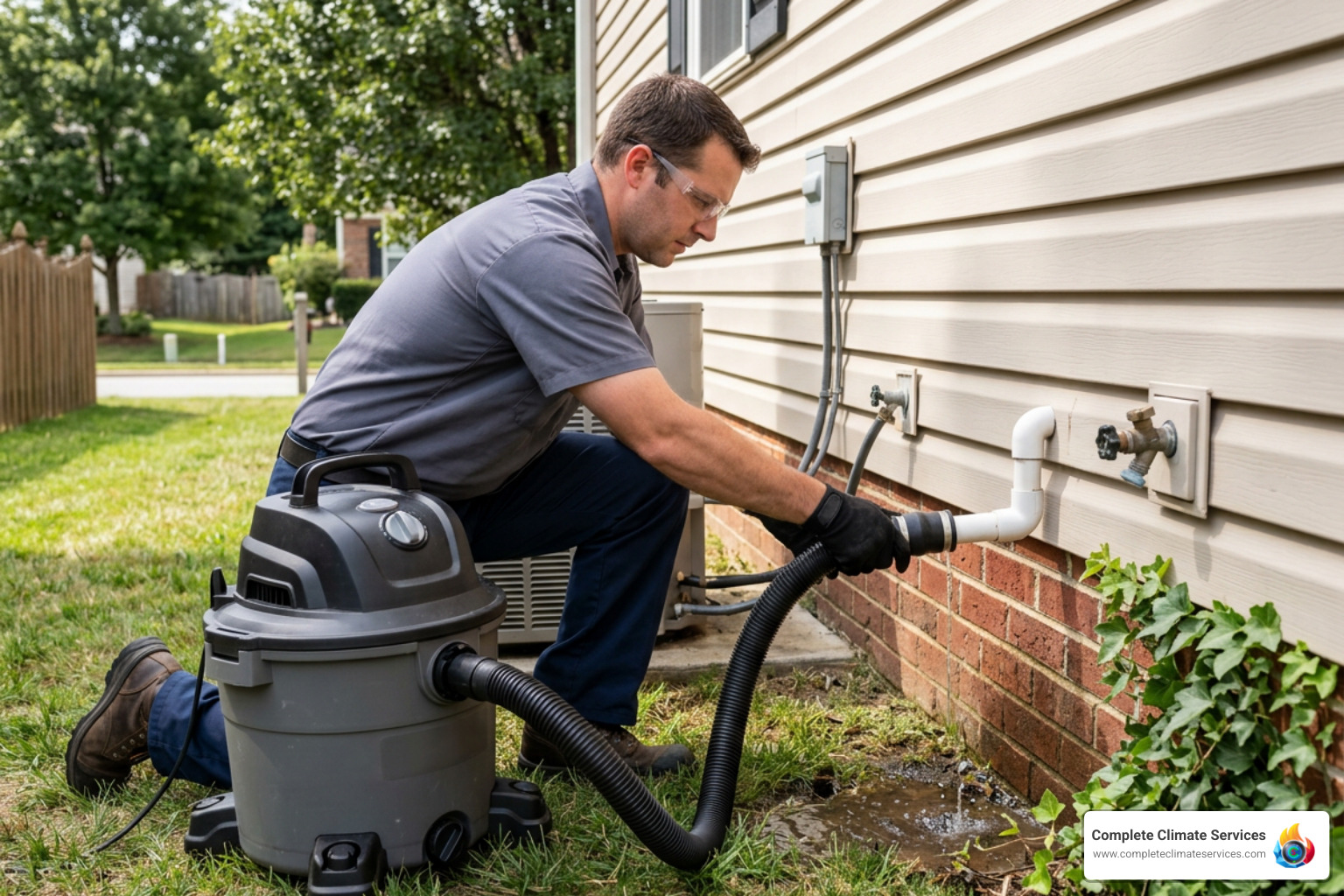
If your drain line is blocked and you have a wet/dry shop vacuum, this wet/dry vac cleaning method is incredibly effective and can often clear a clog in under 60 seconds:
- Locate the Outdoor Drain Exit: Find where your PVC condensate line exits your home (usually near the outdoor condenser unit).
- Attach and Seal the Vacuum: Connect the hose of your wet/dry vacuum to the end of the PVC pipe. To ensure maximum suction, wrap a rag or duct tape around the connection to create an airtight seal.
- Run the Vacuum: Turn on the shop vac and let it run on high for 30 to 60 seconds. This suction will pull the entire plug of algae, slime, and debris out of the line and into your vacuum canister.
- Check the Vacuum Canister: Open the vacuum to confirm you pulled out a gooey, greenish-black plug.
- Locate the Indoor Cleanout Port: Go to your indoor air handler and find the PVC cleanout tee (a T-shaped pipe fitting with a removable cap).
- Flush with Vinegar: Remove the cap and slowly pour one cup of distilled white vinegar down the line. Let it sit for 30 minutes to break down any remaining bacterial growth.
- Test the Flow: Pour a cup of warm (never boiling) water down the cleanout port to verify that it drains freely and exits outside without backing up.
When to Call a Professional for AC Repair and Condensate Drain Issues
While DIY methods work well for simple clogs, there are several situations where you should put down the shop vac and call an experienced HVAC technician:
- No Cleanout Port Exists: If your system was installed without an accessible T-fitting, you should not cut into the PVC lines yourself. A professional can clear the line and install a proper cleanout port for you.
- The Clog Keeps Returning: If your drain line clogs multiple times in a single season, there may be a deeper issue, such as an improper pipe slope, a damaged P-trap, or severe organic growth inside the evaporator coil cabinet.
- Electrical or Float Switch Issues: If your AC won’t turn back on even after you have cleared the line, the safety float switch may be broken, or there could be a deeper electrical problem. Attempting to bypass safety switches can lead to catastrophic water damage or electrical shock.
- Rusted or Damaged Drain Pans: Over time, metal drain pans can rust through, leading to leaks even if the drain line itself is clear. Replacing a drain pan requires removing the evaporator coil, a complex task that must be handled by a licensed professional.
If you are experiencing any of these issues, you can consult our local guide to finding a reliable local AC repair contractor to ensure you get honest, high-quality service in the Baltimore area.
Professional AC Repair and Condensate Drain Cleaning Costs
How much does it cost to have a professional handle this? In July 2026, standard professional drain line clearing in the Baltimore area typically ranges from $100 to $250, depending on how accessible your indoor unit is (attic and crawlspace installations generally cost slightly more due to the complexity of access).
If the technician needs to install a new cleanout tee, replace a faulty float switch, or repair damaged PVC piping, those additions can bring the total cost to around $185 to $350. Below is a simple cost-benefit comparison of DIY maintenance versus professional repair:
| Service Type | Average DIY Cost | Average Professional Cost (2026) | When to Choose |
|---|---|---|---|
| Routine Maintenance / Preventive Flush | $5 (Vinegar) | Included in AC Maintenance plan | Monthly during the cooling season |
| Standard Clog Clearing | $40 – $80 (Shop Vac purchase) | $100 – $250 | First-time clogs with accessible lines |
| Float Switch Replacement | Not recommended for DIY | $185 – $325 | If the switch is broken or system won’t restart |
| Cleanout Tee Installation | Not recommended for DIY | $75 – $125 (as an add-on) | If your system lacks a maintenance port |
| Emergency After-Hours Service | N/A | $250 – $350 | Active flooding or complete loss of cooling on hot days |
Frequently Asked Questions about AC Condensate Drains
Can I use bleach to clean my AC drain line?
While bleach is highly effective at killing mold and algae, we generally advise against using it in your AC drain line. Bleach produces harsh, toxic fumes that can be pulled into your home’s ductwork and circulated throughout your living spaces.
Furthermore, bleach is highly corrosive and can degrade older PVC glue joints, ruin the plastic of your drain pan, and kill the grass or landscaping plants where your drain line terminates outside. Distilled white vinegar is a much safer, eco-friendly alternative that effectively breaks down bacterial slime without damaging your system or your lawn.
Why is my AC drain pan overflowing if the line looks clear?
If you look down your cleanout port and see no standing water, yet your drain pan is still overflowing, you likely have one of three issues:
- A Cracked Drain Pan: The plastic or metal pan under your evaporator coil may have developed a crack or rusted through, allowing water to leak directly out of the bottom.
- A Clogged P-Trap: If your system has a P-trap (the U-shaped bend in the PVC pipe), a clog can form directly inside the bend while the rest of the pipe looks clear.
- Improper Trap Depth: On “draw-through” systems (where the blower fan is located after the coil), the fan creates negative pressure that can actually suck water back into the system if the P-trap is not deep enough. This prevents the water from draining until the system shuts off, causing temporary overflows.
If you suspect a more serious mechanical issue, such as a failing compressor causing system imbalances, read our guide on spotting signs of a compressor problem to help diagnose the issue.
How often should I clean my AC condensate drain line?
For homes in the Baltimore area, we recommend pouring one cup of distilled white vinegar down your cleanout port once a month from May through September (the peak cooling season).
If you live in a particularly humid area or have multiple pets, performing this quick maintenance task every 30 to 60 days will prevent 90% of all condensate drain clogs. Additionally, you should schedule a comprehensive professional AC maintenance visit once a year in the spring to ensure your entire system is clean, calibrated, and ready for the summer heat.
Conclusion
A clogged AC condensate drain line might start as a silent, slow-moving buildup of dust and algae, but it can quickly escalate into an emergency that threatens your home’s ceilings, walls, and indoor air quality. By keeping up with simple monthly vinegar flushes and knowing how to safely use a wet/dry vacuum, you can keep your system running smoothly all summer long.
However, when DIY fixes aren’t enough, or if you are facing an active water leak, you need a team you can trust to get the job done right the first time. At Complete Climate Services, we have provided honest, reliable residential and commercial HVAC services across Baltimore, Ellicott City, Columbia, Towson, and surrounding communities for over 20 years. With our 5.0-star ratings across platforms, we pride ourselves on transparent pricing and exceptional craftsmanship.
Don’t wait for a small drip to turn into a major ceiling repair. If you suspect your drain line is struggling, contact us today to schedule professional AC repair services and keep your home safe, dry, and cool all year round.