

Why AC Repair and Electrical Inspection Go Hand in Hand
AC repair and electrical inspection are two of the most important services a Baltimore homeowner can schedule to keep their home safe, comfortable, and efficient — especially heading into a hot Maryland summer.
Quick answer: What does AC repair and electrical inspection involve?
| Service | What It Covers | Why It Matters |
|---|---|---|
| AC Repair | Fixing broken or underperforming cooling components | Restores comfort and prevents full system failure |
| AC Inspection | Diagnosing the current condition of your AC system | Catches problems before they become costly repairs |
| Electrical Inspection | Checking wiring, panels, outlets, breakers, and grounding | Prevents fires, shocks, and AC system failures |
| Combined Service | AC and electrical assessed together | Ensures your cooling system runs safely and efficiently |
Most homeowners don’t realize how closely their AC system and home electrical system are connected. A weak circuit, a loose wire, or an overloaded breaker can quietly damage your air conditioner — or worse, create a serious fire hazard. Electrical failures cause an estimated 51,000 home fires every year in the U.S., and many start in systems that were never inspected.
The good news: one proactive appointment can catch hidden problems, lower your energy bills, and extend your equipment’s life by years.
I’m Michael Holcomb, Co-Founder and Operations Manager of Complete Climate Services, and I’ve spent years helping Baltimore homeowners navigate everything from emergency AC repair and electrical inspection needs to full seasonal maintenance plans. In this guide, I’ll walk you through exactly what to expect, what gets checked, and why it matters for your home.
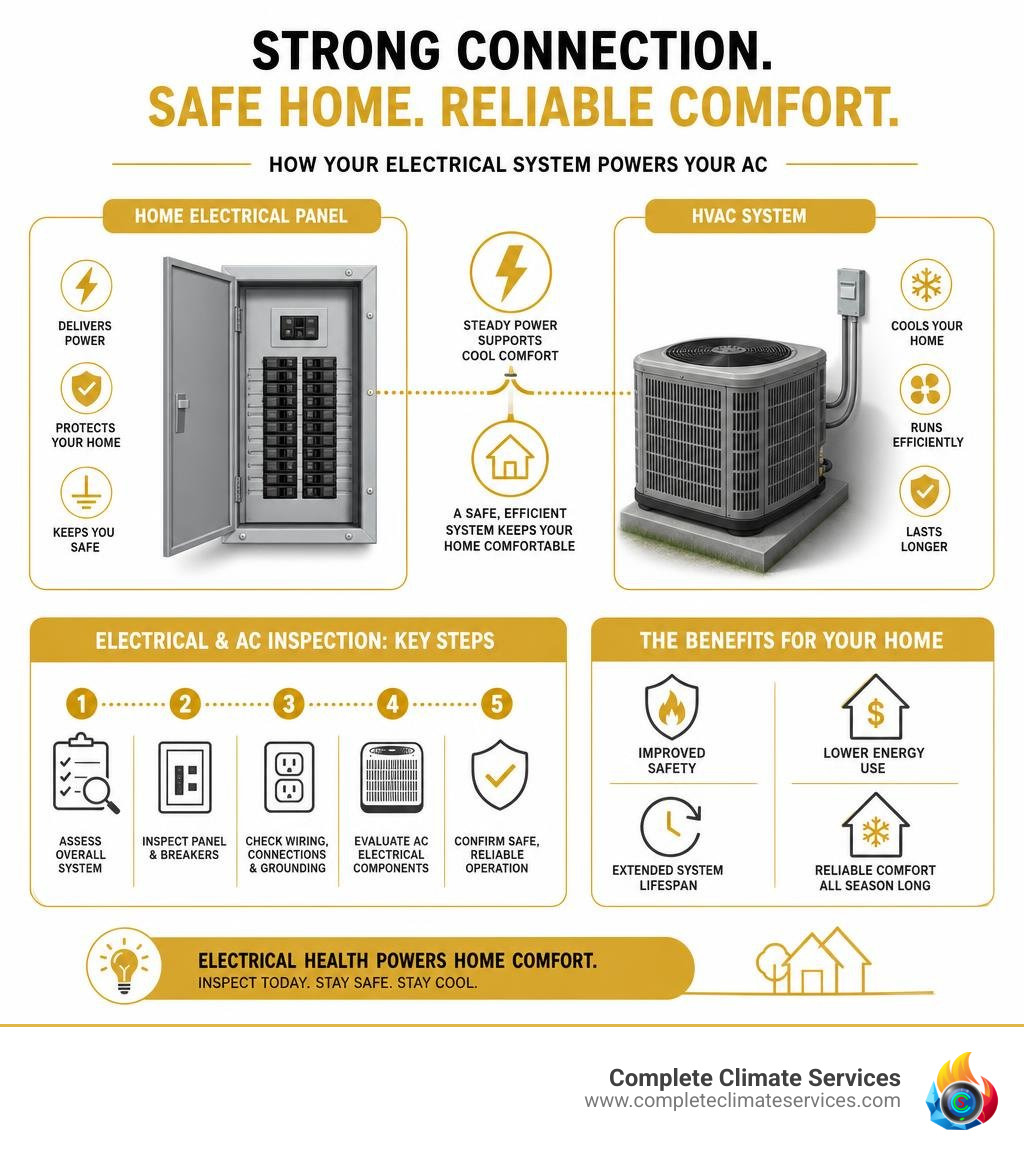
The Crucial Link Between AC Repair and Electrical Inspection
When your air conditioner kicks on during a humid July afternoon in Columbia or Towson, it doesn’t just need refrigerant and clean filters; it needs a massive, steady gulp of electrical power. Your HVAC system is easily the largest electrical consumer in your home. If your electrical panel or wiring is struggling to keep up, your cooling system will pay the price.
This is why we look at ac repair and electrical inspection as a unified strategy. When we inspect your cooling system, we aren’t just looking at the mechanical parts. We are evaluating the electrical load, measuring system strain, and identifying wiring wear that could leave you sweating in the middle of a heatwave. If you are experiencing cooling issues, these quick AC troubleshooting steps can help you determine if the problem is a simple fix or requires professional intervention.
Why Electrical Safety Matters for Your Cooling System
An air conditioner relies on a precise voltage to run its compressor and blower motors. If your home experiences voltage drops—often caused by outdated electrical panels or loose connections—your AC motors have to work twice as hard to do the same job. This extra strain leads to rapid circuit overloads and overheated wiring, which are primary catalysts for electrical fires.
Furthermore, when electrical components struggle, your system’s efficiency plummets, and you might find that your vents are blowing warm air instead of the crisp, cool breeze you expect. Ensuring your electrical infrastructure is sound is the first line of defense in fire prevention and keeping your home safe.
Inspection vs. Maintenance: What is the Difference?
Many homeowners use the terms “inspection” and “maintenance” interchangeably, but they serve different roles in keeping your home comfortable:
- AC Inspection: This is a diagnostic deep-dive. A technician uses advanced tools to evaluate the overall health of the system, test safety controls, measure electrical draw, and identify component wear. It is about identifying what is happening inside your system and catching hidden risks.
- AC Maintenance: This is the hands-on tune-up. It involves system cleaning (like washing the condenser coils), replacing air filters, lubricating moving parts, and performing minor adjustments to preserve daily operating efficiency.
While maintenance keeps the machine running smoothly, an inspection tells you if the machine is actually safe to run. Both are essential, but skipping the diagnostic check means you might be cleaning a system that has a dangerous electrical short waiting to happen.
What Happens During a Professional AC and Electrical Assessment

When our licensed professionals arrive at your home in Catonsville, Ellicott City, or Dundalk, they don’t just glance at your thermostat and call it a day. A professional assessment is a meticulous, highly technical process designed to verify both mechanical and electrical safety.
Using specialized diagnostic tools, we test your system’s safety controls to ensure that if a power surge or mechanical failure occurs, the system will shut down safely rather than overheating. This is why we highly recommend a whole-home electrical inspection alongside your cooling service. It ensures that the power flowing from your main utility pole all the way to your indoor evaporator coil is clean, stable, and safe.
Step-by-Step AC Repair and Electrical Inspection Checklist
During a thorough ac repair and electrical inspection, our technicians complete a detailed multi-point checklist to ensure no component is overlooked:
- Thermostat Calibration: We verify that your thermostat is communicating accurately with your HVAC unit so it doesn’t run longer than necessary.
- Refrigerant Level Assessment: We check for proper charge levels and inspect for leaks, which can cause the compressor to run hot and draw excess electricity.
- Capacitor Testing: Capacitors act like temporary batteries that give your AC motors the kickstart they need. If yours is starting to fail, here’s what to know about replacing it.
- Contactor and Relay Testing: We inspect these switches for pitting or burn marks, which can cause electrical arcing and system failure.
- Disconnect Box Inspection: The outdoor safety switch (disconnect) is checked to ensure it can cut power instantly in an emergency.
- Grounding Verification: Proper grounding is verified to protect your sensitive HVAC electronics—and your family—from dangerous electrical shocks.
Hidden Hazards Uncovered During an AC Repair and Electrical Inspection
Some of the most dangerous home hazards are completely invisible behind your drywall or inside metal electrical enclosures. During our inspections across Baltimore County and Anne Arundel County, we regularly uncover issues that could have had disastrous consequences if left ignored:
- Aluminum Wiring: Common in homes built in the 1960s and 1970s, aluminum wiring expands and contracts more than copper, leading to loose connections and high fire risks.
- Compressor Failures: A struggling compressor will draw massive amounts of electrical current, often tripping breakers or melting wires. If you are seeing early warning signs, this compressor problem guide can help explain what may be happening.
- Double-Tapped Breakers: This occurs when two electrical circuits are shoved into a single breaker slot not designed for it, creating a major hotspot in your electrical panel.
- Degraded Insulation: Over time, the protective plastic coating on wires inside your outdoor AC unit can dry out, crack, and expose live copper to the elements, leading to short circuits.
These hidden hazards highlight why scheduling routine electrical safety inspections is just as vital as booking your annual AC tune-up.
The Long-Term Benefits of Regular Inspections
Investing in regular inspections isn’t just about avoiding emergencies; it is also about keeping more money in your wallet. When your electrical panel and air conditioner are perfectly tuned, your entire home runs more efficiently.
Beyond saving money on your monthly BGE bill, keeping your system in peak condition ensures unmatched indoor comfort. To maximize these savings, don’t forget about your ductwork; sealing leaky ducts can prevent conditioned air from escaping.
Boosting Energy Efficiency and Lifespan
Did you know that regular AC inspections can improve your system’s energy efficiency by up to 30%? When electrical connections are tight and components are clean, your system draws less power to cool your home. This reduction in power consumption directly translates to lower utility bills.
Furthermore, reducing the daily wear and tear on your compressor and motors can extend the overall lifespan of your HVAC system by 5 to 10 years. Catching small, minor issues early through comprehensive electrical safety checks prevents them from cascading into catastrophic, expensive system failures later on.
Meeting Insurance and Real Estate Requirements
If you are planning to buy or sell a home in Baltimore City, or if you are shopping around for a new homeowner’s insurance policy, documented inspections are incredibly valuable. Many insurance providers now require detailed electrical inspections—especially for homes over 25 years old—before they will write or renew a policy.
Furthermore, homes with documented, professional electrical safety certifications often qualify for insurance discounts and experience fewer policy renewal concerns. If you are selling your home, presenting prospective buyers with a clean bill of health for your heating, cooling, and electrical systems can boost your home’s market valuation and prevent stressful, last-minute negotiations during the closing process.
Frequently Asked Questions About AC and Electrical Safety
As local experts, we hear a lot of questions from our neighbors in Glen Burnie, Owings Mills, and Towson. Here are some of the most common warning signs that indicate you need to call a professional for an immediate inspection:
- Flickering lights when your air conditioner turns on.
- A burning plastic smell coming from your vents or electrical panel.
- Frequently tripping circuit breakers when the AC runs.
- A buzzing or humming noise coming from your outdoor unit or panel box.
- Warm air blowing from your supply vents.
If you notice any of these signs, don’t wait for the system to break down completely—or worse, cause a fire.
How often should I schedule an AC and electrical inspection?
We recommend scheduling an AC inspection at least once a year, ideally in early spring before the summer heat hits Baltimore. This ensures your system is ready for peak performance when you need it most.
For your home’s electrical system, the recommended frequency depends on the age of your property:
- Homes under 40 years old: Should receive a professional electrical safety inspection every 10 years.
- Homes over 40 years old: Should be inspected every 5 years.
- Any home with outdated panel brands (like Federal Pacific or Zinsco): Should be inspected immediately, regardless of age.
Can I perform an AC or electrical inspection myself?
While we love a good DIY project around the house, inspecting or repairing high-voltage electrical systems and air conditioners is not a safe weekend chore. These systems carry lethal voltages and involve complex chemical refrigerants regulated by federal law.
Attempting to diagnose electrical issues without specialized safety gear and training carries severe safety risks, including electrical shock, arc flashes, and house fires. Additionally, DIY repairs often violate local building codes and can instantly void your manufacturer’s equipment warranty. To understand why it’s best to leave this work to the pros, read more about the risks of DIY AC work.
What should I expect during a typical inspection appointment?
A standard combined AC and electrical inspection usually takes between one and three hours, depending on the size and age of your home. During this time, our technician will need access to your indoor air handler, outdoor condenser, main electrical panel, and various outlets throughout your home.
Once the inspection is complete, you won’t just get a vague verbal update. We provide a comprehensive written report detailing our findings, clearly organized by priority. If we identify any safety hazards or code violations, we will provide a transparent, upfront cost estimate for the repairs. There are no hidden fees or high-pressure sales tactics—just honest, expert advice to keep your family safe.
Conclusion
Your home’s comfort and safety rely on the invisible partnership between your air conditioner and your electrical system. By staying proactive with your ac repair and electrical inspection needs, you can protect your family from hidden hazards, keep your utility bills low, and ensure your home remains a cool haven all summer long.
Whether you need a quick repair in Dundalk, a safety check in Ellicott City, or emergency electrical troubleshooting in Baltimore, our team is here to help. Complete Climate Services has provided over 20 years of honest, reliable HVAC and electrical expertise to our Maryland neighbors, maintaining a 5.0-star rating across platforms.
Ready to secure your peace of mind? Contact us today to schedule your professional assessment, or learn how our AC repair team can help keep your home running safely and efficiently.

