
A Clogged AC Drain Line Is More Common Than You Think
AC drain cleaning is the process of clearing and flushing the condensate drain line that removes moisture from your air conditioning system. Here’s how to do it in five steps:
- Turn off your AC at the thermostat and circuit breaker
- Locate the T-shaped access cap on the indoor drain line
- Attach a wet/dry vacuum to the outdoor end of the drain line and run for 1-2 minutes
- Pour 1 cup of distilled white vinegar into the access port and let it sit for 30 minutes
- Flush with warm water, replace the cap, and restore power
If the clog persists after these steps, it’s time to call a professional.
You might not think much about your AC drain line — until water starts pooling near your indoor unit, a musty smell drifts through your vents, or your system shuts off on a sweltering Baltimore summer day. At that point, a small, overlooked PVC pipe becomes a very big deal.
A clogged drain line is one of the most common causes of AC system problems. Left unchecked, it can lead to water damage, mold growth, and a system that simply stops working. The good news? For most homeowners, it’s a straightforward fix — and an even easier problem to prevent.
At Complete Climate Services, AC drain cleaning is a common issue for homeowners across the Baltimore area. In this guide, you’ll learn what causes drain line clogs, how to clear them yourself, and when it makes sense to call a professional.
Understanding Your AC Drain Line and Why It Clogs
To understand why your drain line needs attention, we first have to look at how your air conditioner actually works. Most people think an AC just “blows cold air,” but its most important job in humid Maryland summers is removing moisture.
As your system pulls warm, humid air across the cold evaporator coils, the moisture in that air turns into liquid water—just like the condensation on a cold glass of iced tea on a July afternoon in Towson. This water drips into a drain pan and then flows out of your house through a 3/4-inch PVC pipe known as the condensate drain line.
Why Clogs Happen
Because this pipe is constantly damp, it becomes a literal breeding ground for trouble. Algae, mold spores, and bacteria love the dark, wet environment inside that PVC. Over time, these organisms form a thick, jelly-like “gunk” or biofilm. When you mix that biological growth with household dust and pet dander that bypasses your filter, you get a stubborn blockage.
If the water can’t get out, it backs up. This can lead to your AC blowing warm air or, worse, a total system shutdown. Understanding the mechanics is the first step in learning how to clean an AC drain line.
Recognizing the Signs of a Blockage
How do you know if you’re dealing with a clog before you’re standing in a puddle? Here are the most common “red flags” we see in the field:
- Standing Water: If you see water in the emergency drain pan (the metal tray underneath your indoor unit), you have a problem. That pan should be dry.
- Musty Odors: If your vents smell like a damp basement or old socks, mold is likely growing in the standing water within your drain system.
- The “Blank Thermostat” Mystery: Many modern systems in Baltimore County have a float switch. If the drain line clogs, the water level rises and flips this switch, which kills power to the entire system to prevent a flood. If your thermostat is blank and won’t turn on, check the drain line first. Use our AC troubleshooting guide for residents to rule out other power issues.
- Frozen Coils: Believe it or not, a backup can cause the humidity levels to spike around the evaporator coil, leading to ice buildup.
AC Drain Cleaning: A Step-by-Step DIY Guide
If you’ve confirmed a clog, don’t panic. You can often handle AC drain cleaning in under 10 minutes with tools you likely have in your garage.
Tools and Materials Needed
Before you start, gather these items. Having them ready will make the process much smoother:
- A wet/dry vacuum (Shop-Vac)
- Distilled white vinegar (about 1 cup)
- A funnel
- Duct tape or a thick rag (to create a seal)
- A thin wire brush (optional, for the drain opening)
- Warm water
If you’re a homeowner in Towson or Ellicott City looking for quick AC solutions, these basic household items are your best friends. For more comprehensive care, our AC services team can help with the heavy lifting.
The Vacuum and Flush Method
Follow these steps to clear the line effectively:
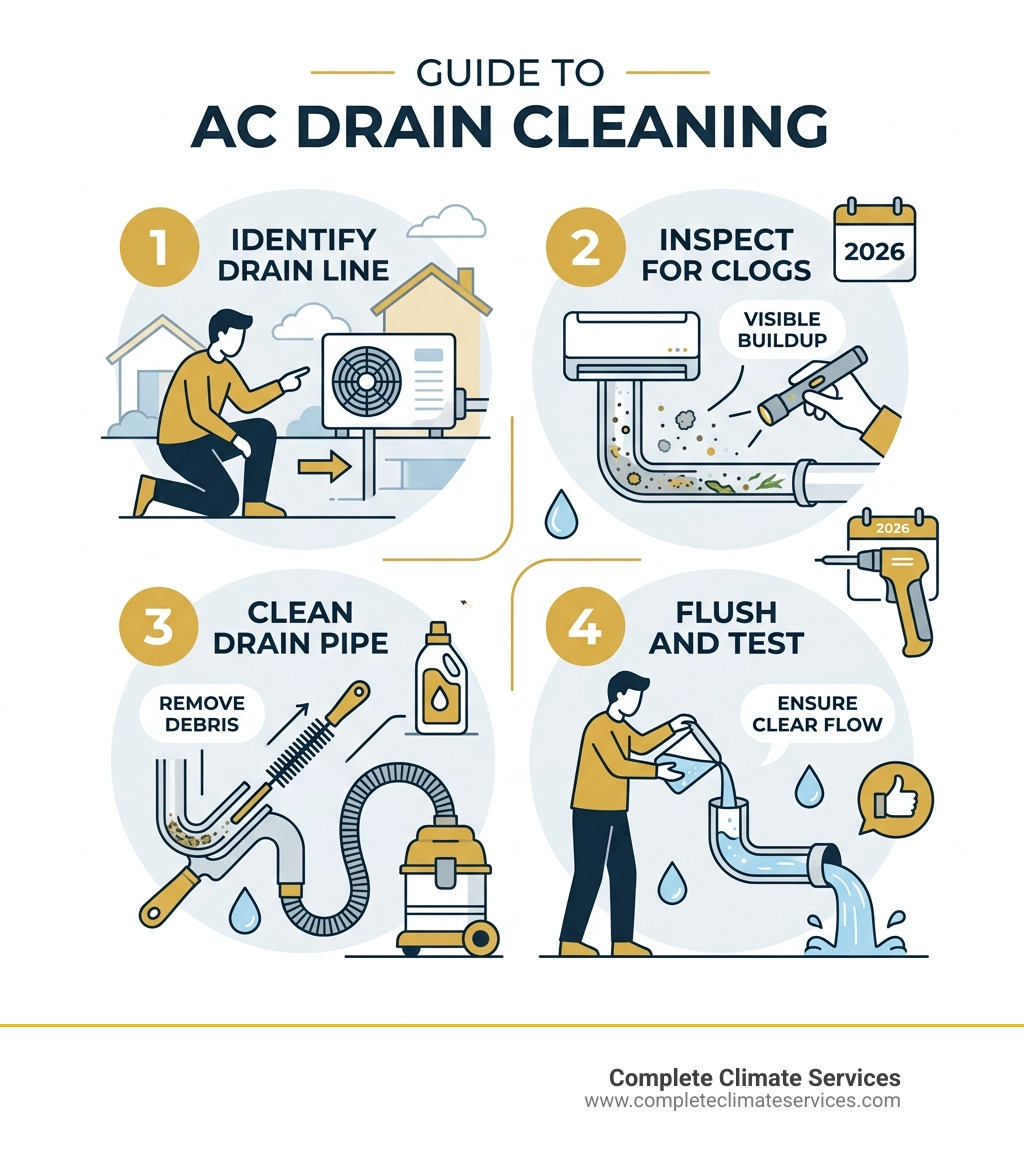
- Safety First: Turn off the power at the thermostat AND the circuit breaker. You don’t want the unit kicking on while you’re working.
- Locate the Exit: Find where the PVC pipe exits your house (usually near the outdoor condenser unit).
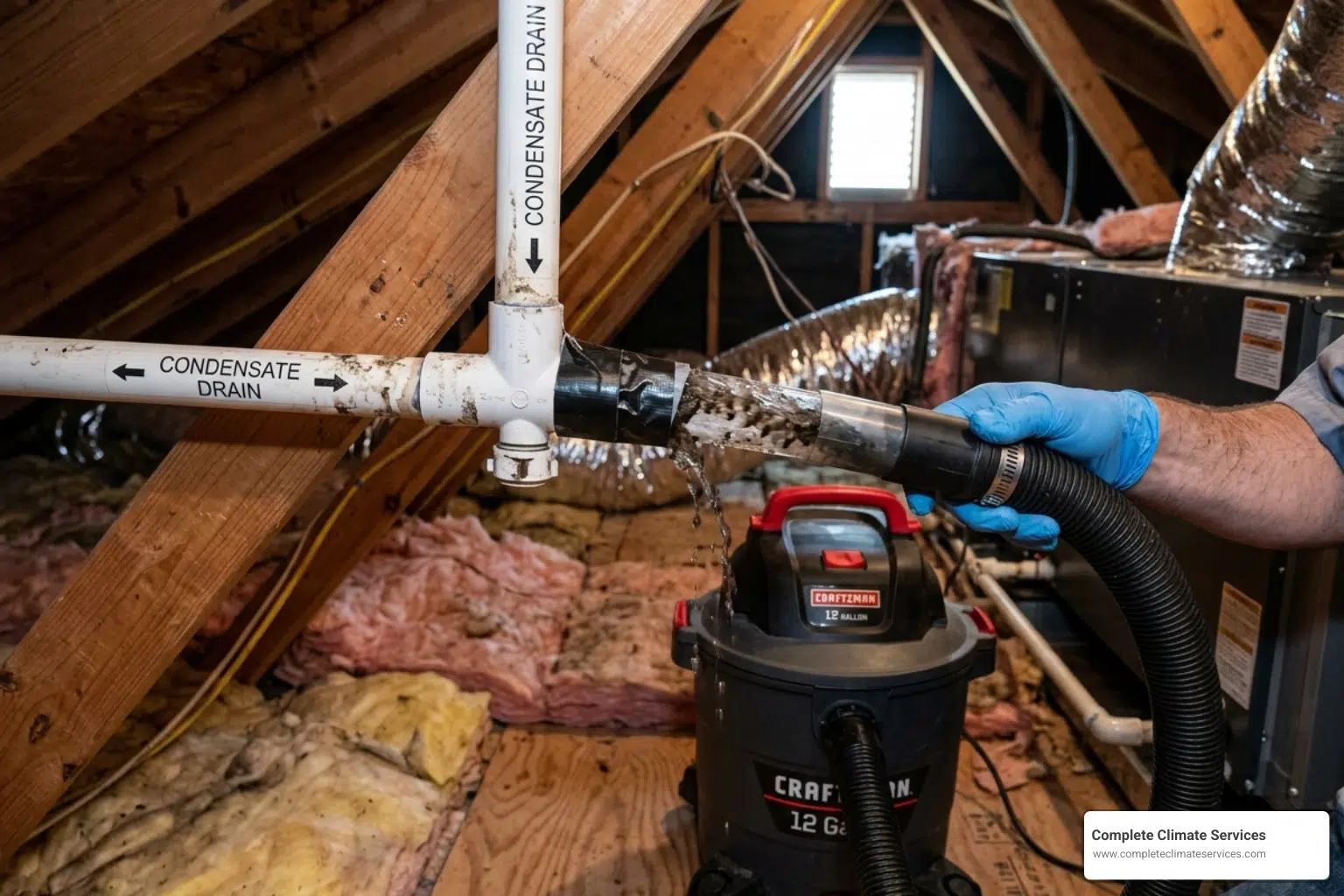
- The Vacuum Trick: Attach your wet/dry vacuum hose to the end of the PVC pipe. Use duct tape or a rag to ensure the connection is airtight. Turn the vacuum on for 1–2 minutes. You’ll likely see brown “gunk” or algae being sucked into the vacuum canister.
- Find the Access Point: Go to your indoor unit. Look for a T-shaped pipe with a small cap on top. This is your vent tee.
- The Vinegar Soak: Remove the cap and pour in 1 cup of distilled white vinegar. Let it sit for 30 minutes. This kills the remaining algae and mold.
- The Final Flush: After 30 minutes, flush the line with a gallon of warm water to ensure everything is flowing freely.
| Feature | Distilled White Vinegar | Household Bleach |
|---|---|---|
| PVC Safety | 100% Safe | Can degrade some plastics over time |
| Effectiveness | Kills mold and algae slowly | Kills instantly but is very harsh |
| Odor | Mild, dissipates quickly | Strong, can enter ductwork |
| Component Safety | Safe for coils and pans | Can corrode metal evaporator coils |
As we often mention when helping homeowners spot signs of compressor problems, keeping the surrounding components safe is just as important as fixing the immediate issue. This is why we almost always recommend vinegar over bleach.
Maintenance Strategies to Prevent Future Clogs
The best way to deal with a clog is to never have one in the first place. In Maryland, where the humidity can feel like a warm wet blanket from June through September, your AC works overtime.
Seasonal Maintenance
We recommend performing a vinegar flush every three months. If you live in a particularly humid area like Dundalk or Essex, monthly flushes during the peak of summer aren’t a bad idea. Is spring a smart time for a tune-up? Absolutely. Clearing the drain line before the first heatwave ensures your system is ready for the heavy lifting.
The Role of Air Filters and Coil Care
A lot of the “gunk” in your drain line starts as dust. When your air filter is dirty or poor quality, dust particles settle on the wet evaporator coils and wash down into the drain. This creates a “mud” that clogs the pipe. Pet owners should swap filters more often to prevent fur and dander from contributing to these blockages.
Regular AC maintenance includes cleaning these coils, which significantly reduces the debris entering your drain system. Check out our AC system care guide for homeowners for more pro tips on keeping your air clean and your pipes clear.
When to Call a Professional for AC Drain Issues
While DIY AC drain cleaning is effective for minor clogs, there are times when you need a professional touch.
When DIY Isn’t Enough
If you’ve tried the vacuum method and the water still won’t drain, the clog might be deeper in the system or located in a “P-trap” that is inaccessible. At Complete Climate Services, we use specialized tools like high-pressure CO2 “blasters” and industrial-strength antimicrobial treatments that provide a deeper clean than vinegar alone.
Risky Installations
If your air handler is located in an attic, the stakes are much higher. A clogged drain here doesn’t just mean a wet floor—it means water dripping through your ceiling. There are hidden risks to DIY repair, especially if you accidentally crack a PVC fitting or overflow a pan while trying to clear it.
Frequently Asked Questions about AC Drain Cleaning
How often is AC drain cleaning needed for my home?
For most homes in the Baltimore area, an AC drain cleaning should be done every 3 months. However, if you have multiple pets, a very dusty environment, or if your home is in a high-humidity area near the water (like Sparrows Point or Edgewater), we recommend checking it monthly during the summer. New homeowners should always start with a professional inspection to see how the previous owners maintained the system.
Is vinegar safe for AC drain cleaning compared to bleach?
Yes, vinegar is much safer. While bleach is a powerful killer of mold and algae, it is highly corrosive. If bleach fumes or splashes reach your metal evaporator coils, they can cause “pitting” and refrigerant leaks. Vinegar is acidic enough to kill the biological growth without risking the structural integrity of your $5,000+ HVAC system. This is one of the many reasons proper maintenance in Maryland is crucial for the longevity of your unit.
What happens if I ignore a clogged drain line?
Ignoring a clog is a recipe for disaster. First, it ruins your indoor air quality by circulating mold spores. Second, it can cause thousands of dollars in water damage to drywall, flooring, and electrical components. Finally, it forces your AC to work harder, shortening its lifespan and driving up your BGE bill.
Conclusion
Maintaining a clear path for your AC’s condensation is one of the simplest ways to protect your home. Whether you’re in Columbia, Owings Mills, or downtown Baltimore, AC drain cleaning is a task that pays for itself in avoided repair bills and peace of mind.
At Complete Climate Services, we’ve built our reputation on over 20 years of honest, reliable service. With 5.0-star ratings across the board, we’re proud to be the team Baltimore trusts when things get sticky. If your DIY efforts haven’t cleared the path, or if you’d rather have a professional ensure your system is in top shape, we’re here to help.
Do not let a small pipe turn into a big problem. Contact our AC repair experts today to schedule seasonal maintenance. We will help keep your system and drain line clear all year long.

