

Why the Outdoor Fan Stops
Heat pump fan repair starts with protecting the system and keeping homeowners safely outside the unit. Turn the thermostat off when the outdoor fan stops, then look for obvious debris around the grille. A brief pause with steam can be normal during defrost, but a fan that remains still needs professional attention.
For local Maryland homeowners, safe observation is enough. Do not open the cabinet, remove panels, or attempt to inspect electrical parts. A trained technician can identify the underlying problem without putting your household or equipment at risk.
I’m Michael Holcomb, Co-Founder and Operations Manager of Complete Climate Services, and I help local homeowners respond safely when equipment acts up. I have watched a stopped outdoor fan quickly affect comfort and place extra strain on the heat pump. I will walk you through warning signs, normal defrost behavior, and when heat pump fan repair needs a technician.
Signs the Outdoor Fan Is Failing
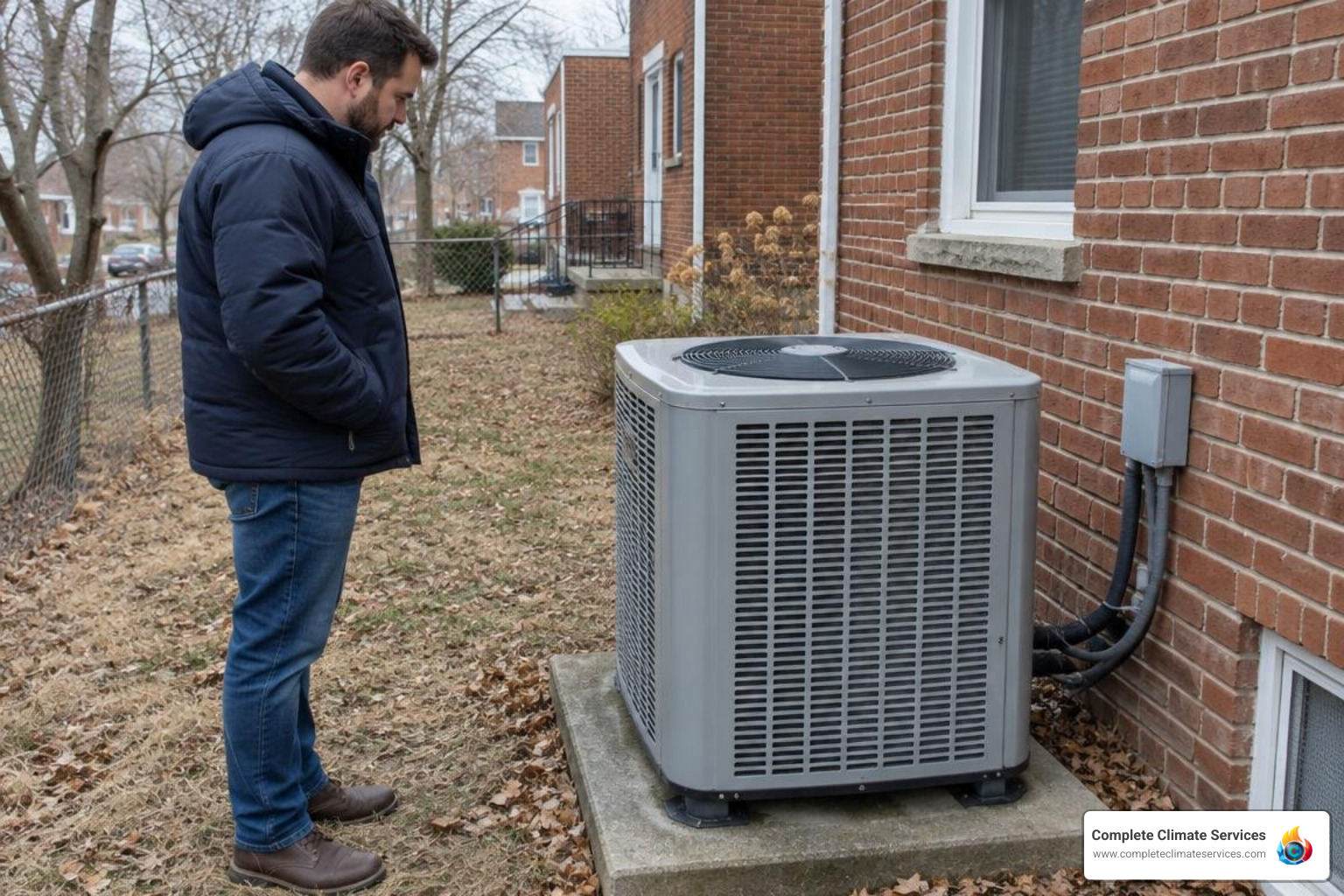
An outdoor fan often gives warning signs before it stops completely. Pay attention to new sounds, weak airflow, or a unit that starts but fails to keep the fan moving. These changes can signal a developing problem that deserves prompt professional evaluation.
Common warning signs include the following:
- Humming or buzzing: The outdoor unit may be trying to start while the fan remains still.
- Grinding or squealing: Unusual mechanical noise can indicate a fan or motor problem.
- Slow or uneven movement: A fan that starts weakly or changes speed needs attention.
- Burning smells: Shut the system off and arrange service if an electrical smell is present.
- Repeated shutdowns: The system may stop to protect itself when airflow is limited.
Do not reach through the grille or try to move the blades yourself. Homeowners should note what they see and hear, then share those details with the technician. Clear observations help the service visit begin with a more complete picture of the problem.
Ignoring early signs can allow a smaller fan issue to affect the entire heat pump. Our overview of signs of trouble can help homeowners recognize when a service call is appropriate. It is better to stop the system and ask for help than continue operating it with uncertain airflow.
Defrost Pause or Real Fan Failure?
Cold weather can make a normal heat pump cycle look alarming from outside. During defrost, the outdoor fan may pause while steam rises from the unit. This process clears frost from the outdoor coil so the system can continue heating.
A normal heat pump cycle can look alarming from outside. During defrost, the outdoor fan may pause while steam rises from the unit. This process helps clear frost from the outdoor coil so the system can continue heating.
A brief fan pause with steam is often a normal defrost cycle, not a failed fan. Watch from a safe distance and allow the system an opportunity to resume normal operation. If the fan remains still or unusual sounds continue, turn the thermostat off and call for service.
A brief fan pause with steam is often a normal defrost cycle, not a failed fan. Watch from a safe distance and give the system an opportunity to resume normal operation. If the fan remains still or unusual sounds continue, turn the thermostat off and call for service.
Moisture can collect on the outdoor coil during cold weather, and the system temporarily redirects heat to clear it. Once the frost clears, the fan should return to normal operation, so do not open the unit or force the fan to move. If the fan stays off after defrost or repeatedly fails to start, our winter heat pump checklist covers other seasonal warning signs.
During normal winter heat pump operation, moisture can collect on the outdoor coil. The system temporarily redirects heat to clear it. The fan pause and visible steam can be expected while that happens.
Why Running Without the Fan Damages the Compressor
The outdoor fan is essential because it moves air across the coil during heating and cooling. Without that airflow, the heat pump cannot manage heat as designed. Continued operation can place harmful strain on the compressor and other major components.
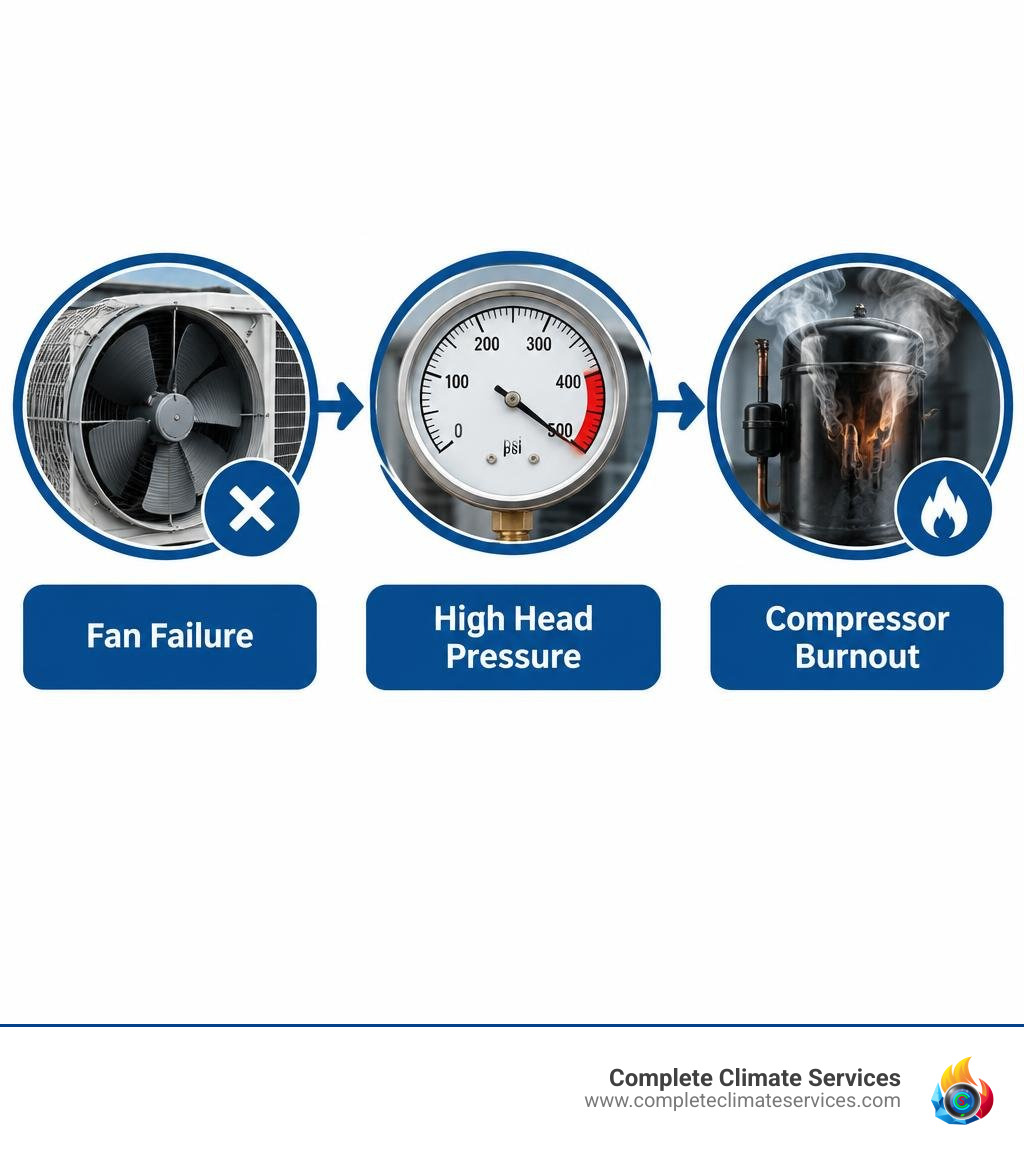
When the fan stops while the system continues running, heat can become trapped around the outdoor coil. In winter, frost can build up and make normal heat transfer more difficult. In warmer weather, the system can struggle to release heat efficiently.
Running without the fan can damage the compressor, turning a focused repair into a larger system concern. If you notice a struggling heat pump and a still fan, turn the thermostat off. Contact a qualified HVAC professional before restarting the equipment.
Safe Checks Before You Call
Start by turning the thermostat off so the equipment does not keep operating without airflow. From outside the unit, look for leaves, snow, ice, or loose debris blocking the grille. Do not remove panels or attempt to access components inside the cabinet.
Check the heat pump breaker once if it appears to have tripped, then leave it alone if it trips again. Make a note of unusual sounds, visible steam, and any obstruction around the unit. Those observations give the technician a clearer picture of what happened before service begins.

The EPA heat pump guidance recommends regular professional service and filter care to support efficient performance. Regular maintenance plans can help identify developing concerns before they interrupt comfort. Homeowners should leave internal inspections and repairs to a qualified technician.
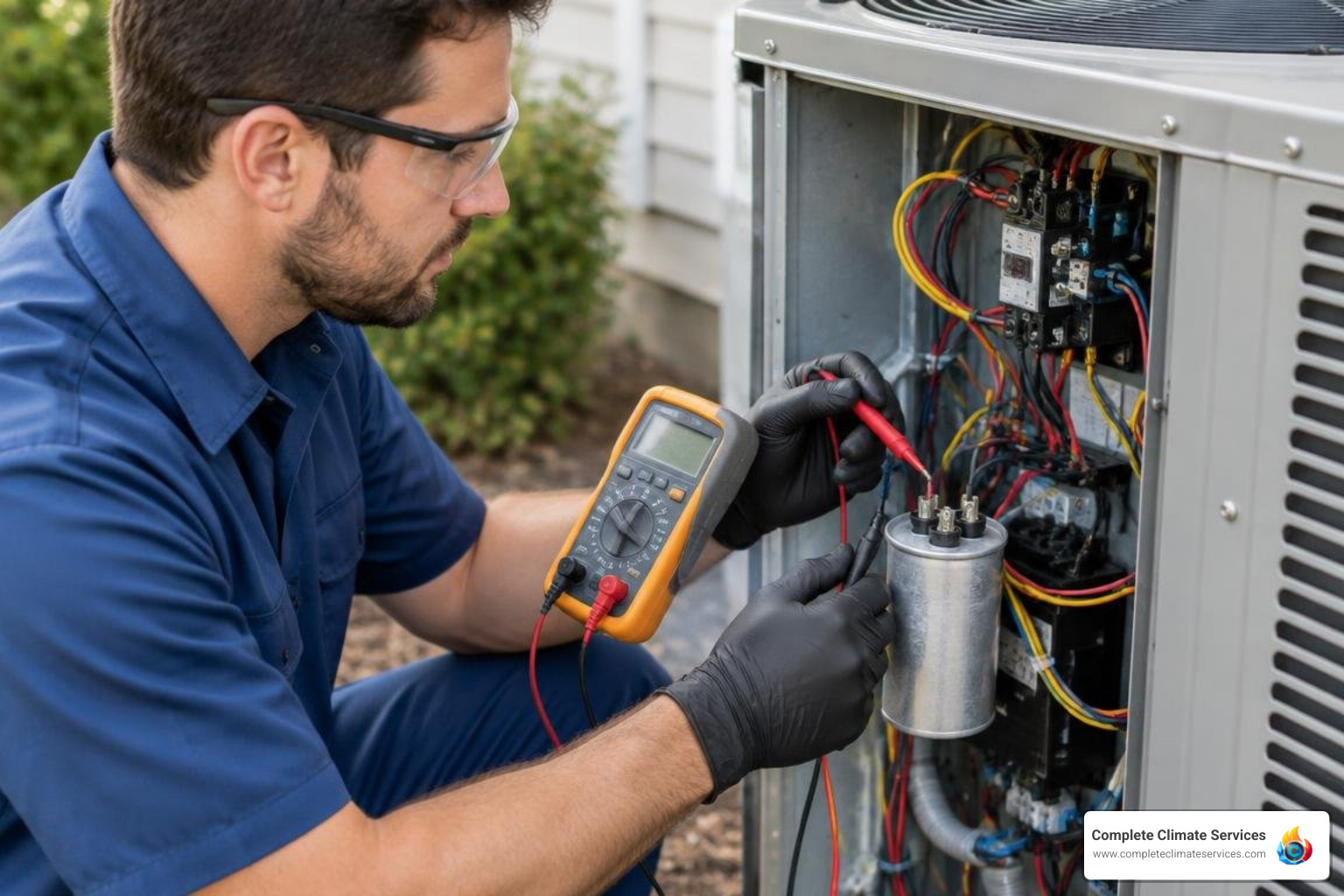
If conditions are severe and your home needs immediate help, arrange emergency HVAC service. A professional can determine whether the issue is limited to the fan or affects other parts of the heat pump. For a broader overview, heat pump repair basics explain why safe observation and prompt service matter.
What Our Technician Does During Heat Pump Fan Repair
Our technician begins by reviewing the symptoms you observed and inspecting the outdoor unit safely. The visit can include checking the capacitor, contactor, motor, wiring, fan blade, rotation, and defrost control. The goal is to identify the actual cause rather than replace parts based on a guess.
The technician also examines the fan blade and motor for conditions that can affect dependable movement, beginning with how securely the blade is mounted and whether debris has bent, chipped, or damaged it. Blade balance matters because an uneven blade can create vibration, noise, and added strain while the system is trying to move air across the outdoor coil. The motor inspection considers bearing wear, smooth rotation, and whether the fan turns in the proper direction for the heat pump’s operating cycle.
The technician also checks for signs that outdoor debris, moisture, or normal wear have affected the motor housing or nearby parts. Looking at these details together helps separate an isolated fan concern from a broader problem. That broader problem needs attention before reliable operation can return.
After the focused inspection, the technician verifies that the repaired system is operating normally. That full system check confirms proper airflow and helps identify related concerns before the visit ends. You receive a written explanation of the findings and upfront pricing before repair work moves forward.
After the repair, the technician confirms airflow at the outdoor unit and watches the system move through a normal startup from the thermostat call. This review helps verify that the fan begins properly, continues running as expected, and supports the outdoor coil without unusual sounds or repeated interruptions. The technician also confirms that the system responds properly when the thermostat calls for heating or cooling and that defrost operation remains consistent with normal winter performance.
Checking these functions together helps reveal related concerns. Those concerns may not be obvious when the fan first begins moving again. This final review gives homeowners a clearer explanation of the repair and confidence that the heat pump has been assessed as a complete system.
The ENERGY STAR maintenance checklist describes professional service that includes securing electrical connections, assessing motor performance, and lubricating moving parts. Faulty connections can contribute to unsafe operation and shorten the useful life of important equipment. Those tasks require trained service rather than homeowner troubleshooting.
For homeowners, the right role is to turn the thermostat off, check the grille from outside, and report what happened. For our team, the role is to diagnose and correct the problem without shortcuts. Professional heat pump repair restores dependable operation while protecting the rest of the system.
A Recent Service Call in Sparrows Point
A Sparrows Point homeowner heard loud buzzing whenever their heat pump cycled on. Our technician diagnosed a failing run capacitor in the outdoor unit and replaced it during the visit. The system now starts quietly and runs without interruption. This call shows why a humming outdoor unit needs professional attention, since the diagnosis and repair remain a technician’s job.
A detailed diagnosis matters because fan symptoms can overlap with other heat pump concerns. Complete Climate Services brings 20+ years of HVAC experience to residential service, with a focus on clear answers and careful workmanship. Our 5.0 stars on Google reflect the importance of responsive communication and dependable service for local homeowners.
When a Fan Repair Is Not Enough
A fan repair can solve the problem when the rest of the heat pump is operating reliably. In other cases, the technician may find additional concerns that affect system performance or dependability. The right recommendation depends on the complete condition of the equipment, not a single symptom.
Frequent breakdowns, major compressor concerns, or recurring airflow problems may point to a larger decision. A technician reviews documented findings and explains whether a focused repair makes sense or the system needs a broader solution. Clear information helps homeowners weigh comfort needs and expected reliability without pressure.
Professional service is especially important when the unit is noisy, repeatedly stops, smells burnt, or fails to resume operation after defrost. Keep the outdoor area clear and arrange service when new fan symptoms appear. That approach supports safer operation and helps prevent a minor concern from becoming an unexpected interruption.
Frequently Asked Questions
Can I run my heat pump if the fan is not spinning?
No. Turn the thermostat off if the outdoor fan is not spinning and the system appears to be running. Operating without normal airflow can damage the compressor and other important components. Arrange professional service before restarting the heat pump.
Why does my heat pump fan stop and start in winter?
A brief pause may happen during a normal defrost cycle when the system clears frost from the outdoor coil. Steam may also be visible during that process. If the fan does not resume normal operation or the unit makes unusual sounds, turn it off and call a technician.
Should the capacitor be replaced along with the fan motor?
A technician decides whether the capacitor should be replaced after inspecting the fan system and related components. The correct repair depends on the actual cause of the failure. Homeowners should not open the unit or attempt component replacement themselves.
Is a humming outdoor unit with a still fan an emergency?
A humming outdoor unit with a still fan should be treated as a reason to stop the system and request service. The sound can indicate that the unit is trying to operate without proper fan movement. Avoid repeated restarts and let a technician assess the equipment.
Can a failed fan damage the rest of my heat pump?
Yes. The outdoor fan supports normal heat transfer, so a failure can strain the compressor and other major parts. Turning the thermostat off when the fan stops helps limit further damage while you arrange service.
Conclusion
A stopped outdoor fan deserves attention, but homeowners should keep the response simple and safe. Turn the thermostat off, look for debris around the grille, check the breaker once, and watch for a normal defrost pause. Then let a qualified technician identify the cause and perform the repair.
For dependable local help, contact our team at Complete Climate Services. We will explain the problem, provide upfront pricing, and help restore comfortable operation.
Written by Michael Holcomb, Co-Founder and Operations Manager, Complete Climate Services.
Complete Climate Services LLC · 204 S Chapel St, Baltimore, MD 21231 · (443) 898-4747

