
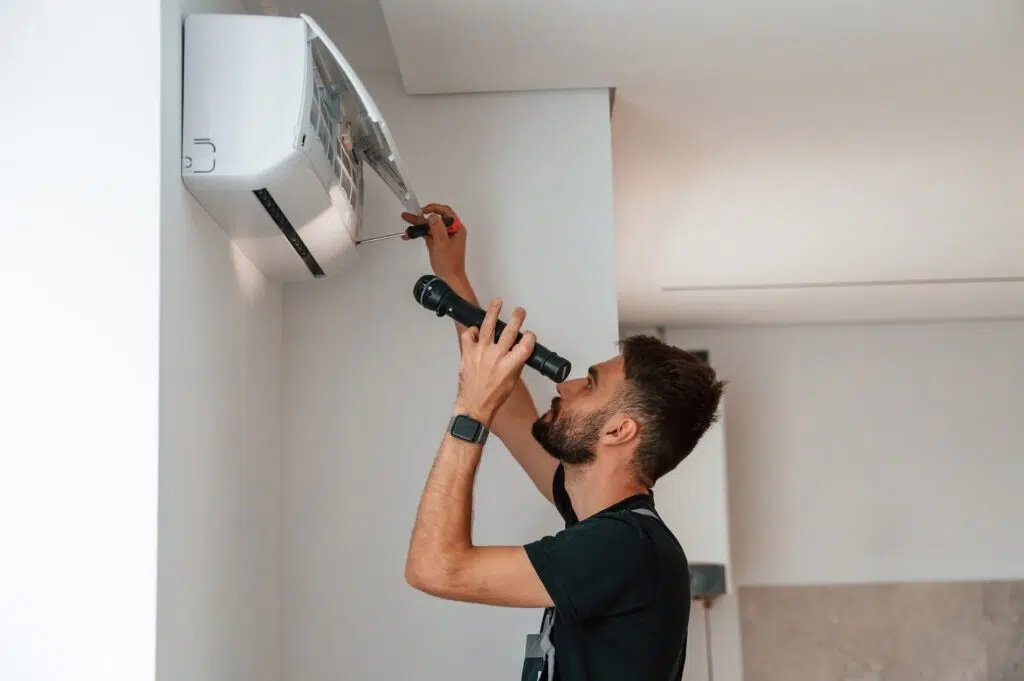
When You Need an AC Repair Service Near Me: Start Here
If you need a fast answer, here’s what most Baltimore homeowners want to know:
| Question | Quick Answer |
|---|---|
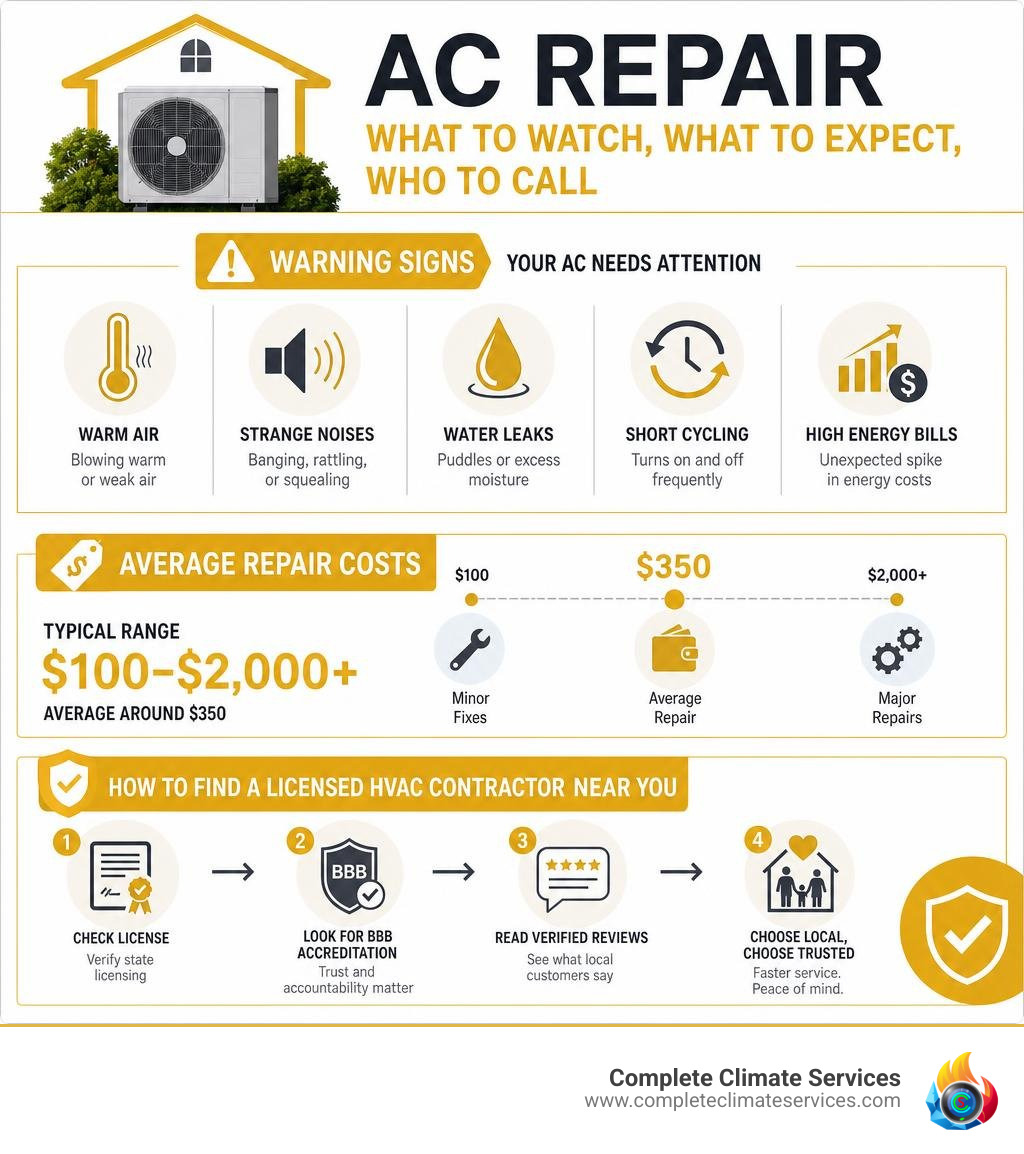
| Average repair cost | $100–$2,000+, average around $350 |
| How fast can I get service? | Same-day or emergency service is widely available |
| How do I find a licensed tech? | Check state licensing, BBB accreditation, and verified reviews |
| Repair or replace? | Repair if under 10–12 years old and cost is under 50% of replacement |
| Common warning signs | Warm air, strange noises, water leaks, short cycling, high energy bills |
Finding an AC repair service near me in the middle of a humid Baltimore summer is stressful — especially when temperatures climb and your home stops cooling down. A broken air conditioner isn’t just uncomfortable. It can affect sleep, health, and your energy bills almost immediately.
The good news: most AC problems are fixable quickly when you know what to look for and who to call.
Air conditioning accounts for nearly half of the average home’s annual energy bill — around $1,000 per year. So getting repairs done right the first time matters, both for your comfort and your wallet.
I’m Michael Holcomb, Co-Founder and Operations Manager of Complete Climate Services, and I’ve spent years helping Baltimore-area homeowners find fast, reliable AC repair service near me solutions they can trust. In this guide, I’ll walk you through everything you need to make a confident decision — from spotting warning signs early to choosing the right contractor.
Common Signs Your Air Conditioner Needs Professional Attention
An air conditioner rarely breaks down without dropping a few hints first. Recognizing these signs early can save you from a complete system failure during a July heatwave.
1. Warm Air Blowing From the Vents
If you feel warm or room-temperature air coming from your registers, it’s a clear cry for help. This issue can stem from a tripped breaker, a failed compressor, or a refrigerant leak. When your AC starts blowing warm air, it’s best to turn the system off to prevent further mechanical damage and call in a pro.
2. Weak Airflow
If the air is cold but barely trickles out of the vents, your blower motor might be failing, or you could have severely clogged ductwork. This forces your system to run longer, spiking your energy bills.
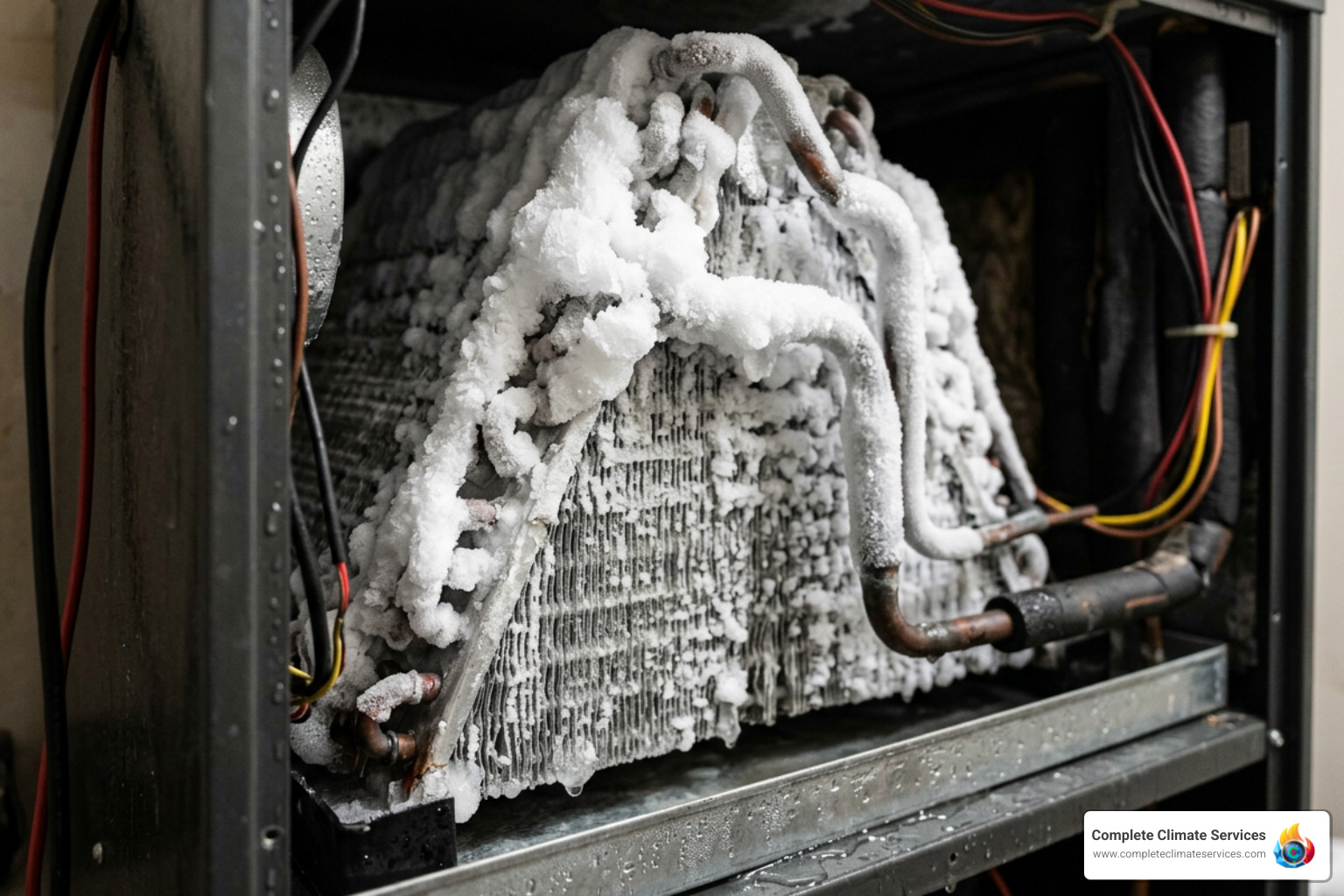
3. Frozen Evaporator Coils
Do you see ice forming on the outdoor refrigerant lines or the indoor evaporator coil? This is usually caused by restricted airflow (like a filthy air filter) or low refrigerant levels.
4. Strange Noises
While no air conditioner is completely silent, loud squealing, grinding, scraping, or clanking noises are not normal. Squealing often points to a slipped blower belt, while metal-on-metal grinding usually indicates worn-out motor bearings. If you hear loud rattling, it could be a warning sign of a failing compressor. For a deeper dive into these sounds, check out what compressor problems can sound like.
5. Water Leaks and Pooling Moisture
Your AC naturally condenses moisture from the air, which drains away through a condensate line. If you notice water pooling around the indoor unit, your drain line is likely clogged. In our humid Maryland climate, a clogged drain can quickly back up and cause expensive water damage to your ceilings and drywall.
6. Short Cycling
If your air conditioner turns on and off every few minutes without ever completing a full cooling cycle, it is “short cycling.” This places immense wear and tear on the compressor and prevents the system from properly dehumidifying your home.
When to Call an AC Repair Service Near Me
Before you pick up the phone to call a technician, it pays to do a quick 3-step check. Sometimes, the solution is simpler than you think:
- Verify the Thermostat Settings: Ensure your thermostat is set to “Cool” and the fan is set to “Auto” (not “On,” which blows air continuously even when the system isn’t cooling). Make sure the target temperature is set below the current room temperature.
- Check the Air Filter: A heavily clogged air filter chokes off airflow, causing the system to overheat or freeze up. If your filter is caked in dust, replace it immediately.
- Inspect the Outdoor Condenser: Ensure the outdoor unit is free of leaves, grass clippings, and debris. If the outdoor fan isn’t spinning, check your home’s main electrical panel for a tripped circuit breaker.
If you’ve completed these checks and your home is still warm, it’s time to call in the professionals. For a complete walkthrough of what you can check on your own, use this AC troubleshooting guide.
How to Choose the Best AC Repair Service Near Me
With so many HVAC contractors in Maryland, finding a reliable, honest technician can feel overwhelming. You want someone who will diagnose the issue accurately without trying to upsell you on a brand-new system you don’t actually need.
When researching local providers, look for these key indicators of quality and trust:
- Years in Business: Companies with decades of local experience have a proven track record of standing behind their work.
- Real Customer Reviews: Look for companies with high ratings across multiple platforms (like Google and Yelp). Pay close attention to how they handle emergency calls and complex repairs.
- Industry Certifications: Technicians should hold NATE (North American Technician Excellence) certifications, demonstrating rigorous training in modern heating and cooling systems.
- BBB Accreditation: A strong rating with the Better Business Bureau indicates a commitment to resolving customer complaints fairly.
To help you navigate this process safely, we’ve put together advice on choosing the right AC repair company as well as tips for finding a trusted Baltimore HVAC team.
Finding a Reliable AC Repair Service Near Me in Maryland
To get the fastest response times, always choose a contractor with a physical presence and dedicated technicians in your immediate area.
If you are looking for localized services, we cover a wide range of communities across Maryland:
- Baltimore & Metro Areas: We provide rapid response troubleshooting throughout the city. Learn more about our Baltimore service area solutions.
- Howard County: For fast, local service in Columbia, check out how we help homeowners in Columbia.
- Baltimore County: From Towson to Dundalk, we have trucks ready to dispatch. Explore our Towson service area guide for neighborhood-specific tips.
We also proudly serve surrounding communities including Catonsville, Dundalk, Ellicott City, Glen Burnie, and Owings Mills. Hiring a truly local Maryland contractor ensures they understand our specific climate, regional building codes, and local utility rebate programs.
Verifying HVAC Licenses and Warranties
Never let an unlicensed or uncertified handyman work on your air conditioning system. Doing so can void your manufacturer’s warranty, lead to code violations, and even create serious safety hazards in your home.
Before hiring any contractor, verify the following credentials:
- State License: Confirm they hold an active master HVAC license with the Maryland Department of Labor HVACR licensing portal.
- EPA Section 608 Certification: Federal law requires any technician handling chemical refrigerants to be EPA-certified. The EPA’s refrigerant certification rules help ensure refrigerants are recovered and handled safely without damaging the environment.
- Liability Insurance: Ensure the company carries comprehensive liability insurance to protect your property in the rare event of an accident.
- Clear Warranties: A reputable company will stand behind their work with written labor guarantees on repairs and clear explanations of any manufacturer parts warranties.
For a step-by-step checklist on vetting local contractors, read our guide to finding an HVAC contractor you can trust.
Understanding AC Repair Costs and What to Expect
Let’s talk numbers. While it’s impossible to give an exact quote without diagnosing the system in person, understanding industry averages can help you budget and avoid surprise fees.
Most HVAC companies charge a flat diagnostic fee (typically ranging from $85 to $150) to send a technician to your home, inspect the system, and pinpoint the problem. If you choose to move forward with the repair, some companies will credit this fee toward the final cost of the work.
| Repair Category | Component / Service | Typical Price Range (Parts & Labor) |
|---|---|---|
| Minor Repairs | Thermostat Replacement, Contactor, or Relays | $100 – $300 |
| Common Electrical | Run/Start Capacitor Replacement | $100 – $500 |
| Refrigerant Issues | Leak Detection, Repair, and Freon Recharge | $350 – $1,000 |
| Major Component | Blower Motor or Fan Motor Replacement | $400 – $900 |
| System Critical | Compressor Replacement (Out of Warranty) | $1,500 – $3,000+ |
One of the most frequent summer repairs is a failed capacitor. This small, cylindrical device acts like a battery to jumpstart your system’s motors. For a detailed breakdown of how this part works and what it costs to fix, check out our guide to capacitor replacement costs and warning signs.
What Happens During a Professional Service Call?
When a professional technician arrives at your home, you should expect a structured, transparent process:
- System Inspection & Diagnostic: The technician will inspect both your indoor and outdoor units, check electrical connections, test safety controls, and measure refrigerant pressures.
- Upfront Written Estimate: Before any tools are used or parts are replaced, the technician must provide a clear, written estimate detailing the exact repairs needed and the flat-rate pricing.
- The Repair: Once you approve the work, the technician will perform the repair using specialized tools. Most common parts (like capacitors, contactors, and fan motors) are stocked directly on their service trucks, allowing repairs to be completed on the first visit.
- Safety & Ductwork Inspection: A complete service call includes checking for underlying issues, such as restricted airflow or leaky ducts. Sealed ductwork ensures the newly repaired system doesn’t waste energy. If you suspect your ductwork is losing cold air to your attic or crawlspace, take a look at how leaky ducts are found and fixed.
Repair vs. Replace: Making the Right Decision for Your Home
If your air conditioner is older or facing a major component failure, you’ll eventually have to decide: Should I keep repairing it, or is it time to invest in a replacement?
To make the right financial choice, consider these three factors:
1. The Age of the System
Most modern central air conditioning units have a reliable lifespan of 15 to 20 years. If your system is over 12 years old and starting to break down frequently, replacing it with a modern, high-efficiency model is often the smarter long-term investment.
2. The “5,000 Rule” of HVAC
Multiply the age of your system by the cost of the repair.
- Example A: A 6-year-old system needing a $350 capacitor repair ($6 \times 350 = 2,100$). Since the result is well under $5,000, repair it.
- Example B: A 14-year-old system needing a $1,200 compressor repair ($14 \times 1,200 = 16,800$). Since this far exceeds $5,000, replace it.
3. SEER Ratings and Energy Savings
Older systems typically operate at 10 to 13 SEER (Seasonal Energy Efficiency Ratio). Modern federal regulations require a minimum of 14 SEER, while Energy Star models require 15 SEER or higher (with premium systems reaching up to 26 SEER). Upgrading an old, inefficient unit with an Energy Star certified model can reduce your monthly cooling costs by up to 30%.
If your AC has started “ghosting” you when you need it most, read more about why a system may stop keeping up.
Preventing Future Breakdowns with Regular Maintenance
The absolute best way to avoid emergency repair costs is to keep your system clean and well-maintained. Just like changing the oil in your car, your AC needs annual professional attention to run efficiently.
A proactive maintenance routine should include:
- Twice-Yearly Tune-Ups: Ideally, schedule a cooling tune-up in the spring and a heating inspection in the fall.
- Regular Filter Changes: Replace your return air filters every 30 to 90 days, depending on whether you have pets or allergies.
- Coil Cleaning: Dust and outdoor dirt insulate your coils, forcing the system to work harder and run longer to cool your home.
For quick, actionable maintenance tips tailored for Maryland homeowners, check out these AC tips for Towson homeowners.
Frequently Asked Questions About Air Conditioning Repair
How quickly can I get emergency AC repair service?
When outdoor temperatures soar, a broken air conditioner is more than a minor inconvenience — it can quickly become a safety hazard, especially for children, seniors, and pets.
We offer rapid response times and emergency dispatch across our Maryland service areas. If your system goes down in the middle of the night or over the weekend, you can request emergency HVAC service right away.
For tips on what to do while you wait for a technician to arrive, read our emergency HVAC repair advice and follow these step-by-step emergency repair tips.
What brands and types of AC systems do local companies service?
A professional HVAC contractor should have the training, diagnostic tools, and replacement parts to service all major system types and brands, including:
- Central Air Conditioners: Standard split systems found in most Maryland homes.
- Heat Pumps: Dual-purpose systems that provide both efficient cooling in the summer and heating in the winter.
- Ductless Mini-Splits: Ideal for older homes without ductwork, additions, or zoned comfort control.
- Major Brands: Carrier, Trane, Lennox, Rheem, Goodman, York, Bryant, Mitsubishi, and more.
To learn more about the specific systems we service and the repair options available, visit our main AC repair service page.
Can I perform AC repairs myself to save money?
While DIY home improvement projects can be incredibly rewarding, air conditioning repair is one area where you should always defer to a professional.
Modern AC systems involve high-voltage electricity (240 volts), complex electronic control boards, and pressurized chemical refrigerants. Attempting to repair these components yourself carries significant risks, including electrical shock, system damage, and federal fines for improper refrigerant handling. For a complete breakdown of the safety and financial hazards involved, read about why DIY AC repair can backfire.
Conclusion
When your home’s comfort is on the line, you deserve fast, honest, and reliable help. At Complete Climate Services, we’ve spent over 20 years delivering top-rated HVAC repair, maintenance, and emergency services to families and businesses throughout Baltimore and the surrounding Maryland communities.
With a consistent 5.0-star rating across platforms, our focus is simple: providing transparent, upfront pricing with zero hidden fees and zero high-pressure sales tactics.
Whether you need a quick diagnostic check, a complex repair, or a complete system replacement, we are here to help you stay cool all summer long.
- Need a price estimate? Contact us for a free estimate online today.
- Want an immediate ballpark cost? Get an instant quote in seconds.
- Ready to restore your comfort? Schedule your AC repair today.

