
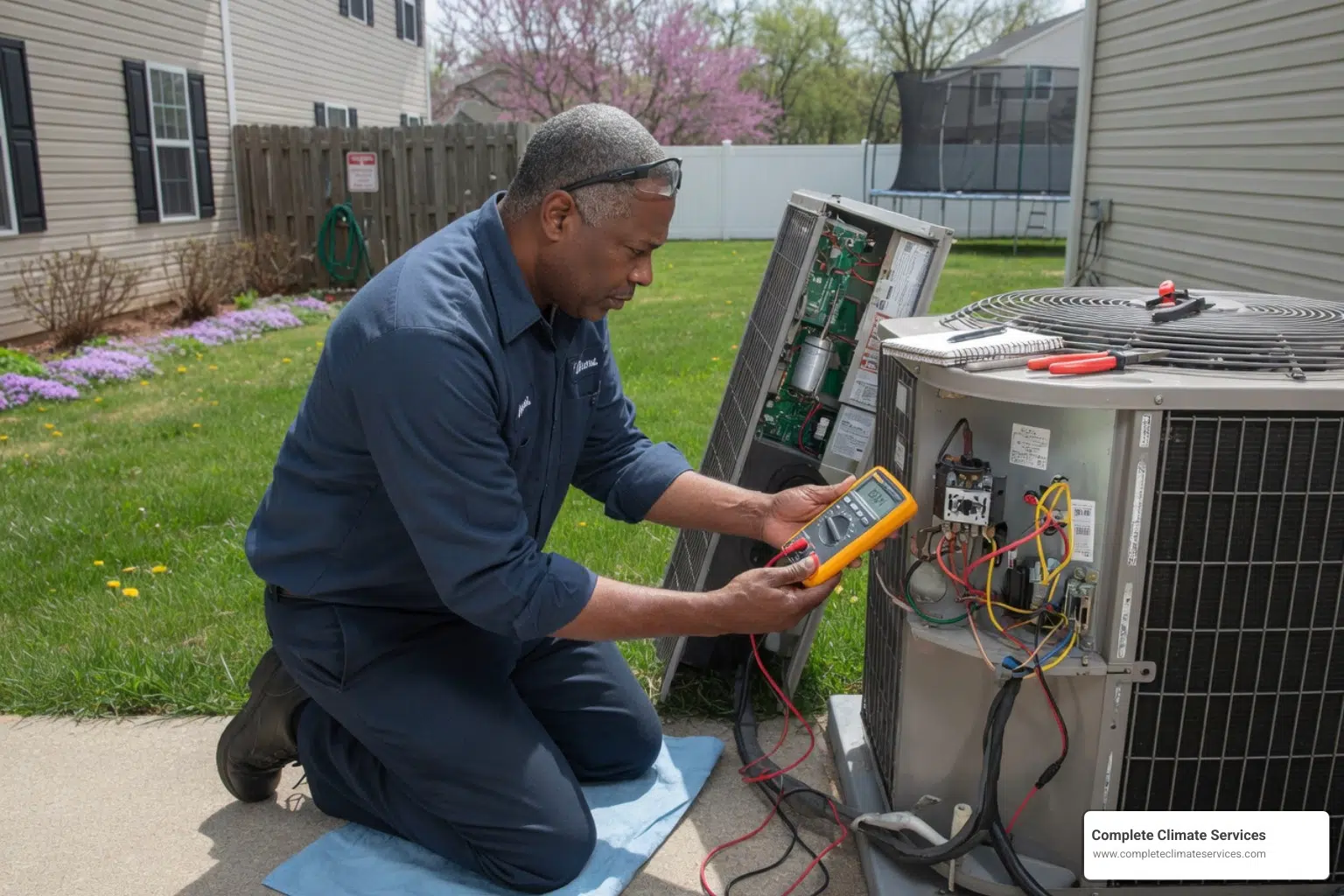
When Your HVAC Goes Silent: What Columbia Homeowners Need to Know
Columbia HVAC repair calls most often center on a handful of predictable problems. Here’s a quick snapshot before we dig deeper:
| Situation | What to Do |
|---|---|
| No heating or cooling | Check thermostat, then call a technician |
| Weak airflow | Inspect filter; schedule a diagnostic |
| Strange noises or smells | Call immediately — don’t wait |
| Rising energy bills | Book a tune-up to catch hidden issues |
| System over 15 years old | Get a repair-vs-replacement assessment |
Columbia’s climate — whether you’re dealing with the muggy summers of South Carolina’s Midlands or the freezing winters of Maryland’s Howard County — puts serious strain on HVAC systems year-round. Hot, humid air in summer pushes cooling systems to their limits. Bitter overnight lows in winter demand reliable heat. When your system decides to check out at the worst possible moment, the discomfort (and the cost) can hit fast.
The frustrating part? Most HVAC failures don’t come out of nowhere. They build quietly — a small refrigerant leak here, a dirty coil there — until one day the system just stops. That’s the “ghosting” no homeowner wants.
I’m Michael Holcomb, Co-Founder and Operations Manager of Complete Climate Services, and I’ve spent years helping Baltimore-area homeowners navigate exactly these kinds of HVAC repair situations — from emergency breakdowns to smart preventive strategies that keep systems running longer. In this guide, I’ll walk you through everything you need to know about HVAC repair in Columbia so you can make confident, cost-smart decisions.
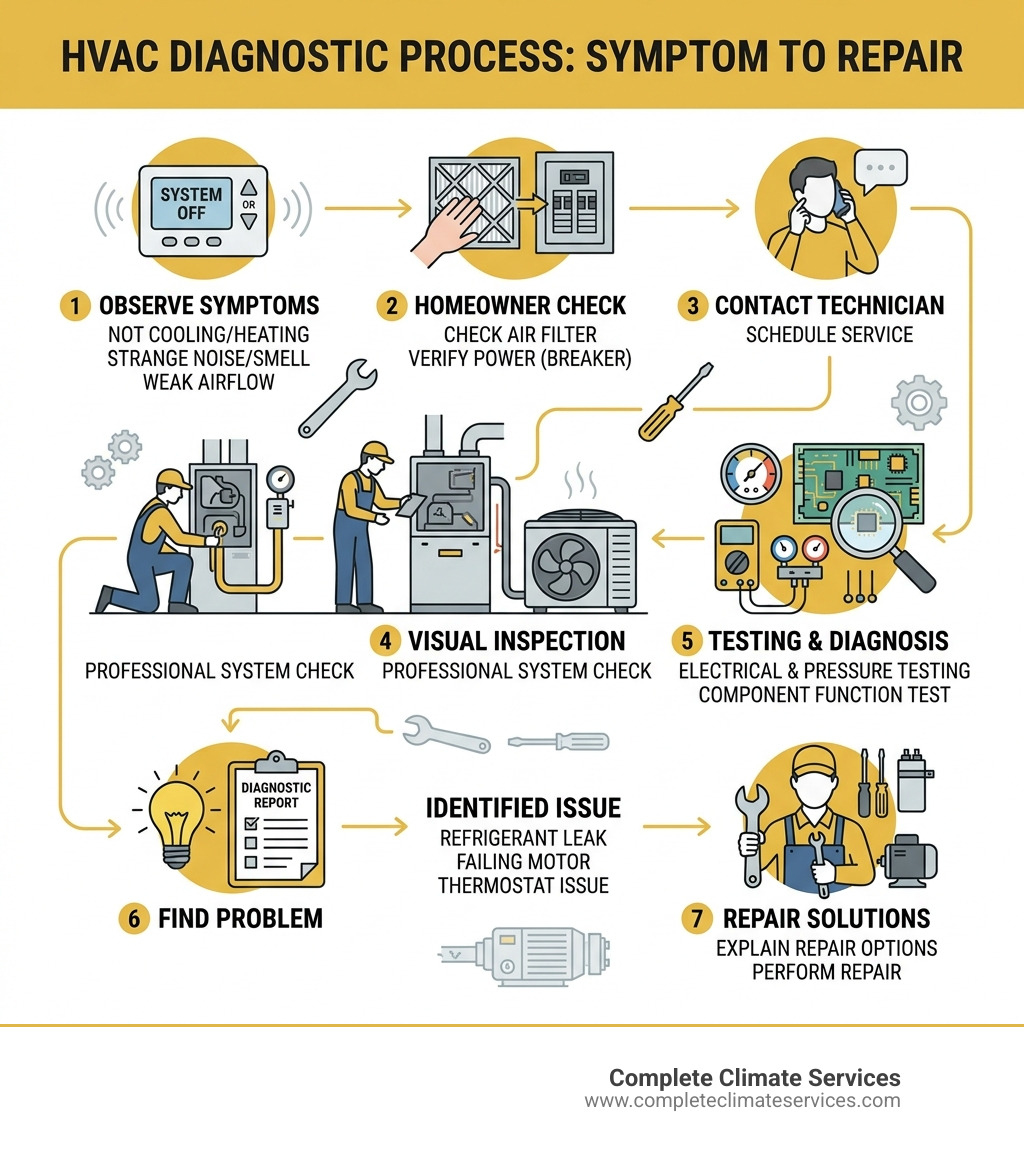
Common Signs You Need HVAC Repair Columbia
It is April 2026, and as the Maryland spring begins to transition into the humid summer months, your HVAC system is about to face its first real test of the year. Often, your unit doesn’t just die; it sends out “SOS” signals that many homeowners overlook. Recognizing these early can save you from a total system meltdown.
Weak Airflow and Temperature Inconsistencies
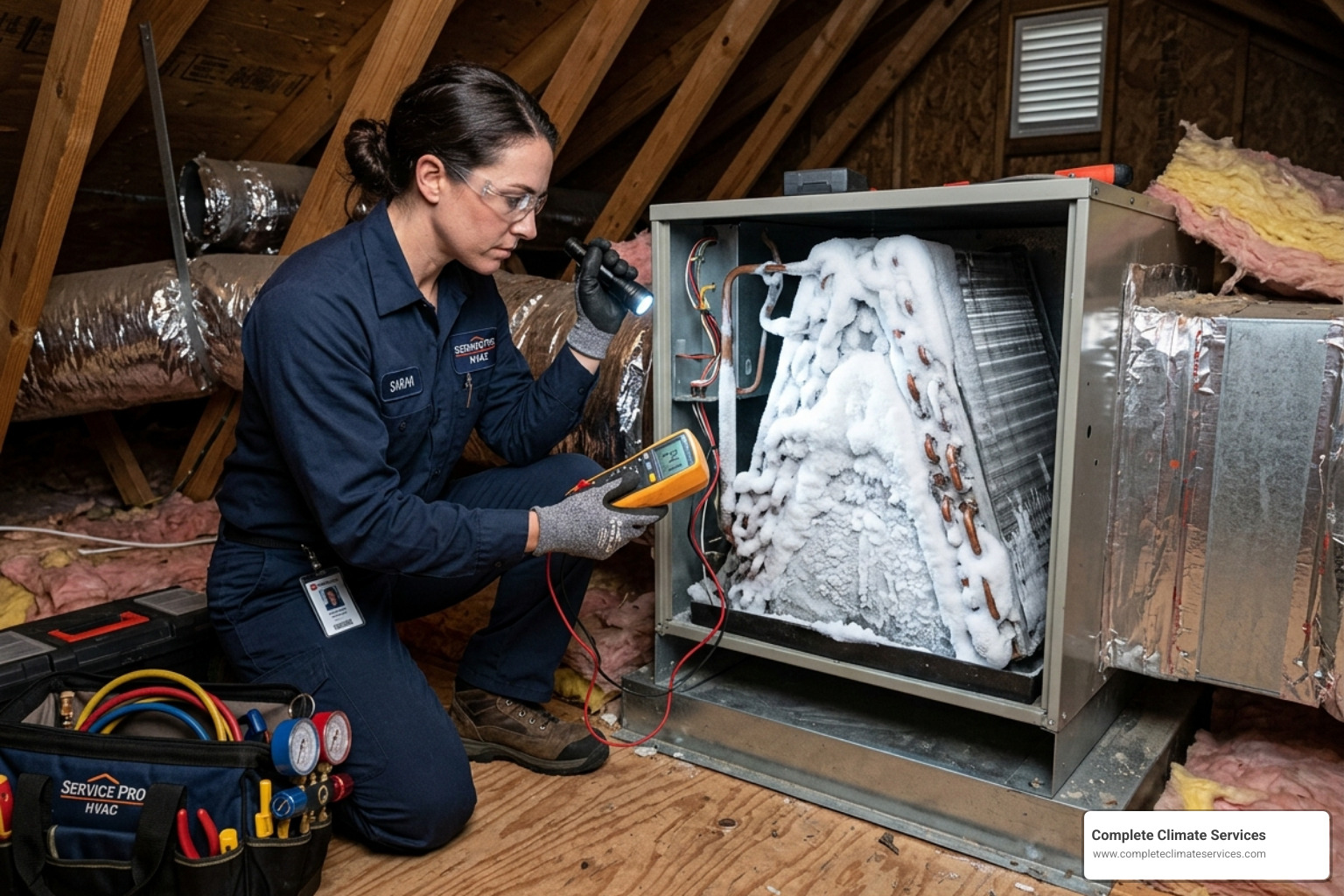
If you feel like your vents are wheezing rather than blowing, you likely have a problem. To identify HVAC problems in Columbia, start by feeling the air coming out of the registers. If the air is cool but the flow is weak, it could be a failing blower motor or a clogged duct. Conversely, if the air is flowing well but the AC Is blowing warm air, you might be dealing with a refrigerant leak or a compressor issue.
Strange Noises and Smells
Your HVAC system should run in the background, not demand your attention. If you hear grinding, squealing, banging, or a hard clunk at startup, something inside may be loose, worn out, or close to failing. In many cases, those sounds can point to compressor trouble, as explained in this guide on warning signs to watch for. Smells matter too. A musty odor can signal moisture or mold in the system, while a hot, metallic, or burning smell may mean electrical parts are overheating and need prompt attention.
Rising Energy Bills and Short Cycling
Have you noticed your unit turning on and off every few minutes? This is called short cycling. It puts immense strain on the hardware and causes your energy bills to skyrocket. If your Howard County utility bill is 20% higher than this time last year without a change in usage, your system is likely working overtime to compensate for a failing part.
Troubleshooting HVAC Repair Columbia at Home
Before you panic and search for HVAC repair in Columbia, there are a few “sanity checks” you can perform. We always recommend a quick DIY sweep to ensure the fix isn’t something simple.
- The Thermostat: It sounds silly, but check the batteries. A blank screen or a miscalibrated sensor can make it seem like the whole system is dead.
- The Breaker Box: High-demand summer days can trip a circuit breaker. Check your electrical panel to see if the HVAC switch has flipped to the “Off” or neutral position.
- Air Filter Inspection: A filthy filter is the #1 cause of airflow issues. If you can’t see light through the filter, replace it immediately.
- Clear Debris: Ensure your outdoor condenser unit isn’t suffocating under a pile of leaves or mulch.
These quick checks can help, and our guide to AC troubleshooting goes into more detail. But be careful with DIY fixes. As we explain in our article on the risks of repairing your AC yourself, today’s systems involve high-voltage parts and pressurized refrigerant. Trying to fix them without the right training or tools can cause injury and may void your warranty.
When to Call for Emergency HVAC Repair Columbia
In Columbia, MD, some HVAC problems are more than annoying – they can quickly turn into a real safety issue. It is smart to treat the situation as an emergency when:
- Indoor temperatures rise above 85 degrees or fall below 55 degrees: That can be especially risky for infants, older adults, pets, and anyone with health concerns.
- You notice an electrical burning smell: Shut the system off and call for help right away, since this can point to an electrical fault or fire hazard.
- Your furnace keeps tripping the breaker: If that is happening, it is usually not a minor glitch. This guide explains why repeated breaker trips can mean you need emergency repair.
- You are at risk of frozen pipes: In cold weather, losing heat for too long can let pipes freeze and burst, leading to expensive water damage.
Knowing when it is time to call for emergency service is vital. If you end up in that situation, follow these practical steps before help arrives to help protect your home while the technician is on the way.
Navigating Columbia’s Humid Climate and Seasonal Extremes
Columbia, MD, is beautiful, but our weather is “bi-polar.” We see roughly 30 days of temperatures above 90°F and nearly 100 days where the mercury dips below freezing. This constant expansion and contraction of pipes and components lead to frequent HVAC repair in Columbia requests.
The Humidity Factor and the 2025 Mandate
Columbia’s high summer humidity isn’t just uncomfortable; it’s a breeding ground for mold and mildew inside your AC’s evaporator coil. Furthermore, as of January 1, 2025, the EPA has phased out R-410A refrigerant. New systems now use R-454B or R-32. If you have an older unit, repairs involving refrigerant will become increasingly expensive as R-410A supplies dwindle.
To stay ahead of seasonal changes, it helps to schedule furnace service in February or book maintenance before peak demand starts. A checkup during the shoulder seasons can help you avoid long waits when the first major cold snap or heatwave arrives.
Winter Furnace and Heat Pump Challenges
When January nights in the Baltimore-Columbia area dip to around 23.5°F, a reliable heating system matters fast. One common cold-weather problem is furnace ignition failure, which is often tied to dirty flame sensors, worn igniters, or gas valve trouble.
If you have a heat pump, seeing a little “smoke” in winter can look alarming, but it’s often just the normal defrost cycle. The real concern is when ice keeps building up and never clears. In that case, it helps to know the warning signs your heat pump needs repair. If your home uses a gas furnace, understanding some common cold-weather furnace problems can also help you catch venting or carbon monoxide dangers early.
Spring and Summer Cooling Demands
As we move into the warmer months of 2026, AC Repair often centers around capacitor failures. Think of the capacitor as the “battery” that jumpstarts your motor. The heat causes these to bulge and pop. We also provide quick AC solutions for Towson homeowners and Columbia residents for clogged condensate drain lines—a common result of Maryland’s high humidity causing algae growth in the pipes. Regular AC services are the only way to keep these drains clear.
Repair vs. Replacement: Making the Right Investment
One of the most common questions we get at Complete Climate Services is: “Is it worth fixing, or should I just replace it?”
| Factor | Repair It If… | Replace It If… |
|---|---|---|
| Age | System is < 10 years old | System is > 15 years old |
| Cost | Repair is < 30% of new unit cost | Repair is > 50% of new unit cost |
| Efficiency | Bills are stable | Bills have increased by 20-35% |
| Frequency | First repair in years | Third repair in two years |
If you’re not sure what to expect, our guide to heat pump service questions in Columbia can help explain how long newer systems typically last. In many cases, upgrading to a high-efficiency unit with a strong SEER2 rating may also boost your home’s value.
For heating systems, furnace repair is often a smart choice if the unit is less than 12 years old. That said, it helps to know the warning signs of common furnace issues, especially a cracked heat exchanger, which usually means replacement is the safer option because of carbon monoxide risk.
Maximizing Efficiency and Indoor Air Quality
Repairing your unit is only half the battle; the other half is making sure it runs efficiently so you don’t need us again next month.
The 35% Rule
Regular HVAC maintenance can cut heating and cooling costs by up to 35% in some homes. When coils are cleaned and airflow is properly adjusted, your system does not have to work as hard to keep you comfortable. Just as important, fixing small furnace issues early can help you save money, protect your safety, and avoid damage to bigger components. You can learn more in these reasons to handle furnace problems quickly.
Breathing Easier
Indoor air can be 2 to 5 times more polluted than outdoor air. During an HVAC repair in Columbia visit, we can discuss:
- HEPA Filtration: Capturing 99.7% of dust and pet dander.
- Duct Cleaning: Removing the “Columbia dust” that builds up over 3-5 years.
- Smart Thermostats: These can save you roughly $180 a year by adjusting temperatures based on your Howard County commute or sleep schedule.
Frequently Asked Questions about Columbia HVAC Services
How much does HVAC repair cost in Columbia?
The cost of HVAC repair in Columbia depends on the component. Generally, a diagnostic fee ranges from $89 to $150. Minor repairs like a capacitor or contactor replacement usually fall between $200 and $400. Major repairs, like a blower motor or evaporator coil, can range from $600 to $1,500. For urgent needs, our Emergency HVAC services provide transparent, upfront pricing so there are no surprises on your bill.
How long does a typical HVAC repair take?
Most HVAC repairs take about 1 to 3 hours, depending on what is causing the problem. Simple fixes like a thermostat issue, clogged drain line, or capacitor replacement can often be completed in under an hour. More involved repairs, such as refrigerant leaks or ductwork problems, may take longer and sometimes need a return visit. If you need help in the area, our team provides prompt service throughout Columbia and nearby communities.
What financing options are available for major repairs?
We understand that an HVAC breakdown isn’t always in the budget. Complete Climate Services works with third-party lenders to offer low-interest financing and monthly installment plans. We also accept all major credit cards and can help you navigate local utility rebate programs that might offset the cost of a new, energy-efficient installation.
Conclusion
At Complete Climate Services, we’ve spent over 20 years proving that HVAC repair in Columbia doesn’t have to be a headache. Whether you’re in Columbia, Ellicott City, or downtown Baltimore, our goal is to provide honest, 5.0-star rated service that respects your time and your home. Our NATE-certified technicians are trained to fix the problem right the first time, ensuring your unit stops “ghosting” you and starts keeping you comfortable again.
Don’t wait for the next Maryland weather extreme to leave you stranded. Whether you need a simple spring tune-up or a middle-of-the-night emergency fix, we’re here to help. Contact Complete Climate Services today!

