
What Every Baltimore Homeowner Should Know About Residential Heating and Air Repair
Residential heating and air repair is one of those things most people don’t think about — until the system stops working on the hottest day in July or the coldest night in January.
When that happens, you need answers fast. Here’s a quick overview of what residential HVAC repair involves:
- What it is: Diagnosing and fixing problems with your home’s furnace, air conditioner, heat pump, or ductwork
- When you need it: Strange noises, weak airflow, warm air from the AC, no heat, or rising energy bills
- Who handles it: A licensed HVAC technician — not a general handyman
- How urgent it can be: Some issues (like no heat in winter or a refrigerant leak) are emergencies requiring same-day service
- What it typically costs: Anywhere from around $150 for a simple fix to $1,500+ for major component replacements
- How to prevent it: Schedule professional tune-ups twice a year — once in spring, once in fall
The good news? Most HVAC problems are fixable, and many breakdowns are preventable with regular maintenance.
This guide walks you through everything — from spotting early warning signs to understanding repair costs, choosing a contractor, and keeping your system running efficiently year-round.
I’m Michael Holcomb, Co-Founder and Operations Manager of Complete Climate Services, where I’ve spent years helping Baltimore homeowners navigate every aspect of residential heating and air repair — from emergency fixes to full system replacements. In this guide, I’ll share what I’ve learned so you can make smart, confident decisions about your home’s comfort.
When to Call for Professional Residential Heating and Air Repair
Maryland weather is notoriously unpredictable. One week we’re enjoying a mild breeze off the Chesapeake, and the next we’re running our air conditioners at full blast to survive a brutal summer heatwave. When your heating or cooling system starts acting up, it can be tempting to ignore the minor hiccups and hope they go away. However, waiting too long often turns a simple, inexpensive fix into a major system failure.
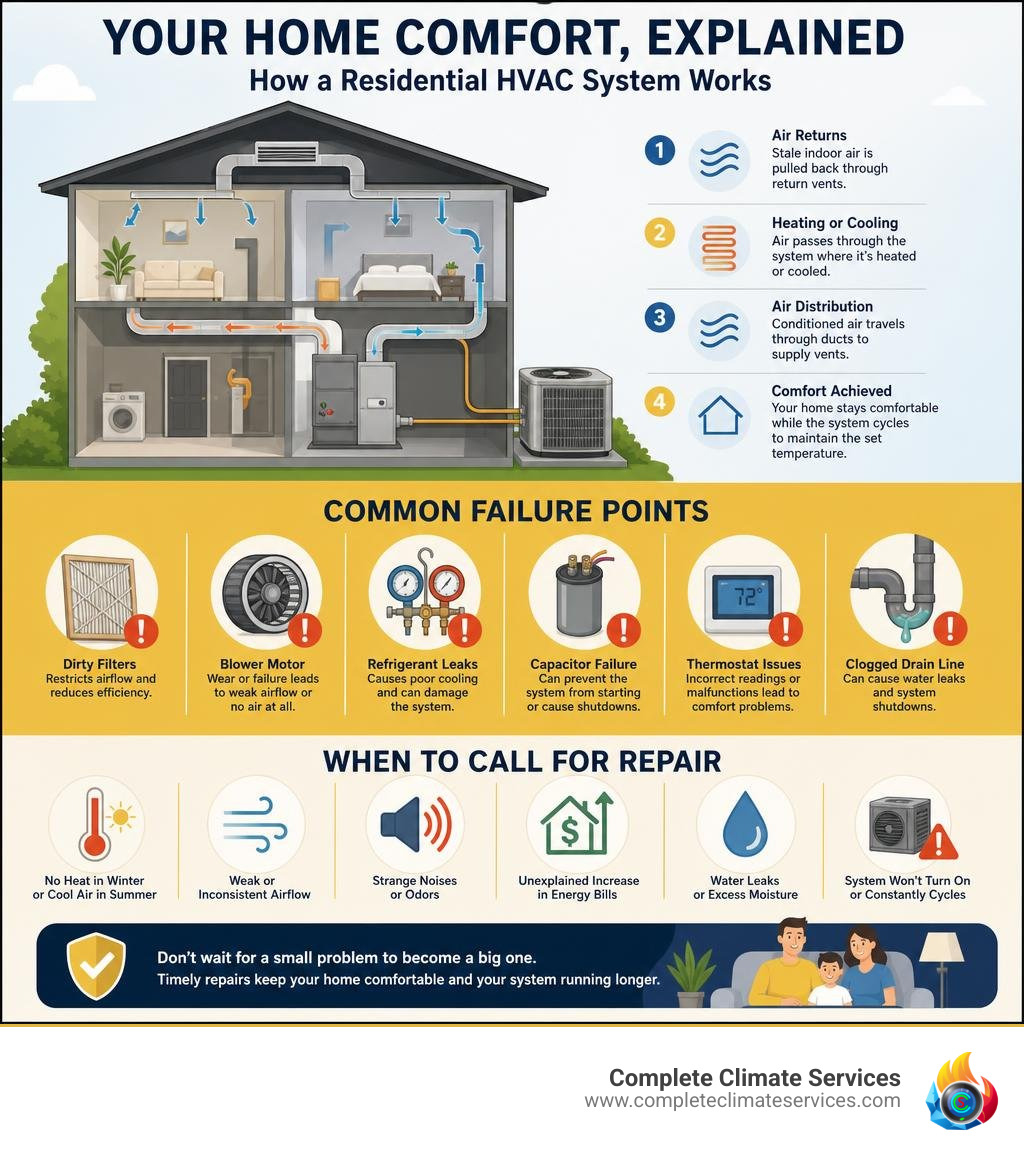
Knowing when to call for professional residential heating and air repair is the first step in protecting your investment and keeping your household comfortable. If you notice that your AC is blowing warm air, it’s a clear signal that something is fundamentally wrong. It could be a simple refrigerant leak, a failed compressor, or a faulty blower motor. Ignoring this symptom will only force your system to run continuously, driving up your energy bills and risking a total system burnout.

Another visual warning sign is ice buildup on your outdoor condenser or indoor evaporator coil. While it might seem logical that a cooling system should get cold enough to freeze, ice is actually a sign of restricted airflow or low refrigerant. Running a frozen system can permanently damage your compressor—the very heart of your air conditioner.
Common Signs You Need Residential Heating and Air Repair
Your HVAC system usually gives you plenty of warning signs before it completely shuts down. Paying attention to these signals can save you from a freezing winter night or a sweltering summer afternoon without climate control. Here are the most common signs that you need to schedule a repair:
- Strange Noises: Squealing, grinding, rattling, or loud banging noises are never normal. A squealing noise often points to a worn-out belt or motor bearing, while banging or clanking suggests loose internal components.
- Weak Airflow: If you hold your hand over your vents and feel only a faint whisper of air, your blower motor might be failing, or you could have severely clogged ducts.
- Frequent Cycling: If your system turns on and off every few minutes, it is “short-cycling.” This places immense wear and tear on the electrical components and prevents your home from reaching a consistent, comfortable temperature.
- Unusual Odors: A musty smell indicates mold or mildew growth inside your ductwork or evaporator coil, while a burning metallic odor suggests overheating electrical parts. If you have a gas furnace, any rotten egg smell is an immediate emergency—evacuate your home and call for gas line inspection right away.
To keep your home safe during the colder months, it’s also helpful to stay educated on heating-specific failures. You can learn what furnace warning signs to watch for so you can identify ignition failures, dirty burners, or cracked heat exchangers before they leave you in the cold.
Troubleshooting Basic System Inefficiencies
Before you pick up the phone to call us, there are a few basic things you can check yourself. Sometimes, what seems like a major system failure is actually a simple oversight that you can resolve in a few minutes. Our step-by-step AC troubleshooting checklist can help you narrow down the issue before scheduling service.
First, check your thermostat. Is it set to the correct mode (Cool or Heat)? Is the fan set to “Auto” rather than “On”? (Setting the fan to “On” keeps it running continuously, which can blow warm, humid air back into your home when the cooling cycle is off). If the thermostat screen is blank, try replacing the batteries.
Second, inspect your air filter. A heavily clogged air filter restricts airflow so severely that it can cause your furnace to overheat and shut down, or cause your AC system’s coils to freeze over.
Finally, check your home’s electrical panel. Did a breaker trip? If you find a tripped breaker, reset it once. However, if it trips again immediately, do not attempt to reset it a second time. This is a safety mechanism indicating an electrical overload or a short circuit, and you need a professional technician to diagnose the root cause safely.
The Real Cost of HVAC Breakdowns and Fixes
When your heating or cooling system breaks down, the first question on your mind is naturally, “How much is this going to cost me?” We believe in complete transparency, which is why we want to demystify the pricing behind residential heating and air repair.
Understanding what goes into the cost of a repair can help you budget effectively and avoid unpleasant surprises when the technician hands you the invoice.
Typical Costs for Common Heating and Cooling Repairs
The cost of an HVAC repair depends heavily on the complexity of the part being replaced, the labor involved, and whether you require emergency after-hours service. To give you an idea of what to expect, we’ve put together a breakdown of the typical costs for common heating and cooling repairs in the Baltimore area:
| Repair Service | Average Cost Range | Complexity Level |
|---|---|---|
| Diagnostic Fee (Standard) | $79 – $129 | Standard service call fee |
| AC Capacitor Replacement | $150 – $350 | Low to Moderate |
| Contactor Replacement | $150 – $300 | Low to Moderate |
| Condensate Drain Line Cleaning | $100 – $250 | Low |
| Blower Motor Replacement | $450 – $900 | Moderate to High |
| Evaporator Coil Repair/Replacement | $800 – $2,000+ | High |
| AC Compressor Replacement | $1,200 – $2,500+ | Very High |
One of the most common electrical failures in an air conditioning system is a failed capacitor. The capacitor acts like a temporary battery that gives your compressor and fan motor the electrical push they need to start running. If you want to understand the part before approving a repair, here’s a simple guide to how AC capacitor replacement works.
It’s also important to note that when your system breaks down late at night, over the weekend, or during a major holiday, diagnostic and labor rates may increase. To avoid sticker shock during an emergency, it helps to know what to expect with after-hours HVAC pricing before you decide whether a repair can wait until regular business hours.
Brand Reliability and Long-Term Repair Needs
Not all HVAC systems are created equal. Different brands and models have varying track records when it comes to reliability, parts availability, and long-term repair needs. Major brands like Carrier, Trane, Lennox, Rheem, York, Bryant, and Goodman are widely regarded as the industry standards.
When choosing or repairing a system, keep these brand-specific factors in mind:
- Parts Availability: Well-known brands have extensive distribution networks. This means that if your Trane or Carrier system needs a replacement part, a local technician is highly likely to have it in stock on their truck or at a nearby local distributor. Lesser-known or generic brands often require ordering parts directly from the manufacturer, which can leave you without heating or cooling for days.
- Warranty Coverage: Most reputable manufacturers offer a 5-to-10-year registered parts warranty. If your system is still within this window, the cost of the replacement parts may be completely covered, leaving you responsible only for the diagnostic and labor charges.
- Installation Quality: The single most important factor in how often a system will need repair is not the brand name on the cabinet—it is the quality of the initial installation. A poorly installed system, regardless of how expensive or reliable the brand is, will suffer from premature breakdowns and high energy usage.
Preventing Emergencies with Proactive Maintenance
The absolute best way to handle residential heating and air repair is to prevent the need for it in the first place. Think of your HVAC system like your car: you wouldn’t drive 50,000 miles without changing the oil and expecting the engine to run smoothly. Yet, many homeowners expect their heating and cooling systems to run for years without any professional attention.
Proactive, seasonal maintenance is the key to ensuring system longevity, lower utility bills, and consistent indoor comfort. If you want to see why these visits matter so much, this overview explains how regular furnace maintenance protects your system.
How Often to Schedule Professional HVAC Tune-Ups
To keep your system running at peak efficiency and prevent unexpected breakdowns, you should schedule professional maintenance twice a year:
- Spring AC Tune-Up: Schedule this in March or April, before the summer humidity sets in. A technician will clean the condenser coils, check refrigerant levels, test the capacitor, and ensure the system is ready to handle the hottest days of the year.
- Fall Furnace Tune-Up: Schedule this in September or October, before the first freeze. During this visit, the focus is on safety and reliability. The technician will inspect the heat exchanger for dangerous carbon monoxide leaks, clean the burners, and test the ignition system.
If you are a first-time homeowner or have recently moved into a new property, you might wonder how these schedules apply to your specific setup. Here’s a helpful breakdown of how often new homeowners should schedule AC maintenance so you can establish a stress-free routine.
The Benefits of Maintenance Agreements and Memberships
Many homeowners find it difficult to remember to schedule these seasonal tune-ups. That’s where maintenance agreements and memberships come in. By joining a structured plan, you put your home’s comfort on autopilot.
Our maintenance plans are designed to make maintenance simple and highly affordable. Members enjoy peace of mind with automatic scheduling reminders, priority service during peak seasons, and exclusive discounts on any repairs that may arise. Investing in a maintenance agreement is one of the smartest ways to extend the lifespan of your equipment and protect your budget from sudden, costly breakdowns.
Navigating the Service Visit and Improving Home Comfort
When you schedule a professional service visit, you shouldn’t feel left in the dark about what is happening to your system. A reputable HVAC contractor will always treat your home with respect and keep you fully informed throughout the diagnostic and repair process.
To help you get the most out of your system between professional visits, we’ve put together a practical homeowner’s guide to AC system care filled with everyday tips to keep your system clean and running efficiently.
What to Expect During a Professional HVAC Service Visit
When a licensed technician arrives at your home, they should follow a thorough, systematic process to evaluate your system’s health. Here is what a standard, professional HVAC service visit entails:
- Comprehensive Inspection: The technician will inspect both the indoor and outdoor components, checking electrical connections, testing safety controls, and measuring voltage and currents.
- Cleaning Vital Components: Over time, dust and debris build up on your system’s coils and blower motor, forcing it to work harder. The technician will clean these parts to restore proper heat transfer and airflow.
- Airflow and Temperature Checks: Measuring the temperature difference between the air entering and leaving your system helps the technician verify that the unit is cooling or heating efficiently.
- Safety Analysis: For heating systems, verifying that there are no cracked components or venting issues is critical to preventing carbon monoxide from entering your living spaces.
To learn more about how these safety inspections protect your family and improve system reliability, read about why fall furnace inspections are so useful.
Enhancing Indoor Air Quality and System Efficiency
Your heating and cooling system does more than just control the temperature—it also plays a massive role in the quality of the air you breathe inside your home. According to the EPA, indoor air can be two to five times more polluted than outdoor air.
During a standard repair or maintenance visit, you can take several steps to improve your indoor air quality and boost system efficiency:
- Upgrade Your Filtration: Standard fiberglass filters only protect your equipment from large dust particles. Upgrading to a pleated MERV 8 to MERV 11 filter will capture smaller allergens, pet dander, and mold spores.
- Control Humidity levels: In our local Maryland climate, summer humidity can make your home feel much warmer than it actually is. Installing a whole-home dehumidifier works alongside your AC to pull moisture out of the air, allowing you to set your thermostat a few degrees higher without sacrificing comfort.
- Seal Leaky Ducts: If your ductwork has gaps or cracks, you are losing conditioned air into your attic or crawlspace. Sealing your ducts ensures that the air you pay to heat or cool actually makes it into your living areas.
For a deeper dive into creating a healthier living environment for your family, take a look at these tips for improving home air quality year-round.
Finding a Trustworthy Local Contractor
When your system goes down, finding a contractor you can trust is just as important as the repair itself. Unfortunately, the HVAC industry has its share of bad actors who use high-pressure sales tactics, offer vague pricing, or perform substandard work.
Whether you are in Baltimore City, Towson, Columbia, Ellicott City, or Dundalk, you deserve an honest partner who prioritizes your comfort and budget.
How to Choose the Right Partner for Residential Heating and Air Repair
When searching for the right contractor, don’t just pick the first name that pops up on Google. Take a few minutes to evaluate their credentials, reputation, and customer service approach.
Here is what you should look for when choosing an AC repair company:
- Licensing and Insurance: Never hire an unlicensed technician. A reputable contractor will gladly provide their Maryland HVAC license number and proof of liability insurance.
- NATE Certification: North American Technician Excellence (NATE) is the gold standard for technician certification. Choosing a company with NATE-certified technicians ensures your repair is completed correctly the first time.
- Transparent, Flat-Rate Pricing: Avoid companies that charge by the hour or give vague estimates. Look for contractors who provide upfront, flat-rate pricing so you know exactly what the repair will cost before any work begins.
- Local Reviews and Reputation: Check third-party review sites to see what your neighbors are saying. Look for companies with consistent, high ratings and positive feedback regarding their professionalism and honesty.
Financing Options and Maintenance Memberships
We understand that a sudden system failure can put a strain on your household budget. If your system requires a major component replacement or a complete system upgrade, you shouldn’t have to compromise on your comfort or safety due to upfront costs.
A trustworthy contractor will offer flexible payment solutions to fit your financial situation. You can easily apply for financing through our secure, third-party partners to find low-interest payment plans that turn a major investment into manageable monthly payments. Combined with our affordable maintenance memberships, keeping your home comfortable has never been easier or more accessible.
Frequently Asked Questions about Residential HVAC Repair
What is considered an HVAC emergency?
An HVAC emergency is any situation that poses an immediate threat to your family’s health, safety, or property. This includes a total loss of heat during freezing winter weather, an active refrigerant leak, electrical issues that cause your circuit breaker to trip repeatedly, or any signs of a gas leak (such as a rotten egg smell or carbon monoxide alarm sounding).
If you are experiencing any of these critical issues, this guide to knowing when an HVAC issue is an emergency explains the immediate steps you can take to keep your household safe.
Is it better to repair or replace an old HVAC system?
To decide whether to repair or replace your system, use the $5,000 Rule: multiply the age of your system by the cost of the repair. If the total exceeds $5,000, it is generally more cost-effective to invest that money into a new, high-efficiency system. For example, if your 12-year-old system needs a $500 repair (12 x 500 = $6,000), replacement is likely the smarter financial move.
Additionally, newer systems offer significantly higher energy efficiency, which will dramatically lower your monthly utility bills. However, if your system is relatively young, keeping up with repairs is highly recommended. If you are tempted to wait, here’s why it is better to take care of furnace problems early.
How often should I change my home’s air filters?
For standard 1-inch pleated filters, we recommend changing them every 30 to 90 days. However, this timeline depends heavily on your household size, whether you have allergies, and whether you own pets.
Pet hair and dander can quickly clog a filter, reducing airflow and placing unnecessary strain on your system’s blower motor. If you have furry family members, this guide explains how often pet owners should replace AC filters to find the ideal filter replacement schedule for your home.
Conclusion
Handling residential heating and air repair doesn’t have to be a stressful, overwhelming experience. By staying alert to the early warning signs of system failure, keeping up with seasonal maintenance, and partnering with a trusted local professional, you can keep your home comfortable through every season without melting.
At Complete Climate Services, we have spent over 20 years delivering honest, reliable, and top-rated HVAC solutions to our neighbors throughout Baltimore and the surrounding areas. Whether you need a quick diagnostic check, emergency repairs, or a complete system replacement, our team of NATE-certified technicians is here to help.
Don’t wait for your system to leave you in the cold or heat. Contact us today to learn more about our HVAC services or to schedule your next seasonal tune-up!