

Why AC Servicing and Repairing Matters for Your Home Comfort
AC servicing and repairing is something every homeowner will need at some point — and knowing the basics can save you time, money, and a lot of sweaty nights.
Here’s what most homeowners want to know right away:
| Question | Quick Answer |
|---|---|
| How often should I service my AC? | Once a year, ideally in spring before cooling season |
| What does a basic AC service include? | Filter check, coil cleaning, refrigerant check, electrical inspection |
| How much does AC repair cost? | Common repairs range from $350–$750; major repairs can reach $5,000+ |
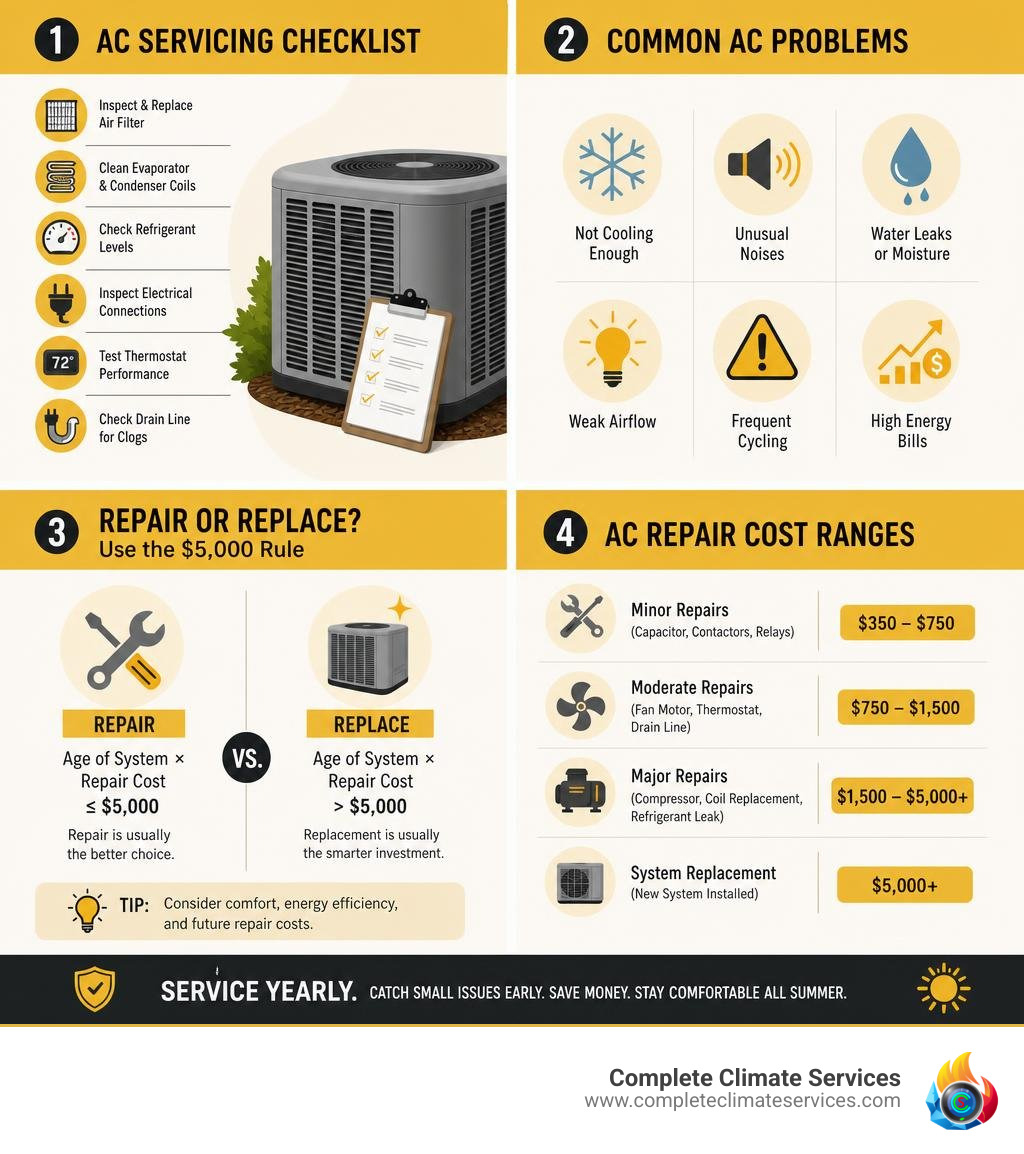
| Repair or replace? | Use the $5,000 rule: multiply system age × repair cost; if over $5,000, consider replacing |
| Can I fix it myself? | You can replace filters and reset breakers — leave refrigerant and electrical work to pros |
A neglected AC doesn’t just break down — it quietly drains your wallet. Dirty filters, worn capacitors, and low refrigerant levels force your system to work harder, driving up energy bills and shortening the unit’s life. Regular maintenance can reduce energy consumption by up to 15% and extend your system’s lifespan by 5–10 years.
The good news? Most problems are preventable with routine care — and most repairs are straightforward when caught early.
I’m Michael Holcomb, Co-Founder and Operations Manager of Complete Climate Services, and I’ve spent years helping Baltimore-area homeowners navigate AC servicing and repairing — from quick tune-ups to full system replacements. In this guide, I’ll walk you through everything you need to know to keep your system running efficiently and avoid costly surprises.
Common Air Conditioner Problems and How to Diagnose Them
When the Maryland summer humidity hits, the last thing you want is an air conditioner that decides to take a vacation. Understanding how your system behaves when it is struggling can help you catch minor issues before they turn into complete system failures.
Many common AC problems start with simple components. For example, weak airflow is often the direct result of a severely clogged air filter. When air cannot flow freely through your system, the blower motor works twice as hard, leading to overheating and eventual motor failure.
Another frequent issue is “short cycling,” where the system turns on and off rapidly without ever completing a full cooling cycle. This not only spikes your energy bills but also puts immense wear and tear on your compressor. Short cycling can be caused by anything from an oversized unit to low refrigerant levels or a miscalibrated thermostat.
Additionally, if you notice ice forming on your outdoor unit or indoor evaporator coil, do not ignore it. Frozen coils are usually caused by restricted airflow (like a dirty filter or blocked vents) or a refrigerant leak. Running your system with frozen coils can permanently damage the compressor, so it is crucial to turn the system off immediately and let it defrost.
Troubleshooting When Your AC Is Blowing Warm Air
There is nothing quite as frustrating as feeling lukewarm or warm air pushing out of your supply vents on a 95-degree afternoon. If you find yourself in this situation, there are a few diagnostic steps you can take before calling in the professionals.
First, check your thermostat. It sounds simple, but verify that it is set to “Cool” and that the fan is set to “Auto” rather than “On.” When the fan is set to “On,” it blows air continuously even when the cooling system is resting, which can make the air feel warm.
If the thermostat settings are correct, the culprit could be a clogged air filter, dirty condenser coils, or a refrigerant leak. A system restricted by dirt cannot absorb or release heat effectively. To help you rule out simple fixes, you can walk through a few quick troubleshooting steps before scheduling service.
If simple troubleshooting does not restore the cool breeze, you may be dealing with a refrigerant leak or a failing compressor. Because refrigerant handling requires specialized licensing, professional intervention is necessary. If you want to understand why your unit is acting up, here is what to know when your AC starts blowing warm air.
Identifying Compressor and Capacitor Failures
If your outdoor unit is hummed out or making a loud clicking sound but the fan is not spinning, you are likely dealing with a capacitor or compressor issue.
Think of the capacitor as a temporary battery that gives your fan motor and compressor the high-voltage “kick” they need to start up. Over time, heat and electrical fluctuations degrade these components. In fact, we recommend replacing start/run capacitors proactively every five years to prevent them from failing when you need them most. If you suspect an electrical issue, this overview of how AC capacitors work explains how these small parts protect your larger system.
The compressor, on the other hand, is the heart of your air conditioner. It pumps refrigerant through the system to facilitate heat transfer. When a compressor begins to fail, you might hear loud rattling noises, experience frequent circuit breaker trips, or notice a complete lack of cooling. Replacing a compressor is a major repair. To help you spot the warning signs early, review these common compressor problem symptoms.
If the issue lies with the fan motor itself rather than the electrical supply, you will need to determine the right replacement specifications. Our guide to choosing the right AC fan motor can help you understand motor types, speeds, and compatibility.
Essential Steps for Professional AC Servicing and Repairing
While homeowners can easily replace filters and clear debris from around the outdoor unit, a comprehensive ac servicing and repairing visit requires professional diagnostic tools and training. Routine professional service ensures that your system remains safe, efficient, and fully compliant with manufacturer warranty requirements.
When we perform a professional tune-up, we do not just look at whether the system is running; we analyze its electrical, mechanical, and thermodynamic performance. This proactive approach catches minor component wear before it leads to a catastrophic system breakdown in the middle of July. If your system is overdue for an inspection, scheduling professional AC repair can restore its peak performance.
What a Comprehensive Tune-Up Includes
A professional maintenance visit is highly detailed. To give you an idea of what to expect, we have outlined the core tasks completed during a professional tune-up:
- Thermostat Calibration: We verify that your thermostat communicates accurately with your heating and cooling equipment.
- Electrical Component Testing: We measure voltage and amperage on motors, inspect contactors for pitting, and test capacitors for proper capacitance.
- Coil Cleaning: We clean the outdoor condenser coil and inspect the indoor evaporator coil to ensure optimal heat transfer.
- Condensate Drain Clearing: We clear algae and debris from the drain line and trap to prevent water damage or system shut-offs.
- Refrigerant Charge Verification: We measure refrigerant pressures and temperatures to ensure the system is operating at manufacturer-specified levels.
- Ductwork and Airflow Inspection: We check for air leaks and measure static pressure to confirm proper airflow throughout your home.
For a complete checklist of how to preserve your system between professional visits, read our homeowner AC care guide.
Why Regular AC Servicing and Repairing Saves You Money
Investing in regular maintenance is far more cost-effective than waiting for your system to break down. When an air conditioner is neglected, dirt accumulates on the coils, filters clog, and electrical connections loosen. This forces the system to run longer cycles to cool your home, which directly increases your monthly utility bills.
In fact, routine servicing can recover up to 15% of lost operating efficiency and extend the overall lifespan of your equipment by up to a decade. Furthermore, clean coils and fresh filters significantly improve indoor air quality by removing dust, pollen, and mold spores from your home’s air supply. To keep your system running smoothly year after year, consider setting up regular AC maintenance.
Repair vs. Replacement: Making the Right Financial Decision
Every homeowner eventually faces the tough decision of whether to keep repairing an aging air conditioner or invest in a new, high-efficiency system. To help you evaluate your options, we have put together a quick comparison table:
| Decision Factor | Choose Repair | Choose Replacement |
|---|---|---|
| System Age | Under 10 years old | Over 12-15 years old |
| Frequency of Issues | Rare, minor hiccups | Multiple service calls per season |
| Energy Bills | Consistent and manageable | Steadily rising despite maintenance |
| Repair Cost | Minor (under $500-$800) | Major component failure (compressor, coil) |
| Current Performance | Cools evenly and quickly | Struggles to keep up with summer humidity |
If your system is constantly breaking down, upgrading to a modern unit can dramatically lower your energy bills. Learn more about how high-efficiency AC systems help Baltimore homes.
Applying the $5,000 Rule for HVAC Systems
An excellent industry guideline for making the repair-versus-replace decision is the $5,000 rule.
To apply this rule, simply multiply the age of your AC system (in years) by the estimated cost of the repair. If the resulting number is greater than $5,000, your money is generally better spent on a replacement.
- Example A: A 6-year-old system needs a $400 capacitor replacement. $400 x 6 = $2,400. Since this is well under $5,000, repairing the unit is the smart choice.
- Example B: A 12-year-old system needs a new compressor costing $2,200. $2,200 x 12 = $26,400. Because this far exceeds $5,000, replacing the system is the more financially sound long-term decision.
Before making a major commitment, it is always wise to gather accurate pricing. Getting a free AC estimate first can help you protect your budget.
How Different AC Types Impact Your Service Needs
The type of cooling system you have in your home will dictate its specific maintenance and repair requirements:
- Central Air Conditioning: These systems rely on a network of ductwork to distribute air. They require regular duct inspections to ensure seals are intact. If you suspect your ducts are leaking cooled air into your attic or crawlspace, review these tips for finding and fixing leaky ducts.
- Ductless Mini-Splits: These systems are highly efficient and allow for zoned temperature control. Because they do not use ducts, they require frequent filter cleanings to maintain proper airflow. If you are considering an alternative to traditional central air, explore whether ductless AC makes sense for an open-concept home.
- Heat Pumps: Because heat pumps provide both heating in the winter and cooling in the summer, they operate year-round. This double-duty usage means they require bi-annual professional maintenance to prevent premature wear.
Depending on where you live in our service area, Complete Climate Services is ready to help. We provide prompt, professional residential HVAC support across Dundalk, Curtis Bay, Brooklyn, Edgewater, Ellicott City, and Catonsville. No matter which neighborhood you call home, our team is dedicated to keeping your home comfortable and your system running efficiently.
Frequently Asked Questions About AC Maintenance
How often should I schedule professional AC maintenance?
You should schedule professional AC maintenance at least once a year. The ideal time for this service is in the spring, before the hot summer weather arrives. This timing ensures your system is clean, safe, and ready to handle high-demand days without breaking down. If you live in Towson and need fast local support, these quick AC tips for Towson homeowners can help you keep your home comfortable.
What are the risks of attempting DIY air conditioning repairs?
While cleaning your outdoor unit’s exterior or replacing air filters are safe DIY tasks, complex electrical and refrigerant repairs carry significant risks. Handling refrigerant without proper EPA Section 608 certification is illegal and harmful to the environment. Furthermore, high-voltage electrical components can cause severe injury or property damage, and amateur repairs often void manufacturer warranties. We break down the biggest safety concerns in this guide to why DIY AC repairs can be risky.
How much does a typical AC repair cost?
The cost of AC repairs varies widely based on the component that has failed. Minor repairs, such as replacing a capacitor, contactor, or clearing a clogged condensate drain, typically range from $150 to $450. Mid-range repairs, like fixing a minor refrigerant leak and recharging the system, can run between $350 and $1,000. Major repairs, such as replacing a blower motor or compressor, can range from $800 to over $3,000.
Conclusion
Ensuring your home remains a cool, comfortable sanctuary during the peak of summer does not have to be stressful. By staying proactive with your annual maintenance, addressing minor symptoms early, and understanding when to repair versus replace your system, you can enjoy reliable indoor comfort while keeping your energy bills low.
At Complete Climate Services, we are proud to serve our neighbors throughout Baltimore and the surrounding counties. With over 20 years of honest, reliable service and consistent 5.0 ratings across platforms, we are dedicated to keeping your home comfortable in every season. Whether you need a quick summer tune-up or comprehensive heating system care, we are here to help. Schedule service today to make sure your home’s complete climate control is ready for whatever the weather brings.
Choosing the Right Partner for AC Servicing and Repairing
Finding an HVAC provider you can trust is essential for peace of mind. You want to partner with a company that employs certified technicians, offers upfront, transparent pricing, and stands behind their work with robust guarantees.
To help you make an informed decision when hiring a contractor, review what to look for in a reliable AC repair company and a trusted Baltimore HVAC company. Taking the time to choose the right professional ensures your ac servicing and repairing needs are handled correctly the very first time.

