When Your AC Fan Motor Fails: What Baltimore Homeowners Need to Know
Quick Answer: Top Replacement AC Fan Motors
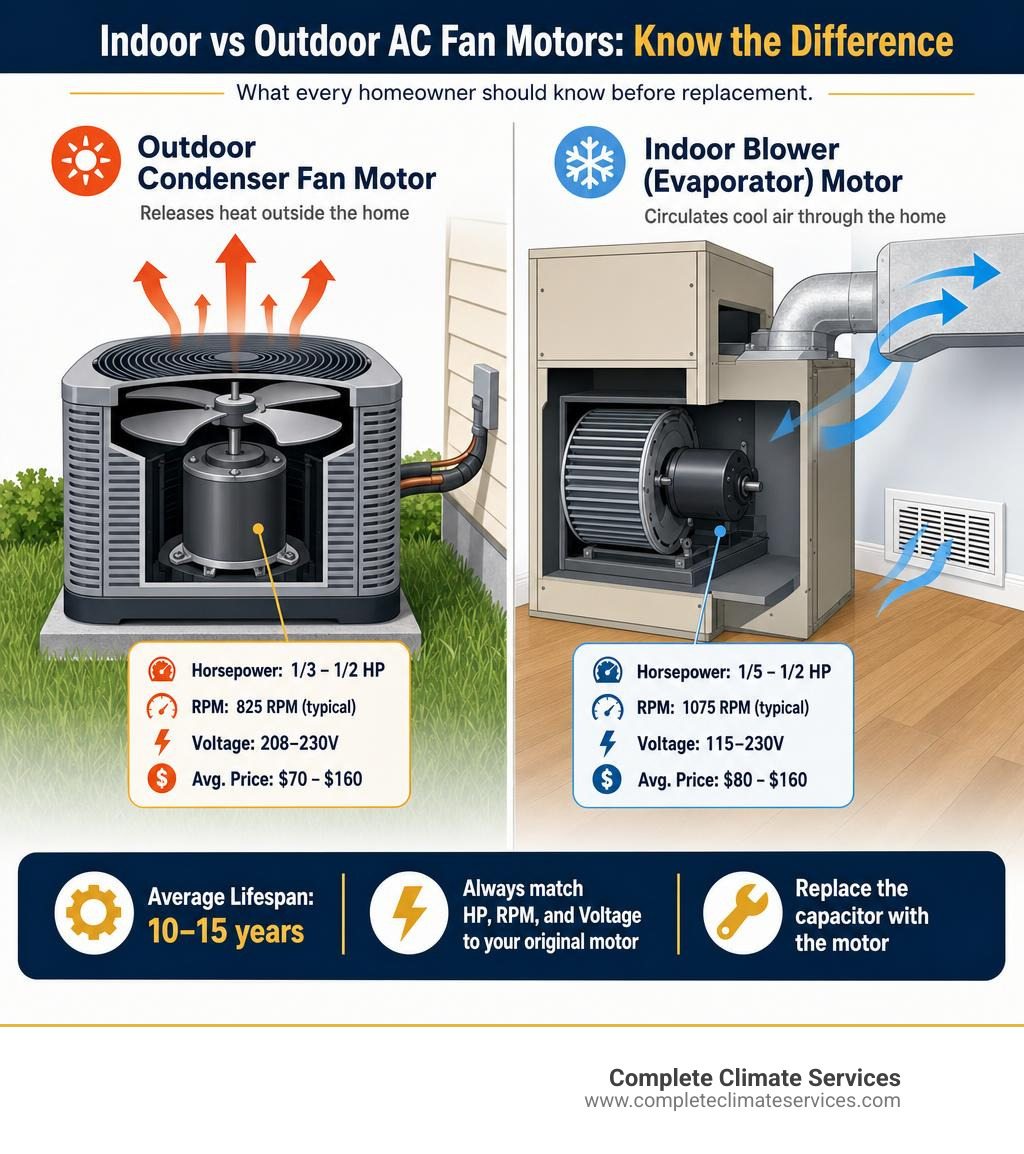
| Motor Type | Common HP | Typical RPM | Voltage | Avg. Price |
|---|---|---|---|---|
| Condenser Fan Motor | 1/3 – 1/2 HP | 825 RPM | 208-230V | $70 – $160 |
| Indoor Blower Motor | 1/5 – 1/2 HP | 1075 RPM | 115-230V | $80 – $160 |
| OEM Replacement | Varies | Varies | Varies | $100 – $200 |
A failing AC fan motor is one of the most common reasons a home stops cooling in the middle of a Baltimore summer. When the motor goes, airflow stops — and your whole system can overheat, short cycle, or shut down completely.
The good news? Many homeowners can identify the problem early and find a compatible replacement motor without guesswork. There are over 460 replacement fan motors available for AC units, covering most major brands and configurations.
This guide walks you through exactly what to look for — from reading specs to picking the right motor for your unit.
AC fan motor terms simplified:
I’m Michael Holcomb, Co-Founder and Operations Manager of Complete Climate Services, and I’ve spent years diagnosing and repairing AC fan motor failures across the Baltimore area. In this guide, I’ll share what our team looks for when evaluating and replacing motors, so you can make a confident, informed decision.
Understanding the Role of an AC Fan Motor
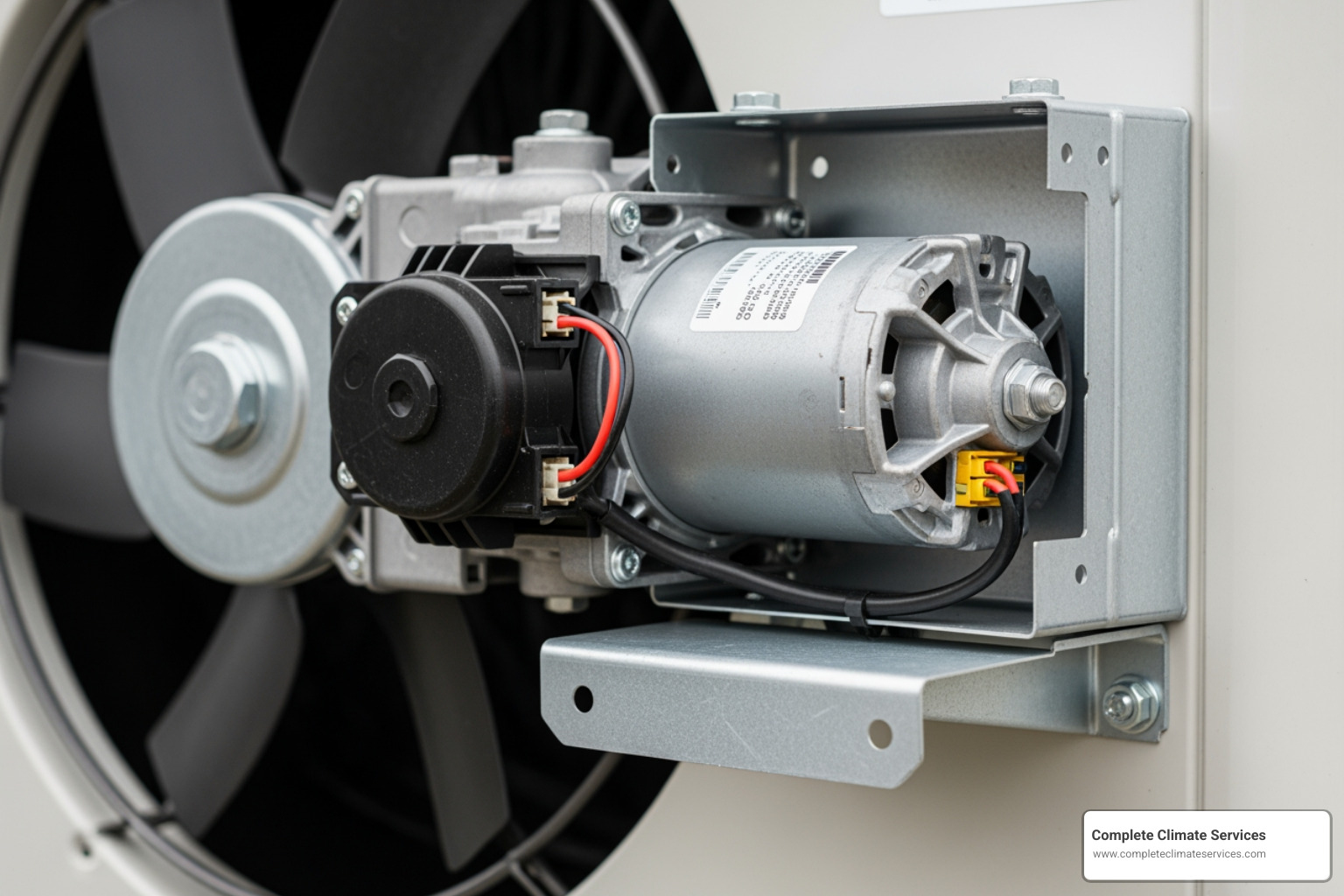
To understand why your air conditioner isn’t cooling, you first need to understand the AC fan motor. Think of these motors as the “lungs” of your HVAC system. Without them, the refrigerant that cools your home has no way to move heat from one place to another.
In a central AC system, the fan motor does two important jobs: it helps move cooled air through your home and keeps air flowing across the outdoor condenser coils so heat can escape. If that motor fails, cooling performance drops fast or stops altogether. If you suspect a motor problem, it’s smart to call for AC repair so the electrical side is handled safely.
Condenser vs. Evaporator Motors
Your system actually uses two different types of motors. The condenser fan motor is located in the outdoor unit. Its job is to dissipate heat by blowing air across the condenser coils. If you look at your outdoor unit and see the large fan on top spinning, that’s the condenser motor at work.
The evaporator motor (often called the blower motor) lives inside your home, usually within the furnace or air handler. This motor is responsible for the airflow volume you feel coming out of your vents. It pulls warm air from your rooms, pushes it across the cold evaporator coils, and sends the chilled air back through your ductwork.
How Motors Drive System Efficiency
As of May 2026, energy efficiency is a top priority for Baltimore homeowners. A high-quality AC fan motor doesn’t just keep you cool; it manages electricity consumption. Modern motors, especially ECM (Electronically Commutated Motors), can adjust their speed based on the cooling demand.
When a motor begins to fail, it often draws more “amps” (electricity) to do the same amount of work, leading to higher utility bills and slower cooling speeds. Keeping these motors in peak condition is vital for maintaining seasonal performance standards.
Signs Your Motor Needs Replacement

Catching a failing AC fan motor early can help you avoid a surprise breakdown in the middle of summer. A common warning sign is when your AC starts blowing warm air. If the fan is not moving enough air across the coils, your system cannot remove heat the way it should.
Pay attention to what your system sounds like. Rattling can point to a loose part, while a loud buzz may mean the motor is struggling to start. If the fan blades are turning slowly or the outdoor unit keeps humming, it may be time to look through this home AC troubleshooting guide.
Identifying Electrical Failure
Sometimes the problem isn’t the motor itself, but the electrical path leading to it. A motor that is “shorting out” will frequently cause blown fuses or tripped circuit breakers. This happens because the motor is drawing too much power, creating a safety risk.
Capacitor issues are also a frequent culprit. The capacitor acts like a battery that gives the motor the “kick” it needs to start. If the capacitor fails, the motor may just sit there and hum until it overheats. This is a key part of spotting signs of a problem with your compressor or fan system.
Physical Symptoms of Wear
Mechanical wear is inevitable over time. Bearing failure is a classic issue; you’ll hear this as a high-pitched squealing or grinding noise. If the bearings are gone, the motor shaft may seize entirely, making it impossible for the fan to spin even if it has power.
Excessive vibration is another red flag. If the motor housing feels extremely hot to the touch (be careful!), it is likely overheating due to internal friction or electrical resistance.
Key Specifications for Choosing a Replacement
When you’re looking for a replacement AC fan motor, you can’t just grab the first one you see on Amazon. You need to match the specific technical requirements of your existing unit.
| Feature | Importance | Common Residential Values |
|---|---|---|
| Horsepower (HP) | Must match or slightly exceed | 1/6, 1/4, 1/3, 1/2 HP |
| RPM | Must be within 10% | 825, 1075, 1625 RPM |
| Voltage | Must match exactly | 115V or 208-230V |
| Frame Size | Determines mounting | 48 (5.6″ dia) or 42 (5″ dia) |
Matching Horsepower and RPM for your AC Fan Motor
Horsepower (HP) relates to the torque requirements of your fan blade. If you use a motor with too little HP, it will burn out quickly trying to turn the heavy blades.
RPM (Revolutions Per Minute) is equally critical. Most residential condenser motors run at 825 or 1075 RPM. If you install a motor with the wrong RPM, you’ll change the airflow velocity, which can lead to ice buildup on your coils or poor heat exchange.
Voltage and Frame Size Requirements
In the Baltimore area, most outdoor units run on 208-230V, while some indoor blowers or window units might use 115V. Connecting a 115V motor to a 230V line will result in an immediate (and smoky) failure.
Frame size refers to the physical dimensions of the motor. The most common is the 48Y frame (about 5 5/8 inches in diameter). You also need to verify the shaft diameter (usually 1/2 inch) and the mounting pattern to ensure it fits into your existing brackets. Many modern replacements are “reversible,” meaning you can change the rotation direction to match your specific fan blade.
Installation and Safety Procedures
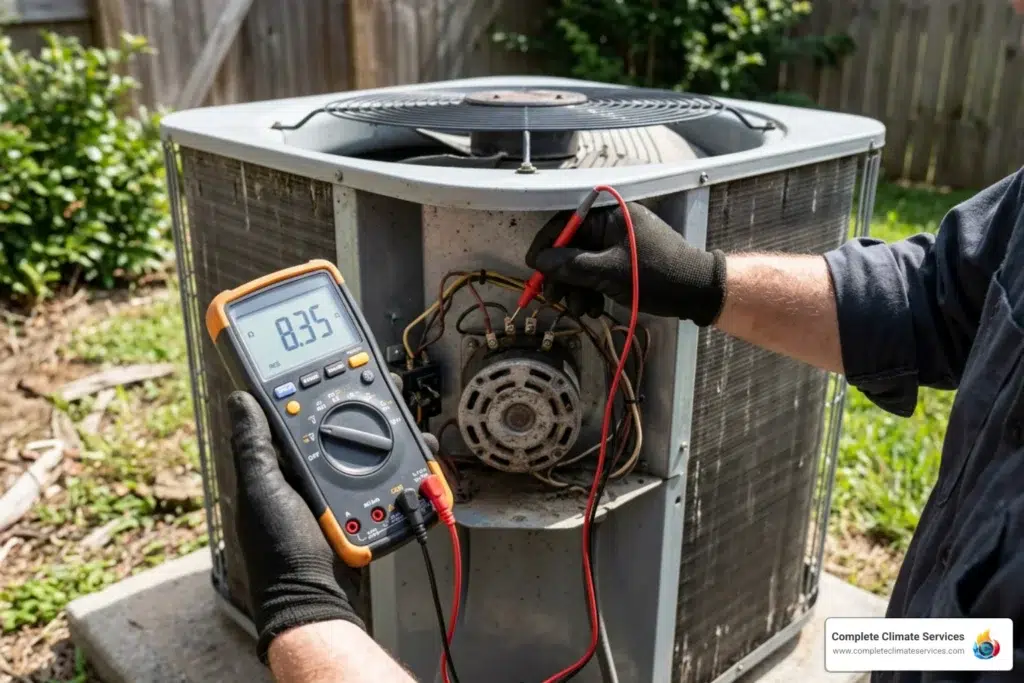
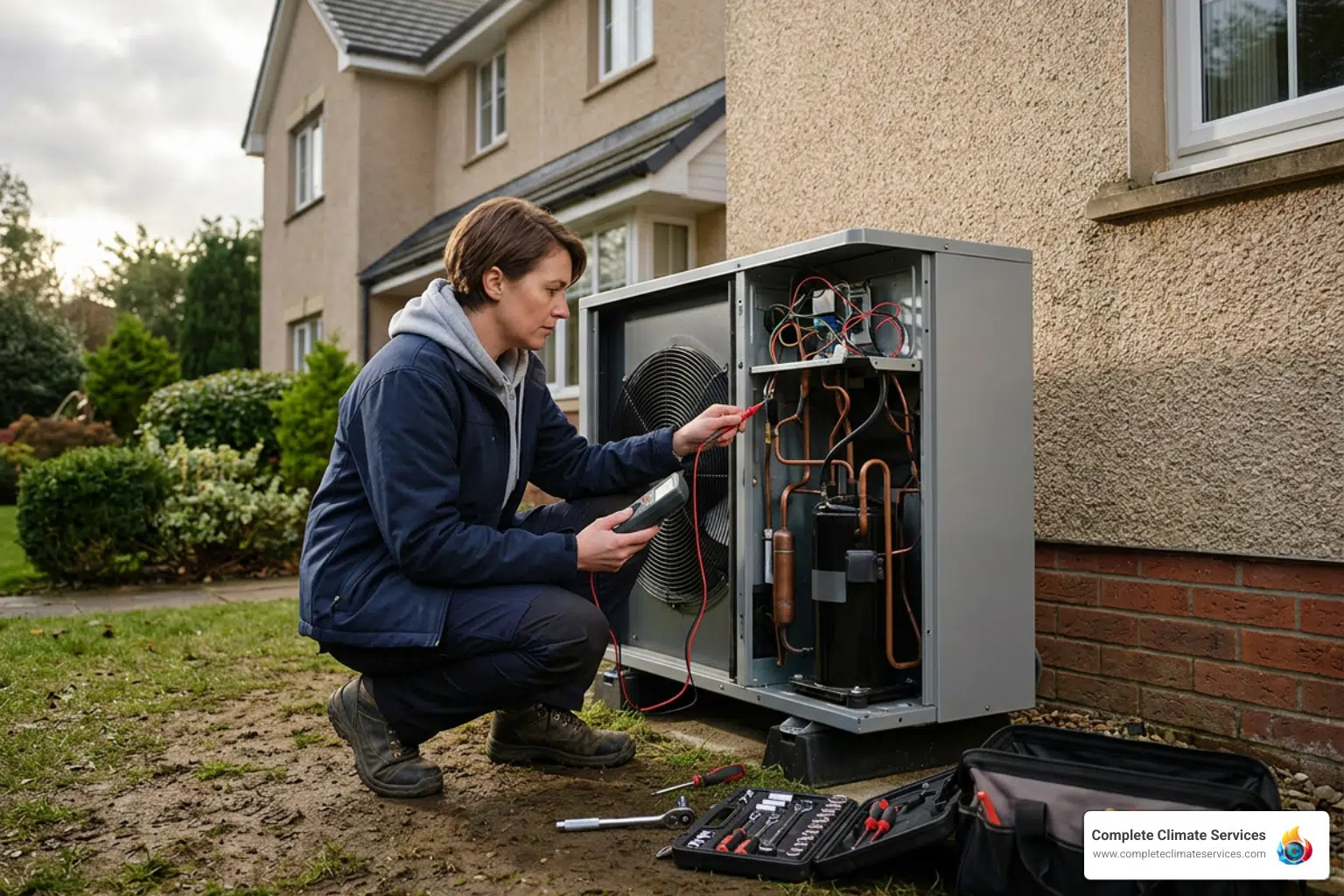
We cannot stress this enough: working with an AC fan motor involves high voltage and stored electricity. Even if the power is off, the capacitor can hold a lethal charge. Before any work begins, the power must be shut off at both the thermostat and the outdoor disconnect box or circuit breaker.
If you are considering a repair, please read about the hidden risks of DIY air conditioning repair. We always recommend using a multimeter to test for “dead” wires before touching anything.
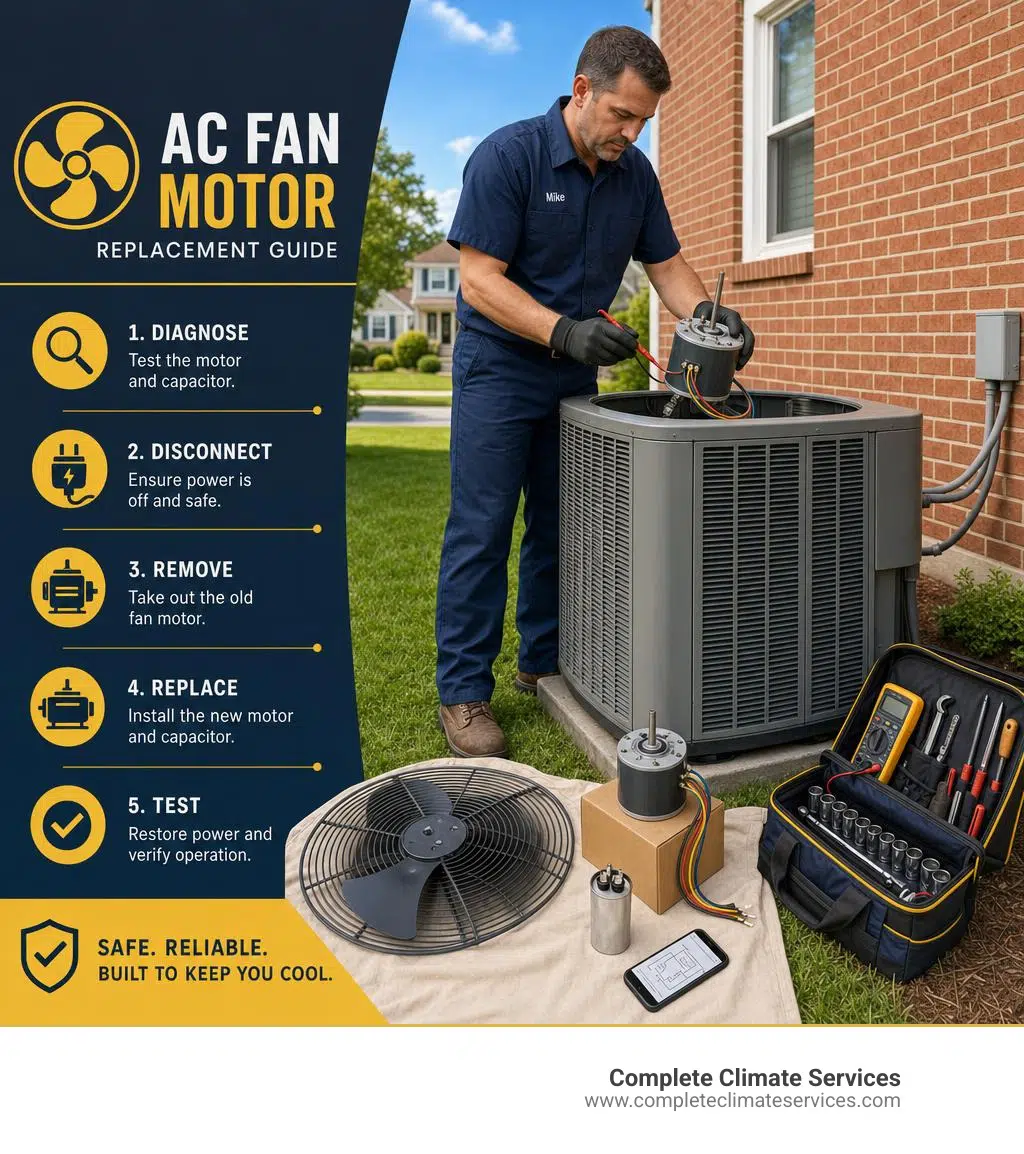
Step-by-Step AC Fan Motor Installation
- Map the Wires: Before disconnecting the old motor, take a photo or draw a diagram of where every wire goes (Common, Start, Run, and Ground).
- Remove the Fan Blade: This is often the hardest part. You may need a hub puller if the blade is rusted to the shaft.
- Swap the Motor: Unscrew the mounting bolts, remove the old motor from the “cradle” or housing, and slide the new one in.
- Align the Blade: Ensure the fan blade is at the same height on the shaft as before. Tighten the set screws onto the “flat” part of the motor shaft.
- Reconnect and Test: Wire the motor according to your map and ensure the rotation direction is correct before closing the unit.
Working with Run Capacitors
When you buy a new AC fan motor, you should almost always buy a new capacitor to go with it. Capacitors are rated in microfarads (µF). If your new motor requires a 7.5 µF capacitor and you use your old 5 µF one, the motor will run hot and fail prematurely. For more details, check our guide on AC capacitor replacement 101.
Maintenance and Lifespan Tips
The typical lifespan of an ac fan motor is about 10 to 15 years, but Baltimore’s humid summers can shorten that if you aren’t careful. Regular AC maintenance is the best way to protect your investment.
One simple tip from our AC system care guide for homeowners is to keep the area around your outdoor unit clear. If grass, weeds, or debris block the airflow, the motor has to work twice as hard, which leads to overheating.
Extending Motor Longevity
- Filter Changes: Clogged filters inside the home put massive strain on the indoor blower motor.
- Coil Cleaning: Dirty condenser coils force the outdoor motor to run longer cycles to dissipate heat.
- Lubrication: While many modern motors are permanently sealed, some older models have oil ports that need a few drops of SAE 20 non-detergent oil annually.
- Rain Shields: Ensure the rain shield (the little plastic hat on the shaft) is transferred to the new motor to prevent water from entering the bearings.
When to Schedule Professional Service
If you smell something burning (like ozone or melting plastic) or hear persistent clicking, shut the system down immediately. These are signs of electrical arcing or a motor on the verge of a “thermal event.”
In Maryland, AC maintenance is critical before heading into summer. A technician can test the “amp draw” of your motor to see if it’s failing internally before it actually stops spinning on a 95-degree day in Dundalk or Essex.
Frequently Asked Questions about AC Fan Motors
How much does a replacement AC fan motor cost?
The part itself typically ranges from $70 to $160 for standard residential models. Popular brands like Century, Genteq, and Fasco offer reliable universal replacements in this range. If you require a brand-specific OEM (Original Equipment Manufacturer) motor for a high-end Carrier or Lennox unit, prices can climb to $200 or more. Total cost including professional labor usually ranges from $300 to $600.
What is the typical lifespan of a fan motor?
With proper care, a motor should last 10-15 years. However, environmental factors in the Baltimore area—such as salt air near the Chesapeake or heavy pollen in Catonsville—can cause corrosion and debris buildup that leads to earlier failure. As of May 2026, many newer motors are designed with improved moisture resistance to combat these issues.
Can I use a higher HP motor than my original?
You can generally go up one size (e.g., replacing a 1/4 HP with a 1/3 HP) if the physical frame size and RPM match. A slightly more powerful motor will often run cooler. However, you should never go lower in horsepower, as the motor will quickly overheat and fail under the load of the fan blades.
Conclusion
Your AC fan motor is the unsung hero of your home comfort system. Whether it’s the condenser motor fighting the Baltimore humidity or the blower motor keeping the air moving in your Ellicott City home, keeping these components healthy is the key to a cool summer.
At Complete Climate Services, we’ve spent over 20 years providing honest, reliable HVAC solutions across Baltimore County and Howard County. With our 5.0-star ratings and deep local expertise, we’re here to help you navigate everything from simple motor swaps to complex system overhauls.
Don’t let a noisy or failing motor leave you in the heat. Contact us to schedule your professional AC repair today and let our experts ensure your system is running at peak efficiency.