

Why Ductless HVAC Installation Is the Smarter Way to Cool and Heat Your Baltimore Home
Ductless HVAC installation is the process of mounting an indoor air handler and an outdoor condenser unit, then connecting them through a small hole in your wall — no ductwork required.
Here’s what you need to know at a glance:
| What You Want to Know | Quick Answer |
|---|---|
| What it costs | $2,000–$10,500 for most homes in 2026 |
| How long it takes | 3–6 hours (single-zone); 1–2 days (multi-zone) |
| Can I DIY it? | Mounting only — refrigerant and electrical work requires a licensed pro |
| Best for | Older homes, room additions, garages, and any space without existing ductwork |
| Energy savings | Eliminates up to 30% energy waste from leaky ducts |
| Works in winter? | Yes — modern systems operate down to -13°F |
Traditional HVAC systems push air through ducts. And those ducts leak — a lot. The U.S. Department of Energy estimates that leaky ductwork wastes up to 30% of the energy used to heat and cool a home. For Baltimore homeowners already dealing with humid summers and cold winters, that’s money walking straight out the wall.
Ductless mini-splits solve that problem by delivering conditioned air directly into the room — no ducts, no detours, no waste.
I’m Michael Holcomb, Co-Founder and Operations Manager of Complete Climate Services, and I’ve overseen hundreds of ductless HVAC installations across the Baltimore area since co-founding the company with my brother Chris. In this guide, I’ll walk you through everything you need to know to make a confident decision about going ductless.
Understanding the Mechanics and Benefits of Ductless Systems
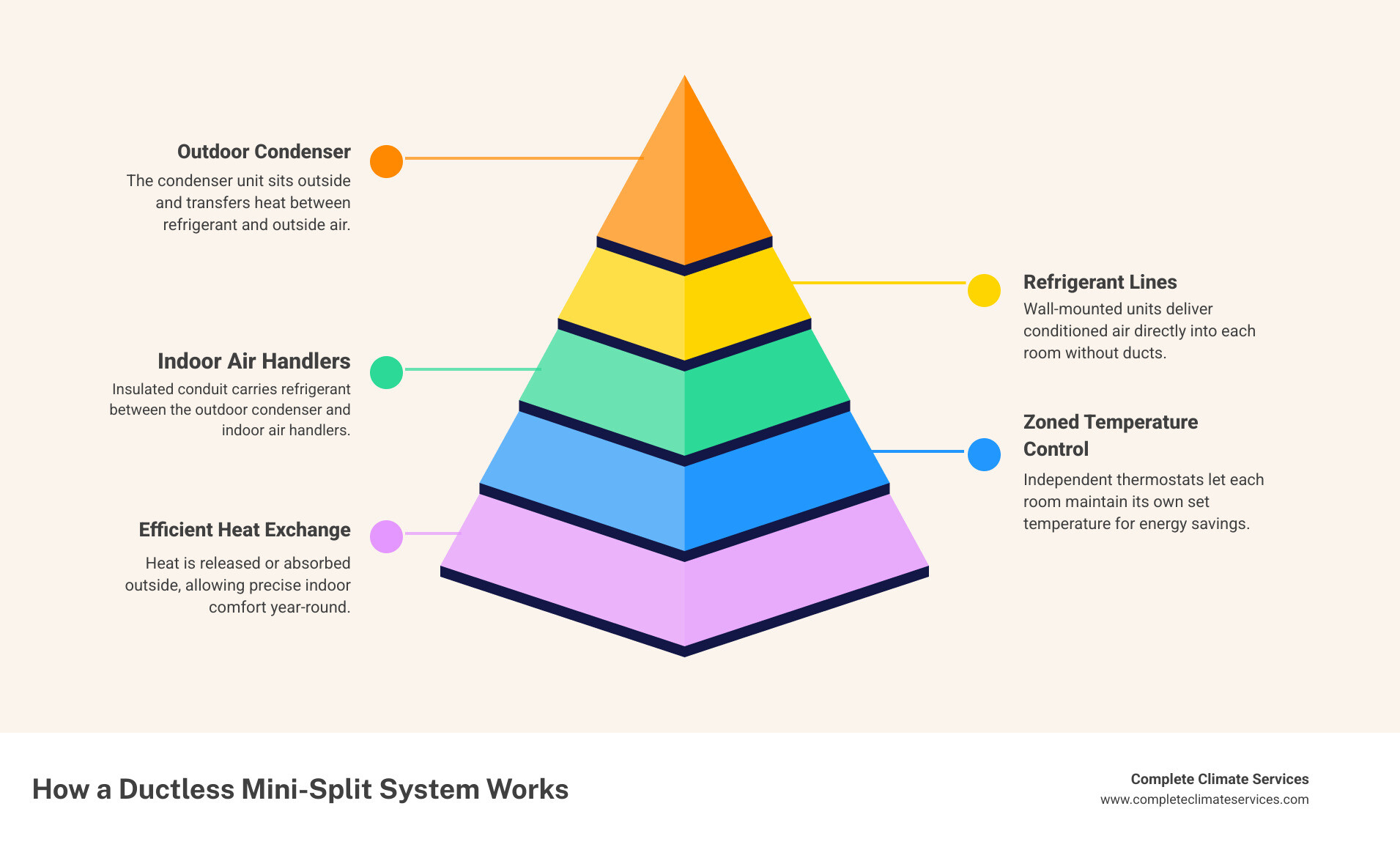
To understand why a ductless HVAC installation is such a game-changer for Baltimore homes, you first have to look at the hardware. A mini-split system is elegantly simple. It consists of two primary components: an outdoor condensing unit and one or more indoor air-handling units. These are linked by a “conduit” housing the power cable, refrigerant tubing, suction tubing, and a condensate drain.
A big reason ductless systems feel so efficient is inverter technology. Instead of running at full blast, shutting off, and starting over again, the compressor adjusts its speed as conditions change. Think of it less like a light switch and more like a dimmer. That steadier operation helps maintain more even temperatures while using less energy. If you want a clearer look at how it all works, take a look at our mini-split basics guide.
As you compare ductless systems, two efficiency numbers matter most: SEER2 for cooling and HSPF2 for heating. The current federal minimum for many mini-splits is 15 SEER2, but plenty of modern systems go well beyond that, often landing in the high teens or much higher. In plain English, a higher rating usually means the system uses less energy to keep you comfortable.
Why Professional Ductless HVAC Installation Beats Traditional Systems
The biggest “win” with ductless is the elimination of energy loss. In a traditional central air setup, air travels through a maze of ducts in your attic or crawlspace. If those ducts are leaky—and most are—you can lose up to 30% of your cooling or heating power before it even reaches your living room.
Beyond efficiency, ductless systems offer a few clear advantages that make them worth a closer look over traditional central air:
-
Zoned temperature control: Done with thermostat battles? A ductless system lets you keep the bedroom cooler while the living room stays warmer. Because each zone runs independently, you are not paying to heat or cool rooms nobody is using.
-
Adaptability: Ductless systems are a smart fit for spaces that never seem comfortable, like bonus rooms, finished basements, additions, or converted garages. If you want to see where they work especially well, take a look at how mini-splits solve tricky room comfort problems.
-
Air quality: With no ductwork collecting dust and spreading allergens from room to room, ductless systems can help support cleaner indoor air. Many indoor units also include built-in filtration for another layer of everyday comfort.
-
Quiet operation: Indoor units are known for running very quietly, often in the range of 19 to 30 decibels. That is about as soft as a whisper, so most of the time, you will hardly notice the system is on.
Planning Your Ductless HVAC Installation: Sizing, Types, and Costs
Proper planning is the difference between a system that lasts 20 years and one that breaks down in three. We start every project with a precise BTU (British Thermal Unit) calculation. We don’t just look at square footage; we look at ceiling height, window orientation, and insulation quality.
A common mistake is thinking “bigger is better.” An oversized unit will “short-cycle,” turning on and off too rapidly, which wears out the compressor and fails to dehumidify the air. Conversely, an undersized unit will run constantly, spiking your electric bill.
You will also need to decide between a single-zone system or a multi-zone setup with several indoor units tied to one outdoor condenser. If you want help figuring out what fits your home best, take a look at our mini-split setup guide.
Budgeting for Your System in 2026
In 2026, the typical ductless HVAC installation cost ranges from $2,000 to $10,500. However, highly complex multi-zone systems for large homes can reach up to $17,000.
| System Type | Estimated Cost Range (2026) |
|---|---|
| Single-Zone (9,000–12,000 BTU) | $2,000 – $4,500 |
| Dual-Zone (2 rooms) | $4,500 – $7,000 |
| Multi-Zone (3–5 rooms) | $7,000 – $13,000+ |
What drives these costs?
- Equipment Quality: High-efficiency units with SEER2 ratings above 25 cost more upfront but save more over time.
- Labor & Complexity: Running lines through interior walls or up to a third-story bedroom requires more time and specialized equipment like scaffolding.
- Incentives: Don’t forget the Inflation Reduction Act! Federal tax credits and local Baltimore utility rebates can often shave thousands off the final price.
Electrical and Placement Requirements
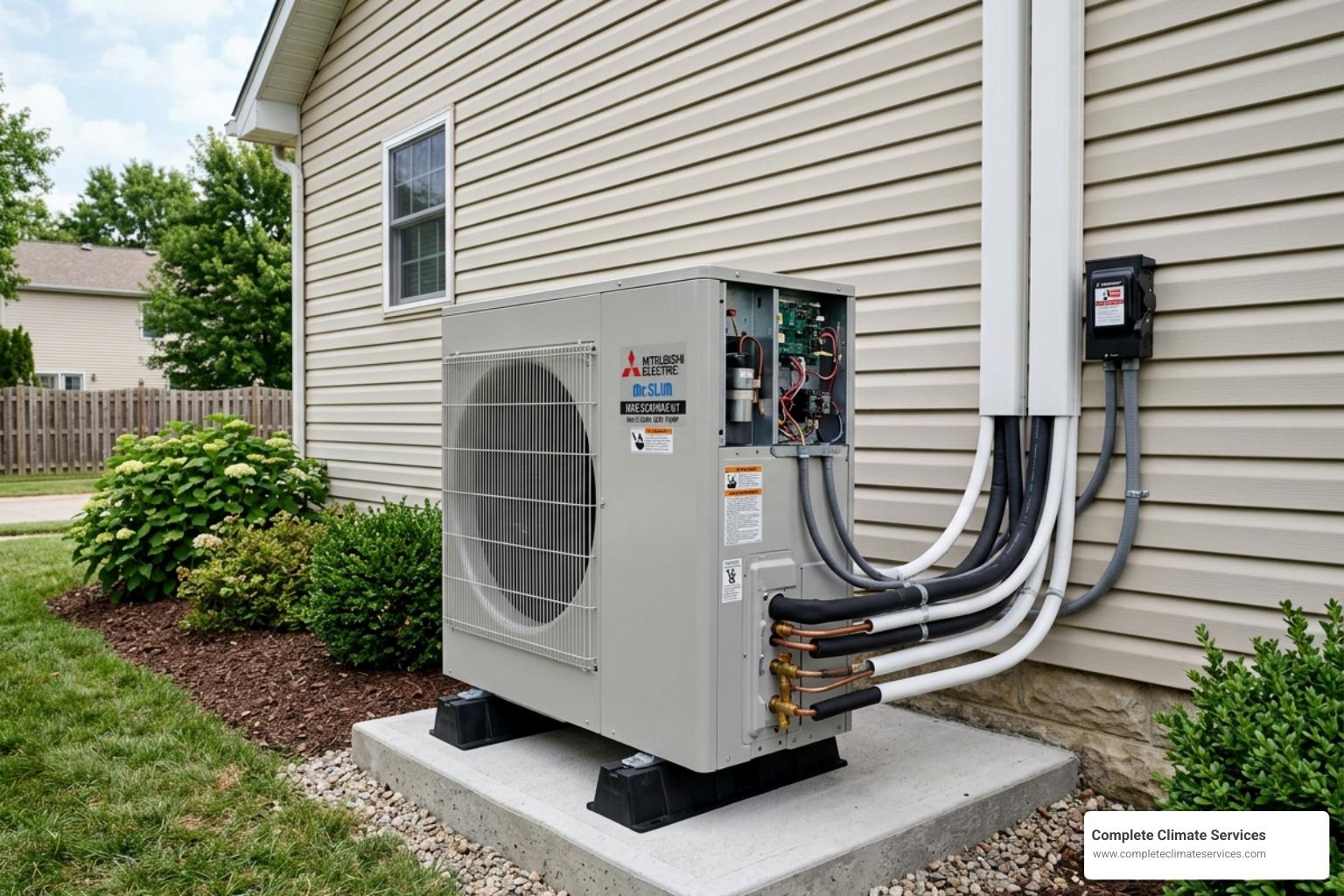
You can’t just plug a mini-split into a standard wall outlet. Most systems require a dedicated 240V circuit with a 20-amp or 30-amp breaker. This usually involves running a new line from your main electrical panel to an outdoor disconnect box near the condenser.
Placement is equally critical:
- Indoor Units: These should be mounted 6–7 feet high on an exterior wall for optimal air distribution and easier drainage. They need at least 4 inches of clearance from the ceiling.
- Outdoor Units: These need plenty of “breathing room” (clearance) to exhaust heat. We recommend placing them on the north or east side of the house to keep them out of the direct afternoon sun, which improves efficiency.
- Wiring: We typically use 14 AWG, 4-conductor stranded cable to handle both power and communication between the units.
The Professional Installation Process: Step-by-Step
While the concept is simple, the execution requires surgical precision. Here is how we handle a professional ductless hvac installation:
- Mounting the indoor bracket: The wall plate has to be anchored securely and set dead level. If it is even slightly off, condensate may not drain the way it should, which can lead to moisture problems around the unit.
- Drilling the wall opening: A small 2-to-3-inch opening is made with a slight downward pitch toward the outside. That simple angle helps water drain out instead of back into the wall.
- Running the lineset: Refrigerant tubing, electrical wiring, and the drain line are carefully routed through the opening. This step takes a steady hand because bent or damaged copper lines can hurt performance.
- Setting the outdoor unit: The condenser is placed on a stable, level base or mounted on a bracket. Vibration pads are often added to cut down on noise and help the system run more smoothly.
- Making the final connections: Proper flaring and sealing are where experience really matters. Specialized tools help create tight, leak-resistant connections in the copper tubing.
Critical Technical Steps in Ductless HVAC Installation
Once the hardware is mounted, the behind-the-scenes work starts, and that is where professional installation really matters. We follow a proven process, outlined in our mini-split efficiency guide, to help your system perform at its best:
- Nitrogen Pressure Testing: We pressurize the lines with nitrogen to 300 PSI (or higher depending on the manufacturer) and hold it to ensure there are zero leaks.
- Vacuuming (The 500 Micron Rule): We use a vacuum pump to remove all air and moisture from the lines. We don’t stop until we reach 500 microns. Moisture in a refrigerant line can turn into ice or acid, eventually “killing” the compressor.
- Condensate Testing: We pour water into the indoor unit’s drain pan to verify it flows freely outside. No one wants a surprise indoor waterfall!
Legal Compliance and EPA Certifications
Handling refrigerant isn’t just a matter of skill; it’s a matter of federal law. According to Section 608 of the Clean Air Act, anyone who handles refrigerant must be EPA certified.
Furthermore, a ductless HVAC installation in Baltimore requires local electrical and mechanical permits. If you skip these, you may face issues when trying to sell your home, and most manufacturers will void your warranty immediately. By hiring a pro, you ensure the installation of your ductless AC is followed according to all local building codes and safety regulations.
Post-Installation Care and Long-Term Maintenance
One of the best parts of a mini-split is that it’s relatively low-maintenance, but you can’t ignore it entirely.
Monthly Tasks: The indoor units have reusable filters that act as the lungs of the system. You should pop the front panel and rinse these filters with warm, soapy water every 30 days. If they get clogged, the unit has to work harder, which can lead to the Mini-Split not keeping home warm during a Baltimore cold snap.
Annual Tasks: Plan for a professional tune-up once a year. A technician should check refrigerant levels, wash the outdoor coil after buildup from dirt or cottonwood, and clear the condensate drain line if algae or debris starts to collect. For a simple maintenance checklist, see our mini-split care guide.
Frequently Asked Questions and Conclusion
At Complete Climate Services, we’ve earned the trust of homeowners across Baltimore by showing up, doing the job right, and standing behind our work. With more than 20 years of experience and a 5.0-star rating, we bring care and precision to every ductless HVAC installation. From Towson and Owings Mills to Columbia and Edgewater, our team helps families get efficient, dependable comfort. If you want to learn more about working with local mini-split experts, start here: see our Baltimore mini-split services.
Can I install a mini-split myself to save money?
While you can physically mount the units and drill the holes, we strongly advise against a full DIY installation. Between the high-voltage electrical requirements, the need for specialized (and expensive) vacuum pumps and gauges, and the legal requirement for EPA certification, the risks far outweigh the savings. A single mistake—like a small refrigerant leak—can cost more to fix than the original installation labor. Plus, professional installation protects your manufacturer’s warranty.
How long does a typical ductless hvac installation take?
A single-zone installation is surprisingly non-invasive and usually takes between 3 and 6 hours. For a multi-zone system covering four or five rooms, expect it to take 1 to 2 days. Unlike traditional HVAC, we don’t have to tear down walls or ceilings to run ducts, so the disruption to your daily life is minimal.
Will a ductless system work in extreme cold?
Absolutely. There is a myth that heat pumps don’t work in Maryland winters. While that was true 20 years ago, modern “hyper-heating” or “low-ambient” units can provide 100% heating capacity down to 5°F and continue operating efficiently all the way down to -13°F. They are an excellent primary heat source for our climate.
Ready to stop wasting energy and start enjoying zoned comfort? Schedule your mini-split installation today with the experts at Complete Climate Services. Whether you’re in Catonsville, Ellicott City, or downtown Baltimore, we’ll help you find the perfect ductless solution for your home.

