
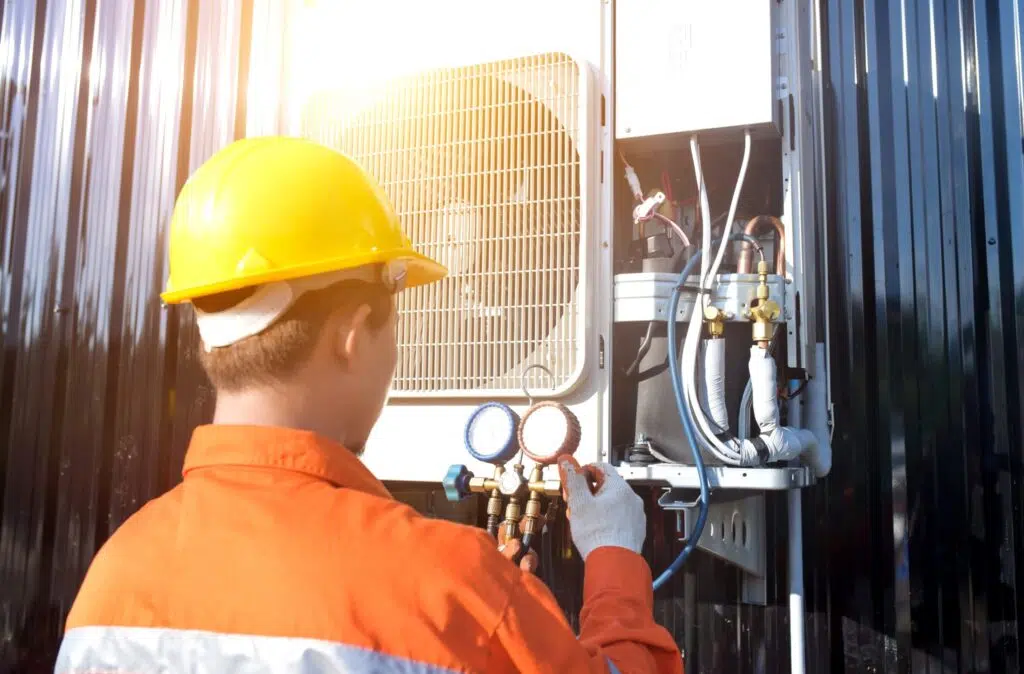
Why the Role of an Air Conditioner Repair Technician Matters More Than Ever
An air conditioner repair technician is a trained professional who diagnoses, fixes, and maintains cooling systems in homes and businesses. If you need a quick answer, here’s what you should know:
What an AC repair technician does:
- Diagnoses why your system isn’t cooling properly
- Repairs or replaces faulty parts (capacitors, compressors, coils, etc.)
- Handles refrigerant safely under EPA certification
- Performs tune-ups and preventive maintenance
- Advises on repair vs. replacement decisions
Key facts at a glance:
| Topic | Quick Answer |
|---|---|
| Average repair cost | $100-$2,000+ (avg. ~$350) |
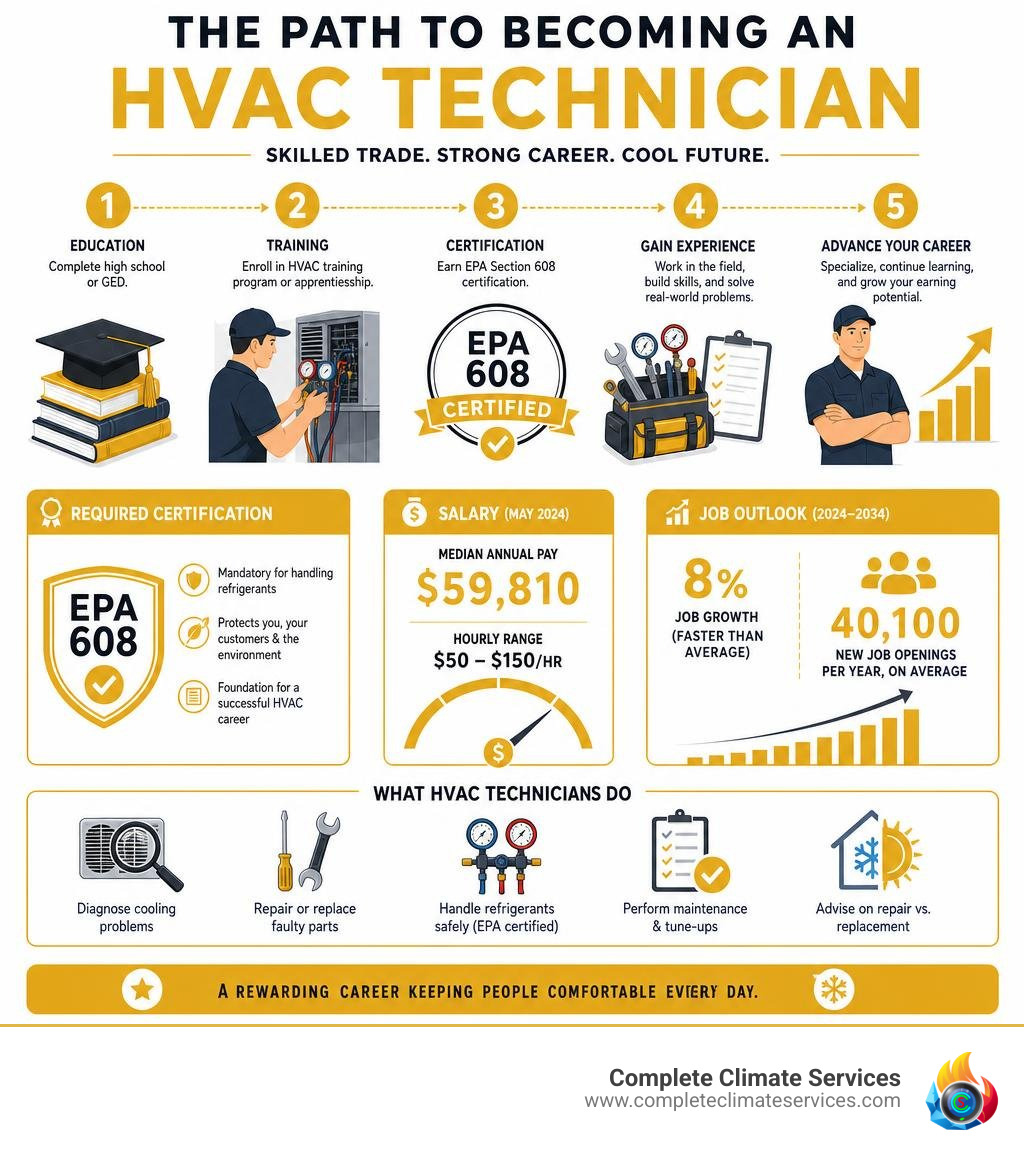
| Hourly rate | $50-$150/hr |
| AC system lifespan | 15-20 years |
| Required certification | EPA Section 608 |
| Job growth (2024-2034) | 8% (faster than average) |
| Median annual pay | $59,810 (May 2024) |
The demand for skilled HVAC professionals is growing fast. According to the U.S. Bureau of Labor Statistics, the field held about 425,200 jobs in 2024 and is projected to grow 8 percent through 2034 – much faster than most other occupations. That growth means roughly 40,100 new job openings per year over the decade. Whether you’re a homeowner trying to understand who’s working on your system, or someone exploring a career in the trades, knowing what this role involves is genuinely useful.
I’m Michael Holcomb, Co-Founder and Operations Manager of Complete Climate Services, and I’ve spent years working alongside certified air conditioner repair technicians – overseeing everything from routine tune-ups to complex system failures across the Baltimore area. In this guide, I’ll walk you through everything you need to know about this trade, from what technicians actually do on a service call to how they get certified and what homeowners should expect.
What Does an Air Conditioner Repair Technician Do?
When your cooling system acts up on a humid Mid-Atlantic summer afternoon, a professional air conditioner repair technician is the one who steps in to save the day. But what actually happens during a typical service call?
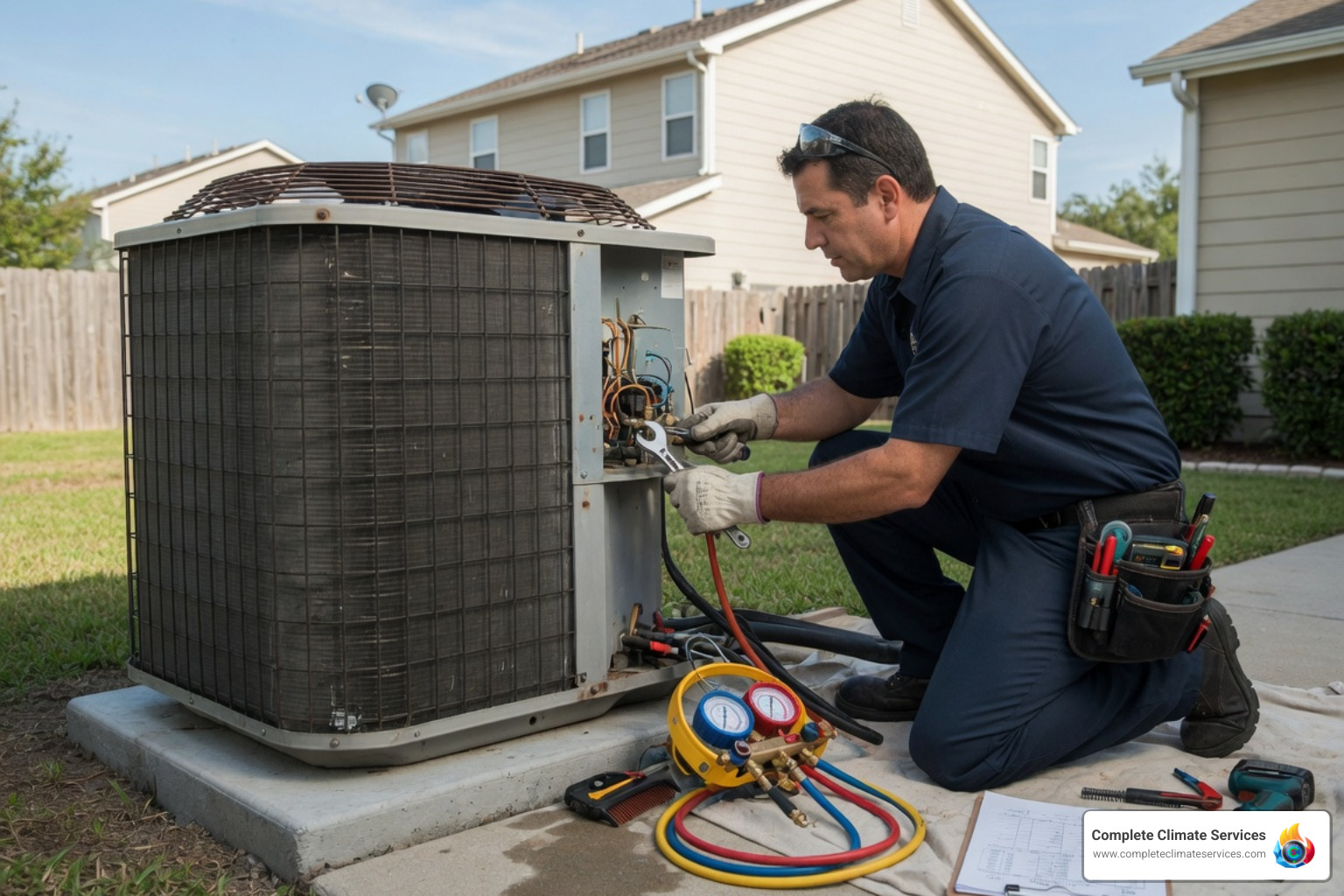
A technician’s primary responsibility is to systematically troubleshoot and restore an HVAC system to safe, efficient operation. The process begins with a comprehensive diagnostic routine:
- Visual Inspection: Checking the physical condition of both the indoor air handler and the outdoor condenser unit.
- Electrical Troubleshooting: Testing electrical components, wiring, and safety controls to ensure correct voltage and current draw.
- Refrigerant Level Analysis: Measuring system pressures and temperatures to verify the correct amount of refrigerant is present.
- Airflow Evaluation: Inspecting filters, ductwork, and blower motors to confirm proper air circulation.
Technicians must be highly skilled in both mechanical repairs and electrical troubleshooting. They utilize specialized tools such as multimeters, manifold gauge sets, vacuum pumps, and leak detectors.
Because modern air conditioning units are complex, closed-loop systems, diagnosing them requires a solid understanding of thermodynamics and electrical circuitry. If your system is acting up, you can use our resident-friendly AC troubleshooting guide to check for simple issues before calling in a professional.
Diagnosing and Fixing Common AC Failures
During a standard service call, a technician often encounters several recurring mechanical and electrical failures:
- Capacitor Failures: Capacitors act like temporary batteries that deliver the high-voltage jolt needed to start the compressor and fan motors. Over time, heat and electrical fluctuations degrade these parts, causing them to bulge or leak. Replacing a faulty capacitor is one of the most common electrical repairs, and our capacitor replacement overview explains what that repair usually involves.
- Frozen Evaporator Coils: If airflow is restricted (often due to a neglected air filter) or if refrigerant is low, the temperature of the indoor coil can drop below freezing, causing condensation to turn to ice. This restricts cooling and can damage the compressor.
- Low Refrigerant: Because AC systems are hermetically sealed, low refrigerant levels always indicate a leak. A technician must locate the leak, repair it, evacuate the system, and perform a precise recharge.
- Compressor Failures: The compressor is the “heart” of the air conditioner, pumping refrigerant throughout the system. Compressor issues can be highly complex and expensive to resolve.
Regional Climate Challenges and Common AC Problems
In our service areas—ranging from Baltimore City to Anne Arundel County and Howard County—cooling systems face unique environmental stresses.
Mid-Atlantic summers are notoriously hot and humid. High humidity forces air conditioners to work twice as hard, as they must remove moisture from the air while simultaneously lowering the temperature. This extra workload accelerates wear on electrical contacts, fan motors, and compressors.
Furthermore, coastal salt air in nearby waterfront areas like Curtis Bay, Dundalk, and Edgewater can accelerate the corrosion of outdoor condenser coils. In urban heat islands like downtown Baltimore, outdoor units must operate in ambient temperatures that can easily exceed 100°F, increasing system operating pressures and the risk of electrical failure.
Understanding these local climate challenges is vital when performing AC repair in Baltimore or helping homeowners keep systems running reliably in Dundalk.
Best Practices for AC Maintenance and Service Calls
Preventive maintenance is key to avoiding unexpected system failures during peak summer months. Homeowners should schedule professional tune-ups annually—ideally in early spring before the cooling season begins.
Regular professional maintenance, whether you are in Curtis Bay, Columbia, or a nearby community, keeps your system operating at peak energy efficiency and extends its overall lifespan.
| Maintenance Task | DIY Friendly? | Professional Required? | Why It Matters |
|---|---|---|---|
| Filter Replacement | Yes | No | Maintains airflow; prevents frozen coils. |
| Clearing Debris Around Outdoor Unit | Yes | No | Ensures proper heat rejection. |
| Coil Cleaning (Chemical) | No | Yes | Removes deep-seated dirt without damaging fragile fins. |
| Electrical Terminal Tightening | No | Yes | Prevents loose connections and electrical fires. |
| Refrigerant Leak Detection & Recharge | No | Yes | Requires specialized tools and EPA certification. |
What to Expect and How to Prepare for a Service Visit
When you book an appointment with an air conditioner repair technician, here is what you should expect during the visit:
- Thermostat Calibration & Check: The technician will verify that the thermostat accurately communicates with your AC unit.
- Full System Inspection: Checking all electrical connections, safety switches, and mechanical parts.
- Performance Testing: Measuring temperature differences (temp split) between the supply and return vents to ensure the system is cooling efficiently.
How you can prepare before the technician arrives:
- Clear Access: Ensure there is a clear, unobstructed path to both the indoor air handler (in your basement, closet, or attic) and the outdoor condenser.
- Secure Pets: Keep dogs and cats in a safe, separate room.
- Clear the Area Around the Thermostat: Make sure the technician can easily access your thermostat controls.
How to Become a Professional HVAC Technician
Entering the HVAC trade is an excellent career choice as of June 2026. The path to becoming an air conditioner repair technician typically involves a combination of formal education, hands-on training, and licensing.
Most aspiring technicians begin by earning a high school diploma or equivalent, followed by completing a program at a trade school or technical college. These programs last anywhere from six months to two years and cover basic electricity, refrigeration theory, heating systems, and safety protocols.
Following classroom education, technicians typically enter an apprenticeship program. This provides several years of paid, on-the-job training under the supervision of experienced journeymen and master technicians, preparing them for the physical and technical demands of the job.
Essential Certifications for an Air Conditioner Repair Technician
To work legally and safely in this industry, technicians must obtain specific credentials:
- EPA Section 608 Certification: Required by federal law for anyone who maintains, services, repairs, or disposes of equipment that could release refrigerants into the atmosphere.
- NATE (North American Technician Excellence) Certification: The gold standard for voluntary technician certification, demonstrating a high level of real-world working knowledge.
- State and Local Licensing: In Maryland, technicians must progress through licensed tiers—Apprentice, Journeyman, and Master—to perform unsupervised work and ensure compliance with local building and mechanical codes.
When hiring a company, understanding these professional requirements helps you choose an AC repair team you can trust and feel confident about the service you receive in Ellicott City or the surrounding area.
Why Homeowners Trust a Certified Air Conditioner Repair Technician
Air conditioning units operate under high electrical voltage and contain pressurized chemical refrigerants. Attempting to repair these systems without proper training poses significant safety risks.
Professional technicians follow strict safety protocols, use specialized diagnostic tools, and ensure your system maintains its manufacturer warranty. Attempting a complex fix on your own can lead to electrical shocks, refrigerant burns, or permanent system damage. If you are tempted to troubleshoot beyond the basics, it is worth understanding why DIY AC repairs can get risky fast.
Costs, Warranties, and the Repair vs. Replace Decision
Understanding the financial side of HVAC services is essential for every homeowner. The cost of hiring an HVAC professional typically ranges from $50 to $150 per hour if charging hourly, though many companies utilize upfront, flat-rate pricing structures.
While a basic diagnostic or minor repair can range from $100 to $500, major component failures—such as replacing a compressor or a blower motor—can cost significantly more. If you are looking for reliable service in Anne Arundel County, a local HVAC company can help you get accurate pricing for your home and system.
Repair vs. Replacement: The $5,000 Rule
When facing an expensive repair on an older system, how do you decide whether to fix it or buy a new one? Most modern air conditioning units have an operational lifespan of 15 to 20 years.
To help make this decision, industry professionals use the $5,000 Rule: $$\text{Age of the System (Years)} \times \text{Estimated Repair Cost} = \text{Result}$$
If the result is over $5,000, it is generally more cost-effective to replace the system. If the result is under $5,000, proceeding with the repair is usually the smarter financial move.
For example:
- A 6-year-old system needing a $400 capacitor repair ($2,400) $\rightarrow$ Repair
- A 14-year-old system needing a $1,200 compressor repair ($16,800) $\rightarrow$ Replace
Additionally, replacing an old, inefficient system with a modern, high-efficiency unit can qualify you for utility rebates and significantly lower your monthly energy bills. If you suspect your compressor is struggling, our guide to common compressor warning signs can help you know when to call for help.
Frequently Asked Questions about AC Repair
How long do modern air conditioning systems typically last?
Most modern central air conditioning systems last between 15 and 20 years. However, this lifespan depends heavily on regular professional maintenance, proper installation, and local climate conditions. Systems operating in high-humidity or coastal areas may experience a slightly shorter lifespan due to increased workload and corrosion.
What are the most common signs that an AC needs professional repair?
You should call an air conditioner repair technician if you notice any of the following:
- Weak or warm airflow coming from your supply vents.
- Strange noises such as squealing, grinding, or loud banging.
- Short cycling, where the system turns on and off rapidly.
- Unusually high energy bills without a change in usage.
- Water pooling around the indoor unit (indicating a clogged condensate drain).
How much does a typical AC repair cost?
The average cost of an AC repair is around $350, but it can range from $100 for simple electrical fixes (like replacing a capacitor) to $2,000 or more for major component replacements (like a compressor or evaporator coil).
Conclusion
A central air conditioning system is one of the most important investments you will make in your home’s comfort and value. Keeping it running efficiently requires the skill, training, and dedication of a professional air conditioner repair technician.
At Complete Climate Services, we have provided honest, reliable residential and commercial HVAC services across Baltimore, Howard, and Anne Arundel counties for over 20 years. With our consistent 5.0-star ratings, our certified technicians are always ready to keep your home comfortable, safe, and cool.
If your air conditioner isn’t performing at its best, don’t wait for a complete system breakdown. Contact us today to schedule professional AC repair and experience the difference that honest, expert service makes.

