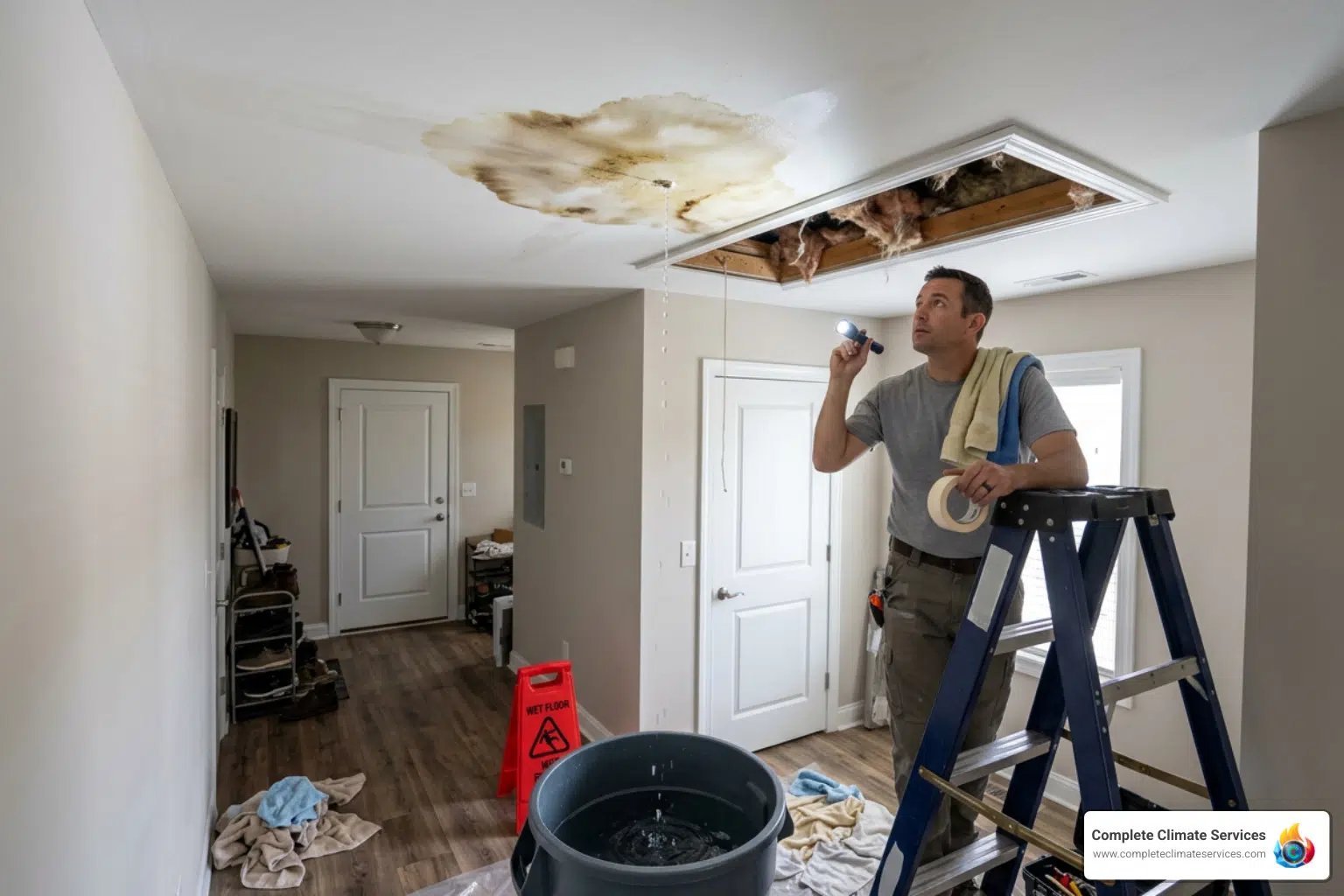
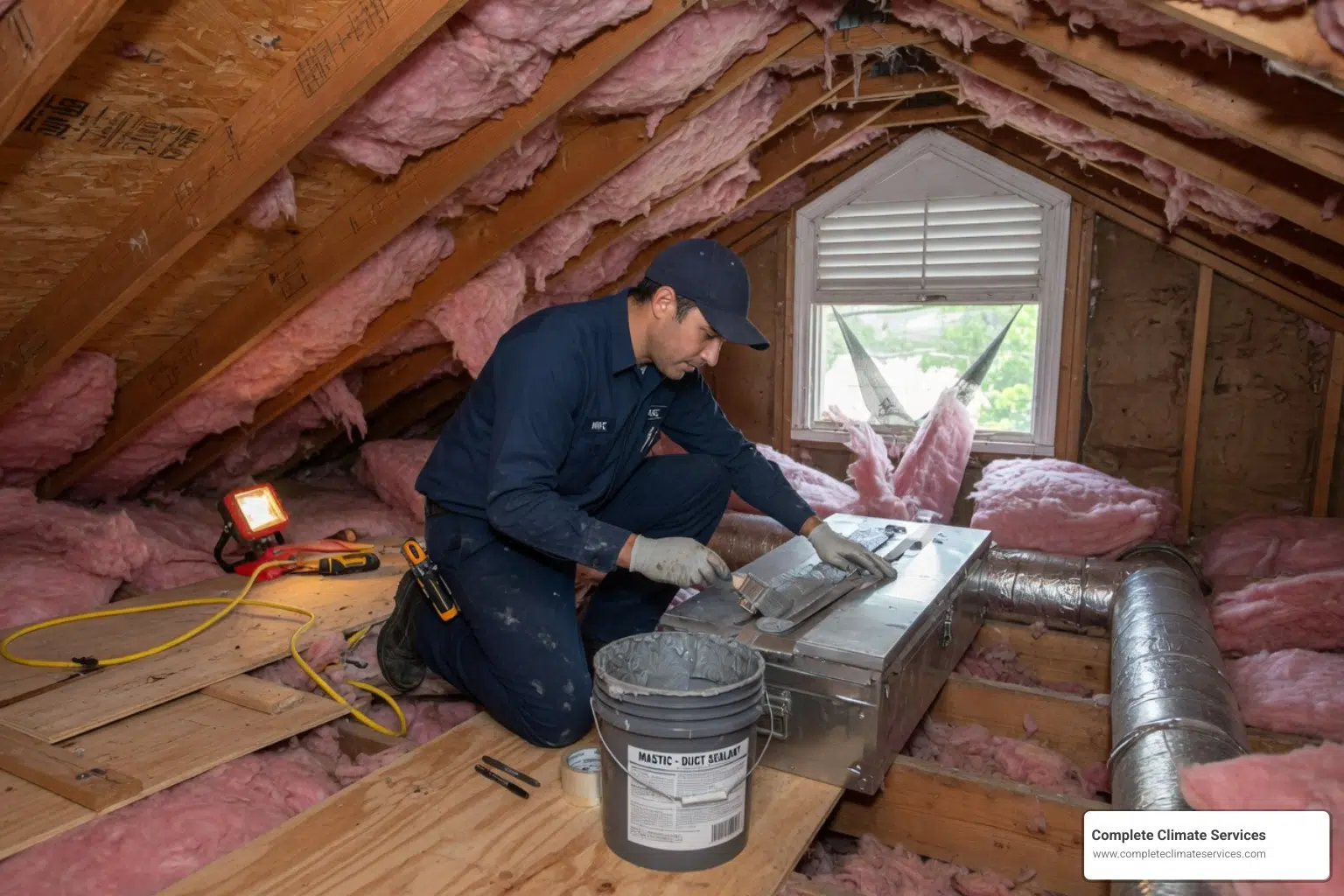
Why Leaky Ducts Are Costing Baltimore Homeowners More Than They Realize
Residential duct repair is the process of sealing, patching, or replacing damaged sections of your home’s air duct system to stop conditioned air from escaping before it reaches your living spaces. Here’s what you need to know at a glance:
- What it fixes: Leaks, tears, disconnected joints, crushed flex duct, and failed seals
- Common signs you need it: Uneven room temperatures, high energy bills, excessive dust, musty odors, or rattling noises from vents
- DIY options: UL 181-rated foil tape and mastic sealant work for small, accessible leaks
- When to call a pro: Large tears, inaccessible ducts, mold, or widespread leakage throughout the system
- Typical result: Sealing ducts can recover up to 20% of lost system efficiency and meaningfully reduce monthly energy costs
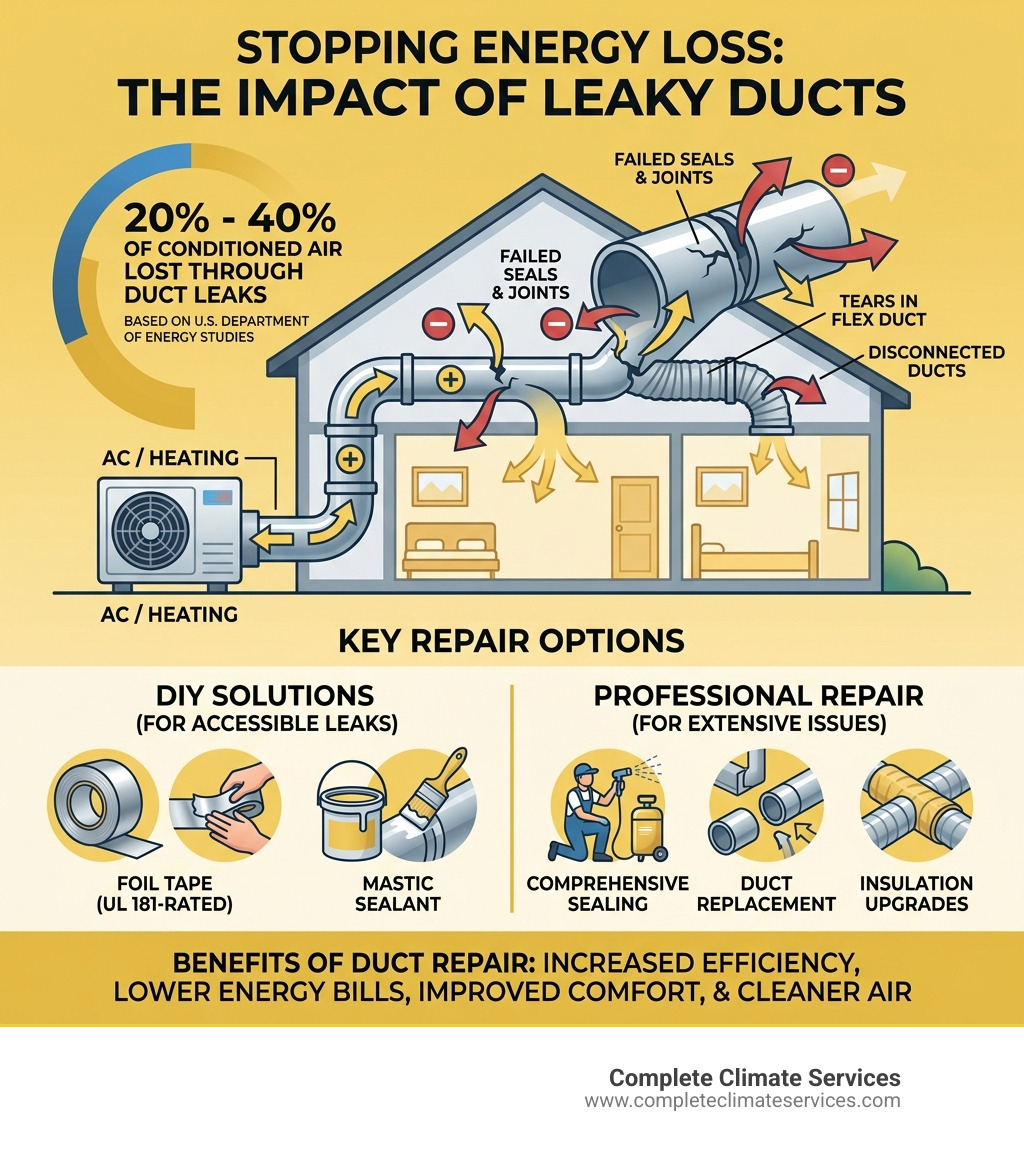
Your duct system is the hidden backbone of your home’s comfort. When it’s working well, you barely think about it. But when ducts develop leaks — and they almost always do over time — your HVAC system has to work much harder to make up for the lost air. Studies from the U.S. Department of Energy show that 25% to 40% of heating and cooling energy is lost through leaky ductwork in a typical home. In some cases, uninsulated ducts running through an attic can lose up to 60% of heated air before it ever reaches a single room.
For Baltimore homeowners already dealing with hot, humid summers and cold winters, that kind of waste shows up fast — on your energy bill, in your comfort, and in the long-term health of your HVAC equipment.
I’m Michael Holcomb, Co-Founder and Operations Manager of Complete Climate Services, and I’ve spent years helping Baltimore-area homeowners tackle residential duct repair as part of our broader heating and cooling work. In this guide, I’ll walk you through everything — from spotting the warning signs to choosing the right fix for your situation.
Basic residential duct repair glossary:
The Importance of Residential Duct Repair
When we talk about residential duct repair, we aren’t just talking about a “quick fix.” We are talking about the health and longevity of your entire home. Many people assume that if their furnace or AC is running, everything is fine. However, if your ducts are compromised, you are essentially paying to heat or cool your attic, crawlspace, or the gaps between your walls.
Beyond just the wasted money, leaky ducts create a “pull” effect. When air leaks out of the supply ducts, the system creates a vacuum that pulls in unfiltered air from unconditioned spaces. This brings in dust, insulation fibers, and even humidity from the outside, which can lead to mold growth. Learning how to clean and maintain your HVAC system is a great start, but if the “pipes” of the system are broken, even a clean unit will struggle.
Common Signs You Need Residential Duct Repair
How do you know if your ducts are the culprit behind your comfort woes? In our 20+ years serving the Baltimore area, from Towson to Columbia, we’ve found that these signs are the most reliable indicators:
- Hot and Cold Spots: If your living room is a balmy 72 degrees but the bedroom feels like a meat locker, you likely have a disconnected or leaking duct serving that specific room.
- Excessive Dust: Do you find yourself dusting every other day? Leaky return ducts pull in dust from attics and crawlspaces and blast it right into your living areas.
- Rattling or Whistling Noises: Loose connections or holes can create strange acoustics. If your vents sound like they’re trying to communicate with you, it’s time for an inspection.
- Musty Odors: Smelling something “off” when the air kicks on? Gaps in the ductwork can allow moisture and mold spores to enter the airflow.
- Sky-High Utility Bills: If your usage hasn’t changed but your bill has spiked, your HVAC system is likely working overtime to compensate for air that never reaches the register.
Understanding Duct Materials and Damage
Not all ducts are created equal, and the type of material in your home determines the residential duct repair approach.
- Sheet Metal: These are rigid, galvanized steel pipes. They are durable but prone to leaking at the seams over time as the house settles.
- Flex Duct: This looks like a large slinky covered in plastic and insulation. It’s common in modern Baltimore homes but very easy to damage. A stray boot in the attic can easily crush or puncture it.
- Duct Board: Made of compressed fiberglass, these are often used for the main “trunk” lines. They can become brittle and crack with age.
Damage often stems from renovation mishaps, where workers accidentally step on or knock loose a duct run. Corrosion from salt air in coastal areas or pest infestations (rodents love the nesting material inside insulated ducts) are also common culprits. For a deep dive into technical standards, the Building America Solution Center provides excellent guidance on sealing procedures.
DIY Methods for Minor Duct Fixes
If you have a small, visible leak in an accessible area like an unfinished basement or attic, you might be tempted to tackle it yourself. For minor issues like a small tear in a flex duct outer jacket or a leaky seam on a metal pipe, DIY is a viable option—provided you use the right materials.
First, forget everything you know about “duct tape.” Ironically, standard cloth-backed duct tape is the worst thing you can use for residential duct repair. The adhesive dries out and fails under the temperature fluctuations found in HVAC systems. Instead, you need UL 181-rated foil tape or mastic sealant.
The Mastic Method: Mastic is a thick, gooey paste that you apply with a paintbrush. It’s the gold standard for sealing because it stays flexible and creates an airtight bond. For gaps larger than 1/4 inch, you should use fiberglass mesh tape to bridge the gap before slathering on the mastic. Ensure the surface is bone-dry and clean before application; otherwise, the sealant won’t stick.
Common DIY Mistakes to Avoid
We see a lot of “creative” DIY fixes in the field, and unfortunately, many of them end up costing more to fix later. Here are the big ones to avoid:
- Using the Wrong Tape: As mentioned, avoid cloth tape. Only use tape labeled UL 181A-P (for rigid ducts) or 181B-FX (for flex).
- Ignoring Surface Prep: If the duct is covered in 20 years of Baltimore dust, nothing will stick to it. Wipe it down with a damp cloth and let it dry first.
- Not Supporting the Duct: If a duct is sagging, sealing the leak won’t help for long. Use 1.5-inch wide straps every 4 feet to keep everything in place.
- Bypassing Insulation: If you seal a duct but leave the insulation pulled back, that section will sweat, leading to rust or mold.
| Feature | DIY Sealing (Mastic/Tape) | Professional Sealing (Aeroseal) |
|---|---|---|
| Accessibility | Limited to what you can see/reach | Reaches ducts inside walls and ceilings |
| Durability | High (if applied correctly) | Extremely High (10+ year guarantee) |
| Skill Level | Moderate | Professional Equipment Required |
| Completeness | Seals individual visible leaks | Seals the entire system from the inside |
Professional Residential Duct Repair Techniques
When DIY isn’t enough, we bring out the heavy hitters. Modern residential duct repair has evolved far beyond just patching holes. One of the most effective methods we use is internal sealing, often referred to by the brand name Aeroseal.
The process is fascinating: we block off all your registers and inject a pressurized, aerosolized polymer into the ductwork. These tiny particles stay suspended in the air until they encounter a leak. Because the air is escaping through the hole, the particles are pulled toward it, where they stick to the edges and build up until the leak is completely plugged. This can seal holes up to 5/8 of an inch wide, even in ducts hidden behind your drywall.
This level of precision is part of the professional HVAC installation benefits we provide. We don’t just guess where the leaks are; we use blower door tests and pressure monitoring to verify exactly how much air is being lost before and after the repair.
When to Call a Professional
While we admire the “can-do” spirit of a DIYer, some situations require a pro for safety and effectiveness:
- Inaccessible Ducts: If your leaks are between the first and second floors, you can’t reach them without tearing out ceilings. Internal sealing is the only non-invasive answer.
- Major Tears: If a flex duct has been completely severed or a large section of sheet metal is crushed, it usually requires a full section replacement.
- Mold or Odors: If you suspect biological growth, the ducts need a professional Indoor Air Quality assessment and specialized cleaning before any sealing happens.
- Asbestos: In older Baltimore homes, some duct insulation contains asbestos. If you see white, chalky tape or “paper” on your old ducts, stop immediately and call a professional.
The Professional Repair Process
When you call us for residential duct repair, we follow a strict protocol to ensure results:
- Comprehensive Inspection: We look at every inch of accessible ductwork and use cameras for the hidden parts.
- Diagnostic Testing: We pressurize the system to measure the exact leakage rate.
- Precision Sealing: Whether it’s manual mastic application or aerosol sealing, we target every weak point.
- Insulation Restoration: We ensure all ducts are wrapped in modern R-8 insulation to prevent thermal loss.
- Post-Repair Verification: We run the pressure test again to show you exactly how much we’ve improved the system’s performance.
Long-Term Benefits and Maintenance
The benefits of residential duct repair are immediate and long-lasting. By balancing the airflow, we take the strain off your blower motor, which can add years to your HVAC system’s life. You’ll also notice that your home stays at a more consistent humidity level—a huge plus during our muggy Maryland summers.
Properly sealed ducts also protect your equipment. When return ducts leak, they pull in dust that bypasses your filter and coats your evaporator coil. This leads to ice-ups and compressor failure. Repairing your ducts is one of the best ways to ensure Spring HVAC maintenance timing goes smoothly every year.
Cost Analysis: Repair vs. Replacement
The big question: should you repair or replace?
- Repair: Generally costs between $500 and $2,500 depending on the size of the home and the method used. The ROI is usually seen within 2-4 years through energy savings.
- Replacement: Can cost $5,000 to $15,000+. This is usually only necessary if the ducts are undersized, severely corroded, or contaminated with mold.
We always look for the most cost-effective solution first. Many times, a thorough sealing job can make a 15-year-old duct system perform like new. If you’re also looking at furnace services, doing both at once can often save on labor costs.
Preventive Care and Inspections
Once your ducts are in top shape, keeping them that way is easy. We recommend a professional duct inspection every 3 to 5 years. In the meantime:
- Change Filters Regularly: A clogged filter increases pressure in the ducts, which can blow out seams.
- Check Vapor Barriers: If you’re in your attic, look for sagging insulation or condensation on the ducts.
- Keep Vents Clear: Don’t block registers with furniture; it creates backpressure that stresses the duct joints.
- Schedule Annual Tune-ups: Regular AC maintenance includes a visual check of the air handler connections, where many major leaks occur.
Frequently Asked Questions about Duct Repair
Does homeowner’s insurance cover duct repair?
Typically, insurance only covers ductwork if the damage was caused by a “covered peril,” such as a fire, a fallen tree during a storm, or a burst pipe that flooded the area. Normal wear and tear, age-related leaks, or rodent damage are almost never covered. We recommend keeping all documentation and photos if you do need to file a claim for storm-related damage.
How long do professional duct repairs last?
When we use professional-grade mastic or aerosol sealants, the repairs are designed to last as long as the house itself. Most aerosol sealing services come with a 10-year guarantee, but the polymer material is extremely durable and won’t degrade like tape.
How much can I save on my energy bills?
While every home is different, the average Baltimore homeowner can expect to save about 20% on their heating and cooling costs by sealing leaky ducts. Given that 30 cents of every dollar spent on HVAC often leaks away, the savings add up fast—especially during peak summer and winter months.
Conclusion
Your home’s ductwork is vital to your comfort and your wallet. Whether you are dealing with hot spots in Ellicott City or high bills in Dundalk, residential duct repair is one of the smartest investments you can make in your property.
At Complete Climate Services, we’ve spent over 20 years building a reputation for honesty and reliability across Baltimore and the surrounding counties. We don’t just patch holes; we optimize your home’s entire climate. With our 5.0-star ratings and deep local expertise, you can trust us to get the job done right the first time.
Don’t let your hard-earned money leak into your attic. Contact us today to schedule your professional residential duct repair and start breathing easier.