
What Does It Actually Cost to Install a Mini Split Heat Pump in 2026?
Understanding the cost to install a mini split heat pump is the first step before you call a single contractor. Here’s a fast answer so you can start budgeting right now:
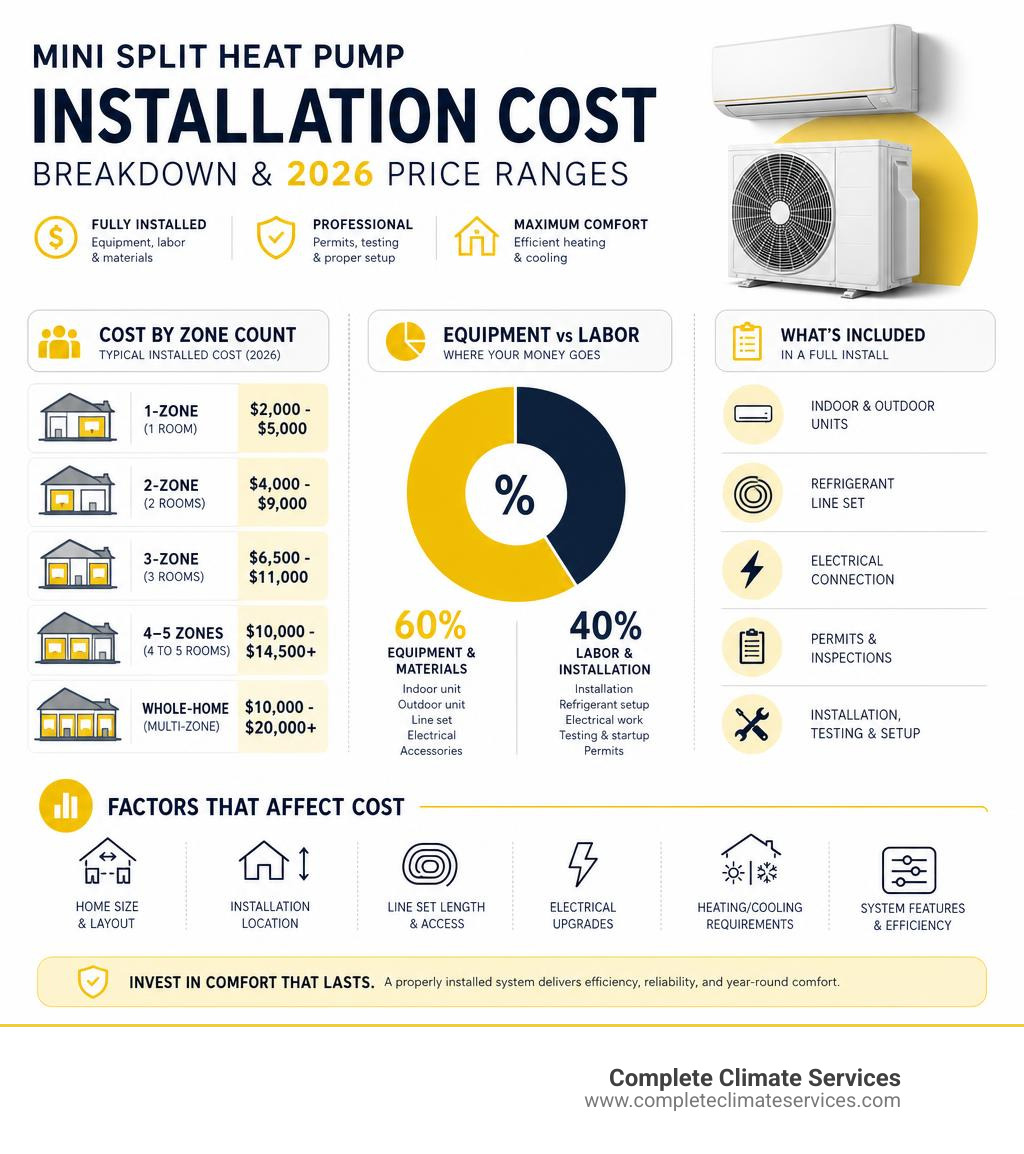
| Project Type | Typical Installed Cost (2026) |
|---|---|
| Single-zone (1 room) | $2,000 – $5,000 |
| Two-zone (2 rooms) | $4,000 – $9,000 |
| Three-zone (3 rooms) | $6,500 – $11,000 |
| Four to five zones | $10,000 – $14,500+ |
| Whole-home system | $10,000 – $20,000+ |
These are fully installed prices — equipment plus labor, line sets, and basic electrical.
Most homeowners go into their first mini split conversation with a number they found on a product page. That number covers the equipment. It does not cover the installer, the refrigerant lines, the electrical circuit, the permits, or the hours of labor it takes to make the system run correctly.
The gap between “unit price” and “installed price” is where the sticker shock lives — and it catches a lot of Baltimore homeowners off guard.
The truth is that mini split installation costs vary quite a bit. A single-zone system for one bedroom can land around $2,000 to $5,000. A whole-home multi-zone setup can push past $14,500. Where your project falls on that range depends on factors most people don’t think about until they’re already in the process.
This guide breaks all of it down clearly — no surprises.
I’m Michael Holcomb, Co-Founder and Operations Manager of Complete Climate Services, and after years of helping Baltimore-area homeowners navigate the real cost to install a mini split heat pump, I’ve seen how the right information upfront saves people thousands of dollars. Let’s walk through exactly what goes into these numbers so you can compare quotes with confidence.
Cost to install a mini split heat pump terms explained:
What Is the Average Cost to Install a Mini Split Heat Pump in 2026?
In 2026, most homeowners should expect the average installed mini split heat pump project to land somewhere between $2,000 and $14,500, depending on how many rooms are being served.
A simple single-zone system is usually at the low end. A multi-zone system with several indoor heads, longer refrigerant line runs, upgraded electrical, and higher-efficiency equipment sits toward the upper end.
National mini split pricing trends can give you a helpful starting point, but your Baltimore-area price depends heavily on your home layout, electrical panel, zone count, equipment choice, and installation conditions.
Quick Answer: The Cost to Install a Mini Split Heat Pump by Project Type
Here is a practical 2026 budgeting table:
| Project Type | Common Use | Typical Installed Cost |
|---|---|---|
| Single-zone | Bedroom, office, attic, sunroom, garage | $2,000 – $5,000 |
| Two-zone | Two bedrooms, living area plus bedroom | $4,000 – $9,000 |
| Three-zone | Main living area plus bedrooms | $6,500 – $11,000 |
| Four to five zones | Larger home or multiple floors | $10,000 – $14,500+ |
| Whole-home ductless | Home without usable ductwork | $10,000 – $20,000+ |
These ranges include the indoor unit, outdoor condenser, refrigerant line set, standard mounting materials, basic startup, and labor. They may not include larger electrical upgrades, unusual mounting, long line-set routing, drywall repair, or permit-related extras.
Why Online Unit Prices Don’t Match Installed Prices
This is the part that makes people say, “Wait, I saw one online for $900.”
That $900 system may only include the equipment. A real installed mini split heat pump also requires:
- Refrigerant line sets
- Outdoor mounting pad, wall bracket, or stand
- Indoor wall bracket or ceiling cassette support
- Wall penetration and sealing
- Condensate drain routing
- Electrical disconnect
- Dedicated circuit in many cases
- Refrigerant handling
- Vacuum testing
- Pressure testing
- Startup and commissioning
- Code compliance
- Warranty registration
A mini split is not a toaster. We wish it were sometimes. You cannot just plug it in and hope for cold air.
Cost to Install a Mini Split Heat Pump by BTU Size
Mini split size is measured in BTUs. One ton of heating or cooling capacity equals 12,000 BTUs.
| BTU Size | Typical Area Served | Typical Installed Cost |
|---|---|---|
| 9,000 BTU | 250 – 400 sq. ft. | $2,000 – $3,500 |
| 12,000 BTU | 400 – 600 sq. ft. | $2,500 – $5,000 |
| 18,000 BTU | 600 – 1,000 sq. ft. | $3,500 – $6,500 |
| 24,000 BTU | 1,000 – 1,500 sq. ft. | $4,500 – $8,000 |
| 36,000 BTU | Large zone or multi-zone system | $7,000 – $14,500+ |
These are rough ranges. A 12,000 BTU unit in a simple first-floor bedroom may be straightforward. That same size unit in a finished third-floor attic with limited access and a long line-set path may cost much more.
The goal is not to buy the biggest system. The goal is to buy the right system.
Single-Zone vs. Multi-Zone Mini Split Costs
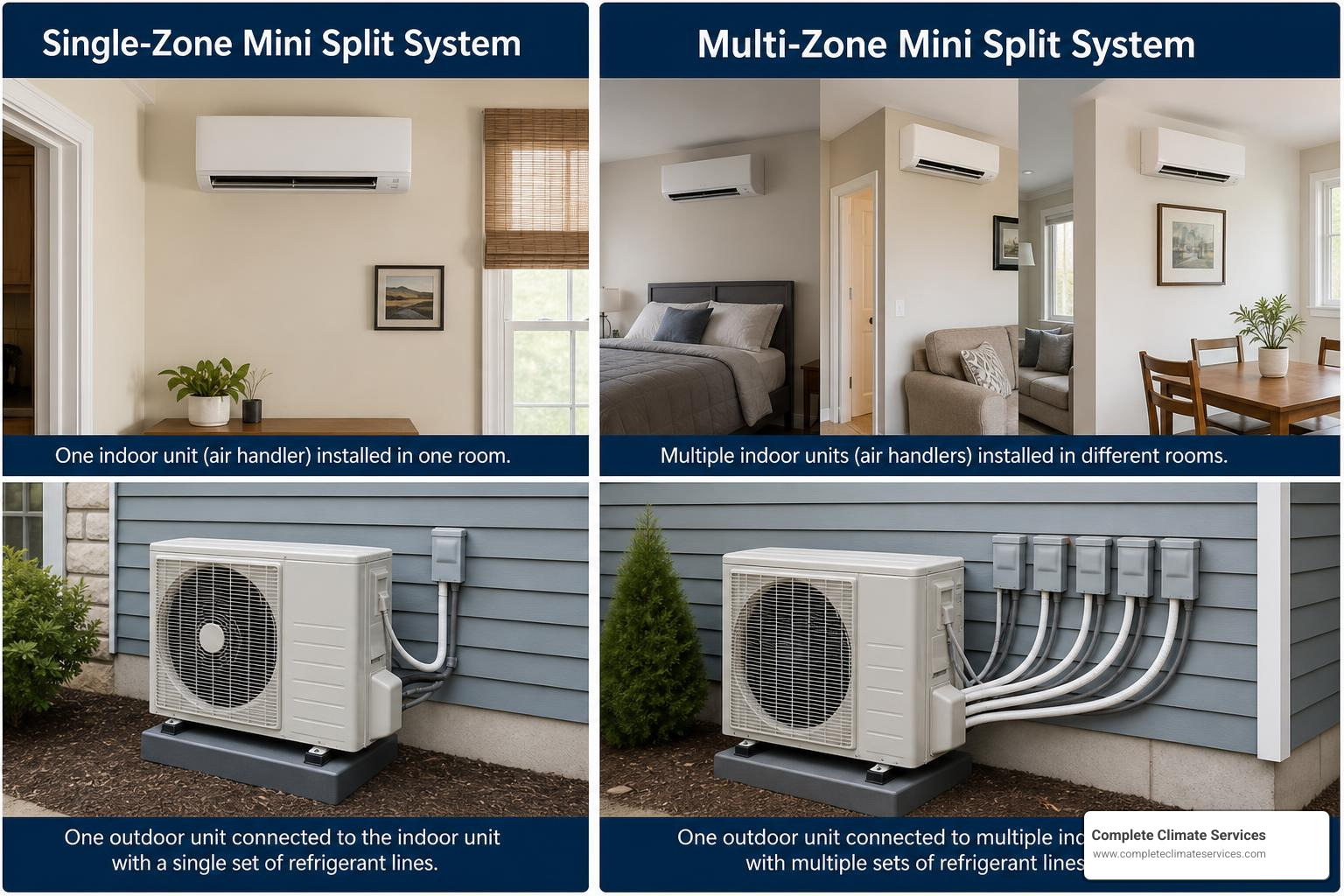
A single-zone mini split has one outdoor unit connected to one indoor unit. A multi-zone system connects one outdoor condenser to two or more indoor heads.
If you want a deeper look at layout options, our professional mini split setup guidance explains how system design affects comfort and performance.
Single-Zone Mini Split Cost: Best for One Problem Room
A single-zone system is usually the most affordable option. It works well for:
- A bedroom that never stays comfortable
- A home office
- A finished attic
- A basement room
- A garage workspace
- A sunroom or addition
- A room far from the existing ductwork
A typical single-zone installation takes about 4 to 8 hours, depending on access, electrical conditions, and how far the indoor unit is from the outdoor condenser.
This setup is usually less expensive because it needs one indoor head, one refrigerant line set, one condensate drain path, and one electrical connection.
Multi-Zone Mini Split Cost: Best for Several Rooms or Whole-Home Comfort
Multi-zone systems cost more because each room adds equipment and labor. A two-zone system might take a full day. A three- to five-zone project can take 1 to 3 days depending on the home.
Multi-zone systems are a good fit when you want:
- Independent temperature control in several rooms
- Heating and cooling for a home without ductwork
- Better comfort across multiple floors
- Less reliance on window units or portable heaters
- Zoned comfort for bedrooms, offices, and living spaces
The added cost comes from more indoor heads, more refrigerant line sets, more control wiring, more condensate drains, and more design time.
When Separate Single-Zone Systems May Beat One Multi-Zone System
It sounds like one outdoor unit should always be better than two. Not always.
In some homes, separate single-zone systems can make more sense because they may offer:
- Better efficiency at partial load
- More redundancy if one system needs service
- Shorter refrigerant line runs
- Easier future expansion
- Better performance for rooms used at different times
For example, if one bedroom is on the back of the house and a finished attic is on the opposite side, forcing both zones onto one condenser may require long line runs and extra labor. Two smaller systems may be cleaner and more efficient.
Our guide to heat pump mini split setups can help you understand which configuration makes sense before you commit.
What Drives the Final Price More Than the Equipment?

The equipment matters, but the installation conditions often matter more. Two homeowners can buy similar mini split systems and receive very different installed prices.
The Biggest Factors That Change the Cost to Install a Mini Split Heat Pump
The biggest price drivers include:
- Number of zones: More indoor units mean more labor, wiring, and materials.
- BTU capacity: Larger systems cost more and may need heavier electrical support.
- Efficiency rating: Higher SEER2, EER2, and HSPF2 ratings usually increase upfront cost.
- Cold-climate performance: Better low-temperature heating capability often costs more.
- Indoor unit style: Wall-mounted units are usually more affordable than ceiling cassettes or concealed ducted units.
- Line-set length: Longer refrigerant runs add material and labor.
- Wall access: Brick, stone, finished basements, and tight attics can raise labor time.
- Electrical condition: Older panels may need upgrades or a new dedicated circuit.
- Condensate drainage: Gravity drains are simpler; pumps add cost.
- Permits and code requirements: Local requirements vary by jurisdiction.
For homes in Baltimore City, Baltimore County, Anne Arundel County, Howard County, and nearby communities, older electrical systems and masonry walls can be major cost variables.
Labor Costs: What Installers Actually Do
Labor commonly makes up 30% to 50% of the total installed cost. That is because mini split installation is not just “hanging a box on the wall.”
A professional installation usually includes:
- Confirming system size and zone layout
- Locating studs and safe mounting points
- Mounting indoor units
- Setting or mounting the outdoor condenser
- Drilling wall penetrations
- Routing refrigerant lines
- Running control wiring
- Installing condensate drainage
- Adding or coordinating electrical connections
- Installing service disconnects where required
- Pressure testing
- Pulling a vacuum on the refrigerant lines
- Releasing or charging refrigerant properly
- Testing heating and cooling operation
- Checking airflow and temperature split
- Cleaning up and explaining operation
Good labor is not cheap. Bad labor is often more expensive later.
Hidden and Add-On Costs to Budget For
Not every project has extra costs, but homeowners should be aware of them before comparing quotes.
Common add-ons include:
- Permit fees
- Dedicated 240V circuit
- Electrical panel upgrade
- Outdoor service disconnect
- Condensate pump
- Exterior line-hide covering
- Long refrigerant line set
- Wall repair or painting
- Roof bracket or wall bracket
- Snow stand for outdoor unit clearance
- Concrete pad or equipment base
- Branch box for multi-zone systems
- Disposal of old equipment
- Smart thermostat or Wi-Fi control accessory
- Annual maintenance plan
A quote that looks low may simply be missing these items.
Sizing, BTUs, and Zone Planning: How to Avoid Overspending
Sizing is where homeowners can save serious money. Oversizing can cause short cycling, humidity problems, noise complaints, and wasted dollars. Undersizing can leave you uncomfortable on the hottest and coldest days.
A good sizing process considers:
- Room square footage
- Insulation levels
- Window size and direction
- Ceiling height
- Sun exposure
- Air leakage
- Room use
- Open or closed floor plan
- Existing heating and cooling equipment
The best answer is usually based on a load calculation, not a guess. Our guide to the basics of heat pump mini split systems explains how these systems work and why sizing matters.
Rebates, Operating Savings, and Payback in 2026
Mini splits are not just about installation cost. They are also about what you spend every month after installation.
High-efficiency inverter-driven mini splits can reduce energy use by adjusting output instead of constantly turning fully on and off. That can mean lower electric bills, especially when replacing electric resistance heat, inefficient window AC units, or poorly performing ducted systems.
Are Federal Tax Credits or Rebates Available for Mini Splits in 2026?
In 2026, incentives require careful checking because programs change.
The older federal heat pump tax credit rules that many homeowners heard about may not apply the same way in 2026. Some rebate programs are now tied to state rollout, utility funding, income qualification, equipment efficiency, and ENERGY STAR certification.
For homeowners in our Maryland service area, possible incentive sources may include:
- Utility rebates
- Maryland energy-efficiency programs
- Home energy rebate programs as they become available
- Manufacturer promotions
- Financing offers
- Income-qualified electrification incentives
Before buying, ask for documentation showing:
- AHRI certificate
- ENERGY STAR status if applicable
- Model numbers
- Efficiency ratings
- Contractor license information
- Itemized invoice
- Rebate application requirements
Do not assume a system qualifies just because it is called “high efficiency.” The exact model matters.
High-Efficiency vs. Lower-Efficiency Mini Splits: Upfront Cost vs. Long-Term Savings
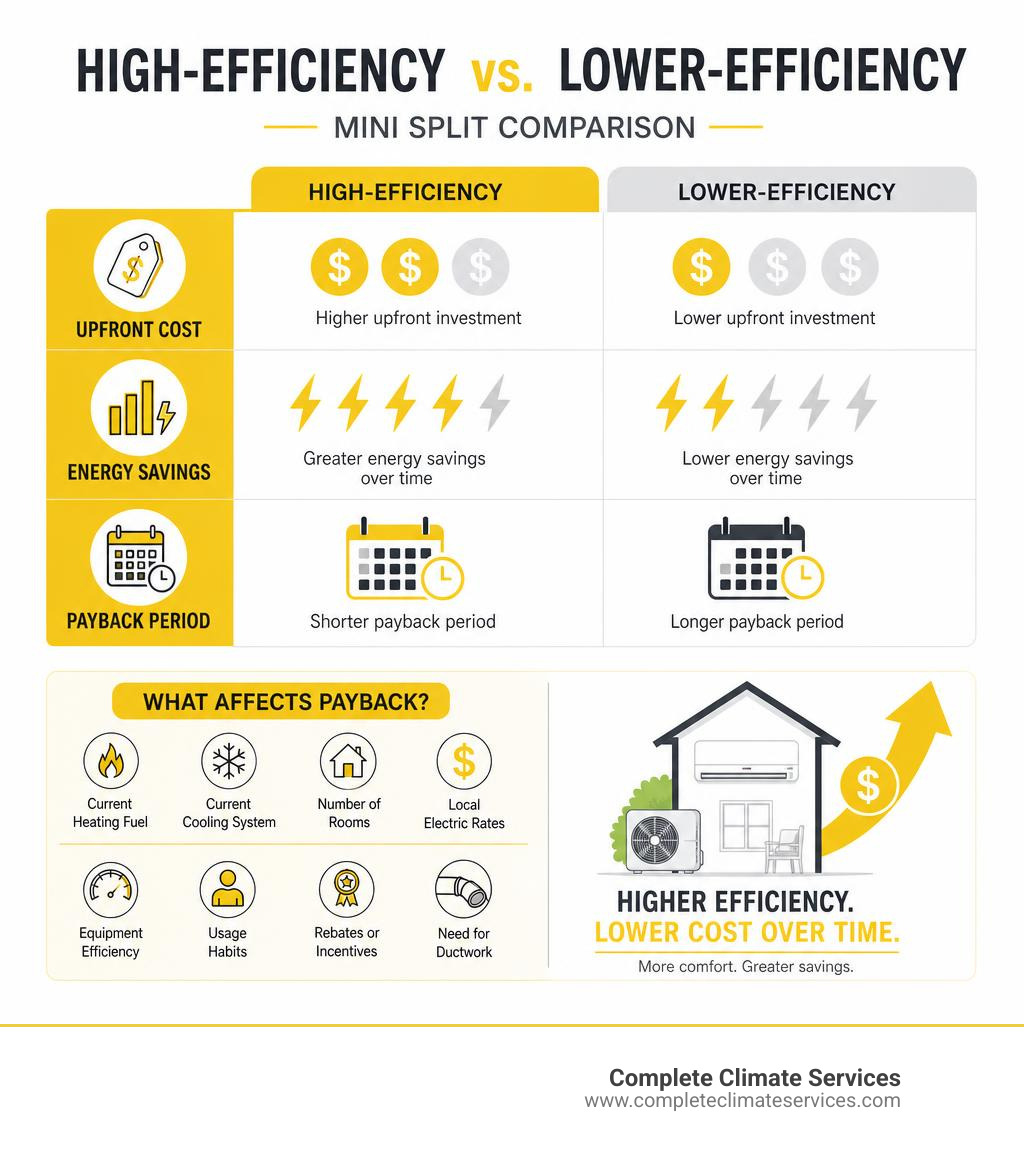
Higher-efficiency systems usually cost more upfront. The tradeoff is lower operating cost over time.
Important ratings include:
- SEER2: Cooling efficiency over a season
- EER2: Cooling efficiency under specific conditions
- HSPF2: Heating efficiency over a season
Mini splits can often use 20% to 40% less electricity than less efficient cooling and heating setups, especially when compared with ducted systems that lose air through leaky ductwork. Duct losses can be significant, and in some homes, a lot of paid-for comfort never reaches the room.
Payback depends on:
- Your current heating fuel
- Your current cooling system
- How many rooms you condition
- Local electric rates
- Equipment efficiency
- Usage habits
- Rebates or incentives
- Whether ductwork would otherwise be needed
A high-efficiency system may pay back faster in a room used daily than in a guest room used twice a year. For more detail, see our heat pump mini split efficiency guide.
Mini Split vs. Central Air Cost: Which Is Cheaper Without Ductwork?
If your home already has good ductwork, central air may be competitive. If your home does not have ductwork, mini splits often win.
Adding ductwork to an older home can be expensive and disruptive. It may involve opening walls, lowering ceilings, using attic space, or sacrificing closet space. Mini splits avoid most of that because they deliver heating and cooling directly to each zone.
Mini splits are especially practical for:
- Older homes with radiator heat
- Homes with boiler systems
- Additions
- Finished attics
- Finished basements
- Garages
- Rooms that are always too hot or too cold
- Homes where ductwork would be difficult to add
DIY vs. Professional Installation: Where Homeowners Save and Where They Risk Paying Twice
DIY mini split kits exist, and some are designed with pre-charged line sets. For the right homeowner and the right simple project, DIY can reduce upfront cost.
But there are real risks.
Mini splits involve refrigerant, electrical wiring, condensate drainage, wall penetrations, and manufacturer installation requirements. Mistakes can lead to leaks, poor performance, water damage, voided warranties, or code issues.
For homeowners who want the system installed correctly and backed by professional support, our mini split system services are designed for exactly that.
When DIY Mini Split Installation May Be Appropriate
DIY may be reasonable when all of these are true:
- It is a simple single-zone system
- The indoor unit is on an exterior wall
- The outdoor unit is close by
- The line set is pre-charged and designed for DIY use
- The electrical panel is accessible and adequate
- A licensed electrician handles required electrical work
- Local permits are checked
- The homeowner is comfortable with careful mechanical work
- Warranty limitations are understood
Even then, it is smart to have a professional inspect the work before startup.
When Professional Installation Is the Smarter Choice
Professional installation is the better choice for:
- Multi-zone systems
- Long line-set runs
- Second- or third-floor rooms
- Ceiling cassette units
- Concealed ducted mini split units
- Electrical panel upgrades
- Older Baltimore-area homes
- Cold-climate heat pump systems
- Homes with masonry walls
- Projects requiring permits
- Homeowners who want warranty protection
A professional installer also helps with system design. That matters because a bad layout can cost more to operate for the next 15 to 20 years.
What a Good Mini Split Quote Should Include
A quality quote should be specific. If it just says “mini split installed,” ask for more detail.
Look for:
- Brand and model numbers
- Indoor and outdoor unit model numbers
- BTU capacity for each zone
- SEER2, EER2, and HSPF2 ratings
- Zone layout
- Indoor unit locations
- Outdoor condenser location
- Estimated line-set length
- Electrical scope
- Permit responsibility
- Condensate drainage plan
- Labor included
- Startup and commissioning
- Warranty terms
- Cleanup and disposal
- Rebate or incentive support
- Maintenance recommendations
The clearer the quote, the easier it is to compare apples to apples. Otherwise, you may be comparing apples to “mystery fruit in a trench coat.”
Frequently Asked Questions About the Cost to Install a Mini Split Heat Pump
Is a Mini Split Heat Pump Worth the Cost?
Yes, for many homes. A mini split heat pump can be worth the cost when you need efficient heating and cooling without adding ductwork.
The best fits include:
- Older homes without ducts
- Room additions
- Finished attics
- Basements
- Home offices
- Bedrooms with comfort problems
- Homes where zoning would reduce energy waste
Mini splits provide room-by-room control, quiet operation, and both heating and cooling in one system. With proper maintenance, many systems last 15 to 20 years or more.
How Much Does a Mini Split Cost for 1,000 Square Feet?
For 1,000 square feet, the cost can range from about $2,000 to $10,500+, depending on layout.
A wide-open 1,000-square-foot area may be served by one larger zone. A 1,000-square-foot area divided into bedrooms, halls, and separate rooms may need two or three zones.
The final answer depends on:
- Floor plan
- Insulation
- Window exposure
- Ceiling height
- Number of rooms
- Heating needs
- Cooling needs
- Whether the system is supplemental or primary
Square footage is a starting point, not the final sizing method.
Why Is Mini Split Installation So Expensive?
Mini split installation costs more than many homeowners expect because the job requires skilled work across several trades.
The price includes:
- Specialized HVAC labor
- Refrigerant line installation
- Electrical work
- Wall penetrations
- Mounting hardware
- Drainage planning
- System testing
- Vacuum and pressure procedures
- Permits where required
- Warranty setup
- Multi-zone design when needed
The system has to be sized, installed, sealed, wired, drained, tested, and commissioned properly. Skipping steps can turn a “cheap” installation into an expensive repair.
Conclusion
The real cost to install a mini split heat pump in 2026 depends on your home, your zones, your electrical system, and the quality of the installation. A single room may cost $2,000 to $5,000. A multi-zone or whole-home system may run $10,000 to $20,000 or more.
The smartest way to avoid sticker shock is to:
- Decide which rooms truly need conditioning
- Get the system properly sized
- Compare detailed quotes
- Ask about permits and electrical work
- Check incentives before purchase
- Balance upfront cost with long-term savings
- Choose an installer who explains the “why,” not just the price
At Complete Climate Services, we provide residential and commercial HVAC repair, installation, maintenance, and emergency services throughout Baltimore and surrounding communities. With over 20 years of honest, reliable service and 5.0 ratings across platforms, we help homeowners make smart comfort decisions without pressure.
If you are ready to price your project clearly, contact us today and schedule professional mini split services with our team. We will help you understand your options, your real installation cost, and the setup that makes the most sense for your home.