
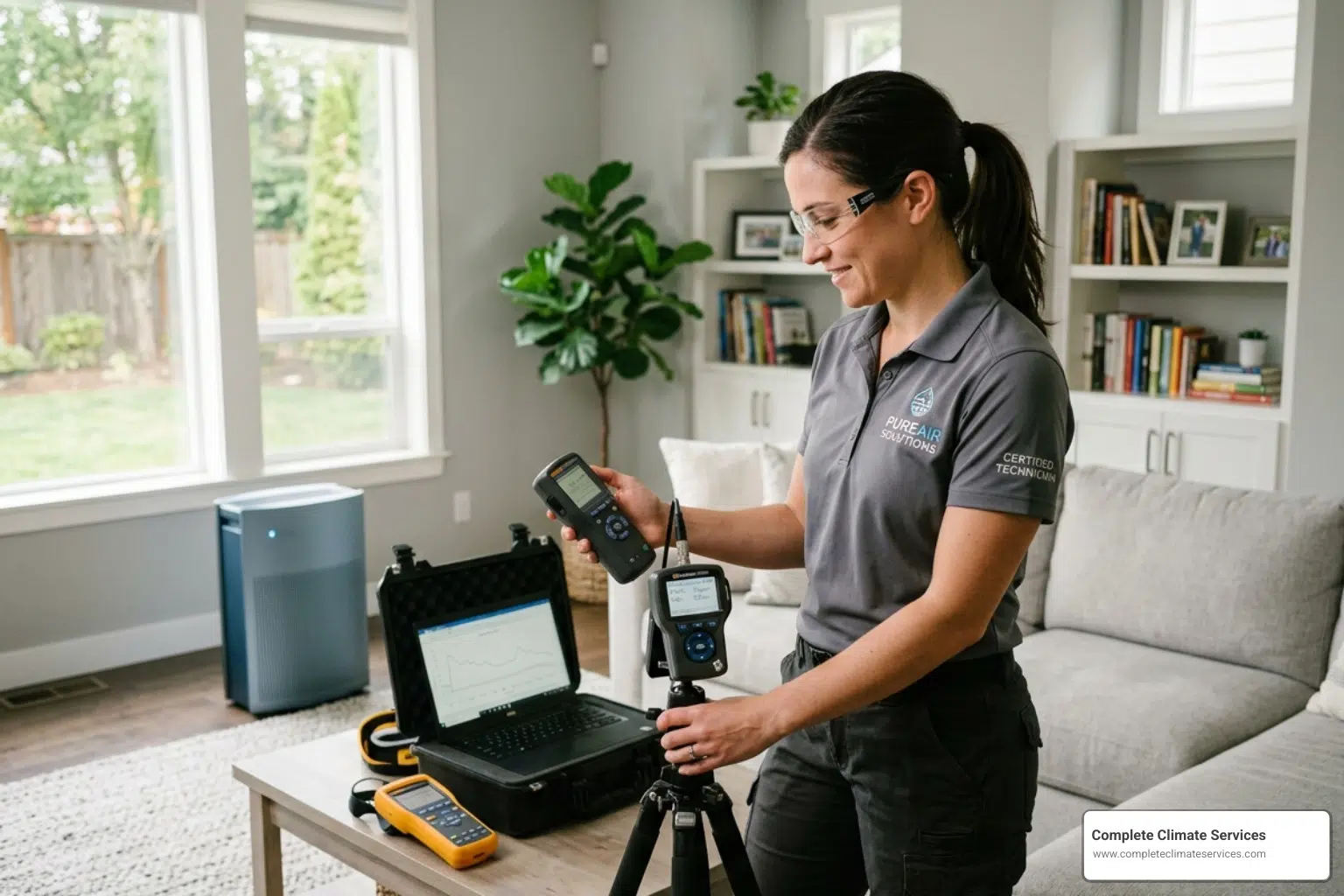
Why Indoor Air Quality Services Matter More Than You Think
Indoor air quality services help homeowners identify, test, and reduce harmful pollutants circulating inside their homes — leading to better health, more comfort, and cleaner air year-round.
Here’s a quick overview of what these services typically include:
- Air quality testing — measuring levels of mold, VOCs, carbon monoxide, and other pollutants
- Visual inspection — checking HVAC systems, ductwork, crawlspaces, and moisture-prone areas
- Remediation planning — a tailored action plan based on your test results
- System installations — air purifiers, HEPA filters, UV lights, humidifiers, and dehumidifiers
- Ongoing maintenance — filter replacements, duct cleaning, and periodic re-testing
Most people assume the air inside their home is safe. It usually feels fine. But according to the EPA, indoor air can be 2 to 5 times more polluted than the air outside — and we spend roughly 90% of our time indoors.
That’s a problem worth paying attention to.
The average person takes 12 to 16 breaths per minute. Whatever is floating in your home’s air — dust, mold spores, chemical fumes, pet dander — goes straight into your lungs, hundreds of times every hour.
Many indoor air issues develop silently. There’s no smell, no visible mold, no obvious warning sign. That’s exactly what makes them easy to overlook and hard to address without professional help.
I’m Michael Holcomb, Co-Founder and Operations Manager of Complete Climate Services, and I’ve spent years helping Baltimore homeowners improve their indoor environments through professional indoor air quality services. In this guide, I’ll walk you through everything you need to know — from spotting the warning signs to choosing the right solutions for your home.
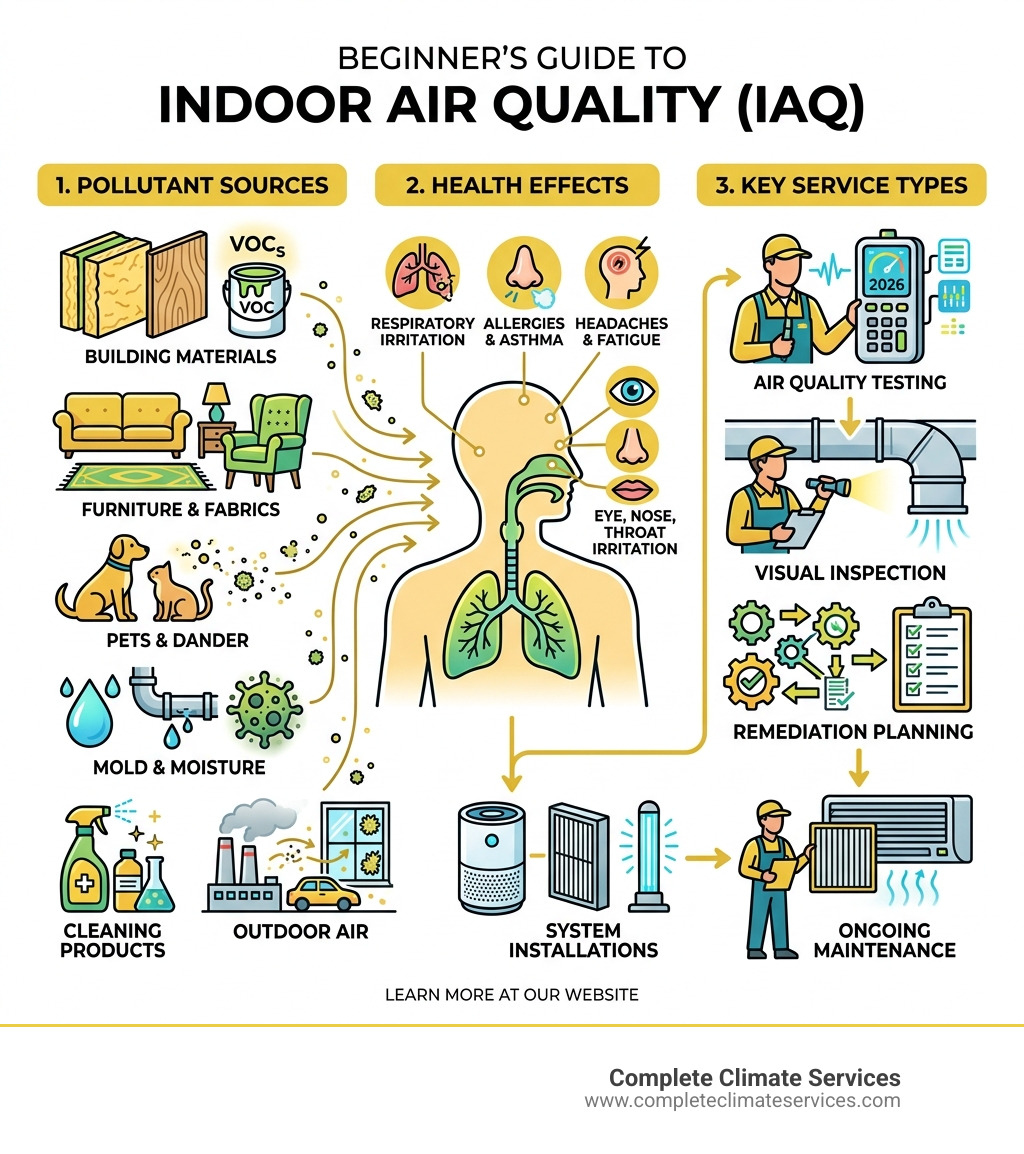
Understanding Indoor Air Quality and Its Impact on Health
When we talk about Indoor Air Quality (IAQ), we are referring to the air quality within and around buildings and structures, especially as it relates to the health and comfort of those inside. In April 2026, with more people working from home than ever in areas like Towson and Owings Mills, the stakes have never been higher.
The statistics are sobering. Approximately 3.8 million individuals perish every year globally due to illnesses directly connected to poor indoor air quality. While that sounds extreme, the day-to-day reality for many Baltimore residents involves chronic “nuisance” symptoms that they never realize are tied to their home’s air.
Common Indoor Pollutants
Indoor air isn’t just “dusty.” It’s a complex cocktail of various particulates and gases:
- Volatile Organic Compounds (VOCs): These are gases emitted from certain solids or liquids. Common sources include paints, cleaning supplies, new carpets, and even “air fresheners.” In office or industrial settings, these are often the most common contaminants.
- Radon: A naturally occurring radioactive gas that you can’t see, smell, or taste. It is a leading cause of lung cancer among non-smokers.
- Asbestos: Often found in older Baltimore homes (pre-1980s), these fibers can become airborne during renovations and cause severe lung damage.
- Biological Contaminants: This includes pet dander, mold spores, dust mites, and bacteria.
For allergy sufferers and those with asthma, these pollutants aren’t just minor inconveniences; they are major triggers. If you find yourself sneezing the moment you walk through your front door in Catonsville, your home is likely trapping allergens rather than filtering them out. Learning how to improve indoor air quality for a healthier home starts with identifying these invisible enemies.
Professional Indoor Air Quality Services: Testing and Assessment
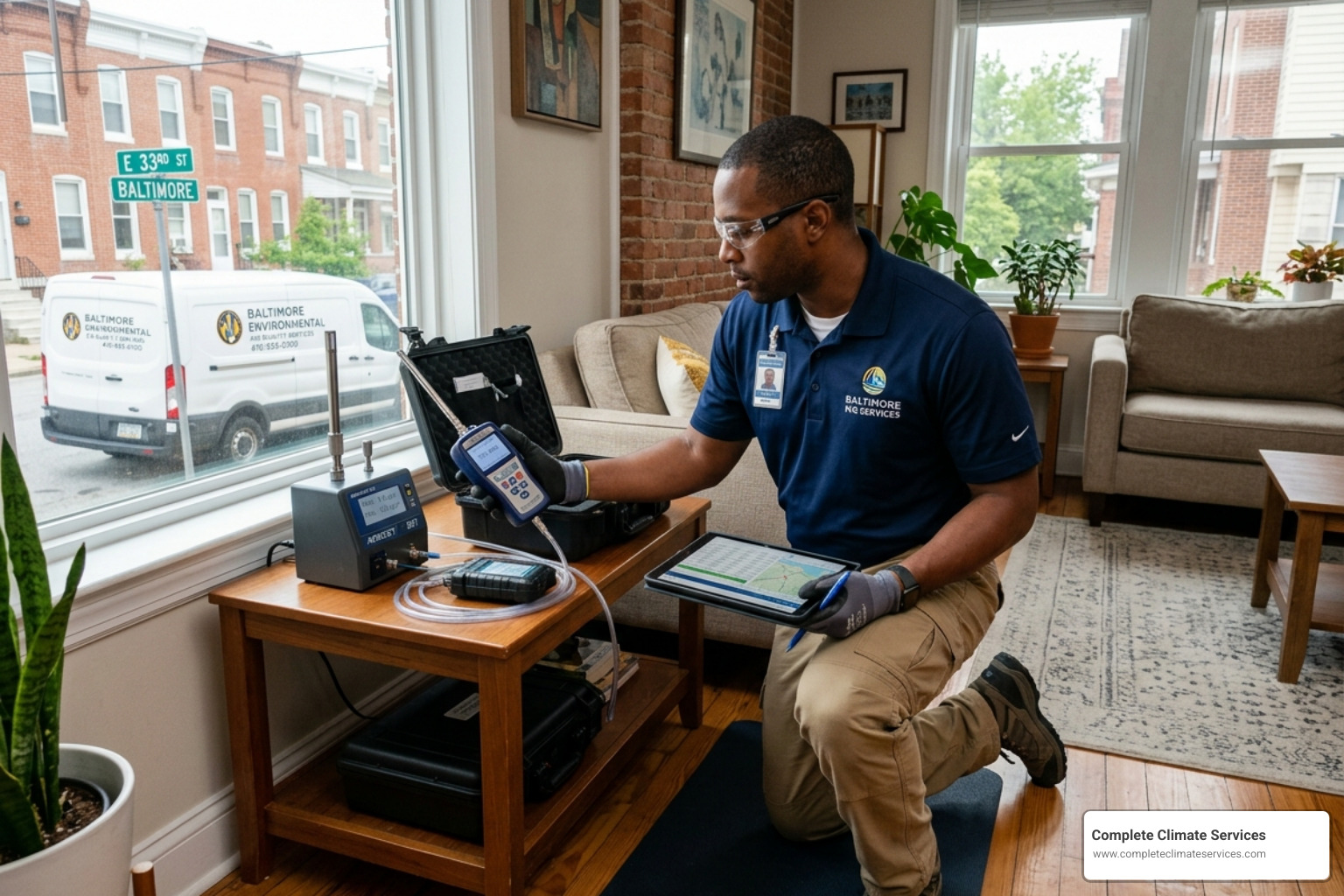
If you suspect your air is less than ideal, the first step isn’t buying a random air purifier from a big-box store. It’s professional testing. At Complete Climate Services, we believe you can’t manage what you don’t measure.
A professional assessment typically takes 1 to 2 hours. During this time, a technician will perform several key tasks:
- Detailed Consultation: We discuss your specific concerns, such as health symptoms or strange odors.
- Visual Inspection: We look at “hot spots” like your HVAC system, ductwork, crawlspaces, and any areas with signs of water damage.
- Air Sampling: Using specialized equipment, we capture samples of the air to measure particulate counts, VOC levels, and mold spore concentrations.
- Humidity and Temperature Readings: Since high humidity (above 50-60%) is a primary driver for mold growth, these readings are crucial.
- Lab Analysis: For certain contaminants like mold or lead, samples are sent to a lab for non-viable or viable testing to identify exactly what is present.
Understanding indoor air quality testing is vital because it moves you away from guesswork and toward a scientific solution.
When to Schedule Indoor Air Quality Services
You don’t necessarily need testing every month, but there are “red flag” moments when you should definitely call in the pros:
- Musty or Chemical Odors: If a room always smells “off,” or if cooking odors linger for days, your ventilation is failing.
- Recent Renovations: Sawdust, drywall dust, and “new house smell” (VOCs) can linger in your ducts long after the contractors leave.
- Water Damage: If you’ve had a leak in Columbia or a flooded basement in Dundalk, mold can begin growing within 24 to 48 hours.
- Health Spikes: If family members experience persistent headaches, fatigue, or irritated eyes that seem to improve when they leave the house, the building itself might be the cause.
- Seasonal Changes: Autumn’s effect on indoor air quality is significant as we seal up our homes for the winter, trapping summer’s dust and allergens inside.
Interpreting Your Air Quality Test Results
Once the testing is complete, you’ll receive a report. But what do those numbers actually mean? A quality report compares your home’s levels against established safety thresholds (like those from the EPA or ASHRAE).
For example, if your particulate matter (PM2.5) levels are high, it might indicate a need for better filtration. If VOC levels are spiked, we look for “source control” — identifying the product or material off-gassing in your home. We make air quality monitoring made simple by providing a clear remediation plan that prioritizes the most dangerous issues first.
Advanced Technologies for Cleaner Indoor Air
Once we know what’s in your air, we can deploy the right technology to fix it. Modern indoor air quality services offer several powerful tools:
- HEPA Filtration: High-Efficiency Particulate Air filters are the gold standard. They are designed to capture 99.97% of particles as small as 0.3 microns. This includes dust, pollen, and even some bacteria.
- UV-C Germicidal Lights: While filters trap particles, UV lights kill or inactivate them. Installed inside your HVAC system, these lights disrupt the DNA of mold, viruses, and bacteria, preventing them from reproducing.
- Whole-Home Dehumidifiers: In the humid Baltimore summers, keeping your home’s humidity between 30% and 50% is the best way to prevent mold growth and dust mite infestations.
- Energy Recovery Ventilators (ERVs): Modern homes in areas like Pikesville are built “tight” for energy efficiency. While this saves on bills, it traps stale air. An ERV swaps out stale indoor air for fresh outdoor air without losing your heated or cooled energy.
Comparative Look at IAQ Solutions
| Technology | Best For… | How It Works | Maintenance |
|---|---|---|---|
| HEPA Filters | Allergies, Dust, Pet Dander | Mechanical trapping of particles | Replace every 6-12 months |
| UV-C Lights | Mold, Bacteria, Viruses | DNA disruption via light | Replace bulb every 12-24 months |
| Carbon Filters | Odors, Fumes, VOCs | Adsorption into charcoal pores | Replace every 3-6 months |
| Dehumidifiers | Mold Prevention, Comfort | Removing excess moisture | Annual inspection/cleaning |
For those dealing with specific issues, such as smoke from distant wildfires (which can send PM2.5 particles into our region) or high local pollen counts, these systems provide a “fortress” effect for your home. Interestingly, air quality problems that mini-split systems can solve are often overlooked; these ductless systems offer specialized filtration for individual rooms that might be harder to reach with central air.
The Role of HVAC Maintenance in Air Purity
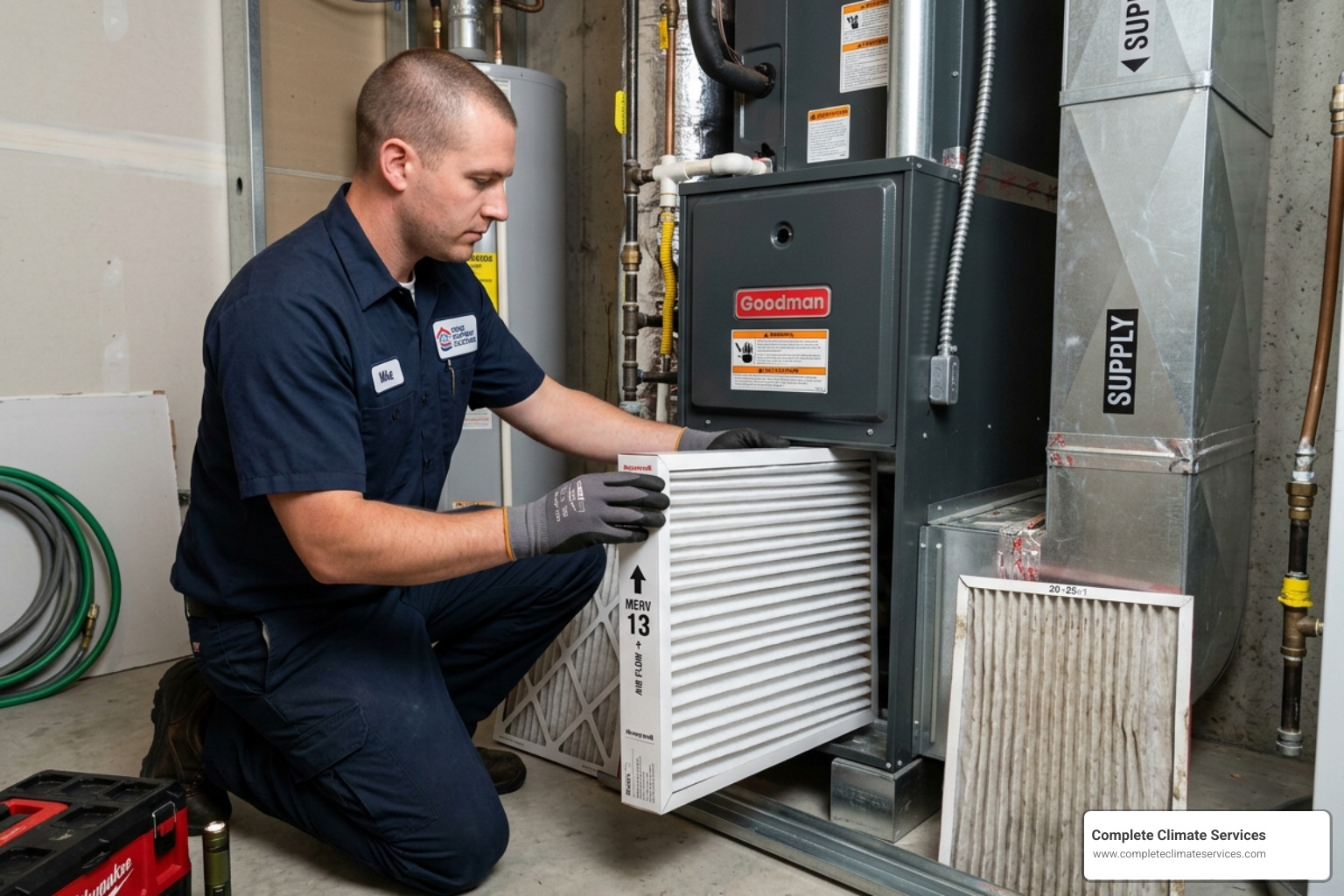
Your HVAC system is the “lungs” of your home. If the lungs are dirty, the body can’t be healthy. This is why regular maintenance is the foundation of all indoor air quality services.
- Air Filters and MERV Ratings: Not all filters are created equal. Minimum Efficiency Reporting Value (MERV) ratings tell you how well a filter traps particles. While a MERV 8 is standard, a MERV 11 or 13 is much better for air quality. However, you must ensure your system can handle the increased resistance of a thicker filter.
- Duct Cleaning: Over years, dust, pet hair, and even mold can accumulate in your ductwork. When the fan kicks on, these contaminants are blasted into your living spaces.
- Airflow Optimization: If your system isn’t moving air correctly, you get “dead zones” where pollutants settle and concentrate.
We always tell our clients that better air quality through HVAC maintenance is the most cost-effective way to stay healthy. A clean system doesn’t just breathe better; it runs more efficiently, saving you money on monthly utilities. If you want to improve HVAC air quality in Baltimore, start with a professional tune-up that includes a deep cleaning of the coils and blower components.
Frequently Asked Questions about Indoor Air Quality Services
How much do professional air quality services cost?
Testing costs can vary depending on the size of your home and the depth of the analysis (e.g., how many lab samples are needed). Generally, a professional IAQ assessment in the Baltimore area ranges from $300 to $600.
Installation of air quality hardware (like UV lights or whole-home purifiers) can range from $500 to $3,000 depending on the technology. While this is an investment, the “Return on Investment” (ROI) regarding reduced medical bills for allergy sufferers and improved sleep quality is often considered priceless by our customers.
Choosing the Right Indoor Air Quality Services Provider
Not every HVAC company is an expert in air quality. When looking for a provider in Essex or Glen Burnie, look for:
- Certifications: Are they trained in IAQ specifically?
- Local Expertise: Do they understand Baltimore’s unique humidity challenges?
- Transparent Pricing: You should receive a quote upfront without “hidden” lab fees.
- Comprehensive Reports: Don’t settle for a “thumbs up” or “thumbs down.” Demand data.
How often should I have my air quality tested?
We recommend a professional check-up at least once a year, ideally during your standard HVAC maintenance visit. However, you should consider a “spot check” after any major life event, such as a home renovation, the addition of a new pet, or if you notice new respiratory symptoms among family members. Improving home air quality year-round requires a proactive stance rather than waiting for a problem to become visible.
Conclusion
The air you breathe is the most fundamental part of your health. You wouldn’t drink brown water from your tap, so why settle for “brown” air in your living room?
At Complete Climate Services, we’ve spent over 20 years providing honest, reliable HVAC and indoor air quality services to our neighbors across Baltimore, from Ellicott City to Perry Hall. With our 5.0-star rating and deep local expertise, we don’t just fix air conditioners; we create healthier environments for families to thrive in.
Whether you are dealing with persistent allergies, worrying about mold after a damp spring, or simply want the peace of mind that comes with a professional air assessment, we are here to help.

