

Heat pump efficiency can make a noticeable difference in winter comfort and electric bills for Maryland homeowners. Cold, damp weather puts extra pressure on equipment, airflow, and the settings used every day. Paying attention to those everyday conditions can prevent small problems from becoming expensive disruptions.
A practical approach matters more than a lesson on ratings or laboratory testing. This guide focuses on safe homeowner habits, warning signs, and the professional service that keeps a system protected. It also explains when a comfort problem calls for a simple adjustment and when it needs a technician.
I’m Michael Holcomb, Co-Founder and Operations Manager of Complete Climate Services. I will walk you through the home conditions that affect heat pump efficiency, the checks homeowners can safely handle, and the work our technicians should perform. Complete Climate Services has 20+ years of HVAC experience and 5.0 stars on Google. The goal is steady winter comfort without avoidable strain on your equipment.
What Heat Pump Efficiency Means for Your Energy Bills
In a real home, efficiency means the system can move heat reliably without running harder than necessary. A clean air path, properly sized equipment, sound ductwork, and consistent thermostat settings help the unit meet demand without unnecessary backup heat. When those pieces work together, indoor temperatures stay more even from room to room.
The EPA heat pump guidance explains that a heat pump typically uses about half the energy of other electric home-heating sources. That benefit depends on the whole system, not just the outdoor unit, so small maintenance issues can affect comfort and operating costs. A blocked return grille or neglected filter can limit the performance homeowners expect.
Baltimore winters often alternate between wet chill and sharp cold, which makes frost management especially important. The separate explanation of HSPF2 ratings covers equipment measurements, while this article stays focused on practical winter performance. The most useful next step is usually to notice changes early and respond before the system is under sustained stress.
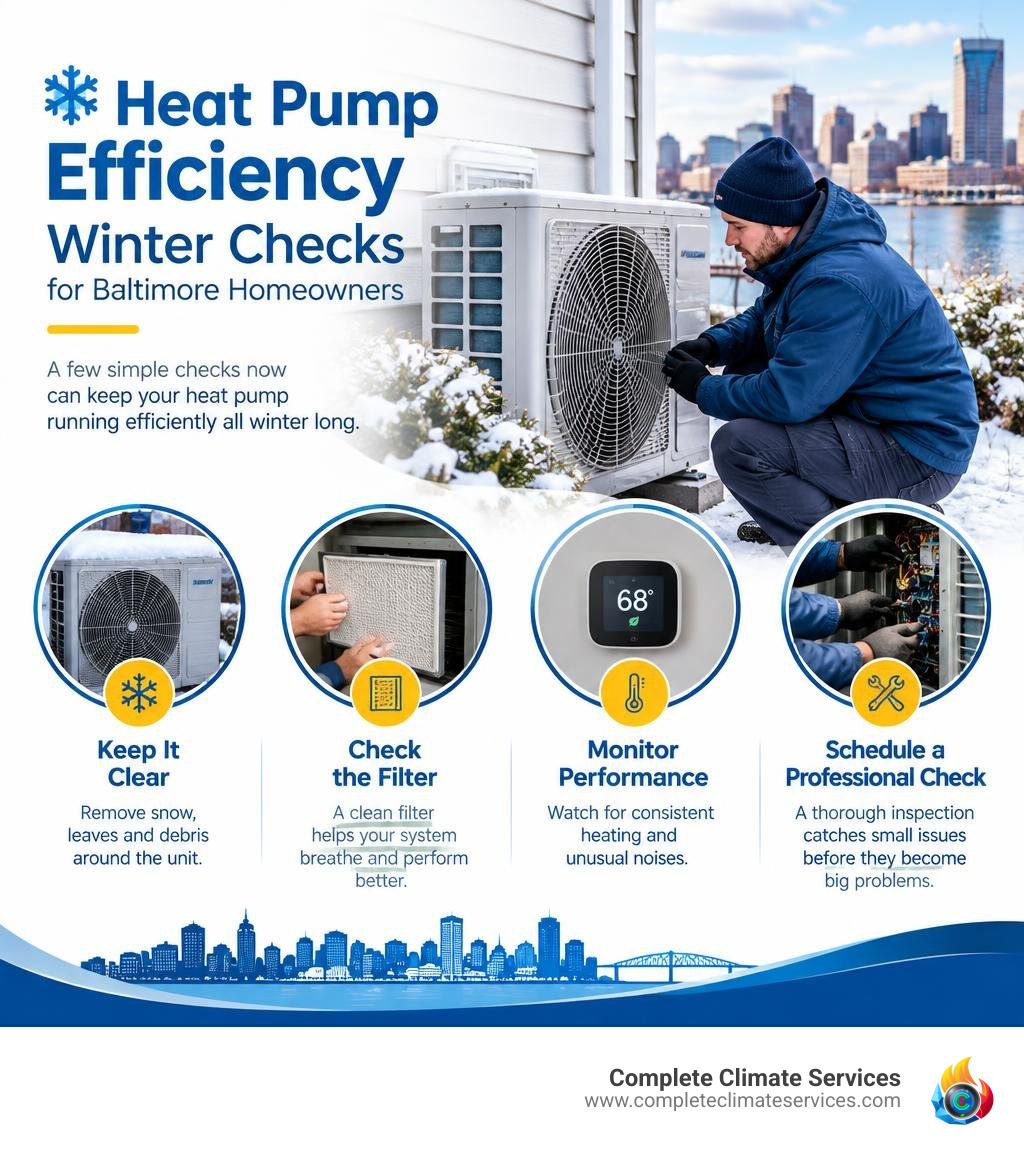
What Lowers Heat Pump Efficiency in a Baltimore Home
Winter performance is usually shaped by several manageable conditions rather than one dramatic failure. A technician can identify the underlying cause, but homeowners can often spot early warning signs before comfort slips. Addressing them promptly helps limit strain during stretches of damp or freezing weather.
Dirty Filters and Blocked Returns
A clogged filter makes the blower work harder and limits the warm air reaching rooms. Check the filter regularly, keep return grilles clear, and do not close supply vents to solve an uneven-room problem. These basic steps help the indoor equipment circulate air as it was designed to do.
Furniture, curtains, and rugs can also restrict return or supply airflow. If one room stays uncomfortable after those simple checks, a technician can determine whether the issue is ductwork, equipment settings, or a repair need. Avoid forcing air into one room by shutting vents elsewhere because that can create new balance problems.
Leaky Ductwork
Duct leaks can send conditioned air into attics, crawlspaces, and other unconditioned areas before it reaches living spaces. ENERGY STAR duct sealing notes that about 20 to 30 percent of the air moving through a typical duct system can be lost through leaks, holes, and poor connections. That loss can make a healthy heat pump seem less capable than it is.
Visible gaps around accessible duct seams deserve professional attention instead of a temporary patch. Better airflow helps each room receive the heating the system is already producing. A technician can also look for disconnected runs, damaged insulation, or balancing issues that are not visible from the living area.
A System That Is the Wrong Size
A heat pump that is too large can cycle on and off before it distributes heat evenly. A system that is too small may run for long periods and call for backup heat more often during demanding weather. Either condition can reduce comfort and add unnecessary wear over time.
The EPA also notes that equipment that is too large or too small can reduce energy efficiency. Complete Climate Services uses a Manual J load calculation to size every new system around the home’s actual heating and cooling needs. That process considers the home itself instead of relying on a quick guess based on square footage alone.
Auxiliary Heat Running Too Often
Auxiliary heat can support the system in challenging weather, but frequent operation may signal a setting, airflow, defrost, or equipment issue. Large thermostat setbacks often create a steep recovery demand that brings on backup heat. A steady setting is usually easier on the system than repeated large adjustments.
The discussion of auxiliary heat costs provides more context on why steady settings can matter. If the thermostat regularly shows auxiliary heat, schedule service instead of assuming the behavior is normal. The technician can determine whether the system is responding to weather or compensating for an underlying problem.
An Outdoor Unit Blocked by Leaves
Leaves, mulch, snow, and other debris can restrict airflow around the outdoor unit. Clear loose debris from around the cabinet, but never remove panels or attempt to work on electrical, refrigerant, or sealed components. Keep the area clear enough for air to move freely around the equipment.
Heavy ice that does not clear after a normal defrost cycle needs professional attention. Homeowners can safely observe the condition and call for service before the restriction places more strain on the system. This approach protects both the equipment and the people trying to maintain it.
Simple Habits That Protect Your Heat Pump
Small, consistent habits help the system operate as intended through a Baltimore winter. Start with the thermostat, filter, breaker, vents, and the area around the outdoor unit because these are homeowner-safe checks. A quick visual review after severe weather can reveal a problem before it affects indoor comfort.
Set the thermostat at a comfortable temperature and avoid large swings whenever possible. Replace a dirty filter, confirm the breaker has not tripped, and keep return grilles and supply vents open and unobstructed. If the filter looks loaded with dust or the airflow feels weaker than usual, address that simple issue before assuming the equipment has failed.
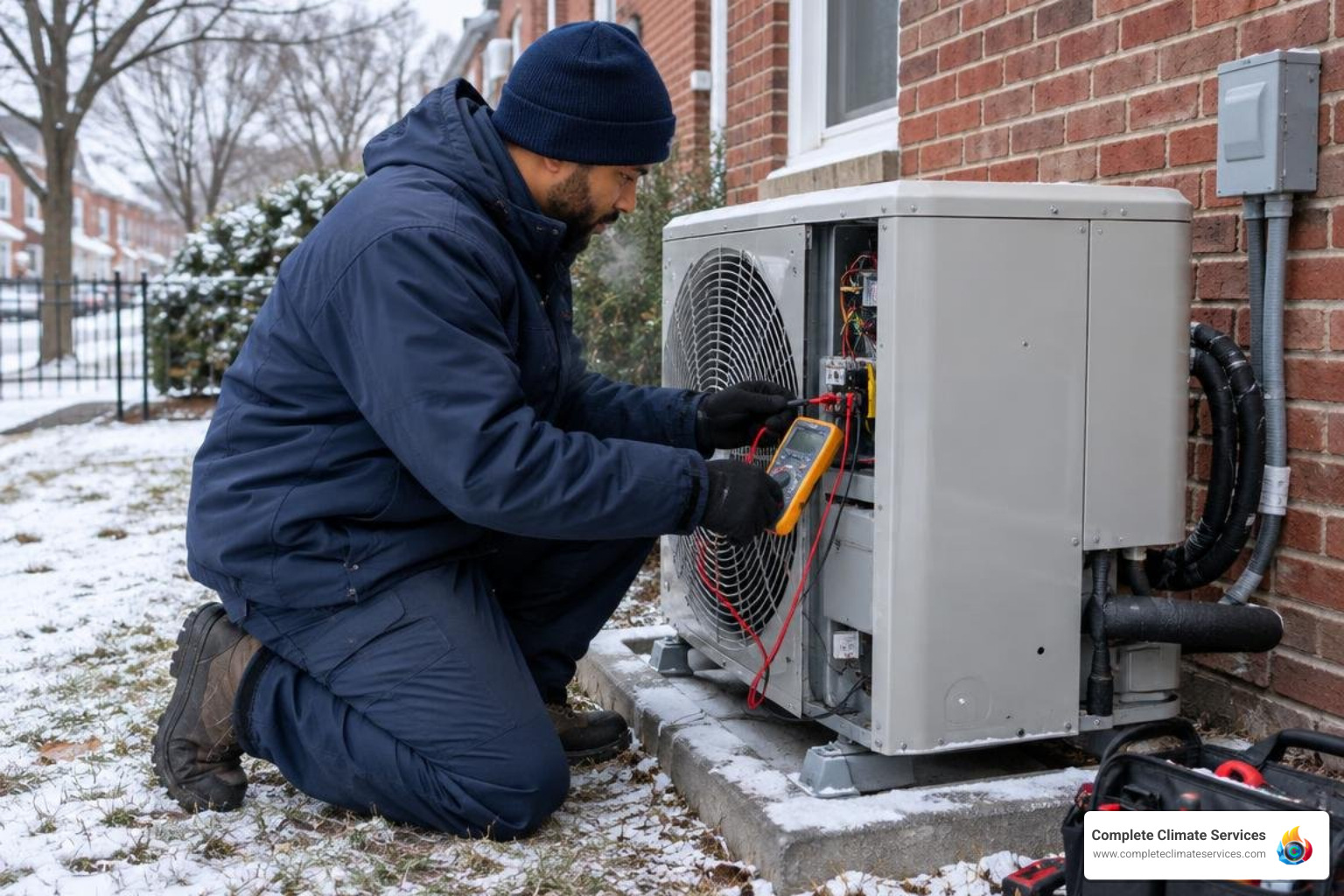
Clear leaves, loose debris, and snow away from the outdoor cabinet so air can circulate. The winter heat pump checklist can help homeowners organize these simple tasks before severe weather arrives. Do not chip at ice or pour hot water on the unit because those actions can damage equipment or create another problem.
Pay attention to changes in the system’s normal routine, such as frequent defrost activity, unusual noises, or rooms that remain cool. Make a note of what happened and when it was first noticed, then share that information when scheduling service. Clear observations help a technician begin the inspection with useful context.
Do not remove access panels, handle wiring, adjust refrigerant, or open sealed components. Those tasks belong to a trained technician because incorrect work can create safety risks and cause more damage. Professional service is the right response when a breaker keeps tripping, ice remains on the unit, or the system cannot maintain comfort.
A seasonal visit offers a more complete level of protection than visual checks alone. Maintenance plans make it easier to keep routine care on the calendar and address developing concerns early. Regular care also gives homeowners a place to ask about thermostat use or changes in household comfort.
What Our Technician Checks During a Heat Pump Tune-Up
A professional tune-up looks beyond the items a homeowner can safely inspect. The EPA recommends professional heat pump service at least once a year, giving a technician the opportunity to find wear or operating problems before they disrupt winter comfort. The visit also provides a clear record of concerns that may need attention before the next cold spell.

Our technician checks airflow, refrigerant charge, indoor and outdoor coils, defrost controls, electrical connections, and thermostat settings. These inspections help identify the issues that can force a system to work harder or rely too heavily on auxiliary heat. The technician can also explain which observations are normal winter behavior and which ones deserve follow-up.
A Recent Service Call in Ellicott City
An Ellicott City family noticed heavy ice coating their outdoor unit that would not clear on its own. Our technician found a stuck defrost control and a low refrigerant charge. After the repair, the coil cleared completely and the system resumed normal heating.
A tune-up is also a good time to discuss recurring comfort concerns, unusual sounds, or frequent defrost activity. For homeowners weighing a replacement instead of another repair, inverter heat pumps can offer a more adaptable option for changing heating demand. A technician can review the home’s existing system and explain whether repair or replacement is the more sensible next step.
A professional visit never asks homeowners to diagnose sealed-system or electrical problems themselves. The safest next step is to share what was observed, including any ice, error message, or change in indoor comfort, so the technician can inspect the right components. This division of responsibilities keeps basic homeowner care useful without turning it into risky repair work.
When Low Efficiency Means It Is Time to Upgrade
Repeated repairs, persistent uneven comfort, frequent auxiliary heat, or recurring ice can indicate that an older system is no longer a good fit. A professional evaluation can separate a repairable maintenance concern from a system that is reaching the end of dependable service. It can also show whether ductwork, controls, or sizing are contributing to the problem.
A replacement should be based on the home’s needs, not on choosing the biggest available unit. Heat pump services begin with a closer look at the equipment, airflow, ductwork, and the home before recommending a path forward. Proper planning helps match the replacement decision to the comfort concerns the household is actually experiencing.
BGE EmPOWER Maryland may offer rebates for qualifying equipment; we can help check eligibility. Homeowners can also use the guidance for restarting equipment after cold spells when a prolonged cold period raises concerns. If the system remains unreliable after simple checks, professional diagnosis is a better choice than repeated thermostat adjustments.
Frequently Asked Questions
Why does my heat pump run longer in cold weather?
A heat pump may run longer when outdoor air holds less available heat and the home needs more warmth. Longer cycles can be normal when comfort remains steady and the system is not showing repeated faults. A sudden change from the system’s usual operation is a reason to schedule an inspection.
Is it normal for my heat pump to go into defrost mode?
Defrost mode is normal when frost develops on the outdoor coil during cold, damp weather. Call for service if heavy ice remains or the unit does not return to normal heating afterward. Do not attempt to remove panels or work on defrost controls yourself.
Should I turn my heat pump down when I leave the house?
Large setbacks can bring on auxiliary heat when the system tries to recover. Our technician can recommend settings that fit your equipment, home, and daily routine. A steady, comfortable setting is often the simplest way to avoid a demanding recovery period.
How often should a heat pump be serviced?
A professional should service a heat pump at least once a year. Regular care helps identify airflow, coil, defrost, refrigerant, and electrical concerns before they create a larger problem. Service is also a good time to discuss comfort concerns that have appeared since the previous visit.
Does a bigger heat pump heat my home more efficiently?
A larger heat pump is not automatically more efficient for a home. Correct sizing supports even comfort and steadier operation, while oversized equipment can cycle too quickly. A professional load calculation helps determine the equipment size that fits the home.
Conclusion
Heat pump efficiency improves when the equipment has clear airflow, steady thermostat settings, proper sizing, and timely professional service. Homeowners can make a real difference by checking the filter, breaker, vents, and outdoor clearance while leaving sealed, electrical, and refrigerant work to a technician. This practical routine helps protect comfort when winter weather puts extra demand on the system.
If a heat pump runs differently than usual, do not wait for a complete loss of heat before asking for help. Early service can clarify whether the concern is a simple maintenance need or a condition requiring repair. Complete Climate Services can assess the system, explain the findings clearly, and recommend the next sensible step.
When a heat pump needs attention, contact our team to schedule an evaluation and protect dependable winter comfort. The same team can also help homeowners understand what ongoing maintenance best fits their equipment.
Written by Michael Holcomb, Co-Founder and Operations Manager, Complete Climate Services.
Complete Climate Services LLC · 204 S Chapel St, Baltimore, MD 21231 · (443) 898-4747

