

Reliable heating air companies diagnose residential equipment problems quickly when cold outdoor temperatures arrive across Maryland. Professional technicians carefully inspect heating components, explain necessary repairs, and outline clear service options for homeowners. Residents across Baltimore City, Baltimore County, Anne Arundel County, and Howard County need dependable winter heating support.
Scheduling seasonal service appointments protects indoor comfort and prevents sudden mechanical breakdowns during severe regional freezes. Structured tune-up visits include comprehensive safety testing, detailed component cleaning, and accurate airflow calibration for every system. Dedicated heating specialists help families protect valuable heating investments while staying cozy during freezing winter months.
I’m Michael Holcomb, Co-Founder and Operations Manager of Complete Climate Services, and I lead our service team. Qualified heating air companies must deliver honest recommendations, upfront pricing before work, and dependable seasonal workmanship. In this guide, I will walk you through diagnostic standards, seasonal maintenance routines, and safety requirements. Our team brings 20+ years of HVAC experience and 5.0 stars on Google to every home.

What Heating Air Companies Handle in a Baltimore Home
Central Maryland properties rely on diverse heating systems to maintain balanced warmth throughout freezing winter conditions. Suburban residences frequently use modern natural gas or electric furnaces to deliver heated air through ductwork. When worn mechanical parts cause sudden heating trouble, homeowners schedule prompt furnace repair to restore steady temperatures. Our local team at Complete Climate Services installs gas, electric, and dual fuel furnaces for regional properties.
Skilled technicians also provide detailed seasonal maintenance and component repairs for existing residential oil furnaces. However, our company maintains existing oil furnaces but does not install new replacement oil units. Historic Baltimore rowhomes frequently rely on hydronic boiler heating configurations to supply steady, comfortable radiant heat. Experienced specialists deliver dependable boiler service to maintain traditional steam radiators and modern hot water baseboards.
Many local households install energy-efficient heat pumps or dual fuel heating configurations for balanced year-round temperature control. Dual fuel systems combine an efficient electric heat pump with an auxiliary gas furnace for severe cold. In addition to primary heating equipment, technicians install and service whole-home humidifiers throughout regional Maryland residences. Balanced indoor humidity levels protect delicate wood floors, reduce static electricity, and improve respiratory comfort during winter.
When equipment replacement becomes necessary, our technicians use a Manual J load calculation to size every system. Accurate load sizing prevents excessive electrical consumption and supports even temperatures across rooms. Homeowners should only perform safe basic checks on thermostats, air filters, circuit breakers, switches, and vents. Handling gas piping, electrical wiring, refrigerant circuits, and sealed internal components requires a trained HVAC professional.
Attempting unauthorized repairs on sealed mechanical components can cause serious property damage or severe personal injury. Understanding these clear service boundaries simplifies the process of choosing an HVAC company for your household. Thorough heating evaluations always begin with measuring static pressure and airflow through supply registers and returns. Restricted air movement causes excessive heat buildup that frequently triggers disruptive furnace short cycling during freezing mornings.
According to ENERGY STAR hiring tips, homeowners should expect technicians to verify equipment model numbers and review maintenance history. Qualified specialists should also evaluate uncomfortable rooms, inspect ductwork thoroughly, and measure airflow across the system. Contractors must provide clear written itemized estimates before beginning any heating repairs or equipment installations. These checks help your heating system run safely and efficiently all winter.
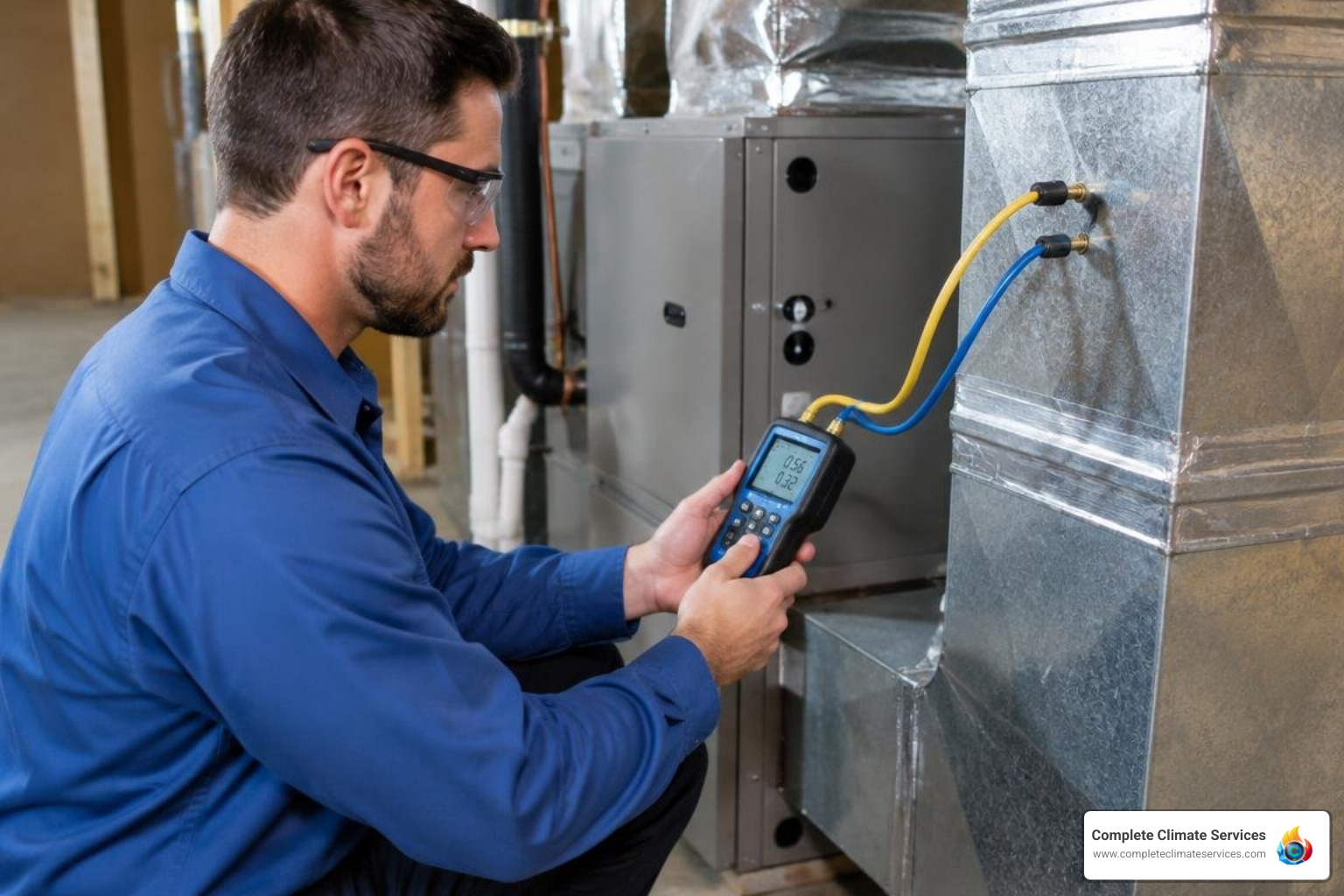
Detailed airflow testing confirms that heated air distributes evenly without placing unnecessary stress on the blower motor. Technicians inspect blower wheel balance, verify fan speed settings, and clean dirty heating coils during maintenance. Specialists also examine burner assemblies to confirm complete, clean fuel combustion across every individual burner port.
Testing safety limit switches ensures that the furnace shuts down automatically whenever internal temperatures rise too high. They also inspect return-air pathways and filter fit, because restricted return airflow can make rooms unevenly heated. These checks help reduce unnecessary strain on the blower and support more consistent heating performance.
Professional heating service requires strict adherence to comprehensive electrical and mechanical safety procedures on every visit. Technicians use digital multimeters to measure operating voltage, motor amperage draw, and electrical capacitor resistance levels. Gas valves and fuel lines receive electronic sensor testing to detect fuel leaks before hazards develop.
Technicians also test flue exhaust pathways to ensure carbon monoxide vents safely outside your living space. For gas-fired equipment, they document combustion readings and inspect venting connections for conditions that require attention. Clear records from these tests help homeowners understand what was checked and why a repair may be recommended.
What a Good Heating Service Visit Looks Like
When you schedule a professional service call, the technician should arrive within the agreed window. A skilled heating specialist arrives fully equipped with diagnostic instruments and listens carefully to your concerns. Before beginning repairs, the technician explains all diagnostic findings and presents clear upfront pricing before work.
This transparent communication provides clarity and helps prevent unexpected charges or hidden diagnostic fees on your invoice. The technician should also explain whether repair is appropriate, what the work involves, and what maintenance may reduce future disruptions. Homeowners can then make an informed decision before authorizing any recommended work.

A thorough heating service visit includes a systematic safety and mechanical inspection of your heating equipment. The technician evaluates thermostat calibration, tightens electrical connections, and inspects the integrity of the heat exchanger. If your household experiences no heat from a boiler, the specialist checks burner operation, water pressure, and relief valves. After completing testing, the specialist reviews all performed work and shares helpful operating guidance for winter.
A Recent Service Call in Canton
A Canton homeowner noticed radiators staying cold even though the boiler ran constantly. Our technician found a seized circulator pump preventing hot water from reaching the system. The technician replaced the pump and bled the lines. Heat returned to every radiator within the hour.
Information to Have Ready Before You Call
Preparing basic equipment details before placing a service call helps dispatchers schedule the most qualified technician. Locate the metal data rating plate on your furnace or boiler cabinet to find key specifications. Having this essential information ready allows the technician to bring appropriate diagnostic tools and matching parts.
This simple preparation saves valuable diagnostic time and allows our team to address heating issues promptly. A clear description of when the problem started and whether it occurs intermittently gives the technician helpful context. Note unusual sounds, odors, or thermostat behavior without attempting to open or repair internal components.
Organizing your heating records before calling ensures our customer support team can assist you efficiently. Having system details ready allows our dispatch team to plan your upcoming service visit accurately. Homeowners can gather several helpful equipment details before contacting our office to schedule their heating diagnostic appointment:
- Equipment brand manufacturer name
- Complete model number and serial number
- Approximate age of the heating system
- Past maintenance service history and records
- Specific diagnostic error codes blinking on control boards
- Locations of cold spots or uneven room temperatures
- Confirmation that air filters have been safely checked
You can safely check that your thermostat has fresh batteries and is set to heating mode. Take a moment to verify that electrical disconnect switches are on and air filters look clean. If the equipment still fails to run normally, leave internal mechanical components untouched for the technician.
Sharing accurate details about unusual noises or cycling patterns helps our team resolve heating problems promptly. Avoid removing access panels or attempting resets beyond ordinary thermostat and breaker checks. Those steps can conceal useful symptoms or create avoidable safety concerns before a professional inspection.
Why Fall and Early Winter Service Matters
Scheduling maintenance before severe winter weather arrives protects your home from sudden heating breakdowns during freezes. Regular seasonal tune-ups clean vital ignition components, remove accumulated burner debris, and restore optimal system efficiency. Minor component wear can quickly cascade into severe mechanical failures if left unaddressed during heavy heating cycles. Reviewing our helpful pre-winter heating guide provides useful insight into preparing your equipment for cold winter weather.
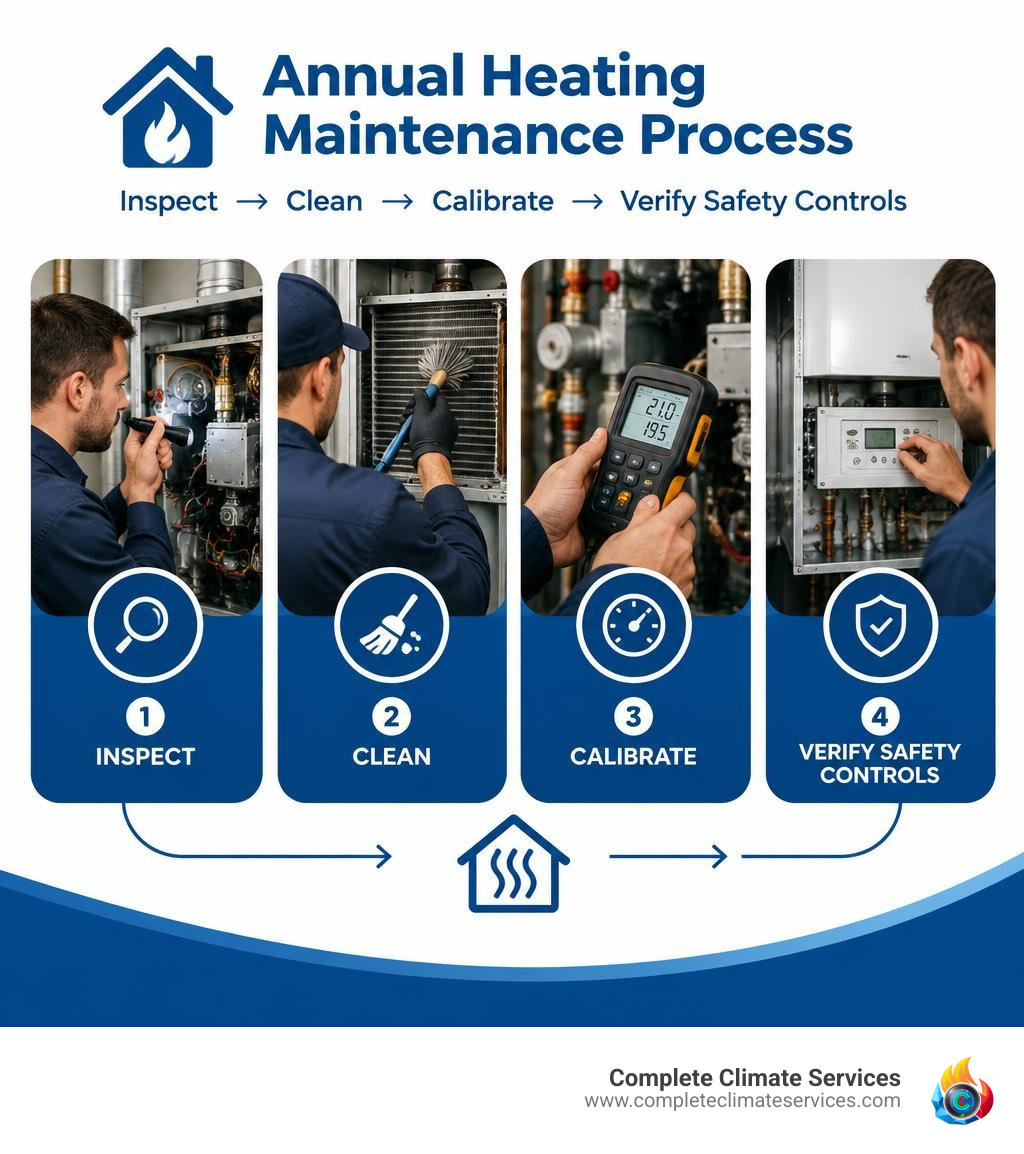
Preventive care keeps electrical connections tight, moving parts lubricated, and fuel combustion running cleanly and safely. Catching small issues early, such as a weak capacitor or worn igniter, prevents costly emergency repairs. Enrolling in our structured maintenance plans makes it easy to keep your system tuned up each autumn.
This dependable seasonal care gives you consistent comfort, reduced energy costs, and lasting peace of mind. During the visit, technicians can identify early wear before it interrupts operation during the season’s heaviest demand. Timely service also gives homeowners time to consider repair options instead of responding under pressure after a breakdown.
When a Heating Problem Is an Emergency
A total heating system failure during freezing weather is a serious urgent situation that demands prompt action. Sub-freezing indoor temperatures can quickly threaten family comfort and leave water pipes vulnerable to freezing and bursting. If your heating equipment emits electrical burning odors, trips breakers repeatedly, or refuses to start, shut it down.
In these critical situations, requesting fast emergency HVAC service is essential to protect your home and family. A qualified technician can assess the equipment safely and identify whether a repair is needed before normal operation resumes. Do not keep trying to restart a system that continues to trip breakers or produces burning odors.
Heating failures during severe cold waves present serious safety risks that require immediate and careful attention. Homeowners should recognize urgent warning signs and follow proper safety precautions during sudden equipment breakdowns. Taking prompt safety measures protects everyone inside the residence during a severe heating system failure:
- If you smell natural gas or suspect a fuel leak, leave the home immediately and call your gas utility or 911 from outside.
- If a carbon monoxide alarm sounds, get everyone outside into fresh air immediately and call 911.
- Never attempt to restart a heating unit that shows signs of scorched wiring, electrical smoking, or active fuel leaks.
- Avoid relighting malfunctioning pilots or resetting gas valves manually without professional guidance.
Carbon monoxide leaks are an invisible, odorless hazard produced by cracked heat exchangers or blocked exhaust flues. Reviewing practical carbon monoxide safety guidelines helps homeowners spot critical warning signs early during winter. According to the CDC carbon monoxide guidance, homeowners should have heating systems serviced annually by a qualified technician.
The agency also recommends installing battery-operated carbon monoxide detectors near all sleeping areas in your home. Test alarms according to the manufacturer’s instructions and replace batteries or units when the manufacturer directs. Treat an alarm as an urgent safety signal rather than trying to determine the source yourself.
Frequently Asked Questions
What heating systems do you work on?
Our technicians service natural gas furnaces, electric furnaces, heat pumps, and dual fuel heating systems. We also provide complete repairs and seasonal tune-ups for existing residential oil furnaces. For homes with hydronic heating, we service gas and oil boilers powering steam radiators and hot water baseboards.
How often should my heating system be serviced?
Residential heating equipment should receive a professional service visit and comprehensive tune-up annually before winter begins. Scheduling your inspection during the autumn ensures that burners, ignition assemblies, and safety switches operate properly. Regular seasonal attention maintains peak operating efficiency and prevents unexpected breakdowns during severe cold snaps.
What should I check before calling for heating service?
You should verify that your thermostat is set to heat mode and has working batteries installed. Check that the furnace power switch is turned on and the main circuit breaker has not tripped. Finally, confirm that your air filter is clean and your supply vents remain open and unobstructed.
Is a home with no heat an emergency?
A complete loss of heat during freezing outdoor weather is an emergency because indoor temperatures drop rapidly. If you smell gas, leave the home immediately and call the gas utility or 911 from outside. If a carbon monoxide alarm sounds, get everyone outside into fresh air immediately and call 911.
Do you work on boilers and radiators in older Baltimore homes?
We regularly service traditional boiler and radiator heating systems found in older homes across the region. Our technicians understand how to diagnose steam boilers, balance cast iron radiators, bleed lines, and repair pumps. We work to keep these historic heating configurations running safely, quietly, and dependably throughout cold winter months.
Conclusion
Keeping your home warm throughout the chilly winter requires dependable heating equipment and skilled technicians you can trust. Complete Climate Services brings 20+ years of HVAC experience and 5.0 stars on Google to every residential heating call. We take pride in delivering honest recommendations, upfront pricing before work, and around-the-clock emergency assistance when needed. Whether you need an autumn safety check, sudden furnace repair, or boiler service, contact our team today to schedule service.
Written by Michael Holcomb, Co-Founder and Operations Manager, Complete Climate Services.
Complete Climate Services LLC · 204 S Chapel St, Baltimore, MD 21231 · (443) 898-4747.

