Is the Air in Your Baltimore Home Actually Safe to Breathe?
If you’ve been looking for professional air quality testing near me, here’s the quick answer:
What professional air quality testing involves at a glance:
| What | Details |
|---|---|
| What it is | Certified inspectors collect air and surface samples, then send them to an accredited lab for analysis |
| What it finds | Mold, asbestos, lead, VOCs, radon, allergens, and other hidden pollutants |
| Who needs it | Homeowners, renters, buyers, sellers, landlords, and business owners |
| How long it takes | 1 to 2 hours on-site; lab results typically within 48 to 72 hours |
| What it costs | Pricing depends on the test type, property size, and number of samples needed |
| Who to hire | A certified, independent inspector who does not also sell remediation services |
Most people assume indoor air is cleaner than the air outside. The EPA says otherwise. According to the agency, indoor pollutant levels can be 2 to 5 times higher than outdoor levels, and Americans spend roughly 90% of their time indoors. The EPA also ranks indoor air pollution among the top five environmental risks to public health.
The problem is that many of the worst pollutants, including mold spores, asbestos fibers, VOCs, and radon, are completely invisible. You can’t smell them. You can’t see them. But they can cause headaches, chronic fatigue, respiratory issues, and worse over months or years of daily exposure.
That’s what makes professional testing so valuable. It takes the guesswork out of what you’re actually breathing.
At Complete Climate Services, our team has seen how often Baltimore homeowners discover serious air quality issues they never suspected, issues that a proper professional assessment would have caught much sooner. Understanding your options for professional air quality testing near me is one of the most important steps you can take to protect your family’s health and your home.
What is Professional Air Quality Testing and What Does It Involve?
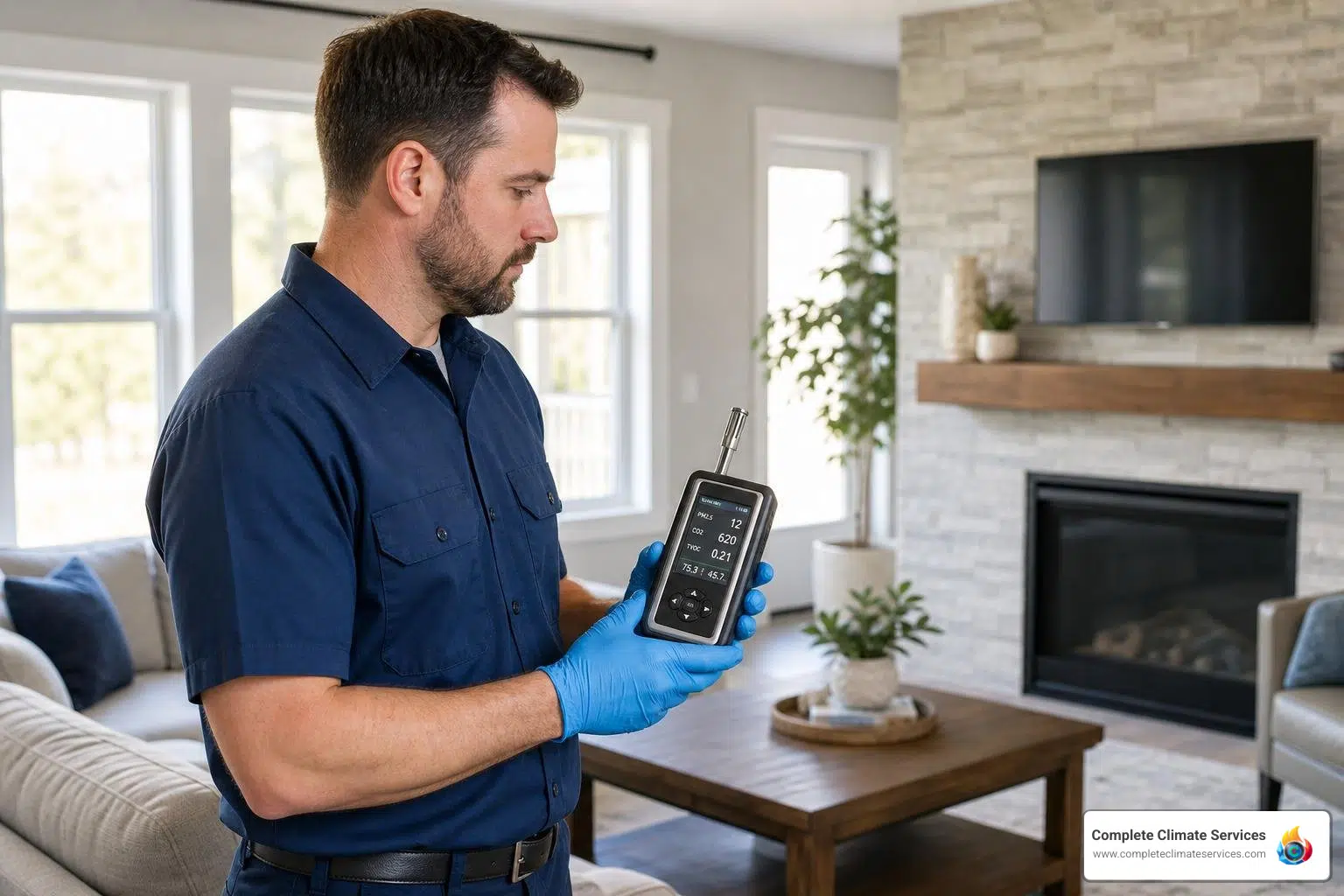
At its core, professional air quality testing is a scientific evaluation of your indoor environment. Instead of relying on a cheap retail sensor that only tracks basic dust levels, a professional assessment uses highly calibrated pumps, cassettes, and physical sampling tools to capture what is floating in your breathing zone.
When you schedule an assessment, a specialist doesn’t just walk in and wave a magic wand. The process requires a systematic approach to capture a true snapshot of your home’s health.
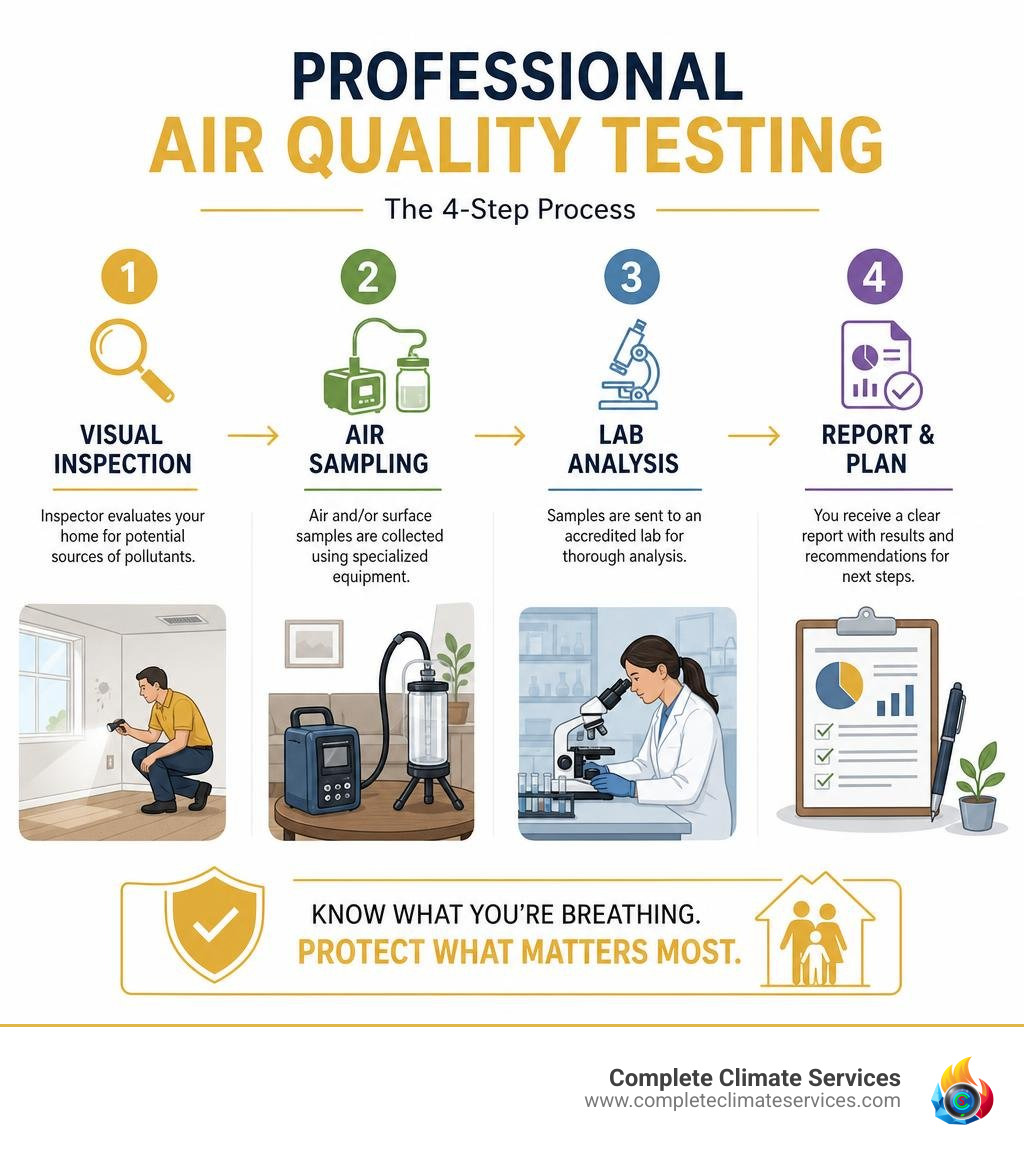
A comprehensive assessment typically involves three key steps:
- Visual and environmental assessment: The technician inspects your home’s layout, locates potential moisture pockets, checks relative humidity, and assesses the state of your HVAC system.
- Air sampling: Calibrated air pumps pull a precise volume of air through specialized filters or collection cassettes. This captures airborne mold spores, particulate matter, and chemical fibers.
- Surface and bulk sampling: Swabs or tape lifts are taken from areas with visible residue, while physical pieces of material may be collected if hazardous substances like asbestos are suspected.
These samples are documented under a strict chain of custody and delivered to an accredited laboratory. This scientific oversight ensures that your final report is legally defensible and highly accurate.
For homeowners who want to pair testing with practical comfort improvements, our indoor air quality services can help identify HVAC filtration, humidity, and ventilation solutions that support a cleaner home environment.
Common Indoor Air Pollutants Tested
A professional evaluation doesn’t just look for “dirty air.” It isolates specific, microscopic hazards that can threaten your structural integrity and physical health. An indoor environmental professional will typically test for a broad spectrum of contaminants:
- Mold spores: While mold is a natural part of the outdoor ecosystem, elevated indoor mold spore counts can trigger severe respiratory issues.
- Asbestos fibers: Often found in insulation, floor tiles, and drywall joint compounds in older homes. If disturbed, these microscopic fibers can be inhaled, leading to long-term lung diseases like mesothelioma.
- Lead dust: Commonly associated with paint used in homes built before 1978. Lead dust is highly toxic, especially to developing children.
- Volatile organic compounds (VOCs): These are chemical vapors released by household items like paints, solvents, new carpets, and cleaning products. Common VOCs include formaldehyde, benzene, and toluene, which can cause headaches, dizziness, and chronic fatigue.
- Combustion byproducts: Carbon monoxide, carbon dioxide, and nitrogen dioxide can leak from poorly maintained furnaces, fireplaces, or gas stoves, posing immediate health risks.
Mold Inspection vs. Mold Testing: Understanding the Difference
It is common to hear the terms “mold inspection” and “mold testing” used interchangeably, but they are actually two distinct steps in the diagnostic process. Understanding the difference can save you from unnecessary fees.
A mold inspection is a physical, visual search for moisture and mold. The inspector uses moisture meters, infrared thermal cameras, and physical examinations of crawlspaces, basements, and HVAC systems to find where mold might be growing and why it is growing.
Mold testing, on the other hand, is the physical collection of air or surface samples to identify the exact species of mold present and quantify the concentration of spores in your air.
Here is a quick comparison to help you understand how they work together:
| Feature | Mold Inspection | Mold Testing |
|---|---|---|
| Primary goal | Find the source of moisture and locate visible mold growth. | Identify mold species and count airborne spores. |
| Tools used | Thermal cameras, moisture meters, flashlights. | Air pumps, cassette collectors, surface swabs. |
| Output | A map of moisture issues and structural recommendations. | An accredited laboratory report with specific spore counts. |
| When to use | You smell a musty odor or had a recent plumbing leak. | You need to prove exposure levels or verify remediation was successful. |
When to Schedule Professional Air Quality Testing Near Me
Knowing when to call for a professional test is all about reading the signs your home and your body are giving you. You shouldn’t wait until there is visible green fuzz growing on your living room walls to take action.
Whether you are trying to keep your family healthy during seasonal transitions or focusing on improving your home’s air quality year-round, timing is everything. In our region, seasonal shifts and local humidity play a major role in how indoor air behaves.
Signs and Symptoms of Poor Indoor Air Quality
Sometimes, your body is the best air quality monitor you have. If you find that your health improves the moment you leave the house for work, but your symptoms return as soon as you walk back through your front door, your indoor environment is likely the culprit.
Keep an eye out for these common warning signs:
- Persistent musty odors: A damp, earthy smell is a surefire indicator of hidden mold growth behind drywall, under carpets, or inside your ductwork.
- Unexplained allergy flare-ups: Frequent sneezing, itchy eyes, a runny nose, or sudden coughing fits when indoors.
- Respiratory irritation: Increased asthma attacks, wheezing, or tightness in the chest.
- Sick building syndrome symptoms: Frequent headaches, chronic fatigue, dizziness, and difficulty concentrating that vanish when you spend time outdoors.
Seasonal changes also alter how these pollutants behave. Understanding how Autumn affects indoor air quality can help Baltimore-area homeowners prepare for the months when windows stay closed and heating systems can trap dust, pet dander, and biological contaminants inside.
Real Estate Transactions and Renovation Requirements
Beyond personal health, there are major legal and financial milestones that require professional air quality testing.
If you are buying a home, a standard home inspection is highly visual and might miss hidden environmental hazards. Scheduling a pre-purchase air quality test, especially for mold and radon, gives you the peace of mind that you aren’t moving into a toxic environment. If the tests reveal elevated levels, you can use the certified lab report to negotiate remediation costs or repair credits before closing the deal.
Similarly, if you are planning a renovation or demolition on an older property, testing is often a safety and legal requirement. Homes built before 1978 are highly likely to contain lead-based paint, while those built before 1980 frequently contain asbestos in wall plaster, ceiling textures, or pipe insulation. Disturbing these materials without proper containment can release hazardous fibers and dust into your living spaces, creating a severe health risk for your family and construction crew.
What to Expect: Cost, Timeline, and Preparation
If you have never scheduled a professional air quality assessment, the process might seem intimidating. However, knowing what to expect in terms of cost, timelines, and preparation can make the entire experience stress-free.
Preparing Your Home for Professional Air Quality Testing Near Me
To get the most accurate results, you need to prepare your home so the air samples reflect your typical daily living conditions. False readings can happen if the indoor air is artificially diluted right before the technician arrives.
To prepare, follow these simple guidelines:
- Maintain closed-house conditions: Keep all exterior windows and doors closed for at least 12 to 24 hours prior to the test. You can walk in and out of the house normally, but do not leave doors or windows propped open.
- Run your HVAC normally: Keep your heating or cooling system running at its usual temperature setting. This helps the inspector see how your HVAC system distributes air and handles humidity.
- Avoid heavy cleaning or activity: Do not vacuum, sweep, dust, or use harsh chemical cleaners within 24 hours of the test. These activities stir up settled dust and release artificial VOCs that can skew the laboratory results.
- Refrain from burning items: Avoid lighting candles, running fireplaces, or smoking indoors before the inspection.
For ongoing peace of mind between professional visits, practicing simple air quality monitoring tips can help you track relative humidity and temperature trends to keep your home in the safe zone.
Cost Breakdown and Lab Analysis Timelines
The cost of professional testing varies depending on the size of your property, the number of samples required, and the specific contaminants you want to analyze.
A basic residential mold inspection with air samples usually costs less than specialized testing for asbestos, lead, or a comprehensive VOC panel. The final price depends on how many samples are collected, which contaminants are analyzed, and whether expedited lab processing is needed.
While this might seem like an investment, it is highly cost-effective compared to tearing down walls to find a suspected leak that isn’t actually there.
Once the on-site inspection is complete, the samples are sent to an accredited laboratory. Standard turnaround times for laboratory results are typically 48 to 72 hours. Some specialized chemical panels, like formaldehyde or tobacco smoke markers, may take longer, though expedited testing is often available for urgent real estate transactions or post-flood emergencies.
Selecting a Certified Professional Air Quality Testing Near Me Provider
When searching for a local testing provider, credentials matter. Because indoor air testing is highly scientific, you should look for companies whose technicians hold recognized industry certifications, such as:
- IAC2 certification (International Association of Certified Indoor Air Consultants)
- ACAC credentials (such as a Certified Indoor Environmental Consultant or CIEC)
- AIHA accredited laboratories (American Industrial Hygiene Association) for analyzing your samples.
Local expertise is also invaluable. A company that understands Baltimore’s unique climate, from the humid summer days in Columbia and Towson to the older, historic housing profiles in Catonsville and Dundalk, will know exactly where to look for hidden moisture and regional environmental risks.
For homes where testing points to airflow, filtration, or comfort-system concerns, Complete Climate Services can connect the findings with practical HVAC services that improve how your equipment manages indoor air.
The Importance of Independent, Third-Party Testing
Perhaps the most critical decision you will make is choosing an independent, third-party testing company.
Always hire a professional who only performs inspections and testing, and does not offer remediation or abatement services.
If a company performs both the testing and the cleanup, there is an inherent conflict of interest. They have a financial incentive to find “dangerous” levels of mold or asbestos in your home because they stand to make money performing the remediation.
An independent, third-party tester has no skin in the game. Their only job is to provide you with honest, unbiased, and scientifically accurate data. Once you have their independent report, you can hand it to any licensed remediation contractor or use it to guide your HVAC service decisions with complete confidence.
Frequently Asked Questions about Indoor Air Quality
Even with all this information, it is completely normal to have a few lingering questions about how to keep your home’s air clean. To help you take charge of your living space, we’ve compiled some of our most frequently asked questions.
What happens if my test results show elevated levels of contaminants?
If your laboratory report comes back with elevated levels of mold, VOCs, or other pollutants, do not panic. The report will pinpoint the exact nature of the problem and where it is concentrated.
Your next step is to implement a targeted remediation plan:
- Source control: Fix the underlying issue. If mold is present, repair the plumbing leak or roof leak causing the moisture. If VOCs are high, remove the off-gassing materials or chemicals from your living spaces.
- Mitigation and filtration: Use air scrubbers, high-efficiency media filters, or specialized ventilation to clean the air. For instance, mini split systems can help solve air quality problems because their ductless design and advanced filtration options prevent dust and mold from circulating through traditional duct networks.
- Post-testing verification: After remediation is complete, have your independent inspector perform a clearance test to verify that contaminant levels have returned to safe, baseline standards.
Is air quality testing required by law for renovations or demolitions?
Yes, in many cases, environmental testing is legally mandated. Under EPA and local Maryland regulations, an asbestos survey must be conducted before any renovation, remodeling, or demolition work on commercial properties or residential buildings constructed before a certain era, typically pre-1980.
Additionally, the EPA’s Lead-Safe Renovation, Repair, and Painting (RRP) Rule requires specific testing and containment protocols if you are disturbing painted surfaces in homes built before 1978. Failing to comply with these regulations can lead to heavy fines, delayed building permits, and serious health liabilities.
How do HVAC systems and maintenance affect indoor air quality?
Your HVAC system is the lungs of your home. If your heating and cooling equipment is dirty, neglected, or poorly designed, it will continuously recirculate dust, mold spores, pet dander, and chemical pollutants throughout your living spaces.
To keep your system running clean:
- Upgrade your filters: Switch to high-efficiency media filters, such as MERV 11 or MERV 13, to capture smaller airborne particles.
- Control humidity: Maintain indoor relative humidity strictly between 30% and 50% using whole-home dehumidifiers to prevent mold growth.
- Schedule regular maintenance: Having an HVAC professional clean your coils, inspect your drain pans, and check your ductwork prevents biological growth from taking hold.
If you are looking to breathe easier, focusing on improving HVAC air quality in Baltimore through professional system cleaning and filtration upgrades is one of the most effective long-term solutions. Consistent, professional check-ups ensure that your system remains a barrier against pollutants rather than a source of them.
Conclusion
At the end of the day, your home should be your safe haven, not a source of physical discomfort or worry. If you are experiencing unexplained allergy symptoms, noticing strange odors, or planning a major renovation, investing in professional air quality testing near me is the best way to get clear, scientific answers.
At Complete Climate Services, we have spent over 20 years providing honest, reliable HVAC repair, installation, and maintenance across the Baltimore area. While we are not mold or asbestos remediators, meaning we have zero conflict of interest and will never try to upsell you on expensive abatement services, we are passionate about helping our neighbors design, maintain, and upgrade their heating, cooling, and filtration systems to achieve pristine indoor air quality.
From Baltimore City and Towson to Columbia, Ellicott City, and Glen Burnie, our 5.0-rated team is here to help you breathe easier.
Ready to take control of your indoor environment? Contact our professional indoor air quality technicians to schedule an inspection, or request a free estimate online and take your first step toward a healthier, happier home.