
Your Free AC Maintenance Checklist PDF: What to Check and When
An AC maintenance checklist PDF gives you a simple, printable way to track every task that keeps your cooling system running efficiently, from monthly filter swaps to annual professional tune-ups.
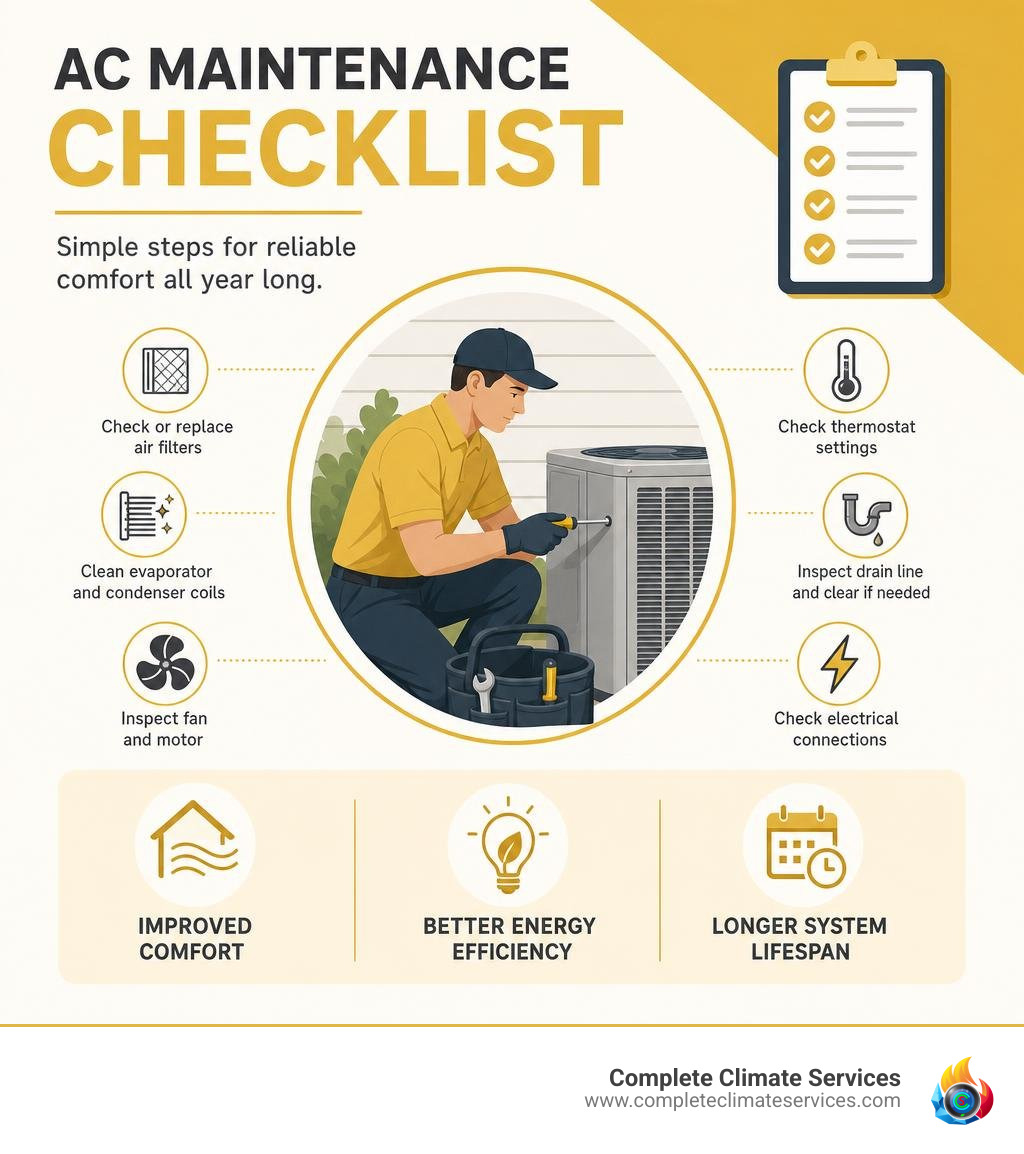
Here’s what a complete AC maintenance checklist covers:
| Frequency | Key Tasks |
|---|---|
| Monthly | Inspect/replace air filter, check drain line, clear vents |
| Spring | Clean coils, clear outdoor unit, test thermostat, check refrigerant |
| Summer | Monitor airflow, check for unusual noises, inspect cycling |
| Fall/Winter | Clear debris, inspect insulation, prep for off-season |
| Annually | Professional inspection, electrical checks, capacitor testing, duct inspection |
Most homeowners don’t think about their AC until it stops working, usually on the hottest day of the year. By then, a small neglected task, like a clogged drain line or a dirty filter, has turned into an expensive emergency repair. According to the U.S. Department of Energy, nearly half of all home energy use goes to heating and cooling, and a clogged filter alone can drive up energy consumption by 5–15%.
A printed checklist changes that. It turns reactive panic into a simple routine.
At Complete Climate Services, our HVAC team has years of hands-on experience with AC installation, repair, and maintenance for Baltimore homeowners. We have seen how a consistent AC maintenance checklist PDF helps prevent the breakdowns we get called about every June. In this guide, we will walk you through exactly what to check, when to check it, and what to leave to a licensed technician.
Why You Need an AC Maintenance Checklist PDF
It’s easy to ignore your air conditioner when it’s quietly doing its job. But behind your walls and inside your outdoor unit, dust is gathering, electrical components are wearing down, and connections are loosening.
Using a physical, printed tracking tool is the single best way to stay on top of these invisible issues. While digital calendars are easy to swipe away and forget, printing a physical copy of a checklist and hanging it in your utility closet or next to your indoor air handler keeps maintenance top of mind.
Consistent maintenance directly impacts three key areas of your home:
- Energy Consumption: When filters are clogged and coils are coated in grime, your system has to work twice as hard to cool your home. Keeping these components clean ensures your system operates at peak efficiency, preventing your summer utility bills from skyrocketing.
- System Lifespan: Most air conditioners are designed to last 10 to 15 years, but skipping routine care can shorten that lifespan. Regular checks prevent minor issues, like a failing capacitor or a slightly low refrigerant charge, from cascading into catastrophic compressor failures.
- Indoor Air Quality: Your HVAC system is the lungs of your home. If your ductwork is dirty or your filters are saturated, your system will continuously recirculate dust, pet dander, and mold spores throughout your living spaces.
By scheduling professional AC maintenance before the intense mid-Atlantic humidity hits Baltimore, you protect your wallet, your equipment, and your family’s health.
The Ultimate Seasonal AC Maintenance Schedule
To keep your system running smoothly without feeling overwhelmed, we recommend breaking your maintenance tasks down by the season. This ensures you are performing the right checks at the right times, matching the natural workload of your system.
When establishing your homeowner maintenance schedules, use the following breakdown as your roadmap.
Spring Pre-Season Preparation Checklist
Spring is the absolute best time to prep your system for the heavy lifting of summer. Before you turn your thermostat to “cool” for the first time, run through these essential tasks:
- Clear Outdoor Debris: Remove any leaves, twigs, weeds, or trash that accumulated around your outdoor condenser unit over the winter. Maintain at least 18 to 24 inches of clear space on all sides to ensure unrestricted airflow.
- Inspect and Clean the Coils: Gently rinse the outdoor condenser coil with a low-pressure garden hose. Never use a pressure washer, because it can flatten the delicate aluminum fins.
- Check Thermostat Batteries: Swap out old batteries in your thermostat to prevent sudden system failures during a heatwave.
- Review System Controls: Turn the system on briefly to ensure it starts, runs, and begins to blow cool air without making unusual noises.
For homeowners who want a tune-up before peak cooling season, early AC maintenance appointments can help catch worn parts, dirty coils, and airflow issues before Baltimore’s summer humidity puts extra strain on the system.
Summer Peak Performance Monitoring
Once the summer heat waves arrive in Maryland, your AC will run almost continuously. During this high-stress period, focus on monitoring and light maintenance:
- Monthly Filter Inspections: Check your air filter every 30 days. If you have pets, allergies, or a busy household, you’ll likely need to replace it more frequently.
- Monitor Airflow Issues: Ensure that supply and return registers throughout your home are open, clean, and completely unobstructed by furniture or drapes. Airflow problems can reduce your system’s overall efficiency by up to 15%.
- Listen and Smell: Pay close attention to how your system sounds and smells when it starts up. Rattling, squealing, or musty odors are early warning signs of mechanical wear or biological growth in your drain pan.
For more seasonal guidance, Complete Climate Services explains practical ways to maximize AC efficiency during a summer heat wave, including simple airflow and thermostat habits that pair well with your printed checklist.
Fall and Winter Off-Season Care
When the cooling season ends, it’s time to transition your system into its off-season phase. If you use a heat pump, your system runs in reverse to heat your home during the winter, meaning it still needs active care.
- Debris Protection: If you have a dedicated central AC unit that won’t be used all winter, clear away fallen autumn leaves and cover the top of the outdoor unit to prevent debris from falling inside. Avoid wrapping the entire unit in plastic, as this traps moisture and creates a perfect home for rodents.
- Inspect Pipe Insulation: Check the foam insulation wrapping your outdoor refrigerant lines. If it is cracked, crumbling, or missing due to UV degradation, replace it to prevent energy loss.
- Keep a Physical Log: Record the date of each filter change, outdoor-unit cleaning, thermostat battery swap, and professional tune-up so your checklist becomes a useful home maintenance history.
DIY vs. Professional HVAC Maintenance Tasks
While we encourage homeowners to take an active role in caring for their systems, it is critical to know your limits. Modern air conditioners are complex machines containing high-voltage electrical circuits and high-pressure chemical refrigerants. Attempting to service these components yourself can result in severe injury, voided equipment warranties, or federal EPA violations.
| Maintenance Task | DIY Safe? | Requires Special Tools? | Why It Matters |
|---|---|---|---|
| Replacing Air Filters | Yes | No | Restores proper airflow and protects the blower motor. |
| Clearing Outdoor Debris | Yes | No | Prevents system overheating and efficiency loss. |
| Flushing Condensate Drain | Yes | No | Prevents water damage and mold growth inside. |
| Checking Refrigerant Levels | No | Yes | Requires EPA certification; incorrect charge damages compressor. |
| Testing Capacitors | No | Yes | High voltage hazard; failing capacitors cause motor burnouts. |
| Deep Cleaning Coils | No | Yes | Requires specialized chemical cleaners and fin-straightening tools. |
Homeowner DIY Tasks You Can Do Today
If you are ready to roll up your sleeves, there are several highly effective tasks you can perform yourself to keep your system in top shape:
- Change Your Air Filters: This is the single most important task any homeowner can do. Swap out standard 1-inch filters monthly, or larger media filters every 6 to 12 months.
- Maintain Clearance Space: Keep bushes, grass, and decorative plants trimmed back at least two feet from your outdoor unit.
- Clean Your Condensate Drain Line: Over time, algae and mold can build up in your AC’s drain line, leading to water backups that can ruin your ceilings or drywall.
When a checklist reveals recurring issues, Complete Climate Services can help with broader AC services for Baltimore homes that go beyond routine maintenance, including repairs, installation guidance, and system replacement recommendations.
Technical Tasks Best Left to the Pros
When our certified HVAC technicians perform an annual tune-up, they handle the complex, high-risk tasks that require specialized diagnostic equipment:
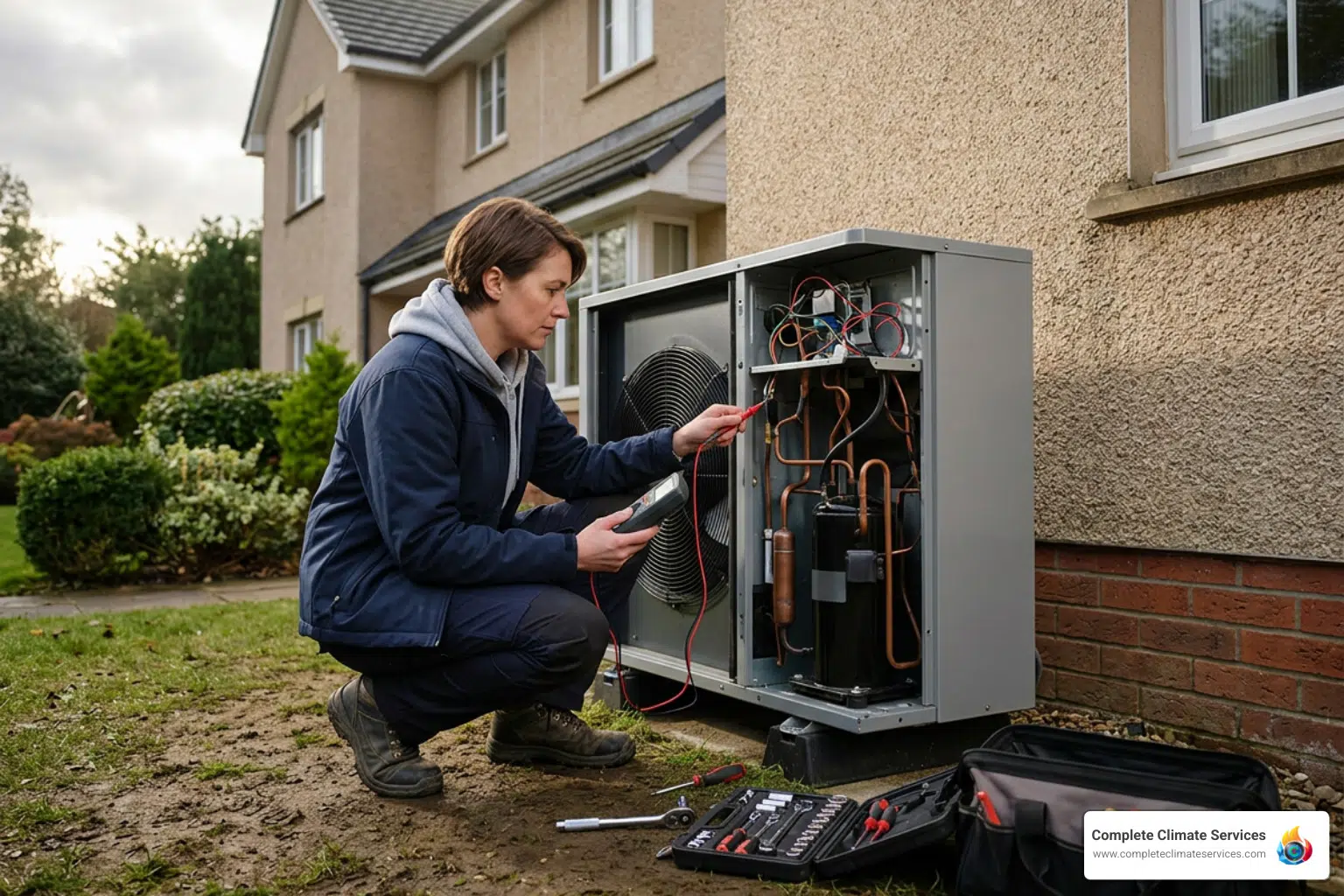
- Refrigerant Level & Leak Testing: We measure suction and liquid line pressures to calculate exact “superheat” or “subcooling” values. This tells us if your system has the precise amount of refrigerant needed to cool efficiently.
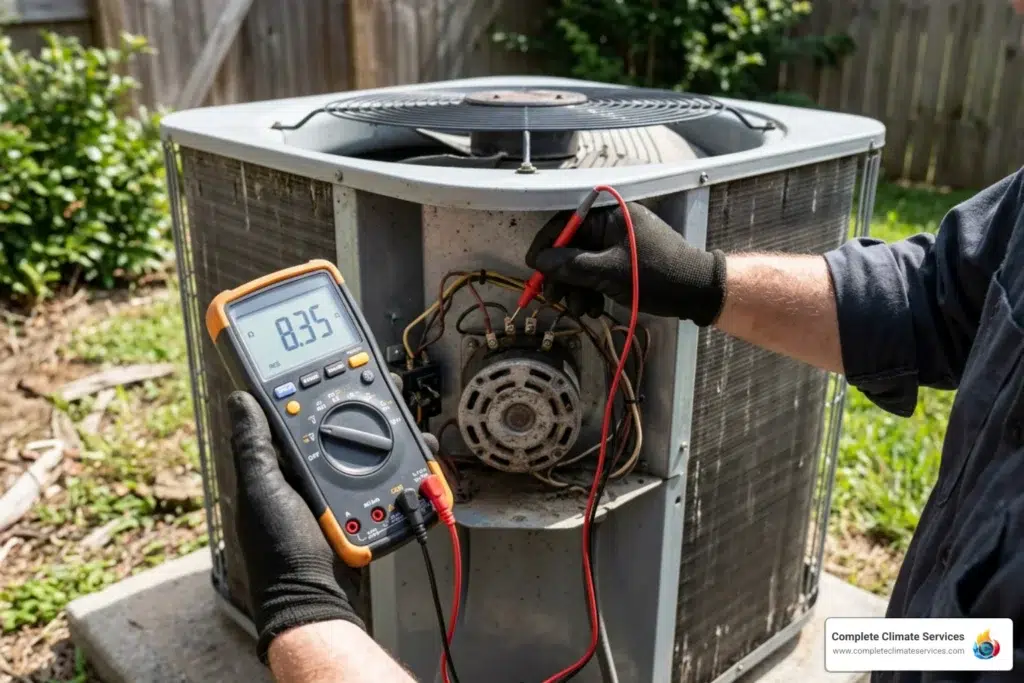
- Electrical Connections & Capacitor Testing: We inspect all wiring for frayed insulation and tighten loose terminals. We also test your system’s capacitors. Since capacitors act like heavy-duty batteries to help start your compressor and fan motors, a weak capacitor is the number one cause of sudden “no-cool” calls in the summer.
- Blower Motor & Wheel Diagnostics: We check the blower motor’s amperage draw against the manufacturer’s rating plate and inspect the blower wheel. A dirty or unbalanced blower wheel can reduce your system’s efficiency by up to 10% and cause premature motor failure.
Split AC vs. Central AC Maintenance Checklist PDF
If your home uses a ductless mini-split system rather than a traditional ducted central air conditioner, your maintenance checklist will look a bit different.
While central AC systems rely on a single large air handler and a network of ducts to distribute air, mini-splits use individual, wall-mounted air handlers in different “zones” of your home.
- Ductless Mini-Splits: Because these units do not use standard paper filters, you must pop open the front panel of each indoor head unit every 2 to 4 weeks to wash the reusable plastic mesh filters. Additionally, because mini-splits have individual condensate drain lines for each indoor unit, each head unit’s drain pan must be checked for blockages to prevent water from dripping down your indoor walls.
- Central Air Handlers: Central systems require ductwork inspections. In a typical house, about 20 to 30 percent of the air moving through the duct system is lost to leaks, holes, and poorly connected ducts. Part of central AC maintenance involves checking duct joints for leaks and ensuring the central return plenum is clean.
How to Use Your AC Maintenance Checklist PDF for Tracking
When you download and print your AC maintenance checklist PDF, don’t just treat it as a one-time chore list. Use it as a living document to build a comprehensive maintenance history for your home.
Write down the date of every filter change, the dates of your professional tune-ups, and any notes about unusual system behavior. If you ever decide to sell your home, having a documented history of professional HVAC care is an incredibly valuable asset that proves to potential buyers that the home has been meticulously maintained.
If your maintenance log starts showing repeated repairs, uneven cooling, or short-cycling, this Complete Climate Services article on what to look for in an AC repair company can help you decide when it is time to bring in a trusted local technician.
Frequently Asked Questions About AC Maintenance
How often should I perform AC maintenance?
You should inspect your air filters every 30 days and replace them as needed, usually every 1 to 3 months. Homeowners should perform basic DIY tasks, like clearing outdoor debris and checking drain lines, seasonally in the spring and fall. Finally, you should schedule a professional HVAC tune-up once a year, ideally in the early spring before the summer heat arrives.
What are the signs my AC needs immediate repair?
If your system is blowing warm air, making strange clanging, squealing, or rattling noises, cycling on and off rapidly, also called short-cycling, or if you notice a sudden, unexplained spike in your monthly utility bills, you should shut the system down and contact a professional immediately.
Can a dirty filter really damage my system?
Yes, absolutely. A heavily clogged air filter restricts airflow across your indoor evaporator coil. Without enough warm air passing over the coil, the refrigerant inside gets too cold, causing the moisture on the coil to freeze solid. Operating a system with a frozen coil can cause liquid refrigerant to flood back into your compressor, permanently destroying the most expensive component in your air conditioner.
Conclusion
Taking care of your air conditioner doesn’t have to be stressful. By printing out an AC maintenance checklist PDF and tackling simple DIY tasks on schedule, you can keep your home comfortable, keep your utility bills low, and prevent costly emergency breakdowns.
When it comes to the technical, high-voltage, and chemical safety checks, let the team at Complete Climate Services do the heavy lifting. We have provided honest, reliable residential and commercial HVAC services across Baltimore, Towson, Ellicott City, Columbia, Catonsville, and surrounding areas for over 20 years. Backed by consistent 5.0-star ratings, we treat your home’s comfort as our top priority.
Don’t wait for the next heatwave to find out if your system is ready. Contact our professional AC maintenance technicians today, and enjoy total peace of mind all summer long!