When Your Heat Pump Stops Working, Here’s What You Need to Know
Heat pump repair is something most Baltimore homeowners will face at least once, and when it happens, you want answers fast.
Here’s a quick summary of what you need to know:
| Question | Quick Answer |
|---|---|
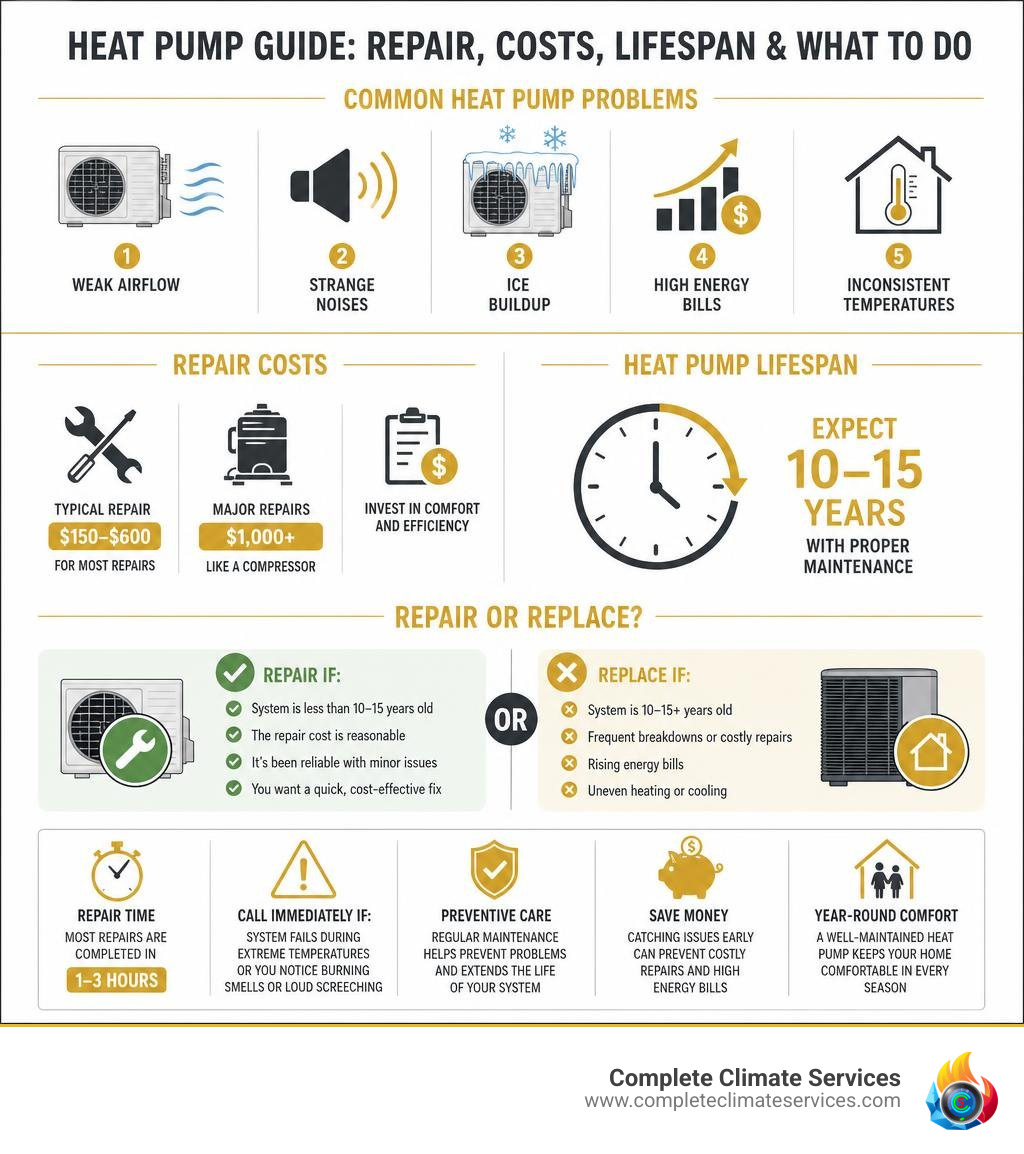
| Most common signs you need repair | Weak airflow, strange noises, ice buildup, high energy bills, inconsistent temperatures |
| Typical repair cost | Varies by the issue and the parts involved |
| Can it be repaired or does it need replacing? | Many heat pumps can be repaired, while replacement is usually considered for older or heavily damaged systems |
| How long does a repair take? | Many repairs can be completed during a standard service visit |
| When to call immediately | If the system fails during extreme temperatures, or you notice burning smells or loud screeching |
A heat pump works hard year-round, heating your home in winter and cooling it in summer. When something goes wrong, it affects your comfort and your energy bills. The good news: most problems are fixable, and knowing what to look for early can save you a lot of money.
At Complete Climate Services, our team helps Baltimore homeowners diagnose and resolve heat pump repair issues of all kinds. In this guide, we’ll walk you through everything you need to make a smart, informed decision about your system.
Common Signs You Need Heat Pump Repair
In our 20+ years serving Baltimore and surrounding areas like Towson, Columbia, and Glen Burnie, we have found that heat pumps are incredibly talkative systems. They rarely fail out of the blue. Instead, they drop subtle and sometimes not-so-subtle hints that things are going downhill.
Recognizing these warning signs early is the key to avoiding a total system breakdown on a freezing winter night or a humid July afternoon. If you pay close attention, you can catch issues before they require emergency HVAC service.
If you suspect your system is struggling to keep up with the Maryland weather, you are not alone. Many homeowners notice a gradual decline in comfort before realizing they need professional help. Our breakdown of why a heat pump struggles explains the comfort changes, airflow problems, and efficiency issues that often show up before a full breakdown.
The most common signs that your heat pump requires professional attention include:
- Weak or lukewarm airflow: The system runs constantly but your home never reaches the set temperature.
- Unusual noises: Grinding, squealing, rattling, or loud buzzing sounds coming from either the indoor or outdoor cabinet.
- Frequent short-cycling: The system turns on and off rapidly without completing a full heating or cooling cycle.
- Ice buildup: Frost or heavy ice forming on the outdoor coils, even during milder temperatures.
- Spiking utility bills: A sudden, unexplained jump in your monthly energy costs.
When your system is forced to work twice as hard to maintain your indoor comfort, it consumes significantly more electricity. That efficiency loss is one reason many homeowners start researching heat pump performance solutions after noticing hot and cold spots, weak airflow, or rising utility bills.
Inconsistent Temperatures and Weak Airflow
When a heat pump is healthy, it distributes a steady, gentle stream of conditioned air throughout your home. If you notice that some rooms are freezing while others are warm, or if the air coming out of your registers feels like a weak whisper, you likely have an airflow restriction.
This issue is often caused by heavily clogged air filters, leaking ductwork, or a failing blower motor. When airflow is restricted, the heat pump cannot transfer heat effectively, forcing the compressor to run longer and hotter. If the problem continues after basic filter checks, Complete Climate Services can inspect the system, ductwork, and controls through our professional heat pump repair services.
Strange Noises and Burning Smells
While a gentle hum is perfectly normal during operation, loud or sudden noises are an immediate cause for concern. Rattling often points to loose components or debris inside the fan cabinet. Squealing or screeching typically indicates a worn-out blower motor belt or failing bearings. Grinding sounds are the most serious, as they often signal a compressor that is nearing the end of its life.
Even more alarming is a burning odor. If you smell electrical burning, turn off the system at the thermostat and breaker immediately. This smell is often caused by overheating wiring, a seized motor, or a failing capacitor. If the smell is strong, repeated, or paired with smoke, our emergency HVAC services can help protect your home and prevent further damage.
Refrigerant Leaks and Frozen Coils
A heat pump relies on a precise charge of refrigerant to transfer heat between the indoor and outdoor air. If a leak develops, the system loses its capacity to heat or cool. One of the most visible signs of a refrigerant leak is ice buildup on the outdoor coil during the winter or the indoor evaporator coil during the summer.
In winter, heat pumps must periodically run a defrost cycle to melt ice off the outdoor coils. If the defrost control board or reversing valve fails, the unit will quickly become encased in a block of ice, choking off airflow and potentially destroying the compressor. Managing your system during our damp, freezing Maryland winters requires a bit of know-how, especially if the same issue comes back after the ice melts.
Repair vs. Replace: Making the Smart Financial Choice
When your heat pump malfunctions, one of the toughest decisions is deciding whether to sink money into a repair or invest in a brand-new system. With rising equipment costs and changing environmental regulations, making an informed financial decision is more important than ever.
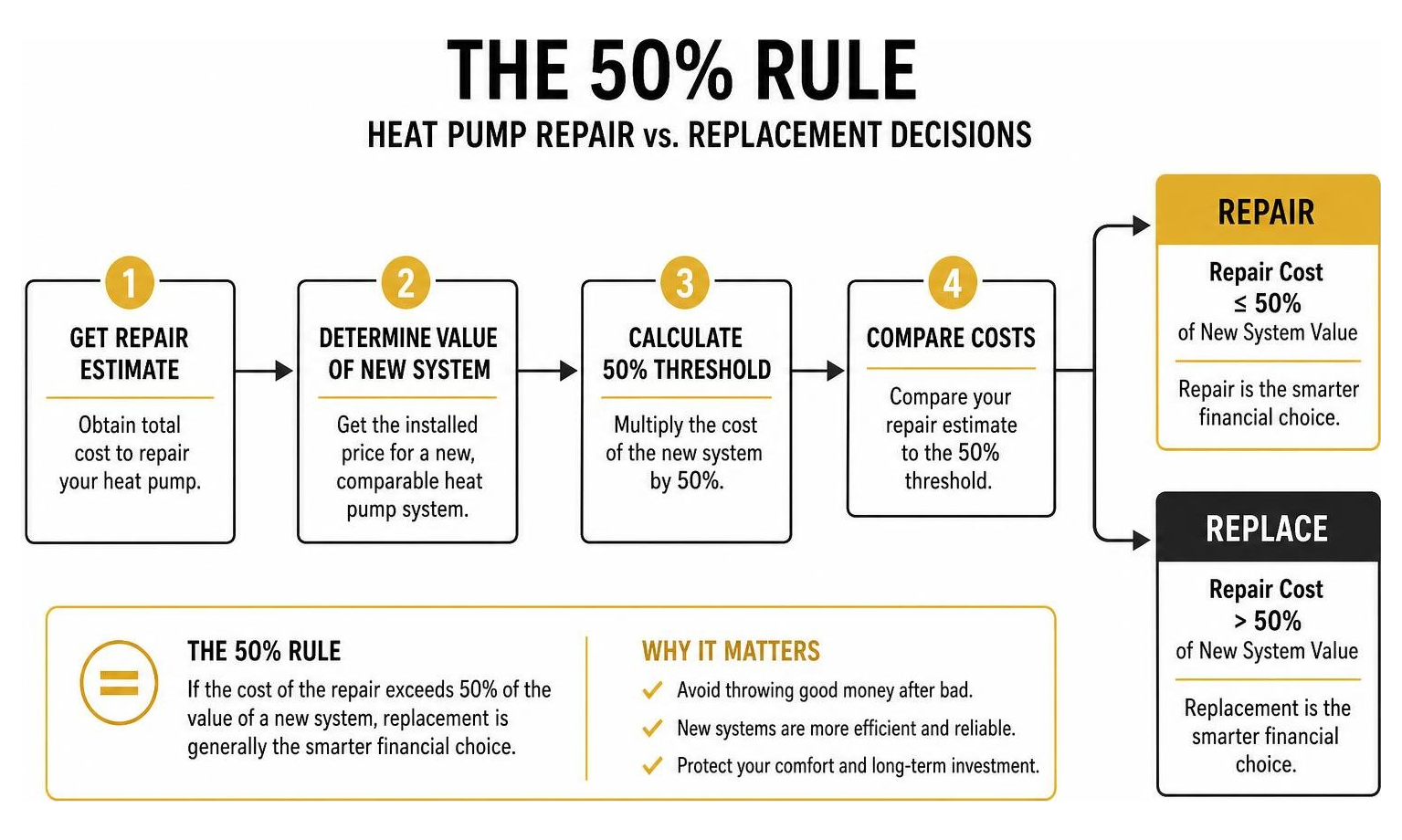
To help you evaluate your options, we use the industry-standard 50% Rule: if the cost of the repair exceeds 50% of the value of a new system, replacement is generally the smarter financial choice.
Here is a quick comparison table to help you weigh your options:
| Factor | Choose Repair | Choose Replacement |
|---|---|---|
| System Age | Under 10 years old | 10 to 15+ years old |
| Repair Cost | Less than 50% of a new unit | More than 50% of a new unit |
| Refrigerant Type | Modern R-410A or R-32 | Obsolete R-22 (Freon) |
| Frequency of Issues | First major issue in years | Frequent breakdowns and service calls |
| Energy Efficiency | Still operating near original SEER | Outdated, high utility bills |
If you decide that a replacement is the most cost-effective path forward, navigating the installation process correctly is essential for long-term reliability. Proper sizing, airflow design, and installation quality all affect how well the new system performs in Baltimore-area homes.
When to Choose Heat Pump Repair
If your heat pump is under 10 years old and has been relatively reliable up to this point, a professional repair is almost always the right choice. Minor component failures, such as a bad capacitor, a faulty contactor, a worn fan motor, or a small refrigerant leak, are often fixable.
Many of the heat pump issues we diagnose in areas like Columbia, Dundalk, and Ellicott City can be resolved with a targeted repair, restoring your system to peak performance without the need for a premature replacement. When you need fast, honest diagnostics, our team focuses on finding the actual cause of the problem before recommending the next step.
When to Invest in a New Heat Pump
If your heat pump is approaching its 12th to 15th year and continues to break down, you may be throwing good money after bad. Additionally, older systems that run on R-22 refrigerant are expensive to service because R-22 has been phased out by the U.S. Environmental Protection Agency. If an old unit has a major refrigerant leak, replacing the system is often the only practical solution.
Upgrading to a modern system can also improve comfort and efficiency. Modern variable-speed inverter systems are more adaptable than older single-stage units, which can help reduce temperature swings and unnecessary runtime. If your current unit needs frequent repairs, Complete Climate Services can help you compare repair and replacement options without pushing you toward a system you do not need.
Troubleshooting and the Professional Repair Process
Before you pick up the phone to call us, there are a few basic checks you can perform yourself. Sometimes, a “broken” heat pump is simply the result of a tripped switch or a misunderstood thermostat setting.
DIY Steps Before Calling a Pro
If your heat pump refuses to turn on or isn’t blowing conditioned air, run through this quick troubleshooting checklist:
- Check the Thermostat: Ensure it is set to the correct mode (“Heat” or “Cool”) and that the temperature setting is active. If the screen is blank, replace the batteries.
- Inspect the Air Filter: A completely clogged filter can cause the system to overheat and shut down as a safety precaution. Replace it if it is dirty.
- Check the Circuit Breaker: Look at your main electrical panel. If the breaker for the indoor or outdoor unit has tripped, reset it once. If it trips again immediately, do not force it. Call us.
- Clear the Outdoor Unit: Ensure the outdoor cabinet isn’t choked by fallen leaves, high grass, snow, or debris. Clear at least two feet of space around the entire unit.
If you have completed these steps and your system still won’t run, it’s time to call in the professionals. Persistent shutdowns, repeated breaker trips, loud noises, burning smells, and ice buildup all point to a deeper issue that should be diagnosed by a trained HVAC technician.
What Happens During a Professional Visit
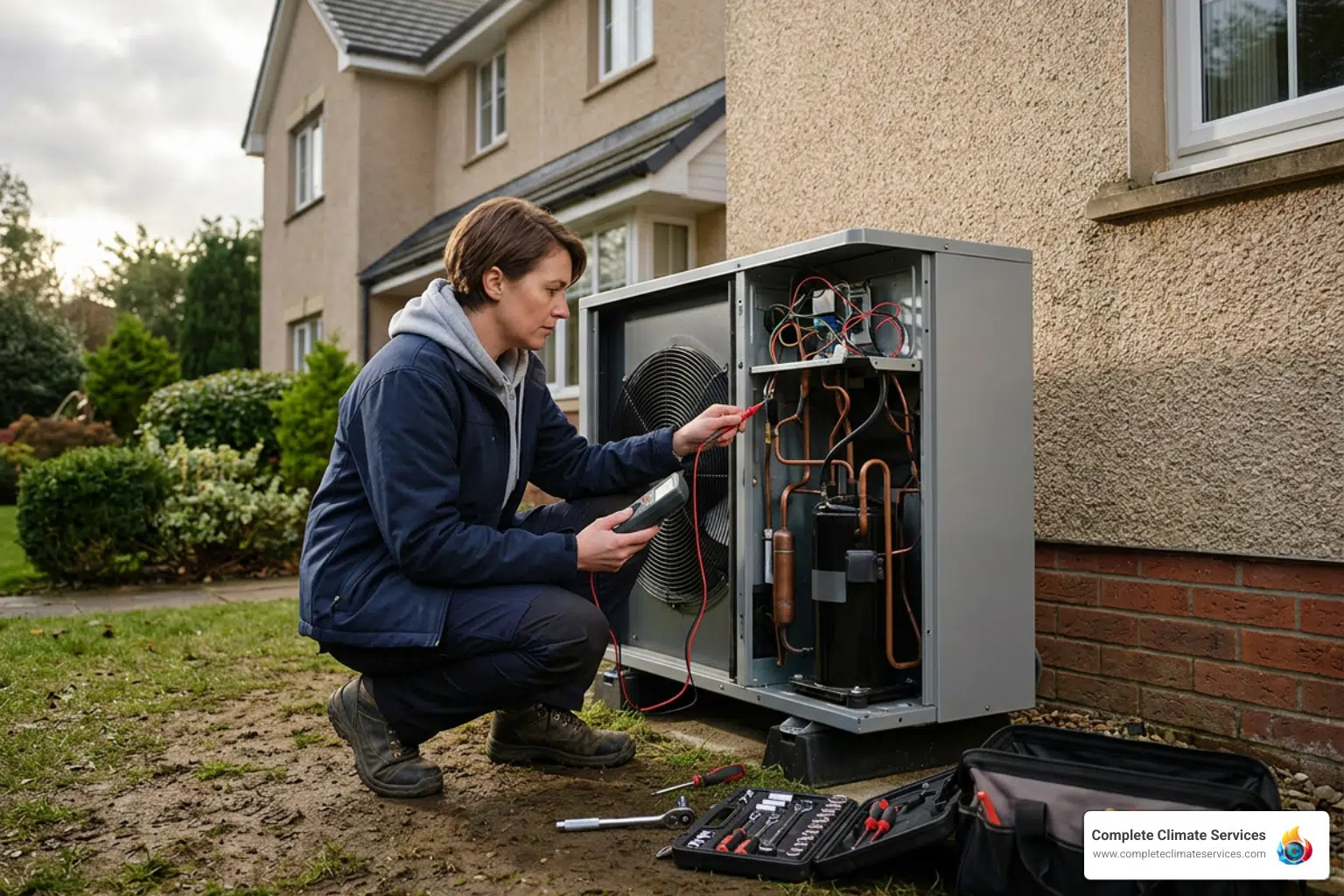
When our EPA-certified technicians arrive at your home in Towson, Catonsville, or Annapolis, we follow a strict, no-shortcuts diagnostic process to find the root cause of the problem:
- Initial Assessment: We talk with you about the symptoms you’ve noticed, check your thermostat calibration, and review the system’s operational history.
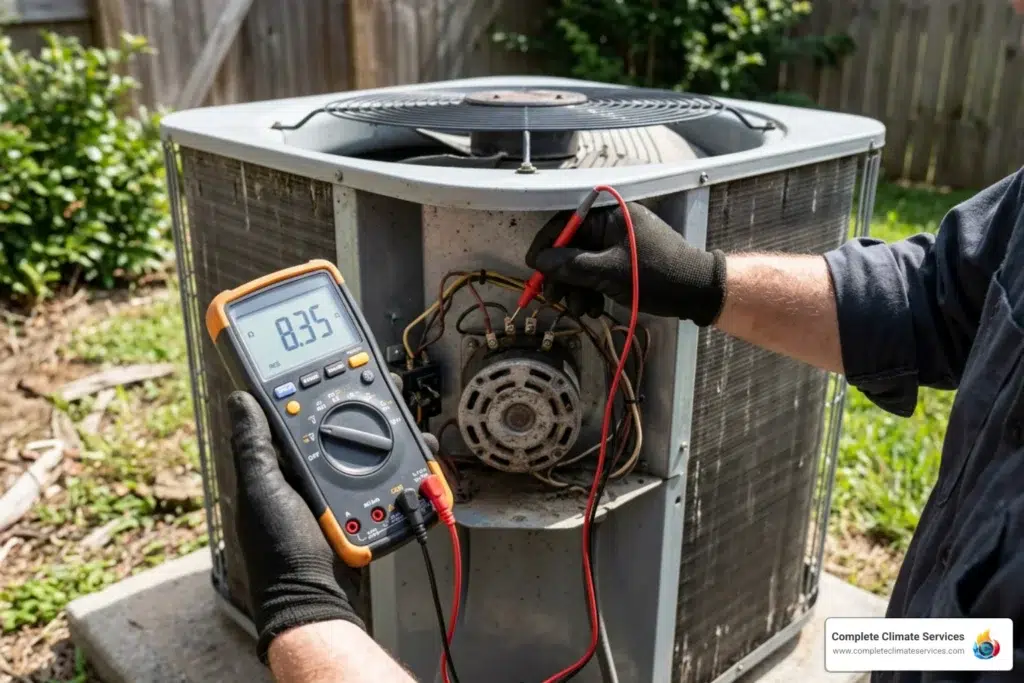
- Diagnostic Testing: We test electrical contacts, measure capacitor capacitance, check refrigerant pressures, and evaluate airflow across the coils.
- Problem Identification and Upfront Pricing: We isolate the exact failure and provide you with a clear, straightforward quote before any repair work begins.
- Component Repair and System Testing: Once approved, we replace the faulty parts and perform a full system test in both heating and cooling modes, verifying the defrost cycle works properly.
If your system experienced a complete shutdown during a severe cold snap, restarting it requires specific safety steps to protect the compressor from damage. When selecting a service provider, look for a licensed team that explains the issue clearly, protects your home during the visit, and tests the system before leaving.
Frequently Asked Questions
What Is the Average Cost of Fixing a Heat Pump?
The cost to repair a heat pump depends on the specific part that has failed, the age of the system, labor needs, and whether the issue affects refrigerant, airflow, controls, or electrical components. Minor repairs, such as replacing a capacitor, contactor, or thermostat, are usually less involved than major mechanical failures.
Medium-sized repairs may include replacing a blower motor, condenser fan motor, or defrost control board. Major repairs, such as replacing a reversing valve or compressor, are more complex and should be weighed against the age and condition of the system. Complete Climate Services always provides upfront, flat-rate quotes so there are never any surprises when the bill arrives.
How Long Do Heat Pumps Typically Last?
The average lifespan of a residential heat pump is 10 to 15 years. However, with biannual professional maintenance, once in the spring and once in the fall, a well-maintained heat pump can often last 12 to 15 years.
Modern high-efficiency models are built with advanced materials and smart controls that can support a longer service life with proper, consistent care. Skipping tune-ups is one of the leading causes of premature system failure.
When Do I Need Emergency Heat Pump Repair?
You should seek emergency heat pump repair if:
- Your system fails during extreme winter freezing or severe summer heat waves, posing a direct safety risk to your family.
- You smell burning plastic, sulfur, or electrical smoke coming from your vents or unit.
- The system is making loud, metallic grinding or screeching noises that indicate immediate mechanical failure.
- Your electrical panel keeps tripping the breaker, indicating a severe electrical short.
When your home comfort is on the line, you cannot afford to wait. Complete Climate Services provides fast, reliable emergency HVAC help throughout the Baltimore metro area. If you are unsure whether your situation constitutes a true emergency, turn the system off, avoid repeated resets, and call for professional guidance.
Conclusion
A malfunctioning heat pump can quickly disrupt your daily routine, but getting your home back to a comfortable temperature doesn’t have to be a stressful experience. Whether you need a simple capacitor replacement, a complex reversing valve repair, or a complete system upgrade, the key is acting quickly to prevent minor issues from turning into major failures.
At Complete Climate Services, we have spent over 20 years providing honest, reliable HVAC solutions to homeowners across Baltimore City, Baltimore County, Anne Arundel County, and Howard County. With our 5.0-star ratings across platforms, you can trust our highly trained team to deliver straightforward pricing, expert diagnostics, and long-lasting repairs.
Don’t let a failing heat pump compromise your comfort or send your energy bills skyrocketing. Contact our professional heat pump repair technicians today, and let Complete Climate Services restore your peace of mind with service you can trust!